NATIONAL
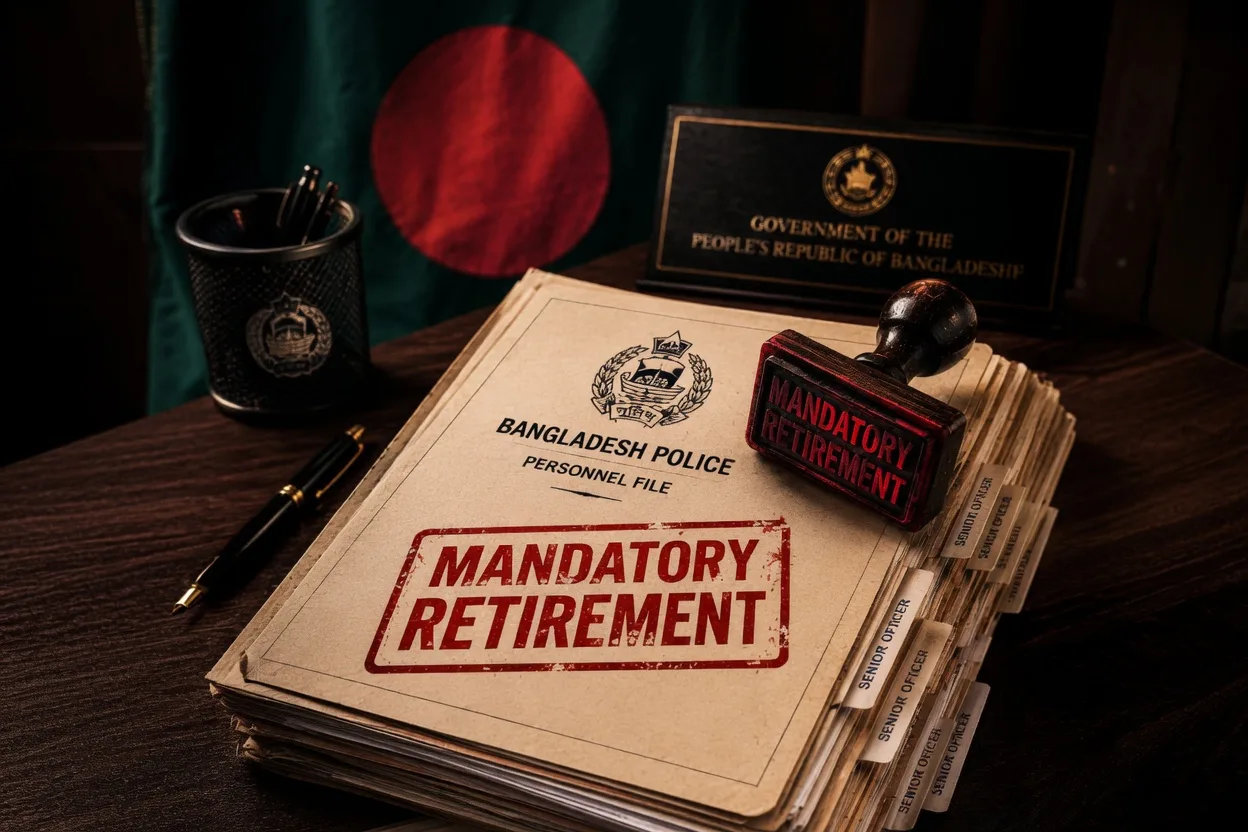
Govt sends 33 senior police officers into mandatory retirement after 25 years of service
Government orders compulsory retirement of 33 senior police officers, including 14 DIGs and 18 Additional DIGs, after 25 years of service.
Collected
BIONIC READING
In a Nutshell:
- The government issued an official presidential notification mandating the immediate retirement of 33 high-ranking police officers under standard civil service regulations.
- The directive, signed by Senior Secretary Manjur Morshed Chowdhury, targets officials from the 20th Bangladesh Civil Service (BCS) batch, including 14 Deputy Inspectors General (DIGs), 18 Additional DIGs, and one Superintendent of Police (SP).
- The affected officers, who officially completed their threshold of service on May 30, will be granted their regular retirement benefits as per the country's statutory service rules.
Why it Matters
This sweeping administrative action reflects the executive branch's willingness to reshape upper-tier law enforcement leadership by invoking specialized statutory powers. It highlights the use of legal mechanisms to fast-track structural adjustments within state forces.
- The retirement of over 30 top-tier commanders simultaneously creates significant, immediate structural vacancies across key regional and central policing divisions.
Who it matters to
The organizational adjustment fundamentally impacts upper-level administrative personnel, internal ministry planners, and the operational hierarchy of the police force.
- Ministry administrators and senior policy planners must immediately resolve the structural vacuum left by the simultaneous exit of 14 DIGs and 18 Additional DIGs.
- Mid-level superintendents and newly promoted senior officers face an entirely reset career trajectory, as the abrupt removal of an entire top-tier block clears previously congested promotion pathways and accelerates leadership transitions within the police service.