Beyond parental blame: why Bangladesh needs statutory age limits for social media
The killing of 13-year-old Ishiat Shahriar Oprotim was not caused by the absence of a social media ban. But it has exposed a wider question Bangladesh has avoided for too long: who is responsible for the digital world children enter long before they are equipped to navigate it?
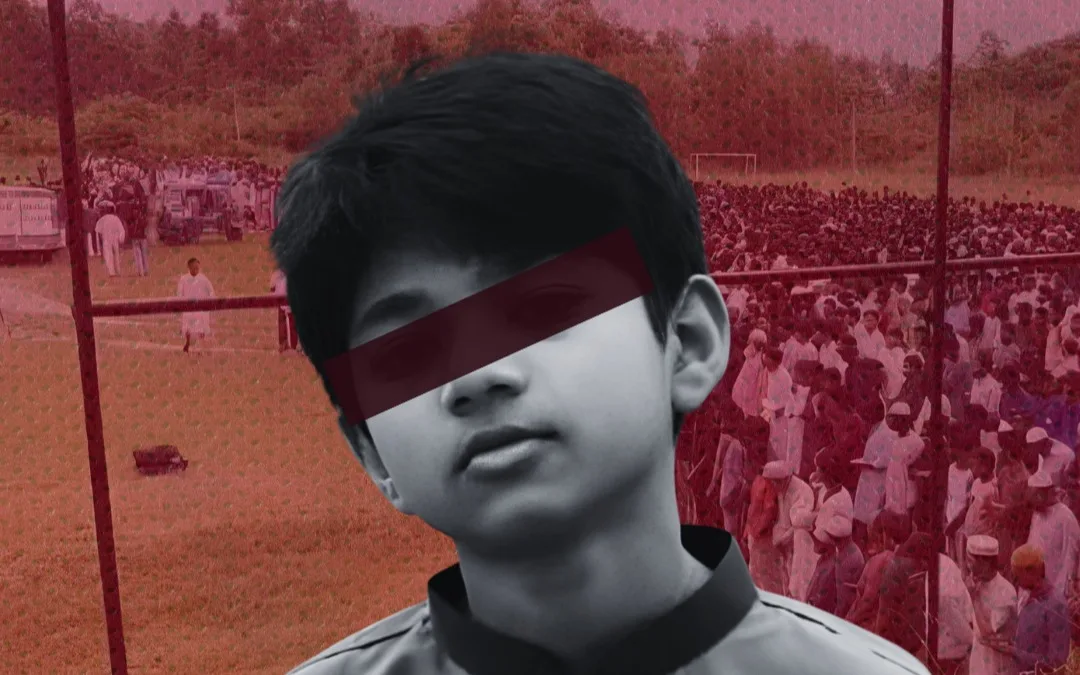
Since a 13-year-old boy was killed in Cumilla, Bangladeshis both online and offline have argued about parents’ responsibilities, iPhones and the decline of social and family values. Those arguments are understandable. They are also incomplete, because they skip over the rules, or the absence of them, governing the online world a child enters at 13.

The case is still being investigated, and it would be dishonest to claim that a social media regulation would have saved him. It would not have removed the iphone, the Tk5,000 debt or the older acquaintances described by police from the critical mass. But the case has forced Bangladesh to confront a question it has postponed for too long: who is responsible for the online world a child enters at 13?
The missing guardrails of the digital age
The honest answer today is that nobody really is. Bangladesh has not finalised any strategy to ban or restrict children's social media use. That is not for lack of discussion. In May, a legal notice sought a ban on social media for under 16s. Earlier this year, the director general of the National Cyber Security Agency said the government was considering restrictions for under 16s and would consider a ban if sufficient public demand emerged.
The neighbourhood is moving too. Pakistan's government is weighing a minimum age, while the Punjab Assembly has called for restrictions on accounts for under 16s. Karnataka has announced plans for a similar ban, and Malaysia began preventing under 16s from registering social media accounts this year.
Consider this piece part of the public demand the agency asked for.

A global shift in child safety
Australia's minimum age took effect in December 2025. The penalty falls on the platforms, not on children or their parents. The UK announced its ban for under 16s in June this year, drawing heavily on the Australian model, with regulations due before the end of the year and the restrictions expected to take effect in spring 2027. It has also proposed limits on livestreaming and contact with strangers, with additional protections applied by default to 16 and 17-year-olds.
In July, the UK added a default midnight to 6am restriction for those older teenagers, alongside measures switching off features such as autoplay by default. Platforms will also be expected to take steps to prevent children circumventing the restrictions.
That kind of structure deserves serious consideration in a country whose Children Act 2013 defines a child as anyone under 18.
The case for statutory limits
Australia's regulator published its three-month evaluation at the end of July. The proportion of children aged 10 to 15 using at least one restricted platform fell only modestly, from almost 86% to just over 81%. A substantial number of children continued to hold accounts, while age checking by platforms remained inconsistent.
Early evidence has also yet to establish dramatic improvements in adolescent sleep or mental health. The wider research remains unsettled. A 2024 review by the US National Academies found insufficient evidence to conclude that social media causes population level changes in adolescent health, while also documenting serious harms experienced by individual children.
So why adopt a minimum age anyway?
Getting the implementation right
First, where children continue to hold accounts because platforms fail to establish their age, that is primarily an enforcement problem rather than an argument against having a minimum age at all. Australia has already identified shortcomings in compliance, while the UK's proposed system places responsibility for preventing circumvention on the companies themselves.
Second, a law changes what a parent can say to a 13-year-old.
Today, refusing a social media account can mean being the only parent in a child's circle saying no. One Australian minister made the obvious comparison: nobody expects complete compliance with minimum drinking age laws, yet their imperfect enforcement is hardly an argument for abolishing them. A statutory minimum changes the default. Instead of parents having to justify why their child cannot join, platforms have to justify why they allowed them in.
Third, Bangladesh's own evidence, though it demonstrates association rather than causation, points towards risks that deserve attention. A study of schoolchildren aged 14 to 17 found that 325 had experienced cyberbullying, with psychiatric disorders more common among victims. A national survey of 4,984 girls found that those cyberbullied during the previous year had almost four times the odds of major depression. An icddr,b study found that 83% of Dhaka schoolchildren spend more than two hours a day looking at screens.

Bangladesh should learn from the Australian model while trying to fix what Australia got wrong.
Three changes are crucial.
Enforcement
The Cyber Security Act 2026 gives the BTRC powers to order content blocking, but blocking an entire platform is a weapon no government will use lightly against social media juggernaut like Meta in a country that practically runs on it. The law therefore needs graded penalties short of blocking, alongside cooperation with regulators elsewhere in the region that are dealing with the same multinational companies.
Age proof
The planned digital ID wallet should be capable of confirming that a user is over 16 without telling the platform who that user is, and without telling the state which platforms the person uses. Otherwise, a child safety measure risks becoming a register of who watches what.
Privacy cannot be treated as collateral damage in the name of protecting children.
Evaluation
Australia commissioned an independent evaluation involving an academic advisory group led by Stanford researchers. Bangladesh should write into any statute a duty to publish compliance data every six months, followed by a parliamentary review after two years.
Why act now rather than wait for more results?
Offline failures cannot excuse online paralysis
None of this replaces a swift trial for those responsible for killing Oprotim, or a police force that treats every missing child report with the urgency it deserves. Police recorded 15,717 missing child reports between January and July this year, with 2,038 children still missing. Those failures require their own answers.
But failure offline is no reason for paralysis online.

At his funeral prayer, Oprotim's father asked that no other parent lose a child as he had. A minimum age for social media cannot guarantee that. No serious policy can make such a promise.
But Bangladesh has already identified the risks. Its own officials have said they are prepared to act if there is public demand. Countries around it are moving, and the world's first large scale experiments are now producing evidence from which Bangladesh can learn.
There is no good reason to keep postponing the question.
Adil Mahmood is a former journalist and public policy observer.