2 Years later
Analysis: Asif Nazrul’s uncorroborated Prothom Alo interview claims he played a central role in the July uprising and Yunus’s appointment.
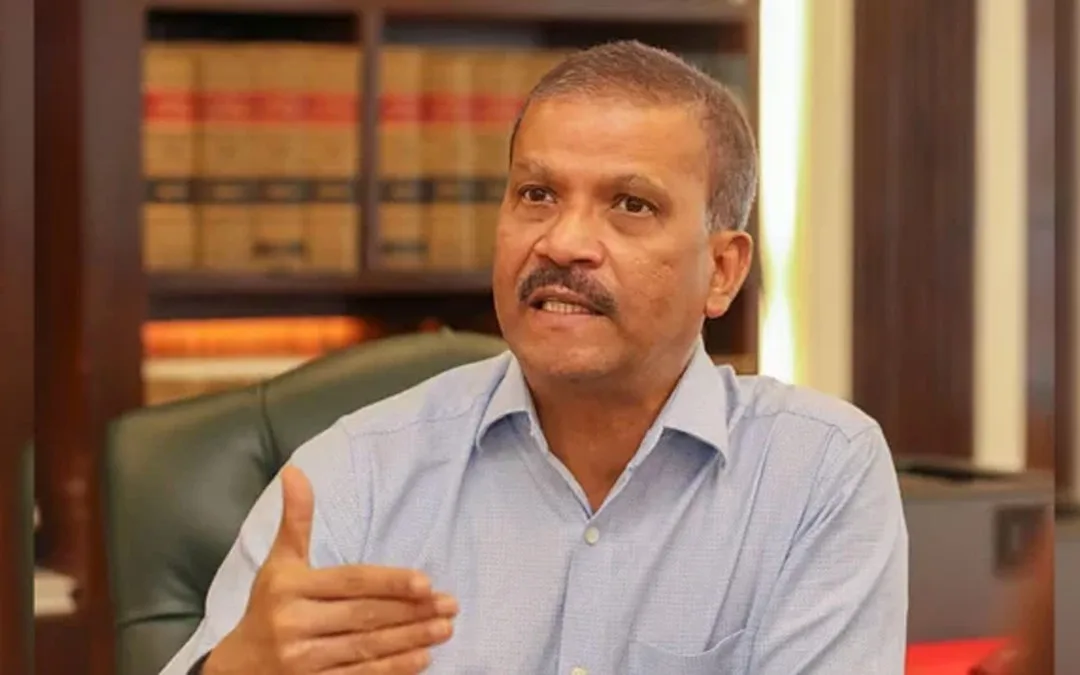
In a Nutshell:
- Asif Nazrul, a Dhaka University law professor and long-time Awami League critic, frames his entry into the July uprising as organic, citing pre-existing student ties, though this self-description is uncorroborated by any second source in the piece.
- Nazrul recounts a late-July warning about snipers and possible arrests, but admits he did not record the date and is unsure whether it was July 24 or 25, undermining the story’s precision.
- On August 5, 2024, Nazrul says he was summoned to army headquarters as the sole civilian representative among roughly 20 politicians, a claim resting entirely on his own recollection.
- He describes being lifted onto protesters’ shoulders “like a coach after winning the Champions League,” a vivid, self-flattering detail with no independent verification.
- Nazrul claims he learned of Hasina’s departure only when it appeared on a television behind Army Chief Waker-uz-Zaman, positioning himself as more informed than the general in that moment.
- At Bangabhaban, Nazrul says he was again the only civil-society figure among roughly 40 attendees, repeatedly casting himself as uniquely positioned and indispensable throughout the narrative.
- He recounts privately lobbying the army chief to release his former student Akhtar Hossain from jail “that very night,” a personal-favor anecdote that is impossible to verify independently.
- Nazrul says student leaders Nahid, Asif, and Sarjis first proposed Dr. Yunus to him at Curzon Hall, and that he was skeptical Yunus would accept — a framing that lets Nazrul later claim credit for “convincing” the army chief.
- He describes persuading Waker-uz-Zaman on Yunus using personal anecdotes about Yunus’s ties to Clinton, Biden, and European royalty, an unverifiable claim of influence over a sitting army chief.
- Nazrul then reveals that on August 6 evening, the army allegedly held a secret meeting to convince students to accept someone other than Yunus — a dramatic claim he says he only learned about “later,” raising questions about how firsthand this account actually is.
- The interim government was sworn in August 8, 2024, with Nazrul crediting himself with the constitutional mechanism (Article 106) used to legitimize it.
- Nazrul closes by grading the government’s own record, including admitted “failures” like mob violence and attacks on Prothom Alo and The Daily Star — notably, outlets closely tied to the same media ecosystem publishing this interview.
Why it matters
This Prothom Alo interview is presented as a historic revelation, but it is worth noting that virtually every dramatic claim — the sniper warning, the army chief’s alleged surprise at Hasina’s departure, the secret meeting to replace Yunus, the personal lobbying that supposedly changed the general’s mind — rests solely on Nazrul’s own uncorroborated memory, recounted two years after the fact. The interviewer does not appear to press him on inconsistencies, such as his admitted inability to recall exact dates, nor seek any corroborating source, army statement, or student-leader confirmation for the more extraordinary claims, like the alleged secret anti-Yunus meeting. Prothom Alo’s choice to headline the story around a “plot to sideline Yunus” — the single most sensational in the piece — while running it during a politically sensitive pre-referendum period, invites scrutiny of whether this is disinterested journalism or a vehicle for one insider’s self-mythologizing narrative. Nazrul positions himself in nearly every pivotal scene as the indispensable actor: the only civilian in the room, the one who calmed the crowd, the one who convinced the general, the one who cited Article 106. That degree of narrative self-centering, published without visible pushback, is itself a story about how elite historical memory gets constructed and disseminated in Bangladesh’s media.
What we think
Readers and institutions should treat single-source, memory-based accounts like this one — published two years after the events they describe, by a figure who benefited politically and professionally from the outcome he’s describing — with proportionate skepticism rather than treating them as settled history. Bangladesh’s media ecosystem, especially outlets like Prothom Alo positioning themselves as arbiters of the “official” uprising narrative, should be pressed on editorial practices: m did they simply publish one man’s flattering self-account verbatim. This matters more, not less, given the 2026 referendum context, where competing factions have strong incentives to shape the historical record of August 2024 in self-serving ways — making it worth asking who benefits from Nazrul being remembered as the indispensable broker who single-handedly saved Yunus’s appointment.