Bangladesh has a dead factory dilemma
Bangladesh has just opened 44 dead state factories and nearly 10,000 acres to private investors, its boldest asset sale in years. Whether this rebuilds industry or just moves land into new hands may say more about the Tarique Rahman government than anything it has said so far.
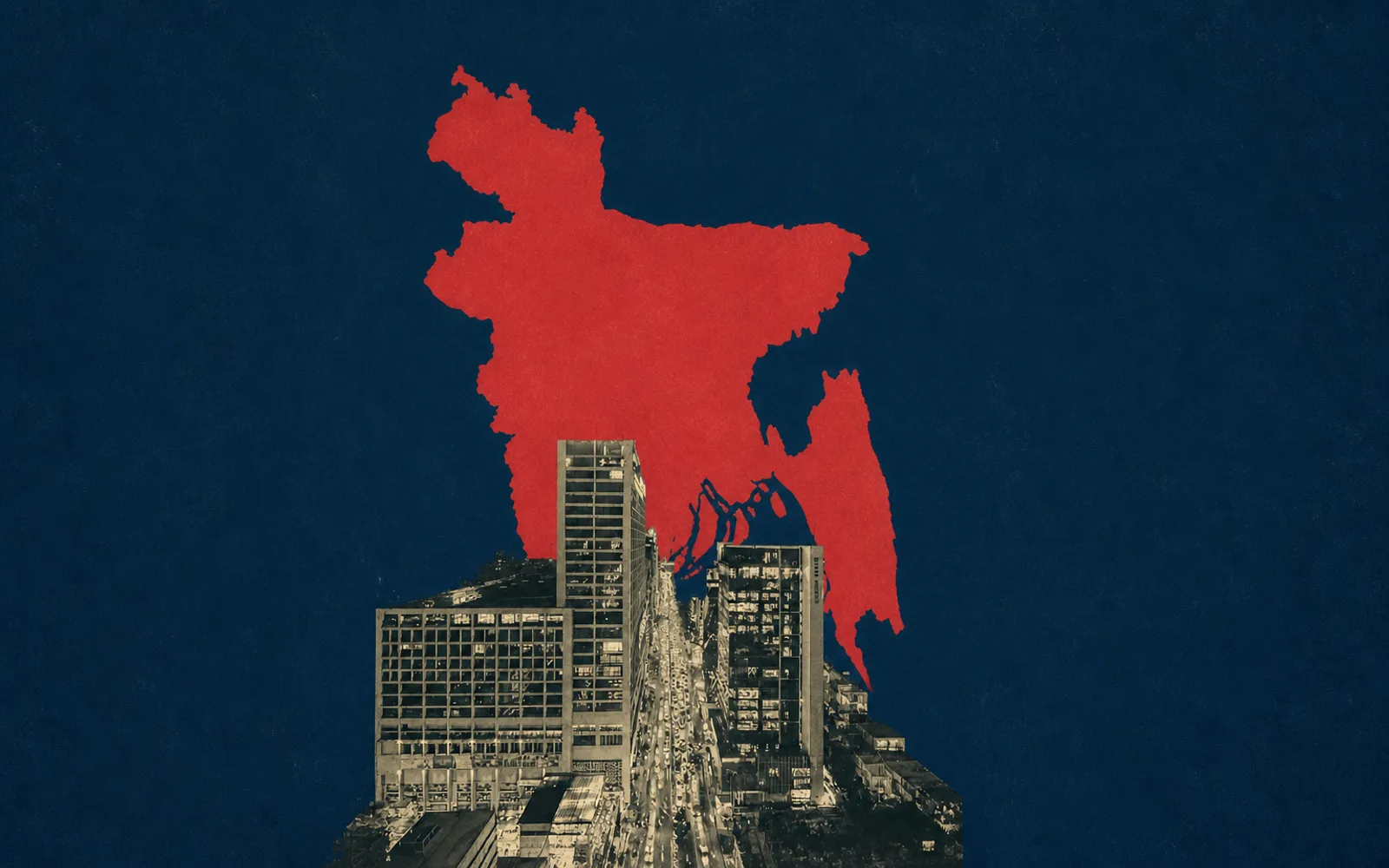
Bangladesh has moved from announcing its boldest state asset sale in years to actually closing deals.
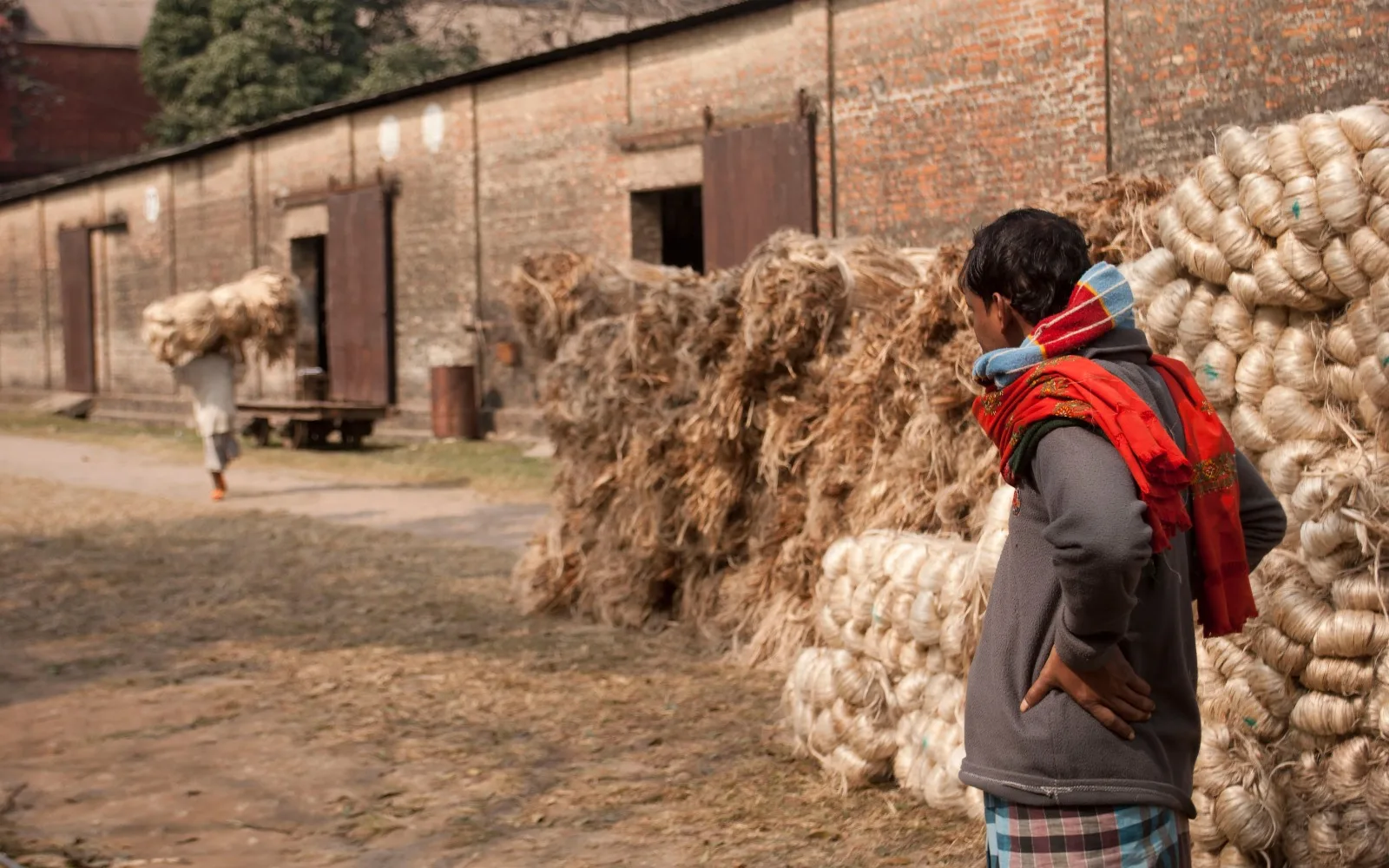
On August 11, the government signed lease agreements for three long closed jute mills, National Jute Mills in Sirajganj, Star Jute Mills in Khulna and Platinum Jubilee Jute Mills in Khulna, handing them to PRAN RFL Group and HAMCO Group. Together the deals bring in about Tk619cr of investment and are expected to create close to 11,630 jobs. Officials say 14 of a targeted 20 mills from the corporation's 2020 closures have now been leased out, with production already resumed at nine. That progress is real, but it does not resolve whether the workers laid off when these mills first closed in 2020 ever received the wages, gratuity and provident fund payments they were promised at the time. New jobs at a reopened mill are not the same as settling old debts to the people who used to work there.
New jobs at a reopened mill are not the same as settling old debts to the people who used to work there.
This sits inside a much bigger programme. In June, the Bangladesh Investment Development Authority (BIDA) unveiled 44 dormant or loss-making state enterprises across five corporations, sugar, textiles, chemicals, jute and steel, covering close to 10,000 acres. By mid-August, 14 companies had filed 86 investment proposals for a share of it. PRAN RFL alone has put in 35 proposals across 16 sites, on top of the 3,500 jobs it has already created reviving Rajshahi's textile and jute mills under a public-private partnership. Akij Resource Group, TK Group, Kazi Farms and Transcom have filed a further 29 between them.
A new Invest Bangladesh Act, passed last month, folds BIDA and the Bangladesh Economic Zones Authority into a single agency to run the process, and BIDA says a policy on how these units will be handed over, lease, sale or profit sharing, should be approved within weeks.
This is not a marginal housekeeping exercise. It is a genuine test of how the BNP government led by Tarique Rahman intends to run the economy after February's election, and it deserves to be judged on more than good intentions.
The regional picture
It helps to place this within the wider region. Singapore's Temasek Holdings has spent five decades proving a state can hold commercial assets at arm's length from its ministers and still make money, and its portfolio is now valued above SGD400bn. It functions, by design, as an ordinary institutional investor rather than an arm of government. Indonesia has taken a bigger and messier swing at the same idea. Danantara, launched last year and modelled explicitly on Temasek, is meant to eventually hold nearly a thousand state enterprises worth close to $900bn, and its early months have already exposed the tension built into the model. An academic comparison published late last year found Danantara sharing some of the same governance weaknesses, concentrated executive authority, unclear legal status and thin independent auditing, that eventually helped sink Malaysia's 1MDB fund. Malaysia's own Khazanah shows a milder version of the same problem: useful and professionally run but permanently asked to chase commercial return and national development goals at once, which blurs a line investor want kept clean.
Bangladesh's programme is more modest than any of these. It is not creating one shareholder entity to professionally manage everything the state owns, it is inviting private capital into 44 specific units still sitting under their existing sector ministries. This is not the country's first flirtation with the bigger idea either. A $10bn sovereign wealth fund was approved by the cabinet back in 2017 and then quietly abandoned by the Finance Ministry. The narrower approach on the table now may have a better chance of surviving contact with reality, precisely because it deals in specific, named factories rather than an abstract fund with no assets to point to.
Why the government sees an opportunity
The case for doing this is straightforward, and the government's own budget makes it plainly. The FY2026 to 27 budget projects a deficit of roughly Tk2.43 lakh crore against revenue of Tk6.95 lakh crore, and a portfolio of loss-making mills is an obvious place to start when the state needs to borrow less and earn more. Industrial land is also one of the most commonly cited obstacles to investing in the country, and a large share of these 44 sites already sit inside established industrial estates with roads, power and gas connections built years ago, sparing new investors years of preparatory cost.
There is also a case that goes beyond simple asset recycling. PM Rahman has said publicly that he wants to reduce the country's dependence on garment exports by building up industries such as toys and leather goods. Several of the units on offer, particularly the textile mills under BTMC and the chemical plants under BCIC, are exactly the kind of underused industrial capacity a genuine diversification push would need. If investors can be persuaded to retool rather than simply extract land value, these sales could serve dual purpose: clearing dead weight off the state's books while giving Dhaka's stated diversification strategy somewhere real to land.
Not everyone agrees
Not everyone agrees this is good news. The Communist Party of Bangladesh and other left leaning parties have rejected the plan outright, arguing it amounts to handing public assets to private and, in some cases, foreign hands. They tie it to a wider pattern, fuel import, power distribution, railways and state run hotels are all reportedly moving the same way, and warn that once these become profit driven businesses, costs in essential sectors will rise and jobs will be cut. The Socialist Party of Bangladesh held a rally outside the National Press Club on 10 August making the same case. This is a real political constituency, not a fringe complaint, and a government pushing this many transfers through at once should expect it to grow louder rather than quieter.
Industrial revival, or a land sale in disguise?
There are three risks worth taking seriously regardless of where one stands politically. The first is whether industrial revival is really what is happening everywhere. Some of BJMC's closed mills are being converted into economic zones rather than reopened as factories, following the precedent set at Adamjee, where the government settled the mill's outstanding liabilities before handing the land to the zone authority. That is a reasonable model, and one that should be applied consistently, because a mill quietly becoming a housing project or a logistics park is not an industrial revival, whatever the paperwork calls it. Bangladesh has seen leased factories turned into housing before, and the way to prevent a repeat is picking buyers on genuine industrial expertise and reputation, not simply on who bids highest.
Who actually benefits?
The second risk is governance. Bangladesh scored just 24 out of 100 on Transparency International's latest Corruption Perceptions Index, its second worst showing in 14 years, and its courts have a documented history of favouring the state and politically connected parties in investment disputes. A 2025 white paper estimated some $234bn was laundered out of the country over the previous 15 years, much of it tied to public institutions, yet no forensic audits of those institutions were ordered to establish where the money went. If the committees now screening 86 competing proposals are not genuinely independent, and if the criteria for choosing between, say, Nabil Group and Milk Vita for a single sugar mill are never published, this initiative risks becoming exactly what its critics already call it: state assets moving to whoever has the best political relationships, dressed up as industrial policy.
Can the government deliver on its promises?
There is a third reason for caution, and it has nothing to do with corruption or valuation. It is simply whether the government can deliver the basic support it has promised. BIDA's pitch to investors includes uninterrupted gas supply as one of the incentives for taking on these 44 sites. But separate reporting this year found roughly Tk35,000cr in private investment already sitting idle across the country's existing economic zones, waiting for gas connections that have not materialised, in some cases for as long as 14 years, as with the Mirsharai Economic Zone, which began development in 2012 and still runs on partial gas supply today. If the government cannot yet deliver the utilities it promised to investors who have already committed capital elsewhere, it owes the public a clearer account of why the same promise, made again here, should be believed this time.
The concern is not hypothetical. A fire at one of the country's two LNG import terminals on Jul 21, compounded by Qatar halting scheduled deliveries amid the Iran war, pushed Bangladesh into its worst gas shortage in years. At the crisis's peak in mid-August, gas reaching the national grid had fallen to close to half of demand, and industries from steel to textiles were running at 20% to 50% of capacity, with some factories shut outright, including four of the five urea plants run by BCIC, one of the five corporations whose idle assets are on offer in this very sale. Whatever BIDA promises new investors, it is promising uninterrupted gas at a moment when the state cannot reliably supply the industries it already has.
What success would require
None of this means Bangladesh should slow down. Idle land and rusting machinery help no one, and the early results, thousands of real jobs at reopened jute mills, are more than this sector has produced in years. But the government does not need to invent new principles to get this right. It needs to borrow ones already tested, imperfectly, in Singapore, Jakarta and Kuala Lumpur, and apply the lessons of its own history with BJMC rather than repeat them: settle old debts to displaced workers honestly, audit before selling rather than after, deliver the utilities that are promised, and publish selection criteria and audited terms for every deal so the public can see whether it got a fair price. That would do more to answer the CPB's objections than any amount of investor friendly messaging. Forty-four factories, and counting, are a good place to prove the government can manage speed, fairness and scrutiny all at once.
Adil Mahmood is a former journalist and public policy observer