Gas Supply Improves in Bangladesh
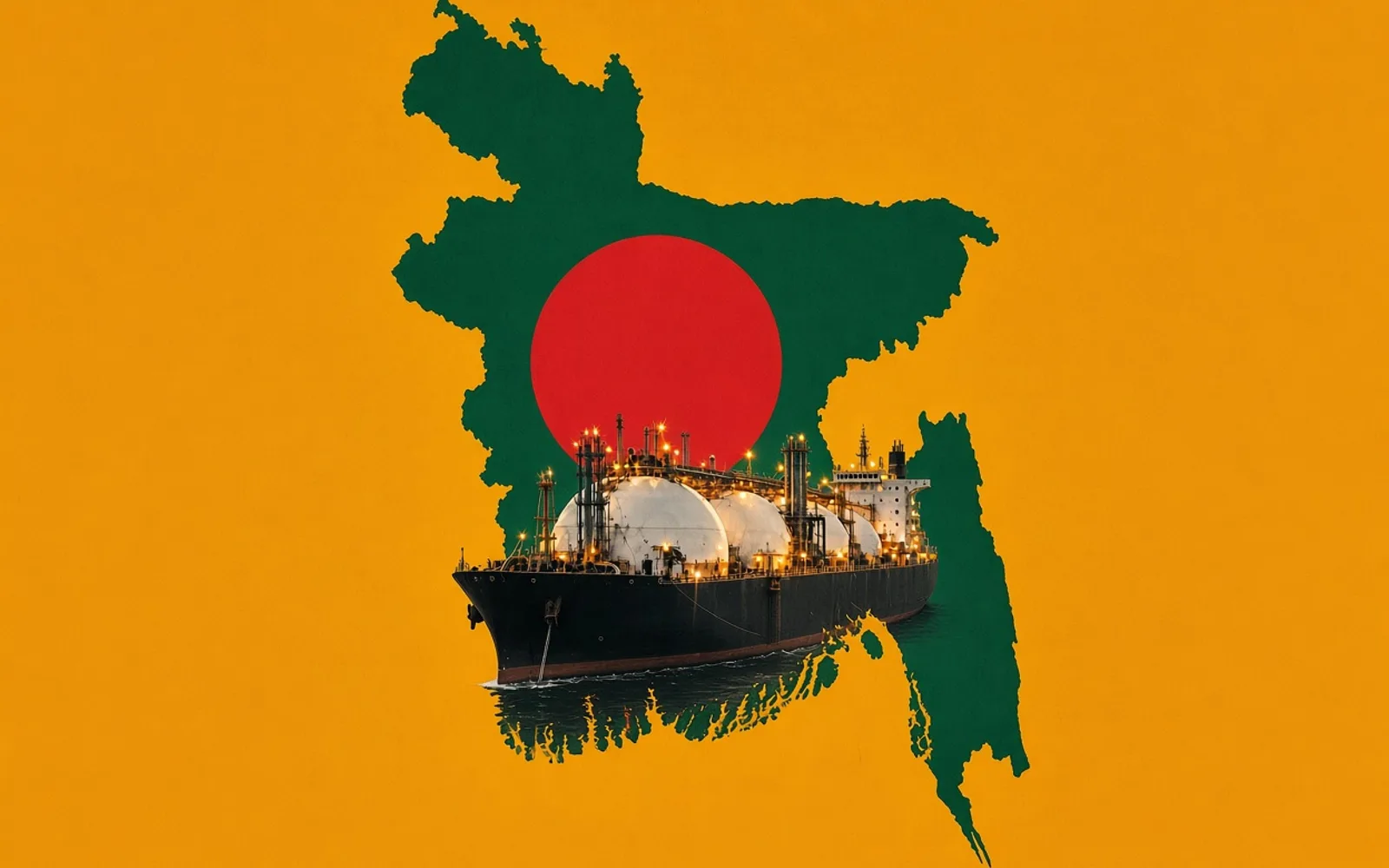
Bangladesh’s gas supply has improved significantly, with regasified LNG supply reaching 980 million cubic feet per day on Monday night. This eases pressure on industries and power generation after weeks of shortages.
In a Nutshell
- Bangladesh’s total gas supply reached 2,582 million cubic feet per day (MMcfd) on Monday night which is the highest since an LNG terminal was damaged by fire on July 21.
- The Excelerate Energy-operated Moheshkhali terminal was supplying 500 MMcfd, while Summit’s terminal was supplying 480 MMcfd.
- The country’s two floating LNG terminals have a combined capacity of 1,100 MMcfd.
- The improved supply is expected to ease gas shortages that have affected industrial production and power generation.
Context
On 21st July 2026, fire damaged a boiler at the Excelerate Energy-operated LNG terminal causing Bangladesh to face a prolonged gas shortage. Since then, supply from the terminal was reduced further as its LNG inventory ran low amid delays in securing additional cargoes. The situation affected industries and power plants that depend heavily on gas.
However, after almost two months, since Monday, 15th September, supply has significantly improved as the terminal increased its output to 500 MMcfd, while Summit’s terminal was supplying another 480 MMcfd.
Why It Matters
The past few weeks have also shown that having enough gas is not only about how much Bangladesh can import, but also how safely and reliably that supply is maintained. Although the latest improvement brings relief, the vulnerability exposed by the disruption still remains.
What We Think
For now, the return of higher LNG supply is good news for factories, power plants and consumers who have been dealing with the effects of the shortage. With both floating terminals now supplying close to their combined capacity, the immediate pressure can be reduced.