What’s Bangladesh conveying to Myanmar over the Rohingya?
Bangladesh will convey its position to Myanmar over a statement disputing the origins and identity of Rohingya refugees in Bangladesh. The exchange comes after years of failed repatriation talks, and as a separate attempt by Malaysia to return Rohingya to Myanmar has raised the same question of whether Myanmar can provide conditions for a safe return.
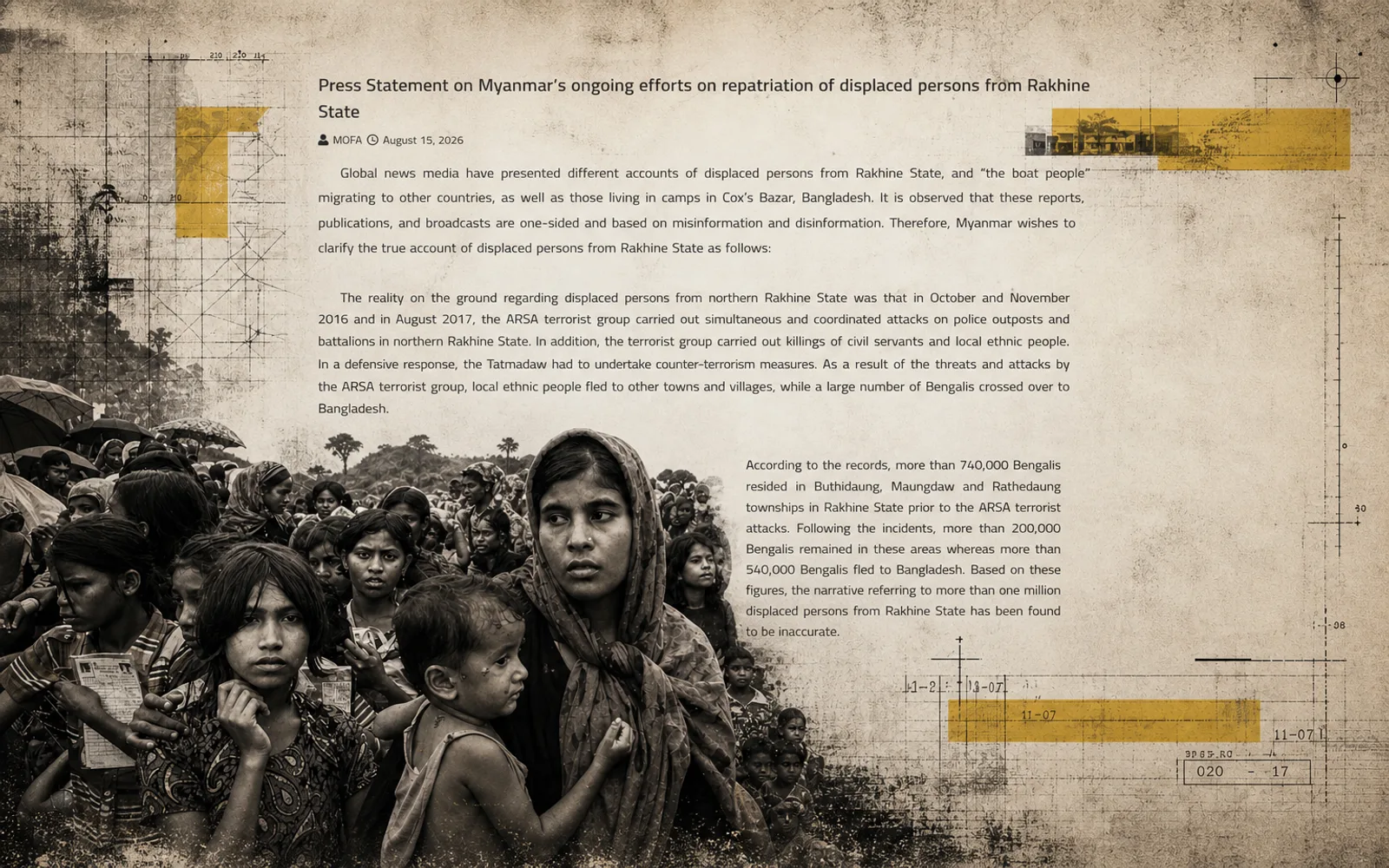
In a Nutshell:
- Bangladesh’s Director General of the Ministry of Foreign Affairs will meet Myanmar Ambassador Kyaw Soe Moe over Myanmar's August 15 statement on Rohingya refugees in Bangladesh.
- Myanmar says 308,797 people from Bangladesh's list have evidence of having lived in Rakhine State, while 113,507 have no such evidence, and 4,241 were linked to terrorism.
- Myanmar says it will receive verified former residents when security improves, while continuing to reject the Rohingya ethnic identity and call them Bengalis
Context
Bangladesh and Myanmar have been negotiating Rohingya repatriation since 2017, after more than 700,000 Rohingya fled Myanmar for Bangladesh that year. Bangladesh has consistently argued that they came from Myanmar and that Myanmar must take responsibility for their return. Myanmar has instead refused to recognise Rohingya as one of its 135 official ethnic groups and calls them Bengalis, a term that implies they are migrants from Bangladesh. The two countries agreed on a repatriation arrangement in 2017, but planned returns in 2018 and 2019 did not take place because refugees did not consider the conditions suitable for going back. UNHCR has maintained that returns must be voluntary, safe and dignified, and later efforts were further disrupted by Myanmar's 2021 coup and renewed fighting in Rakhine. Malaysia has now entered the same debate after its prime minister said Myanmar had agreed to receive 5,000 Rohingya from Malaysia and referred to 300,000 from Bangladesh.
Why it matters
The Rohingya are effectively marooned between two countries, neither of which is willing to fully claim responsibility for them. Bangladesh does not want permanent responsibility for a population it says belongs to Myanmar, while Myanmar's refusal to recognize the Rohingya identity allows it to accept only people it can verify as former residents rather than acknowledge the broader community's claims to belonging, citizenship and the right to live in dignity. The United Council of Rohingya has rejected Myanmar's latest account as an attempt to erase their identity and shift responsibility for their displacement. Malaysia has exposed the practical problem with this arrangement. After Prime Minister Anwar announced Myanmar would receive 5,000 Rohingya, Malaysia later backed out, saying the plan would not proceed if refugees faced persecution or threats to their lives. UNHCR has similarly maintained that return must be voluntary, safe, dignified and sustainable. That leaves the central question unresolved: even if Myanmar agrees to receive people after verification, who guarantees their safety, and what exactly are they returning to?
What we think
Myanmar is likely to defend its latest position without accepting the premise that Bangladesh wants it to accept. It can cite nearly 309,000 verified former Rakhine residents as evidence of its willingness to take people back, while referring to security conditions and disputed identities to limit that commitment. That gives Naypyidaw a way to keep repatriation alive on paper without resolving the question at its heart. Bangladesh, therefore, needs to push the conversation beyond lists and verification. The previous rounds of talks show that getting Myanmar to say who it will accept has never been enough to get refugees home, and Malaysia's latest experience reinforces the point. Unless the discussion reaches citizenship, identity, rights, freedom of movement and credible security guarantees, today's meeting risks becoming another round in the same cycle rather than a route out of it.