Lines of Revolt
4 books about revolutions and regime changes around the world
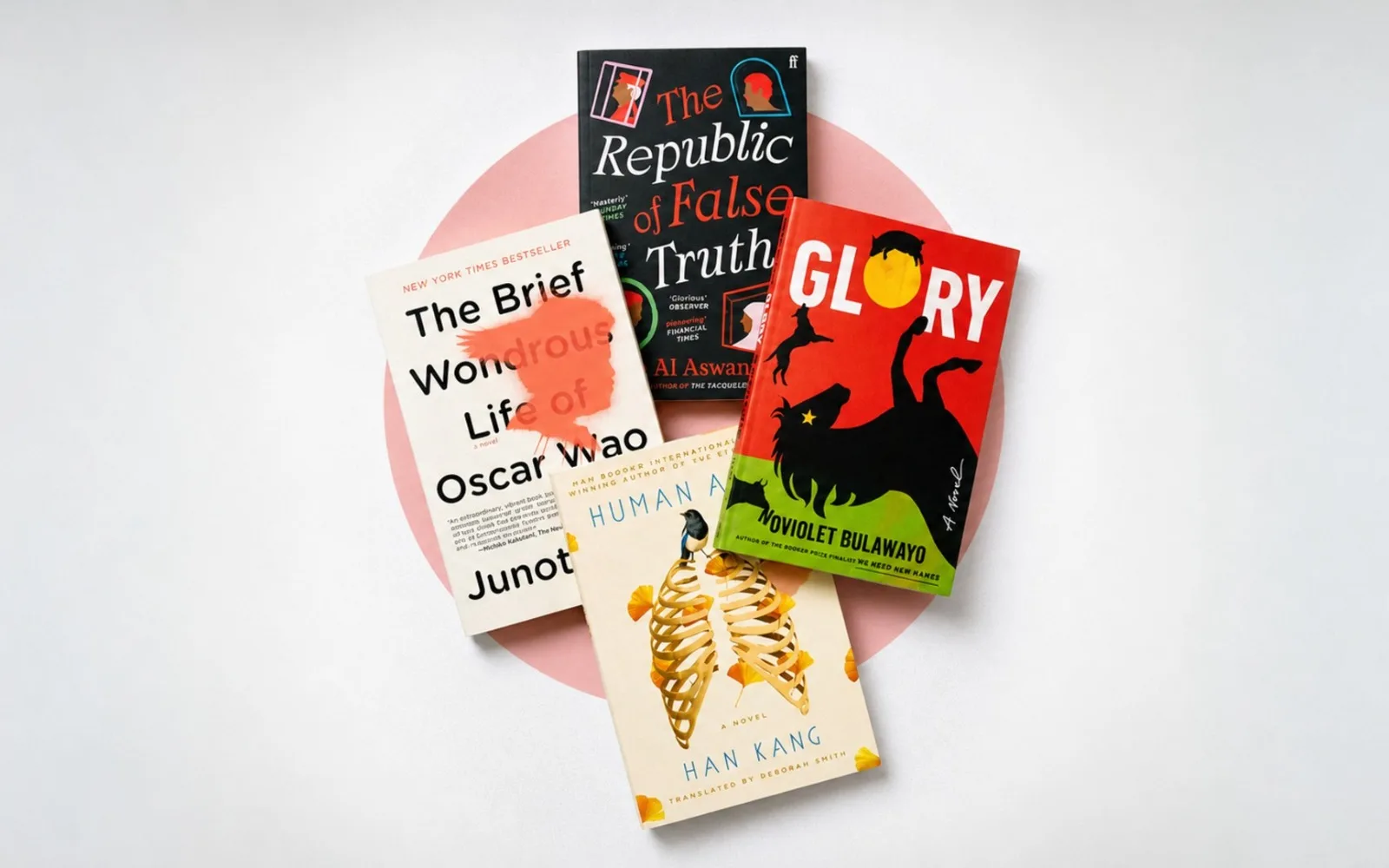
Since the July Revolt in Bangladesh in 2024, there have been some 11 youth-led uprisings around the world, from Morocco to the Maldives, with some, like Nepal and Madagascar leading to a regime change. And here in 2026, India recently a moment of reckoning as the BJP went head-to-head with a movement spearheaded by the Cockroach Janta Party, which resulted in the ousting of the Indian Minister of Education late last month. Headlines and news analyses provide statistics and political context for each of these movements, but to really understand the human nuances, and perhaps to learn from the past, one must turn to historical fiction. Here are five stunning novels you have to check out..
Human Acts by Han Kang
In May of 1980, students in Gwangju, South Korea began protesting martial law imposed by military dictator Chun Doo-Hwan. The protests gained momentum as civilians, incensed by the brutalization of the students by the authorities, formed militia and took over large segments of the city. They were arrested, beaten, raped and killed by the military in a brutal retaliation. The administration at that time banned political activity, shut down universities and ruthlessly suppressed the media, framing the incident as a riot instigated by North Korean sympathizers, setting the official death toll at 165. Only later would painstaking investigations into the events uncover the truth and the extent of the atrocities, and it is now believed that the massacre claimed somewhere between 600-2500 lives. Han Kang approaches this incendiary material like a poet with a scalpel; arranging the narrative as personal essays from multiple perspectives, with the death of a single boy Dong Ho at the center. She manages to turn those casualty numbers back into people, the corpses and bodies back into vessels for life stories in a way that makes reading this an almost physically painful experience, but the readers will come away with a clearer understanding of how and why Yoon Suk Yeol’s attempted coup in 2024 failed so spectacularly.
Glory by NoViolet Bulawayo
Robert Mugabe was a Zimbabwean politician who entered the scene as a revolutionary, leading the African nation into independence, before overstaying his welcome, first as Prime Minister, and then as President. His reign, which spanned some four decades (yes, you read that right) was marked by corruption and human rights abuses. He was eventually deposed in a bloodless coup in 2017, but the aftermath was even more turbulent. NoViolet Bulawayo gives this chapter in history the Animal Farm treatment, creating a narrative that is part allegory, part prose-poem, with the human actors being represented by animals – a device that does little to soften the blows as the story really gets into the graphic details of the viciousness of a fascist government. For a book that is so gut-punchingly violent, it is also darkly funny, which really does a number on the emotions of the reader. For Bangladeshi readers, the cult of the personality that dominated the discourse around Mugabe, and the police brutality inflicted upon ordinary people during the transition of power will find a particularly strong resonance in this book.
The Brief, Wondrous Life of Oscar Wao by Junot Díaz
Robert Mugabe may have had a long reign of terror, but he wasn’t the only one. Rafael Trujillo was a Dominican military officer and dictator who ruled over the Dominican Republic for thirty years, from 1930 until his assassination in 1961. He made liberal use of state terrorism to stay in power, and his regime was one rife with forced disappearances and killings, with estimates for the deaths ranging from 25,000 to 50,000. This doesn’t include the estimated 17,000 to 35,000 Haitians were killed by the Dominican Army under Trujillo's orders in the infamous Parsley massacre, which continues to affect Dominican-Haitian relations to this day.
There’s no easy way to tell this story, so Junot Diaz takes the speculative route with the story of Oscar Wao, a fictional overweight Dominican American youth plagued by a family curse. A nerdy young man with an obsession for sci-fi and comics, he is desperate for love, but his Alpha geekdom, lack of social skills and his immense weight prove to be a deterrent to all his prospective love interests. The story is narrated in the first person by a mysterious entity whose identity is revealed towards the final quarter of the novel, and the narrator slots in the misadventures of our hapless protagonist with family lore, and this is where the Dominican Republic’s bloody history is teased in. Trujillo makes an appearance in the story but his representation is limited to descriptions that come from the narrator’s perspective. Diaz creates irony using this strong dictator as a minor character and focusing on the characters that would have otherwise been marginalized.
While the history will break your heart, there’s something undeniably cool about the way the author weaves pop culture, Dominican slang and bucket-loads of black humour to turn tragedy into triumph, and this makes it an unforgettable read.
The Republic of False Truths by Alaa Al Aswany
The Egyptian Revolution, which is considered to be one of the notable uprisings of the Arab Spring in the early 2010’s, began in January of 2011. What began (as is typical of these things) as a series of peaceful protests, strikes and acts of civil disobedience, quickly turned bloody as armed forces were deployed to quell the resistance and violent clashes between security forces and protesters resulted in at least 846 people killed and over 6,000 injured. President Hosni Mubarak was forced to step down, but what felt like a victory of the people at the time slowly became something else with crackdowns and a failed election and counter-revolution that ended with a military coup and shaped the Egyptian politics and policies we see today.
Alaa al-Aswany, one of the founders of the very real Enough! movement (referenced in the novel), brings a fictionalised account of the failed coup of 2011, and its appalling aftermath in this bold novel. We meet the key players of the administration that merit the revolution in the first place, described with a satirist’s eye for caricature. These chapters are juxtaposed between the idealistic email correspondences between the revolutionaries and harrowing first-hand accounts by the torture victims later on, that require almost no embellishment.It is a powerful, heart-breaking and cynical book, as can only come from an author exiled for wanting better for his people. Readers in Bangladesh will find much in common with our recent history.