Bangladesh to Build Police Academy and Jail on Reclaimed Chattogram Land
Reading
In a Nutshell
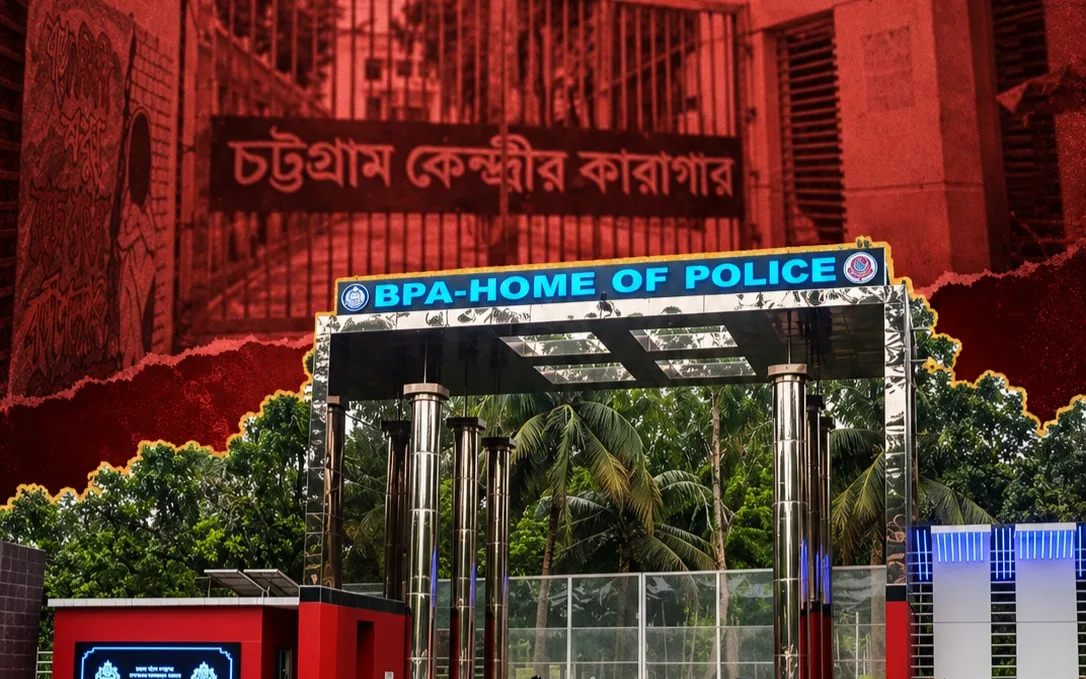
- Home Minister Salahuddin Ahmed said the government will build a police academy at Jangal Salimpur in Chattogram, modelled on the Bangladesh Police Academy in Sardah, Rajshahi.
- About 300 acres have been set aside for the academy, on government khas land. The authorities plan to recover and clear it of criminal activity.
- Chattogram Central Jail will move to a separate 72-acre site in Jangal Salimpur. The minister said people living on the land unlawfully would be rehabilitated.
- Two army camps under the 10 Infantry Division in Ramu will be set up in the hills around the Rohingya camps, including Rangikhali and Noakhalipara, to curb kidnapping for ransom.
- Camp security will be upgraded with repaired fencing, solar lighting, CCTV cameras and watchtowers.
- The Armed Police Battalion (APBN) will step up joint operations inside the camps against drugs, online gambling, human trafficking and armed groups. Around 400 APBN sub-inspectors have been given legal authority to investigate cases.
- The minister said Rohingya repatriation could happen quickly with international support and coordinated UN action.
Context
Jangal Salimpur is a large stretch of hilly government land in Chattogram that has been occupied illegally for years and has long been associated with land-grabbing and criminal activity. The government now wants to use it for two state institutions, a police academy and a central jail.
In Cox's Bazar, more than a million Rohingya live in crowded camps. Kidnappings for ransom in the surrounding hills, drug trafficking and the presence of armed groups have been reported repeatedly. No Rohingya have been repatriated since the 2017 exodus despite several attempts, and much of Rakhine State is now controlled by the Arakan Army rather than Myanmar's government.
Why It Matters
Both announcements show the state trying to take back ground it has lost, physically in Chattogram and in terms of control around the camps. Putting a police academy and a jail on land long held by illegal occupants is a statement of authority as much as a building project. It also brings a major police institution closer to the country's main port and its southeastern border. But land recovery rarely goes smoothly. How the government treats the people already living in Jangal Salimpur will determine whether this is seen as restoring order or as an eviction.
In the camps, the measures point to a tougher security approach: soldiers nearby, surveillance inside, and more police with powers to investigate. That may reduce kidnappings and trafficking.
It also means a refugee population under heavier watch, most of whom have nothing to do with crime. The minister's optimism on repatriation is harder to square with conditions in Rakhine, where the authority Bangladesh would need to negotiate with is no longer clearly Myanmar's government.
What We Think
Security works best when people can see that it is fair. At Jangal Salimpur, the government should publish who qualifies for rehabilitation and where they will go before the bulldozers arrive, not after. In the camps, more soldiers and cameras will only build trust if abuses by security forces can be reported and are punished, and if ordinary refugees are not treated as suspects.
The new academy is also a chance to train police differently, in trafficking cases, cybercrime and crowd control that does not rely on force. On repatriation, Dhaka would be better served by honesty than by optimism. Returns will not be quick while Rakhine is a war zone, and saying so plainly would strengthen Bangladesh's case for sustained international support.