The word Bangladesh still won’t say
The debate over ethnic identity in the Chittagong Hill Tracts goes back to the founding of Bangladesh. While the country initially emphasised Bengali nationalism, many CHT communities did not identify as Bengali.
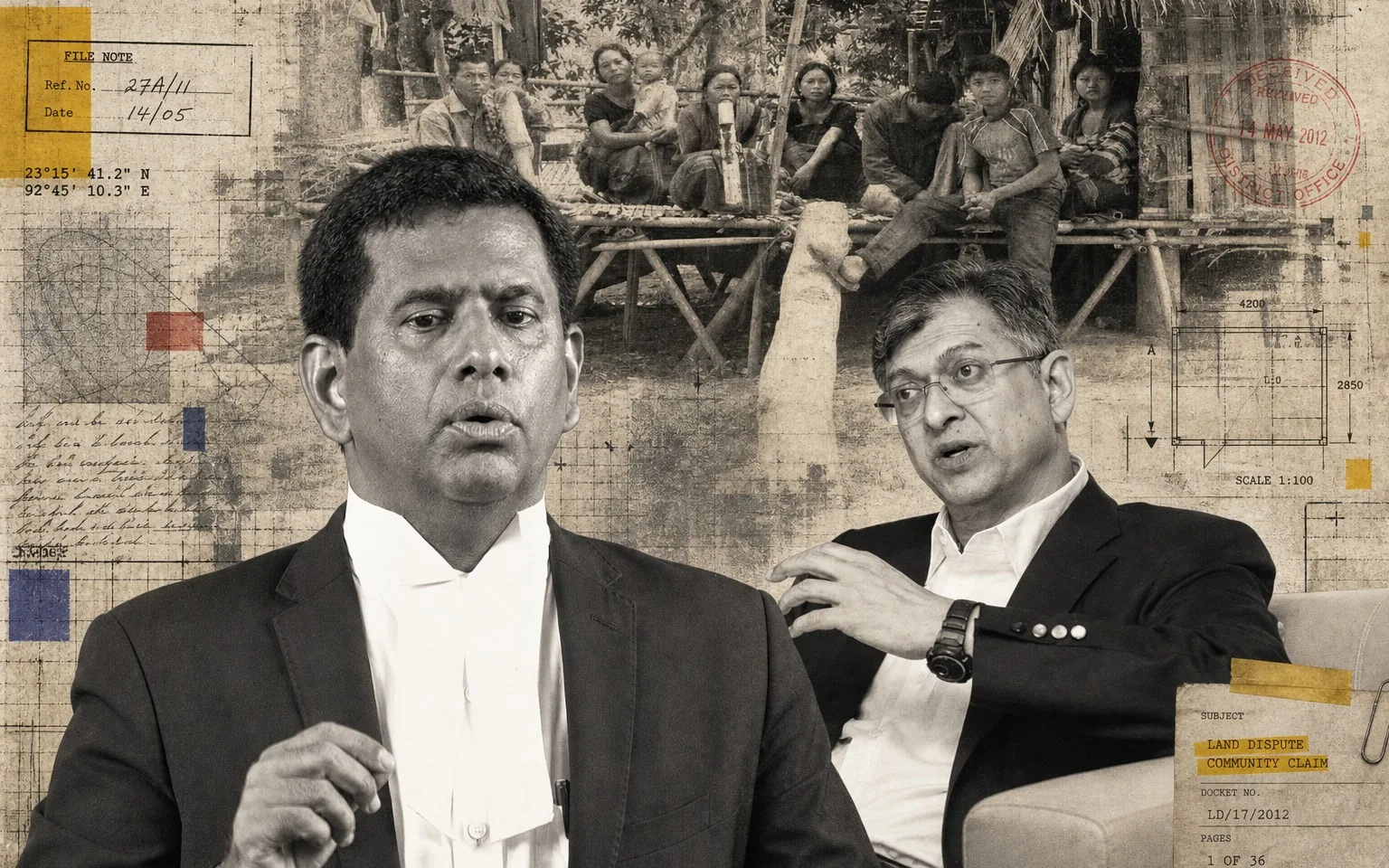
In a Nutshell:
- Home Minister Salahuddin Ahmed has rejected the term “indigenous” for ethnic communities, arguing that everyone in Bangladesh shares the national identity of “Bangladeshi.”
- Former ICT Chief Prosecutor Tajul Islam has linked recognition of CHT communities as indigenous to concerns over territorial control and foreign influence.
- Salahuddin cited Bangladesh’s abstention from the 2007 UN Declaration on the Rights of Indigenous Peoples (UNDRIP), although UNDRIP is non-binding and does not establish a general right to secession.
- The state has long avoided formally using “indigenous,” with the 2011 constitutional amendment instead referring to “tribes, minor races, ethnic sects and communities.”
Context
On 15 February 1972, a delegation of 17 Jumma leaders from the CHT, led by M.N. Larma (then a member of parliament) and Mong Chief Maung Prue Sein Chowdhury, met Sheikh Mujibur Rahman at his official residence in Dhaka. They submitted a four-point memorandum demanding autonomy for CHT, retention of the 1900 CHT Regulation, preservation of the traditional authority of the Chakma, Mong, and Bohmong kings, and a ban on outside settlement without local consent. Mujib rejected the demands outright. Sources record his response in several closely related versions: “All the people of Bangladesh are Bengalis. There is no reason to deny this truth. So forget about autonomy, go home, and become Bengalis. Larma is widely quoted pushing back against this framing, both in that meeting and later in parliament during constitutional debates: “I am a Chakma… A Chakma can never be a Bengali. I am a citizen of Bangladesh — Bangladeshi. You are also Bangladeshi but your national identity is Bengali… they (indigenous peoples) can never be Bengalis.” The later shift toward Bangladeshi nationalism placed citizenship, rather than ethnicity, at the centre of national identity. Yet disputes over identity, land and political representation continued. The 1997 CHT Peace Accord created a framework for regional governance, land management and greater political participation, but its implementation remains contested. The 2011 constitutional amendment also avoided the term “indigenous,” using categories such as “tribes” and “ethnic communities.” The current government is therefore continuing a long-standing state position, but with a stronger focus on sovereignty and security. Tajul Islam has also further framed the issue in geopolitical terms, focusing on the CHT and its borders with India and Myanmar. At the same time, Bangladesh's international messaging has been more nuanced, with the government telling the UN in April 2026 that it was pursuing implementation of the Peace Accord and principles related to participation and land rights.
Why it matters
“Indigenous” is not simply a question of terminology. For CHT communities, recognition is connected to identity, land, political representation, culture and the implementation of the Peace Accord. For the state, the issue raises concerns about territorial integrity and whether collective rights could eventually strengthen demands for greater autonomy. But equating indigenous rights with separatism risks oversimplifying the issue. UNDRIP recognises rights to self-determination, culture, participation and land, while also stating that it does not authorise actions undermining the territorial integrity of sovereign states. The bigger risk for Bangladesh may be alienation rather than immediate separatism. If communities feel their identity is being treated as a threat to sovereignty, existing grievances may become harder to resolve. It also creates a credibility challenge if Bangladesh presents itself internationally as implementing the Peace Accord while domestic rhetoric increasingly frames indigenous recognition as a security threat.
What we think
CHT has always been a complex issue but Bangladesh does not have to choose between national sovereignty and minority rights. One Bangladeshi citizenship can coexist with different ethnic, linguistic, cultural and historical identities. Recognising Indigenous identity does not automatically mean endorsing secession. The more important task is addressing the issues underlying the terminology: land disputes, political representation, and the full implementation of the CHT Peace Accord. Ultimately, “Bangladeshi” and “Indigenous” do not have to be competing identities. One describes citizenship; the other can describe history, culture and collective identity.