Democracy endures by managing disagreement, says US Ambassador
US Ambassador Brent T. Christensen said democracy survives through institutions that manage disagreement, while Law Minister Mohammad Asaduzzaman said Bangladesh shares key constitutional principles with the United States and remains committed to rights, rule of law and constitutional governance.
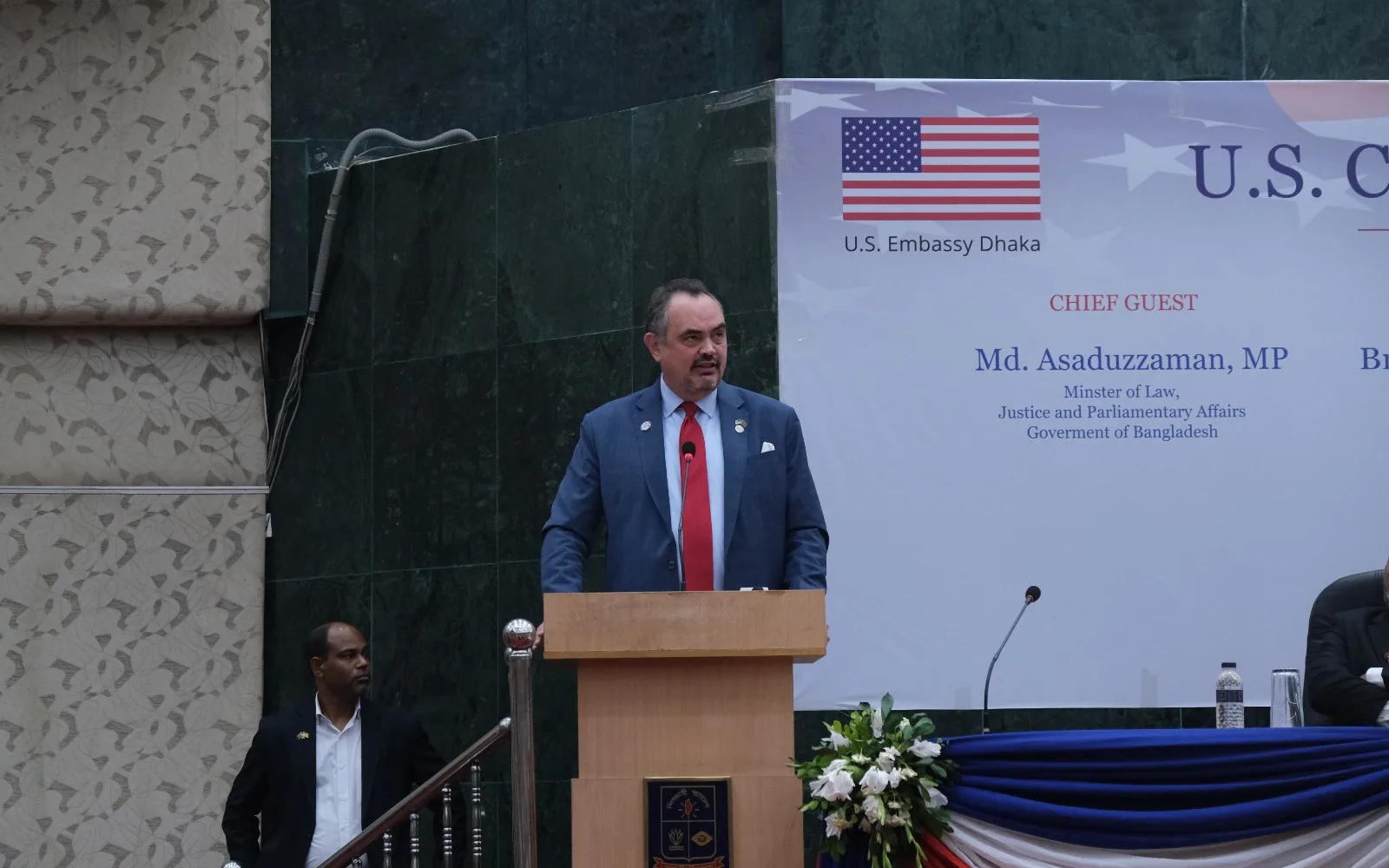
US. Ambassador Brent T. Christensen on Thursday said the durability of a democracy depends not on eliminating disagreement, but on building institutions capable of accommodating it.
Speaking at a U.S. Constitution Day programme at Dhaka University’s Nabab Nawab Ali Chowdhury Senate Bhaban, Christensen said the U.S. Constitution was born out of intense argument, compromise and division among delegates in Philadelphia in 1787.
“What made that Constitution exceptional wasn't that the delegates agreed on everything. It's that they built a system that did not require them to agree on everything,” he said.
The ambassador highlighted separation of powers, judicial independence and checks and balances among the legislature, executive and judiciary, saying these arrangements were designed to prevent any individual, faction or temporary majority from acquiring total control.
“It wasn't designed for efficiency… It was designed for durability,” he said.
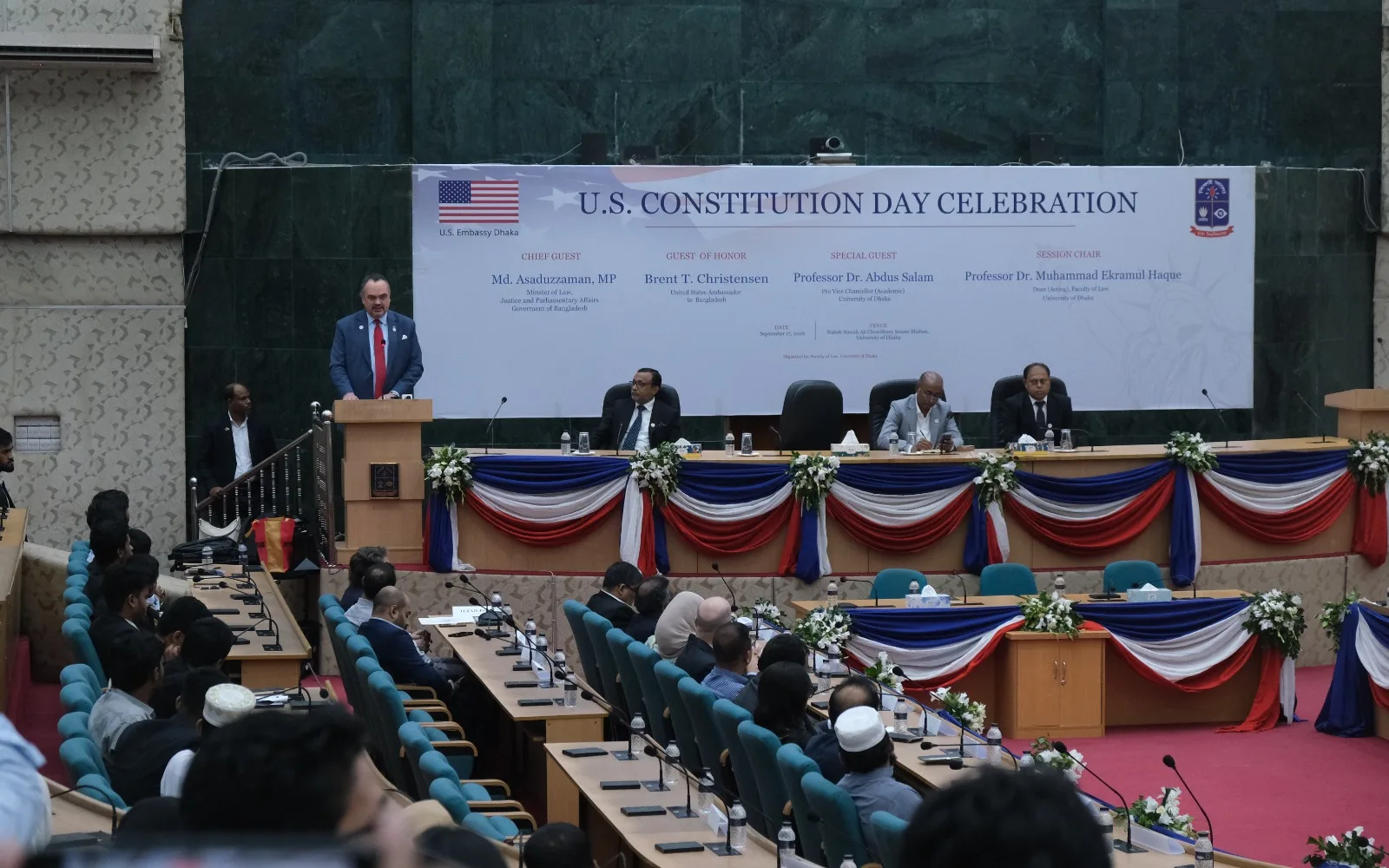
Christensen noted that the U.S. Constitution has been amended 27 times, arguing that its capacity to adapt, not rigidity or perfection, has helped it endure for nearly two and a half centuries. The U.S. Constitution was signed on September 17, 1787, while the United States is marking the 250th anniversary of its 1776 Declaration of Independence this year.
Drawing a parallel with Bangladesh, he said the country’s 1972 Constitution was also framed after a struggle for independence and sacrifice, requiring its makers to reconcile competing visions for a new state.
“Bangladesh also knows something about the hard work of constitution-making,” he said, adding that debates on judicial independence, separation of powers, religious freedom and political consensus were integral to democratic development.
Law, Justice and Parliamentary Affairs Minister Mohammad Asaduzzaman, also speaking at the event, said Bangladesh’s Constitution shared several principles with the U.S. framework, particularly the idea of popular sovereignty reflected in the phrases “We the People of the United States” and “We, the people of Bangladesh.”
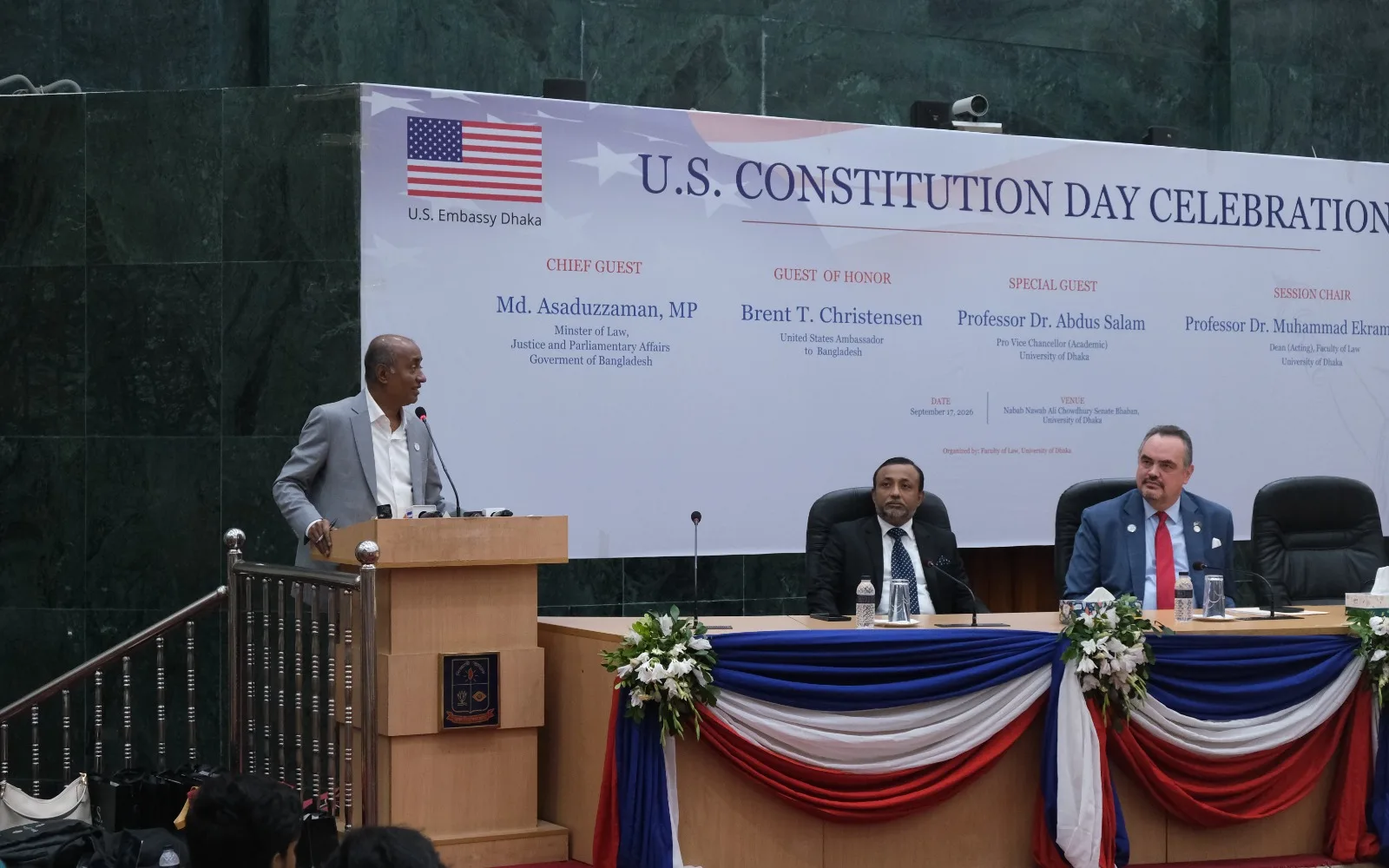
He said democracy, freedom of expression, association and assembly were among the constitutional values that Bangladesh had adopted, and referred to Marbury v. Madison, the 1803 U.S. Supreme Court decision associated with judicial review.
Asaduzzaman said Bangladesh’s Supreme Court exercises comparable constitutional jurisdiction under Article 102, while constitutional questions remain subjects of discussion among lawyers, academics and ordinary people across the country.
The minister alleged that more than 4,500 political activists were killed in “crossfire” and around 700 people were forcibly disappeared during the previous regime, and claimed that political persecution had affected more than six million BNP supporters.
He said the government had adopted a “zero tolerance” policy against enforced disappearances and extrajudicial killings and had strengthened the National Human Rights Commission framework to improve protection of citizens’ rights.
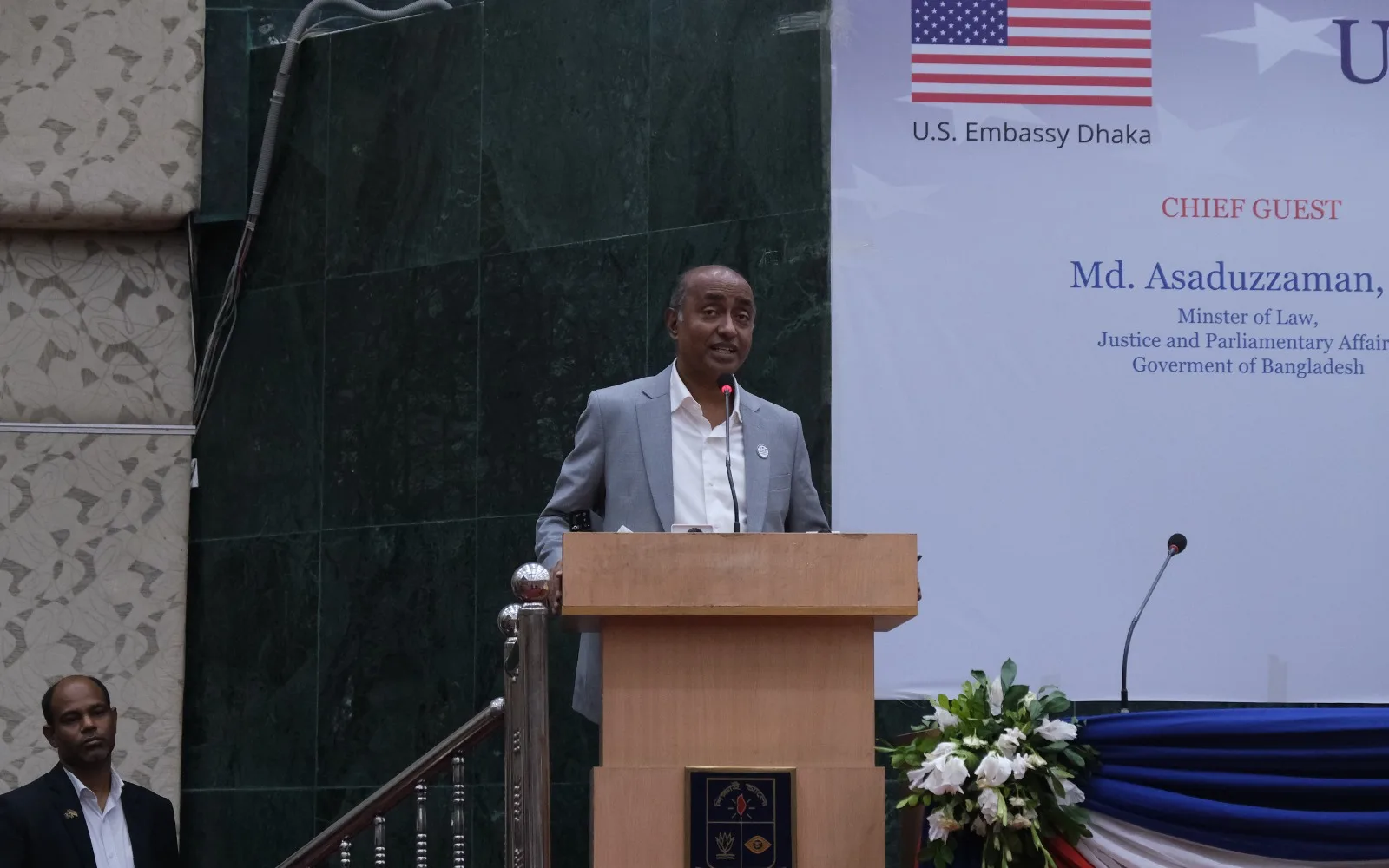
The event, organised with Dhaka University’s Faculty of Law, included a public ceremony, panel discussion, essay competition, quiz contest and an American Founders Museum exhibition. Dhaka University had announced the September 17 programme in collaboration with the U.S. Embassy.