26 Blasts, 9 Vehicle Fires, 1 Train Arson Hit Dhaka in Four Days
A string of crude bomb blasts, vehicle fires, and a train arson has rattled Dhaka over the past four days, pushing police to flood the city with checkpoints as they probe possible political motives behind the unrest.
The Nutshell
- Dhaka recorded at least 26 crude bomb ("cocktail") blasts, nine vehicle fires, and one train arson between September 18 and September 21, with the trouble spilling across several neighborhoods rather than staying confined to one area.
- The unrest actually began on September 15, within hours of an International Crimes Tribunal (ICT) verdict — a bus went up in flames in Mohammadpur, a crude bomb exploded just outside the Supreme Court, and three more detonated on the Dhaka University campus.
- Blasts kept coming on September 18 and 19, hitting Malibagh, Mohakhali, Jatrabari (where a rickshaw driver was injured), Postogola, Shankar, Shapla Chattar, Kamalapur, Shahbagh, and Lalbagh.
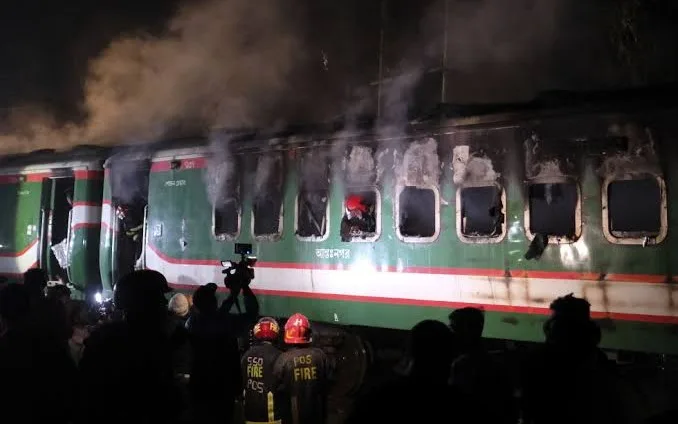
- By September 20 and 21, arsonists had moved on to a seized pickup truck burned outside South Keraniganj Police Station and buses torched in Mirpur, Badda, and Kadamtali. On the night of September 20, a carriage of the Netrakona-bound Haor Express was also set ablaze while it sat waiting at Kamalapur Railway Station.
- The Detective Branch has picked up four active Awami League members over the Jatrabari blasts, recovering four unexploded cocktails from them in the process.
- The Dhaka Metropolitan Police (DMP) has thrown up more than 200 checkpoints across the city, pulling in regular police, the Detective Branch, Counter Terrorism and Transnational Crime (CTTC), and the Armed Police Battalion to help contain the fallout.
Context
These attacks trace back to rising political tension after the September 15 ICT ruling, which sentenced Awami League General Secretary Obaidul Quader and six other senior leaders to death for crimes against humanity committed during the July Uprising.
The first blast went off roughly an hour after the verdict was announced. Two days later, on September 18, crude bombs were being hurled from flyovers in Malibagh and Mohakhali, kicking off a run of explosions and transport fires that continued for the next three days. Most of the bombs went off without hurting anyone, and the train fire caused no injuries either — but public transit vehicles still took a real beating. Investigators now suspect sabotage in the train fire, pointing to signs that an accelerant like petrol or gunpowder may have been used to set it off.
(Note: A separate explosion at an Ashulia factory on September 20, which killed six people and injured at least 20 after LPG cylinders detonated inside a covered van, is being treated as an industrial accident and hasn't been linked to the Dhaka incidents.)* Why It Matters The spread of these incidents across Dhaka suggests a deliberate strategy of scattered, localized disruption rather than one concentrated strike. Transport hubs — Mirpur, Badda, Kadamtali, major road intersections, and railway points like Kamalapur — bore the brunt of the fires and explosions, hinting at a clear target on the city's mobility.
Why It Matters
The spread of these incidents across Dhaka suggests a deliberate strategy of scattered, localized disruption rather than one concentrated strike. Transport hubs — Mirpur, Badda, Kadamtali, major road intersections, and railway points like Kamalapur — bore the brunt of the fires and explosions, hinting at a clear target on the city's mobility.
Police have already tied the four Jatrabari suspects to the Awami League, linking at least that specific set of attacks to a party currently barred from political activity.
What We Think
This isn't an unfamiliar playbook — crude bombs and public transport arson have long been tools the Awami League has reached for during stretches when it's been out of power.
What the government is dealing with, then, is less a mystery and more a familiar tactic resurfacing at a familiar moment. If the scattered attacks keep coming, the real strain will be on law enforcement, which will need to sustain a heavy citywide presence for the foreseeable future. And even when individual blasts do limited physical damage, the repeated disruption to buses and trains adds up.