Dhaka’s New Pink Buses Aim to Make Travel Safer for Women
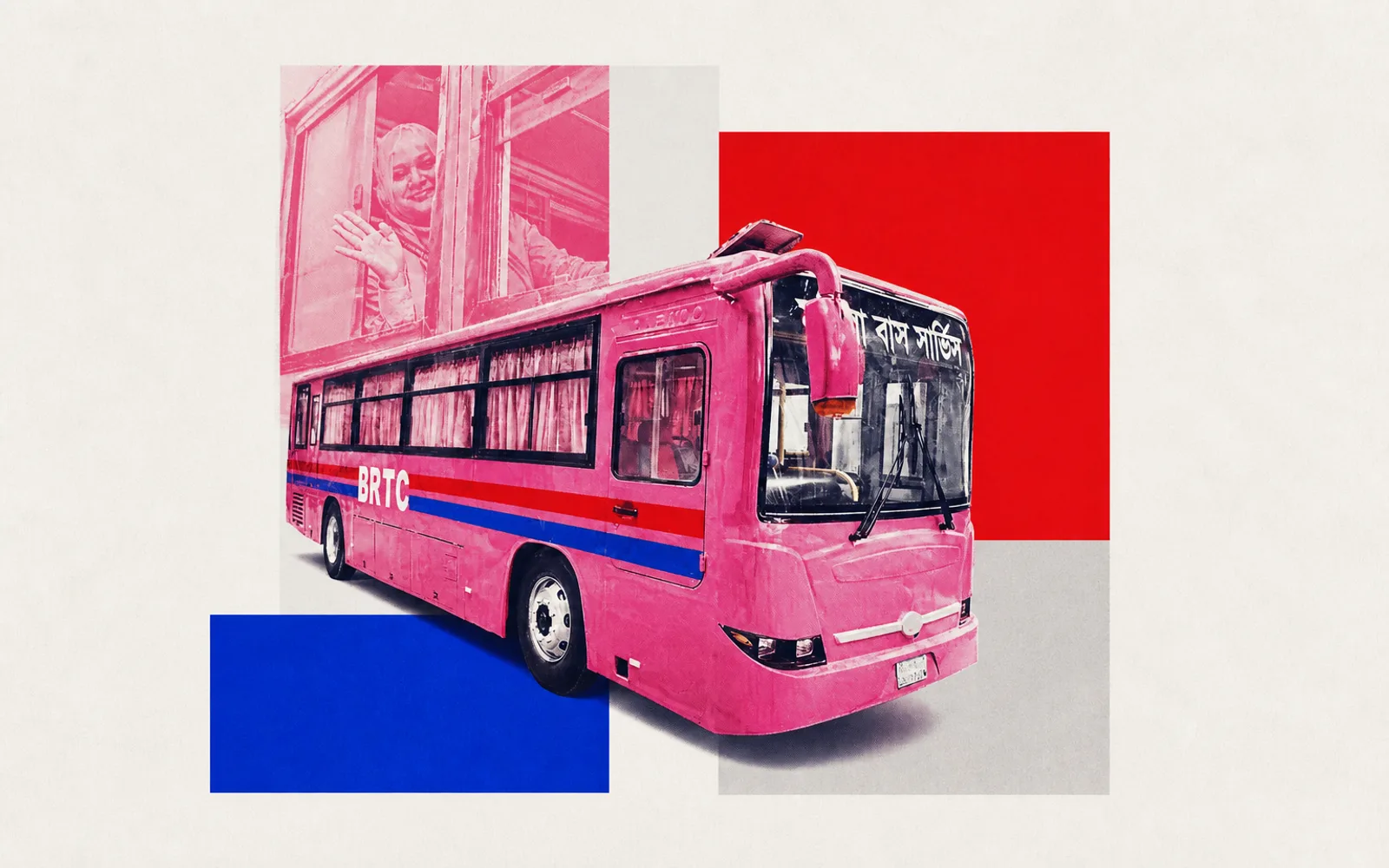
The government has launched 10 women-only Pink Buses in Dhaka, with four more planned for Bogura and Chattogram. The service follows months of promises beginning with the BNP's February election manifesto and a March directive from Prime Minister Tarique Rahman, but the launch also raises a bigger question: does separating women from male passengers make public transport safer if the roads, bus stops and wider law enforcement remain unsafe?
In a Nutshell:
- The BNP promised women-only buses in its February 6 election manifesto, and Tarique Rahman reaffirmed the pledge on March 2, setting a 180-day target for the service.
- On March 4, the government said BRTC would operate women-only buses with female drivers, conductors and helpers, but BRTC then had only 16 female drivers, six with heavy vehicle licences and none driving buses.
- A May 20 discussion jointly organised by DTCA's Bus Route Rationalisation Project and Bangladesh Nari Sangbadik Kendra found that women face harassment and insecurity throughout their journeys, from boarding buses to reaching destinations.
- The government launched 10 buses in Dhaka today, with four more planned for Bogura and Chattogram, following its announcement of nine buses on eight Dhaka routes in its 180-day action plan.
Context
Women-only buses are not new to Bangladesh, and the current service grew out of an existing BRTC women's bus operation that authorities considered too limited. The latest plan moved from a manifesto pledge to a March government directive, then to a May transport action plan and a June budget announcement before today's launch. The documented delay included a shortage of qualified female bus drivers, with BRTC needing to train and license women for heavy vehicles.
Why it matters
At the DTCA-backed discussion in May, participants called for safer bus stops, pavements, lighting, enforcement and accountability because harassment and violence is experienced not just in buses but also outside of them. It can happen while waiting at a stop, on the road, or on poorly lit routes to bus stops. So, while the government has initiated an important service with buses run by women, for women, it also needs to consider implementing measures that women have already called for. The wider BNP transport plan has promised CCTV, an Intelligent Transport System, route reform, and an independent Metropolitan Transport Authority, but these still remain far off in the future, with some in the planning stage.
What we think
The government has not publicly explained whether today's BRTC buses were newly procured or refurbished existing vehicles, what vehicle fitness checks were conducted, or what maintenance standards will apply. And beyond Pink Buses and Family Cards, what concrete measures are making it easier for women to work, study, travel and move around independently? A women-only bus may provide a useful option, but it should not become a substitute for making ordinary public space safe enough that women do not need one.