Dhaka’s UN Week
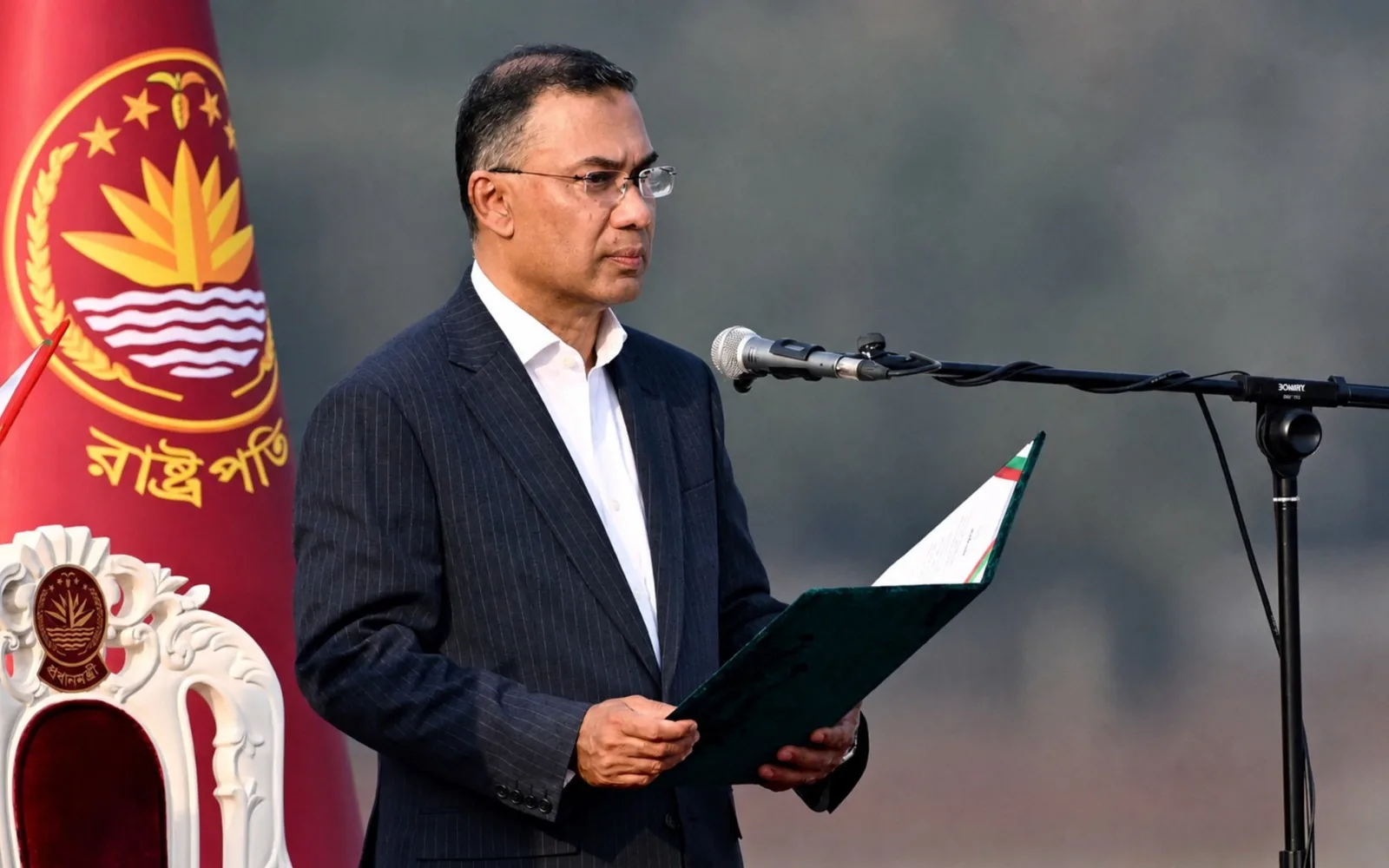
Tarique Rahman's first appearance before the UN General Assembly as an elected head of government carries two structural facts that reshape everything else on the calendar: Bangladesh is not just attending this session, it is presiding over it. We analysed the Prime Minister’s UN schedule and this is what we can expect.
The Rohingya Track: Managing a Deteriorating File
The Rohingya cluster, the call with Myanmar special envoy Julie Bishop, the CR-11 side event on durable solutions and accountability, and the calls with UNHCR's Volker Turk and High Commissioner for Refugees Barham Salih, is the substantive core of the week. Nine years after the 2017 exodus, repatriation has effectively stalled. Myanmar had verified only around 354,000 of the 829,000 refugees Bangladesh has formally submitted for return, and the junta says the process cannot start while civil war continues in Rakhine. Compounding this, the armed group now controlling most of Rakhine, the Arakan Army, has been documented by the UN Human Rights Office and Human Rights Watch committing its own mass killings and forced labor against Rohingya, meaning Dhaka's traditional talking point now has to accommodate a second, non-state persecutor with de facto territorial control. Expect Rahman's language to shift from repatriation as the sole solution toward justice and accountability framing that names the Arakan Army directly. The realistic outcome is rhetorical reinforcement, not a breakthrough.
Economic Diplomacy: Locking In the Tariff Win, Managing a New Threat
The World Bank meeting with Ajay Banga and the Wall Street breakfast hosted by JP Morgan sit against a real backdrop. Bangladesh signed a reciprocal trade agreement with Washington in February 2026 cutting the US tariff on Bangladeshi goods from 20 percent to 19 percent, with a mechanism for zero tariff treatment on garments made with US cotton, in exchange for opening Bangladesh's market to roughly 7,100 US tariff lines. A new complication has since emerged: Washington separately imposed a 10 percent forced labor tariff tied to raw material sourcing, pushing total duties on Bangladeshi garment exports to roughly 25.6 percent. Expect the World Bank and Wall Street conversations to focus on financing for export diversification and pressing for relief on that additional tariff, since garments remain Bangladesh's largest foreign exchange earner.
The Regional Chessboard and the Deliberate Absence of India
The Pakistan bilateral with Shehbaz Sharif is the most politically loaded meeting on the calendar, and it sits inside a larger, very deliberate repositioning. Since taking office, Rahman's government has pursued a forward looking relationship with Islamabad, resuming direct flights, easing visas, and exploring defense procurement, as part of a "Bangladesh First" doctrine that ends the pro India tilt of the Hasina years . Rahman's own first foreign trips went to Malaysia and China rather than India, producing infrastructure and economic zone agreements with Beijing that Delhi read as a reset rather than a rupture . India's total absence from this itinerary is not an oversight, it is policy. A state minister for foreign affairs recently described India publicly as "just another country," and officials have confirmed there is no possibility of a Rahman visit to Delhi around this session. This matters for three reasons. First, it signals that the government elected in February is willing to let the historically central India relationship cool in public, at least rhetorically, even as normalization proceeds through quieter technical channels on water sharing and border issues. Second, it removes any chance of the Assembly week producing a high profile India Bangladesh moment that could reassure investors and security planners on both sides who worry about drift. Third, it leaves Bangladesh's Pakistan and China outreach unbalanced by any comparable gesture toward Delhi, which sharpens the impression, whether accurate or not, that Dhaka is tilting toward Islamabad and Beijing rather than pursuing genuine non alignment. Analysts have already flagged that without a Trump meeting or clear economic wins, and without any India counterweight, the visit risks looking more symbolic than substantive .
The UN Presidency: The Missing Frame for the Entire Trip
The single most consequential fact absent from the programme is that Bangladesh's own former foreign minister, Khalilur Rahman, is currently President of the 81st session of the UN General Assembly, having defeated Cyprus's candidate in a contested secret ballot, 99 votes to 91, on June 2, 2026, and taken office on September 8. He is only the second Bangladeshi ever to hold the post, after Humayun Rashid Choudhury in 1986 to 1987, and he reportedly stepped down as foreign minister to take up the full time role of presiding over the 193 member body for a one year term. This is not a minor honorific. It means that for the duration of this General Debate, the person gaveling open sessions, setting the tone for the year ("restoring trust, managing transformation"), and formally welcoming every head of state to the podium is a Bangladeshi official. That gives Rahman's delegation a structural advantage no schedule line can capture: home field credibility inside an institution most small and middle powers experience as a guest. It plausibly explains why Bangladesh's own bilateral roster this week leans toward smaller and mid tier states (Bhutan, Haiti, Croatia, Thailand) rather than great power sit downs, since the government may be calculating that visibility and standing this year come less from courting major powers bilaterally and more from the reflected prestige of having produced the Assembly's president. It also raises a subtler point of protocol: any friction between Dhaka's national interests (on Rohingya, on tariffs, on Kashmir adjacent regional dynamics involving Pakistan) and Khalilur Rahman's obligation to preside with "fairness, independence and integrity" over all 193 member states creates a genuine, if quiet, tension that the official programme does not acknowledge at all.
Talking Points and Realistic Expectations
Bangladesh's own foreign secretary has previewed the General Debate speech's themes: democratic transition, rule of law, accountability, climate change, economic cooperation, youth and women's empowerment, and the Rohingya crisis . Expect Rahman to lean heavily on the "New Bangladesh" and "Bangladesh First" framing that his government has been testing domestically since the February election, positioning this as the country's first genuinely elected voice at the UN since the 2024 uprising. The most tangible deliverables likely come from the economic track, since those conversations map onto ongoing negotiations rather than open ended goodwill. The Rohingya and climate tracks will generate visibility but no structural change, because the real levers, Myanmar's internal conflict and global climate finance architecture, sit outside anything Bangladesh can resolve bilaterally this week. The China and Pakistan tilt, paired with India's total absence, consolidates a foreign policy repositioning already set in motion earlier this year rather than launching anything new. And the UN presidency, unmentioned in the programme, is arguably the single biggest asset this delegation has going into the week, even though it belongs to a Bangladeshi who technically now answers to the whole Assembly rather than to Dhaka alone.