Surviving the city
Dhaka’s rapid expansion has erased many of the natural systems that once absorbed monsoon rainfall, while climate migration and rising heat are deepening the city’s vulnerabilities. Restoring wetlands, canals and integrated urban governance could help make the capital more liveable.
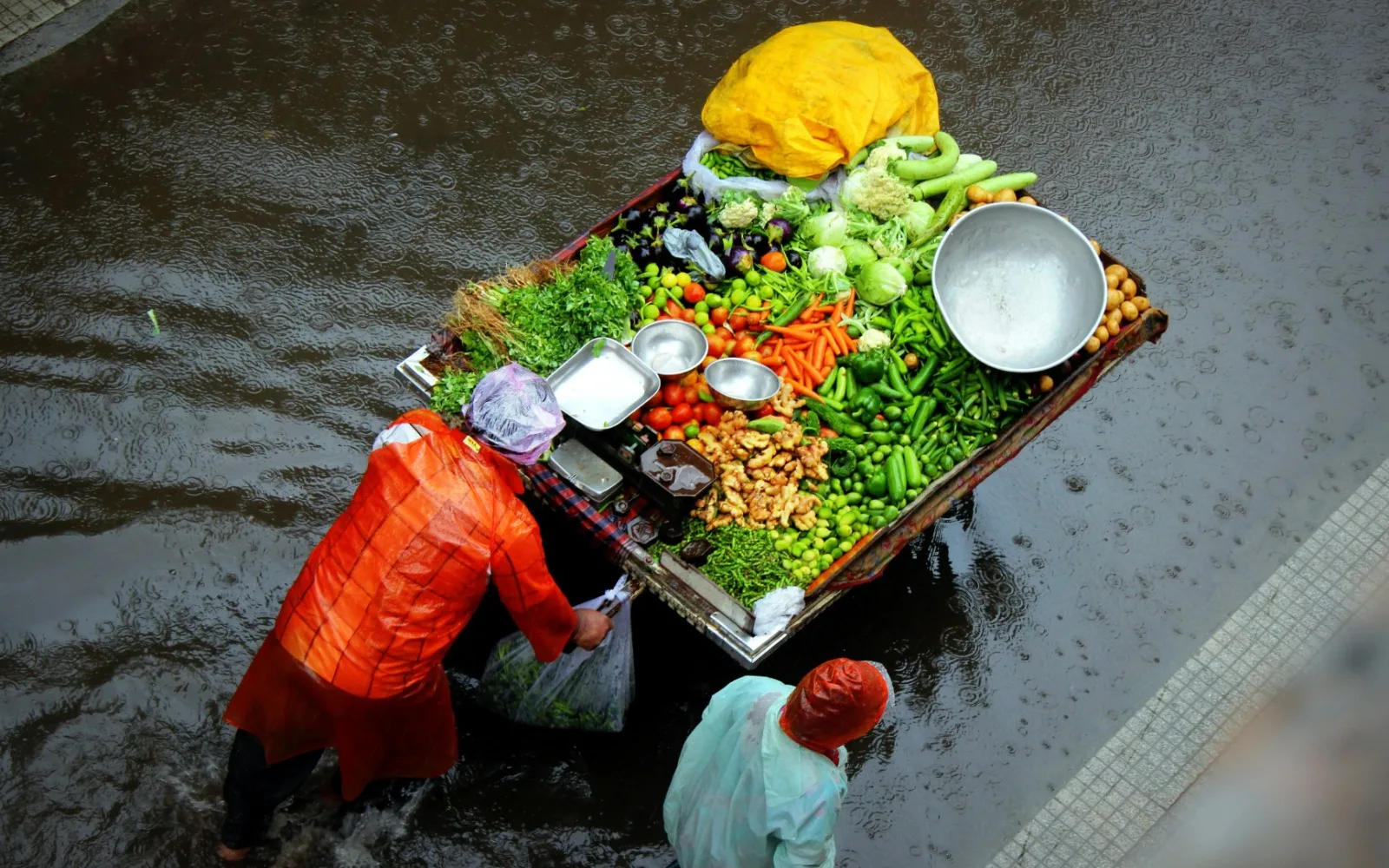
Whenever I think of the spirit of Bangladeshi people, Gobinda Halder’s song “Mora ekti phulke bachabo bole juddho kori” comes to mind. The first line of the song starts with a simple flower. Something so small and yet we fight to protect it, with a recognition of the protection we as people feel for all the gifts of nature we have. People who are so very deeply moved by the beauty and abundance of nature that the flower comes first before the mention of any human life.
Turning our backs on nature
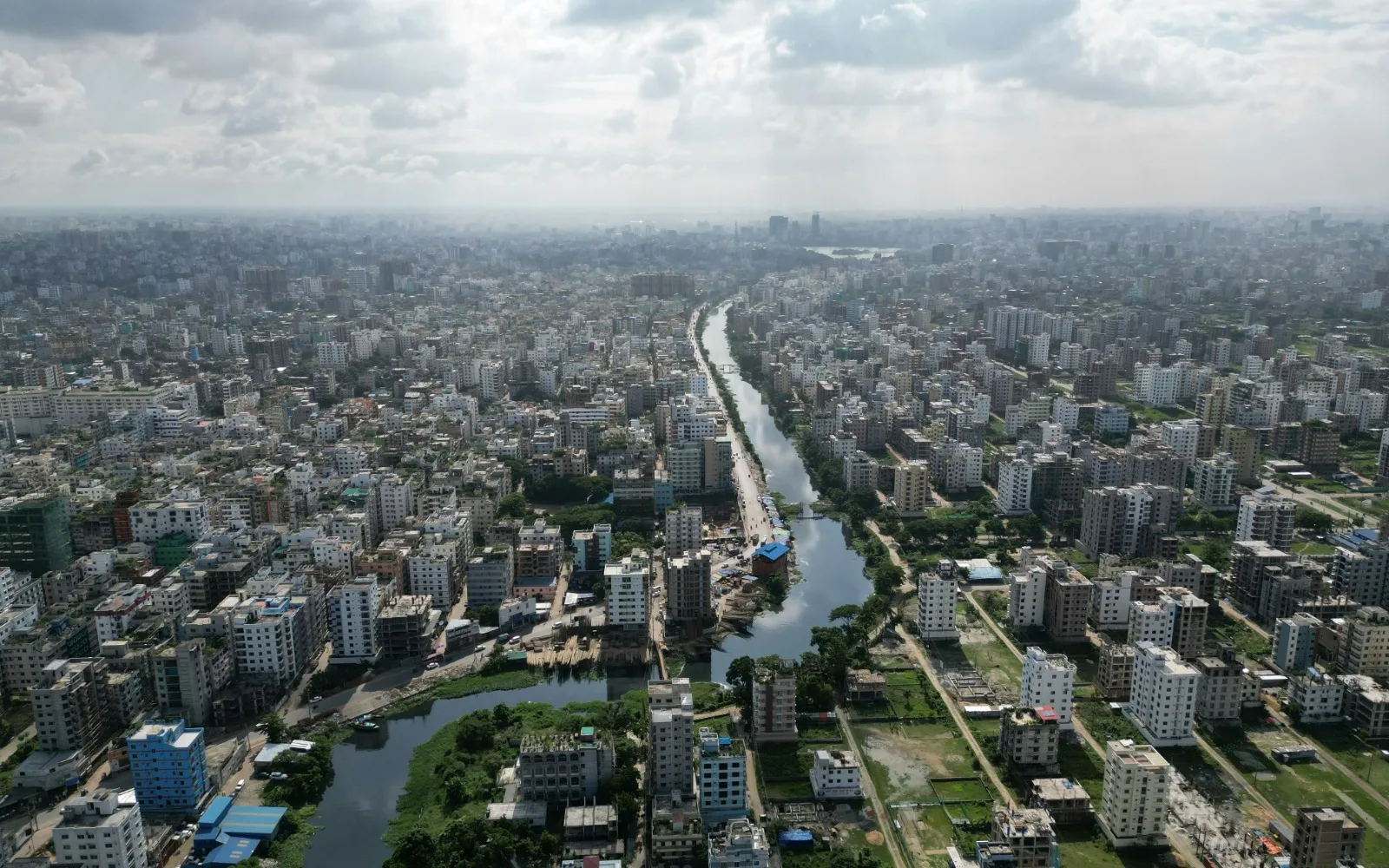
Half a century later, this song seems so far away from anything that represents reality. Cities needed to be built, and so many lives flourished from it. But somewhere in the story of growth, we lost our connection with nature. Not because our way of life or our culture changed, but because our cities went from lush green settlements to concrete jungles, with no way to regenerate themselves or the people who live within. Somewhere in that half a century, Dhaka city became from a city to a megacity, with a population increase from 6.621 million (in 1990) to 16.982 million (in 2014), ranking the 11th largest megacity in the world, with projections of being the 6th largest with an estimated population of 27.374 million by the year 2030.
Somewhere in the story of growth, we lost our connection with nature.
The population grew much faster than the infrastructure was growing, with unplanned agricultural land, wetlands, retention ponds, and canals being filled to accommodate housing, roads and commercial development. The natural systems in place that absorbed monsoon rainfall were no longer there and compounded with the absence of integrated urban planning as major barriers to effective flood management. The underlying problem, as experts consistently identify, is the disappearance of canals and wetlands as one of the principal drivers of Dhaka's worsening waterlogging.
As you sow, so you reap
Rapid urban expansion has also intensified heat stress. According to a study published in March 2026, satellite-based research in Dhaka found that between 2015 and 2025, increases in “built” areas were strongly associated with higher land surface temperatures, while vegetation and water bodies had the opposite effect. Additionally, heavy dependence on private vehicles, traffic congestion, and fossil fuel consumption increase greenhouse gas emissions while worsening air pollution and this higher heat exposure. Poor waste management also meant plastic waste frequently blocks drains, reducing the city's ability to cope with heavy rainfall. And during the last half a century, climate change magnified these vulnerabilities that were embedded in how the city grew.
With climate change came climate migration – another layer of complexity. Thousands of people in Bangladesh continue to migrate to Dhaka city in search of livelihoods, being displaced by cyclones, river erosion, salinity intrusion, and flooding in coastal areas. Many settle in informal settlements located in flood-prone or environmentally fragile areas, where inadequate housing, sanitation, and drainage further increase vulnerability.
It seems that Dhaka city was built to fail.
But the paradox? The city itself is also the solution.
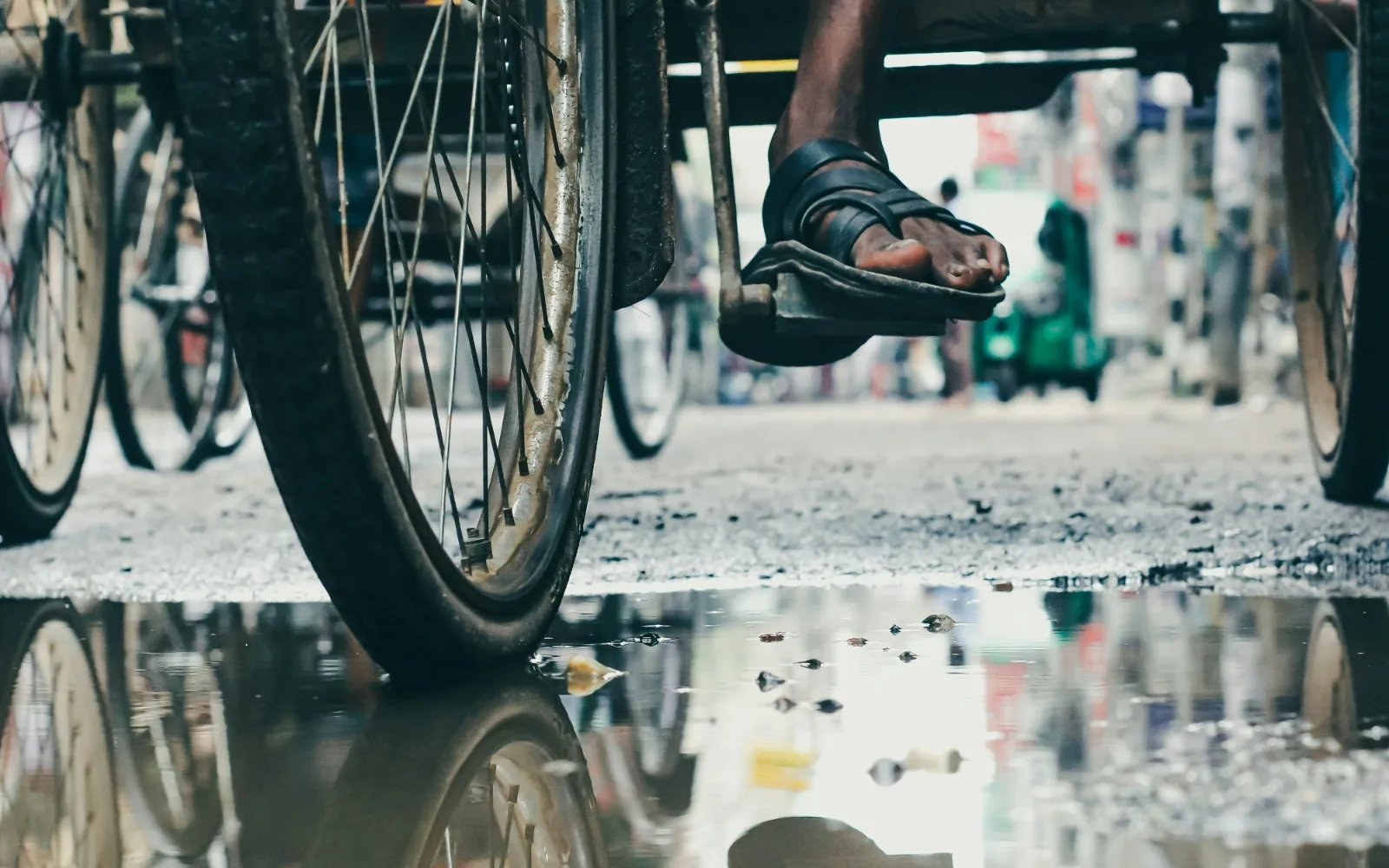
A report by the UN Habitat in 2024 argues that cities are simultaneously victims of climate change and central to its solution. Cities are central to the solution because compact urban density enables scale, energy efficiency, mass transit, and rapid implementation of nature-based adaptation. Through localized governance and community-led initiatives, urban centers provide the essential place where global climate goals must be achieved.
Regeneration as a path forward
This has been echoed across international organizations, academic research, and Bangladeshi experts, who agree that Dhaka requires systemic transformation rather than isolated engineering projects. Solutions frequently suggest restoring Dhaka’s rivers, canals, wetlands, and retention areas through nature-based approaches. Experts also call for integrated governance, in which urban planning, drainage, transport, housing, waste management, public health, and environmental protection work together rather than operating independently. Investment in public transport, inclusive planning, urban greening, renewable energy, early warning systems, and climate finance will be critical if Dhaka is to remain liveable under a changing climate.
- Restore rivers, canals, wetlands and retention areas through nature-based approaches.
- Coordinate urban planning, drainage, transport, housing, waste management, public health and environmental protection.
- Invest in public transport, inclusive planning, urban greening, renewable energy, early warning systems and climate finance.
Yet it all comes down to, what can we do? There is a saying that we need to embody what we desire. That embodiment could look like disposing of waste responsibly, avoiding dumping plastics into drains and canals, conserving water and energy, and working collectively to reduce environmental pressures. In a world where it feels like there is no sense in fighting for what we want to protect, let us not forget the song, “mora ekti phulke bachabo bole juddho kori”.
Raida A. K. Reza is Doctoral Researcher at the United Nations University's Institute for Integrated Management of Material Fluxes and of Resources (UNU Resource Nexus), Leibniz Institute of Ecological Urban and Regional Development (IOER), and Dresden University of Technology (TUD).