Dinesh Trivedi Advocates for a Nobel for Nazrul
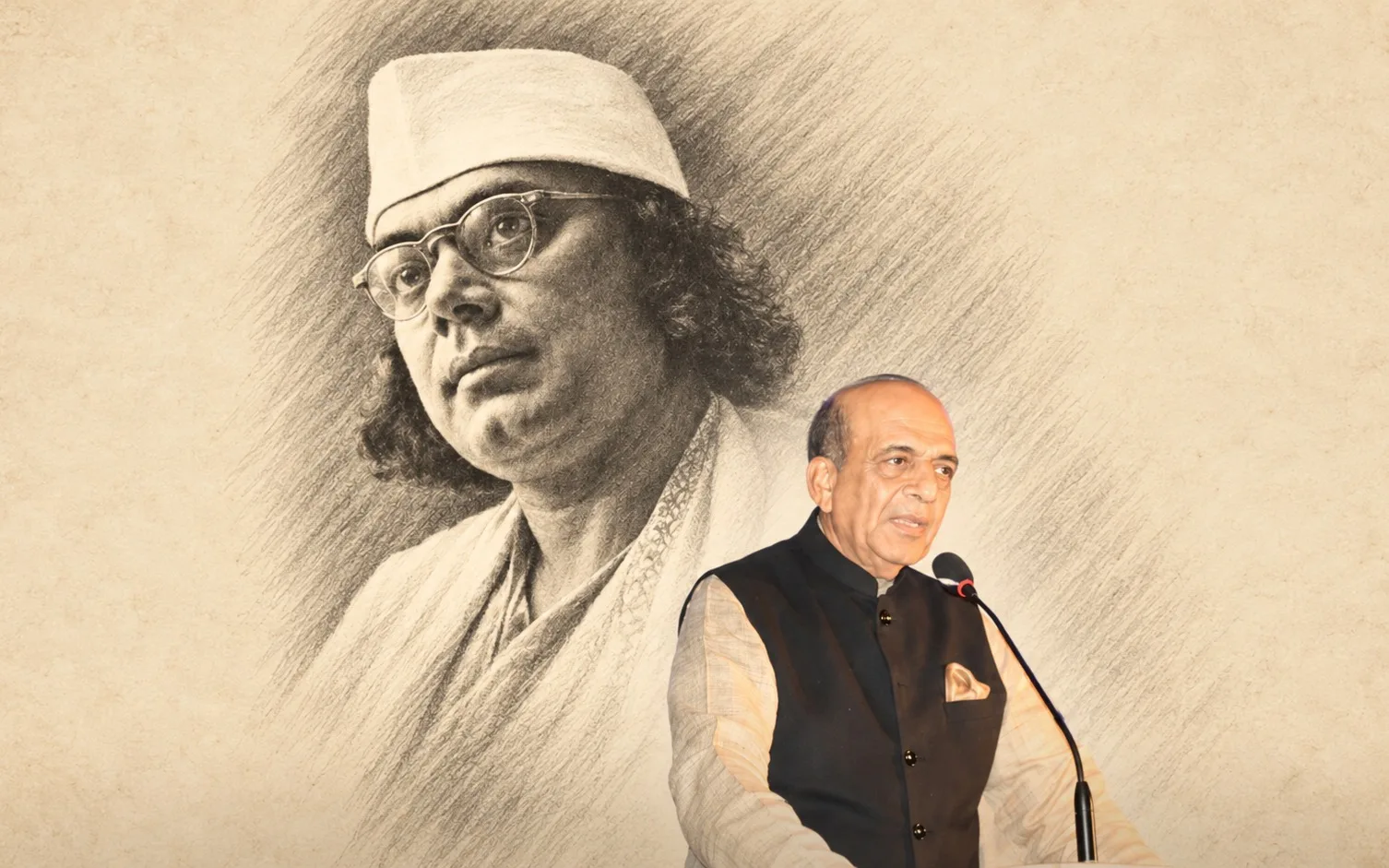
At a cultural programme in Dhaka marking the 50th anniversary of Nazrul’s death, Indian High Commissioner to Bangladesh, Dinesh Trivedi said Kazi Nazrul Islam should also have received the Nobel Prize.
In a Nutshell:
- Dinesh Trivedi said Kazi Nazrul Islam “should have been given the Nobel Prize” at a Nazrul commemorative event in Dhaka.
- The Indian High Commissioner described Nazrul as a figure who challenged established ideas and influenced collective consciousness through his writings.
- The remarks were made at ‘Nazrul Sandhya’, organised by the Indira Gandhi Cultural Centre at Chhayanaut Auditorium on September 17.
- The programme marked the 50th death anniversary of Kazi Nazrul Islam and featured music, poetry and dance based on his work.
- Bangladesh has designated 2026 as Nazrul Year as part of national commemorations of the poet.
Context
Bangladesh’s National Poet Kazi Nazrul Islam was born in Churulia in present-day West Bengal, while he spent the final years of his life in Bangladesh and died in Dhaka in 1976. Trivedi made the remarks at ‘Nazrul Sandhya’, organised by the Indira Gandhi Cultural Centre at Chhayanaut Auditorium on the 50th death anniversary of Kazi Nazrul Islam. His remarks came during a period of renewed cultural engagement between Bangladesh and India. Earlier this month, he and Bangladesh’s Culture Minister discussed cooperation involving literature, music, folk culture, heritage preservation and exchanges of artists and researchers, particularly around the Nazrul Year celebrations.
Why it matters
The remarks are less about a prize that cannot now be awarded and more about how Nazrul’s contribution is being remembered 50 years after his death. Moreover, the timing also gives the comment a wider cultural dimension. Nazrul’s legacy cannot be reduced to a single label or award. As Bangladesh marks 50 years since his death, it is still a recognition he never received that can be retrospectively corrected.
What we think
With 2026 being observed as the Nazrul Year and Bangladesh and India discussing renewed cultural exchanges, is Nazrul once again being used as a point of connection between the two countries?