Bangladesh’s Exam Results Became an Information War Before Students Could Read Them
More than 402,000 SSC and equivalent candidates sought re-scrutiny after the latest results. The episode exposed how unclear policies, sensational coverage and weak institutional communication can turn assessment into a crisis of trust.
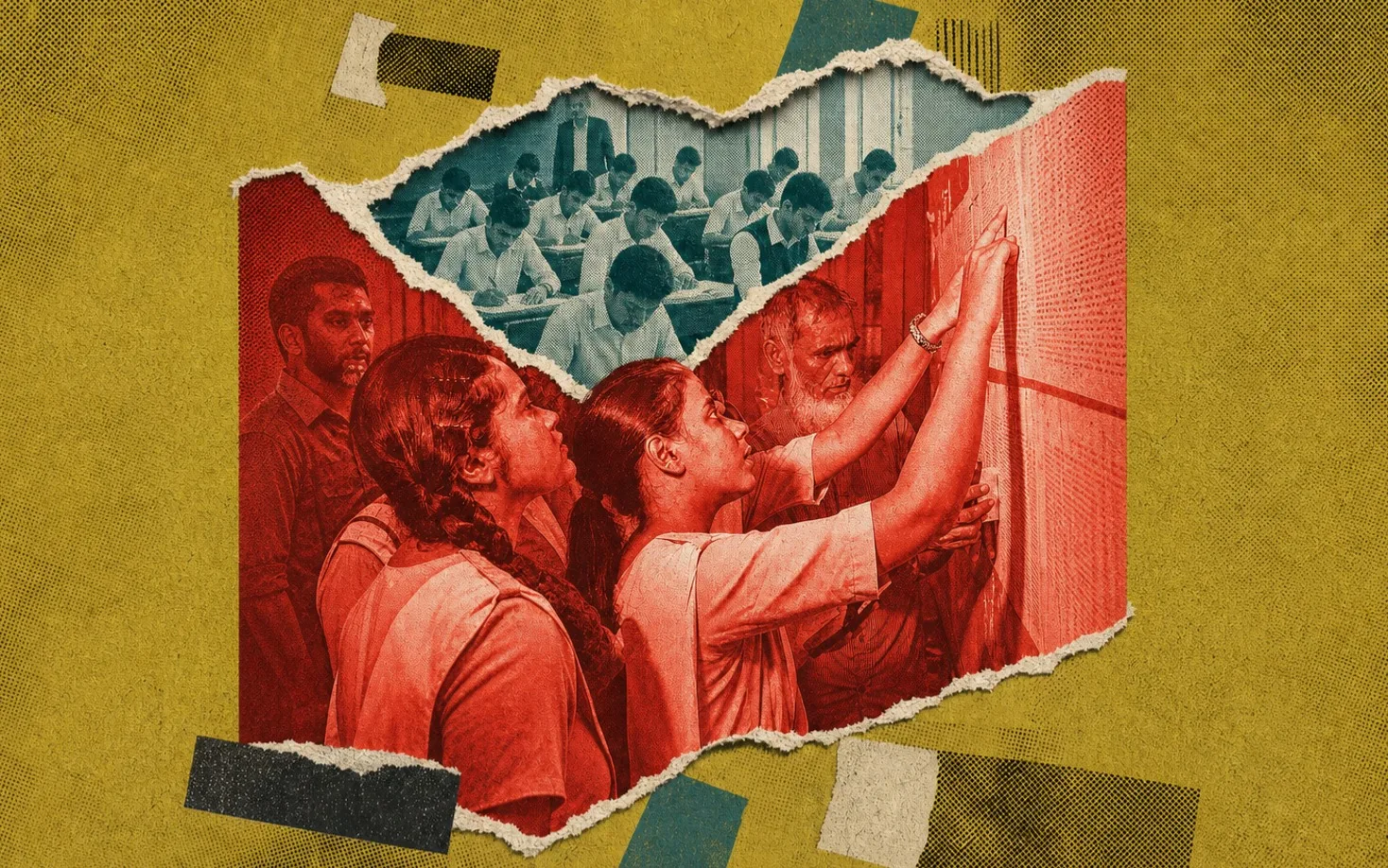
The headlines are festooned with “crashed to 62.25%” and “lowest in 19 years”, but judging the education system with its pass rate is like asking a tailor to make a suit from just your collar size.
The number I am watching is 402,051, the number of SSC and equivalent candidates who asked the state to read the script again. That's 1 in 5 candidates and more than a million papers, but it doesn't mean that a million of them were marked wrongly. It instead measures the uncertainty, humiliation and distrust that the system produced for over 4 lakh students to pay for the state to check again.
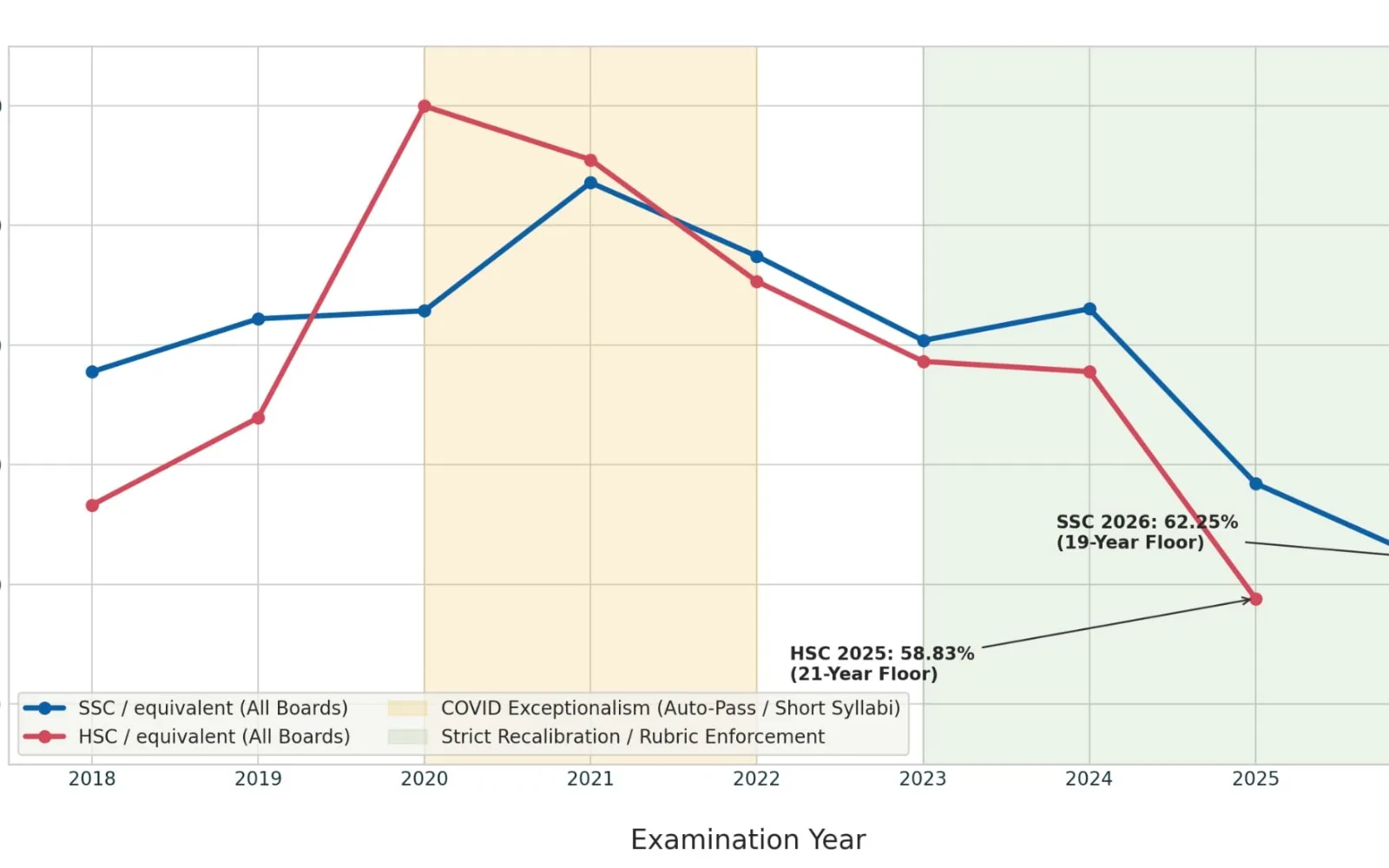
On 10 August, the boards announced that 62.25% of SSC and equivalent candidates had passed across all eleven boards. It follows 68.45% from last year, and 83.04% from the year before. HSC had already fallen to 58.83% in 2025, its lowest level in roughly two decades. The immediate explanation was strict marking and the end of grace marks, but the crisis did not end at the examiner's desk. It entered the one system that turns uncertainty into spectacle.
The number of GPA-5 awards went from 182,129 in SSC 2024 to 116,676 in 2026, and from 145,911 in HSC 2024 to 69,097 in 2025. The highest grade can only contract with the pass rate when the entire system of marking shifts, but most households just read “historic low” with the image of a student crying or a parent waiting at the gate.
How results become spectacle
The first was opacity. Two valid SSC figures circulated on the same day: 62.25% across all eleven boards and 64.05% across nine general boards. Without a simple explanation attached to every headline, the gap looked like proof of tampering.
The second was frame distortion. "Collapse" travels faster than "denominator." A crying child travels faster than a board-level table. Algorithms did not need a ministerial instruction to create panic. Emotion will always outrun information.
The third was commercial predation. Exams are a predictable market for fake question papers, paid leak portals, and fraudulent services. Such scams are fraud against families, but they are not evidence that the national result was fabricated.
Algorithms did not need a ministerial instruction to create panic. Emotion will always outrun information.
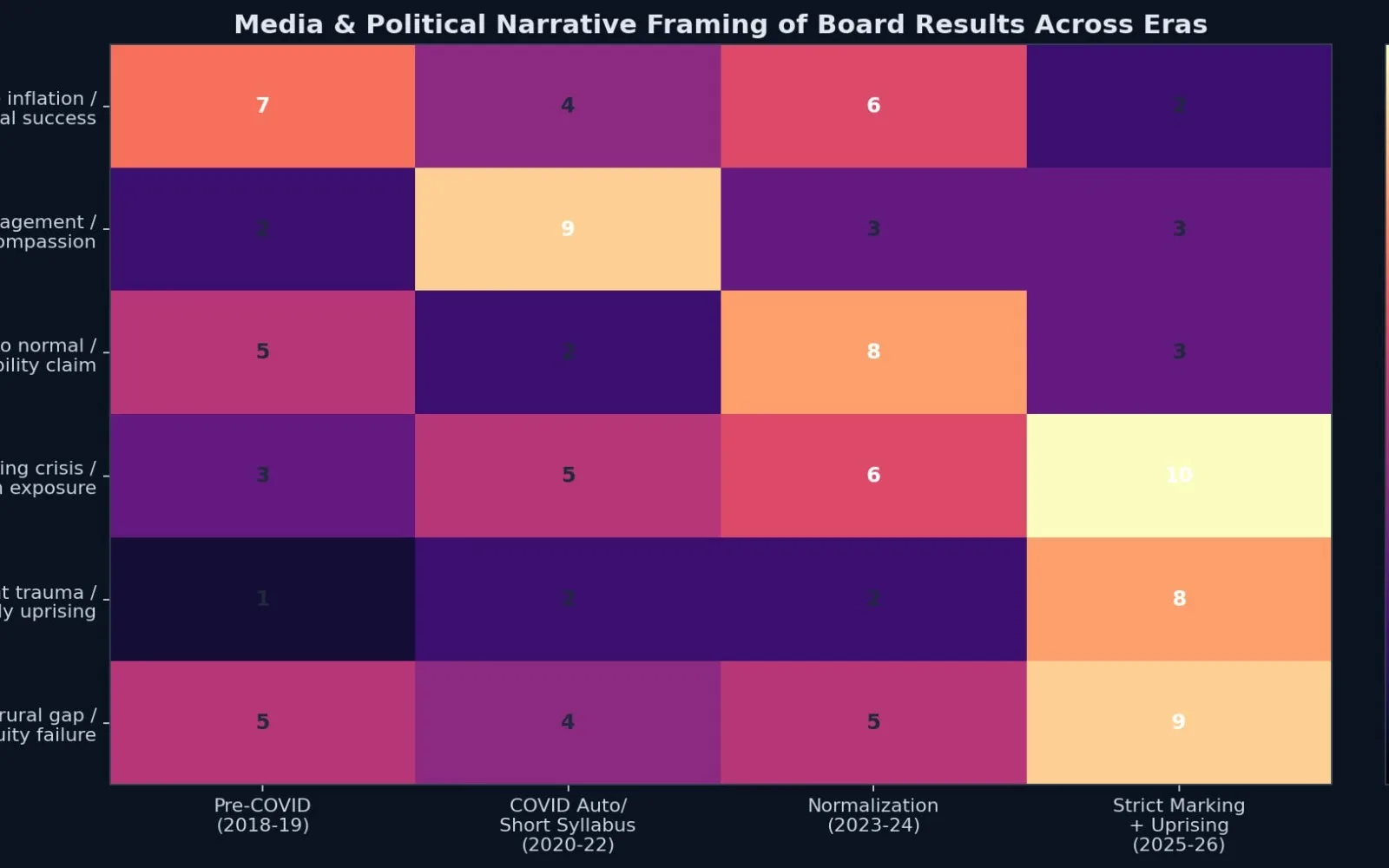
The fourth was shame theatre. A minor crying outside an exam center is not evidence of national collapse. Yet news outlets repeatedly turn that distress into a reusable template: clip, caption, outrage, engagement, repeat. The result is a public performance of catastrophe that tells students what they are expected to feel.
This is the grammar of Bangladeshʼs result-day media — catastrophe is the lead, intimacy is the visual, and blame is the comment section. This is how an institutional correction is converted into a personal verdict for a 17-year-old. It is tempting to think of psychological operations at this point, but the information environment is actually full of smaller, more ordinary forms of deception.
Why the result felt like a crisis
Public examinations in Bangladesh are not merely educational assessments. They dictate entry into college, family standing, and even marriage prospects and adolescent vulnerability. The psychological mechanisms are ordinary and powerful. Uncertainty removes oneʼs sense of control. Social comparison turns a private grade into public ranking when millions receive results on one morning. Expectation violation hits harder when families have been trained by a decade of high pass rates to believe passing is the baseline. Conditional self-worth makes “I got a lower mark” become “I am a failure.”
Soon, a friendʼs GPA-5 becomes over-generalisation and an unclear policy becomes paranoia.
These are not defects, but understandable responses to a system that withheld context and then broadcast the consequence. The number 402,051 is therefore a measure of trust rupture after a system asked students to accept a new standard without explaining the transition adequately.
Cambridge International provides a useful but limited comparison. In June 2026, Bangladesh recorded more than 43,500 Cambridge entries, up 8% year-on-year; IGCSE/O Level entries rose 10%, and AS/A Level entries rose 5%. Those students lived through the same broad national conditions but did not show a comparable participation cliff.
What the Cambridge comparison can—and cannot—show
This does not prove that Cambridge students performed better. Bangladesh-wide Cambridge grade distributions are not publicly available, and the population is not comparable: international-curriculum candidates tend to be more urban, affluent, English-proficient and better resourced. Pearson Edexcel released results on schedule, but Bangladesh-wide Edexcel outcomes are not publicly published. Missing data must remain missing.
What the comparison can say is narrower: a shared national environment alone is not a sufficient explanation for the public-board shock. The divergence is consistent with a system- specific crisis of assessment, resources and communication. It is not proof of causation, but it is a reason to stop blaming children for a failure of institutional design.
Bangladesh needs honest measurement. It also needs adults who understand what honest measurement does when it arrives without warning.
From measurement to repair
A paid, one-week re-scrutiny window is not enough for a cohort facing a changed ruler.
Bangladesh needs visible retake routes, fee waivers, bridge courses, child-protection follow-up and school-based mental-health referral. The state did not need to manufacture despair for despair to become politically useful. It only needed to leave the information vacuum open.
The honest result may have been necessary. The information war around it was not. The abandoned student was optional.
Dr. Murtaza Zakiul Abrar is a Cognitive Behaviour Therapist, and Conflict & Crisis Intervention Specialist based in Dhaka, Bangladesh. This independent analysis draws on public board-result information, reporting on re-scrutiny and institutional outcomes, and publicly available Cambridge and Pearson Edexcel information.