NATIONAL
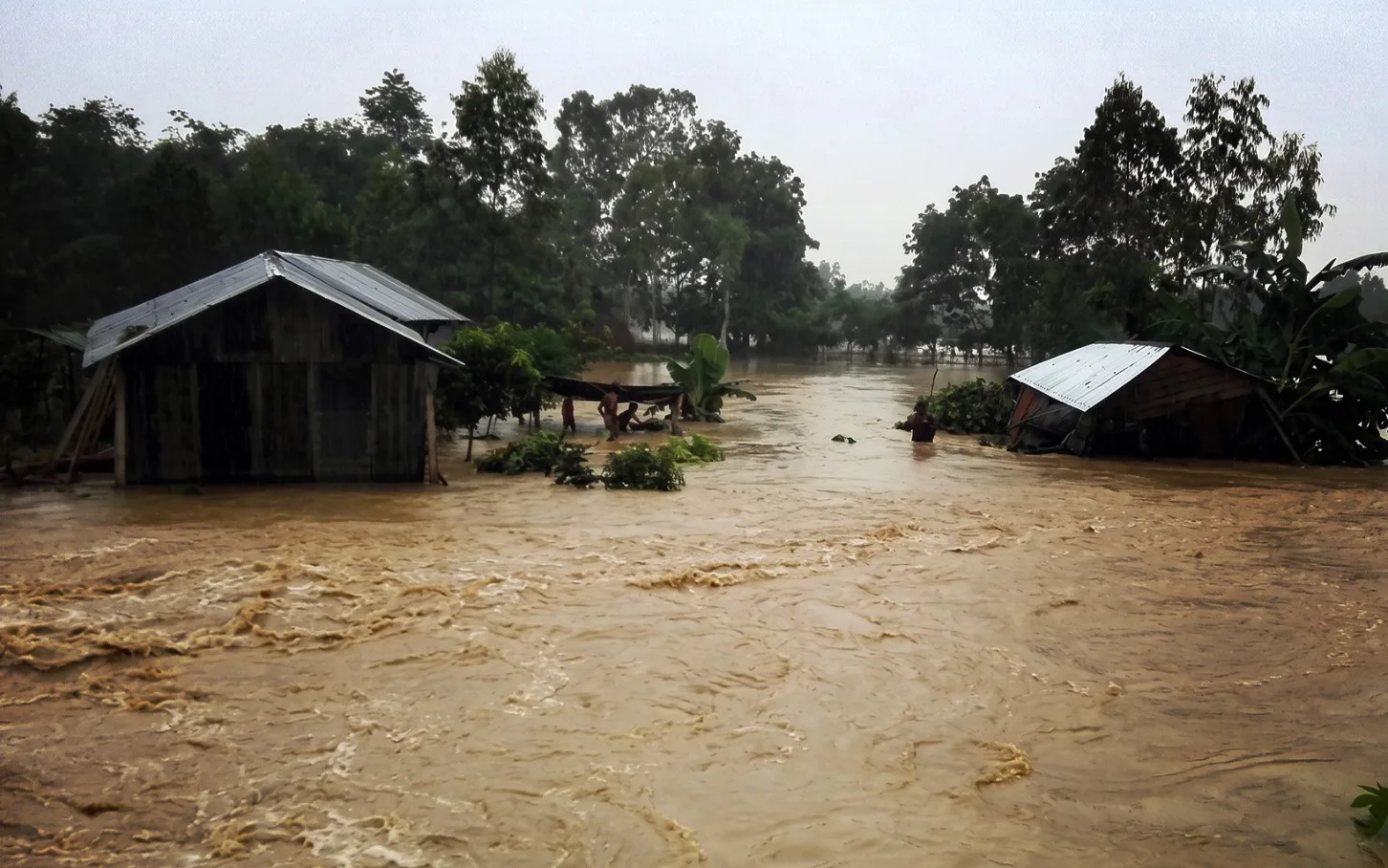
Floods & landslides leave 51 dead, hit 10 lakh people across 7 districts
Floods and landslides in seven districts of Bangladesh kill 51, injure 39 and affect about 1.02 million people; shelters opened and relief allocated.
Collected
BIONIC READING
In a Nutshell:
- Floods and related accidents killed 51 people and injured 39, affecting over 1.02 million people across 58 upazilas, 386 unions, and 11 municipalities in seven districts.
- Cox's Bazar recorded the most deaths at 28 (15 local residents and 13 Rohingya), while Chattogram had the most affected people, with about 595,000 hit and roughly 147,500 families stranded.
- Authorities opened 1,131 shelters now housing 44,457 people, and allocated Tk 17.5 million in cash and 3,250 metric tonnes of rice for the seven districts.
Why it Matters
This disaster highlights the extreme vulnerability of Bangladesh's regional infrastructure and populations to seasonal weather extremities and flash floods.
- With more than a million people affected and over 267,000 families stranded by water, the flooding represents a major displacement and relief challenge concentrated in a short period.
- The high death toll in Cox's Bazar, including 13 Rohingya, points to how disasters compound risk for people already living in fragile conditions such as camp settings.
- The government has set aside funds and rice not only for the seven affected districts but for all 64, signalling preparation for the possibility that the crisis could spread or intensify.
Who it matters to
The floods affect residents, displaced groups, and government agencies coordinating the response.
- People in Khagrachhari, Rangamati, Bandarban, Cox's Bazar, Chattogram, Moulvibazar, and Habiganj face death, injury, and loss of homes, cutting across every age group, gender, and section of the community, with hundreds of thousands stranded or displaced.
- Already living in vulnerable conditions, the Rohingya community account for 13 of the district's 28 deaths, underscoring their heightened exposure to natural disasters.
- District and local administrations must run rescue and relief work at scale, distributing cash, rice, and dry food while managing more than a thousand shelters.