France’s Classrooms Rise Up Against the State
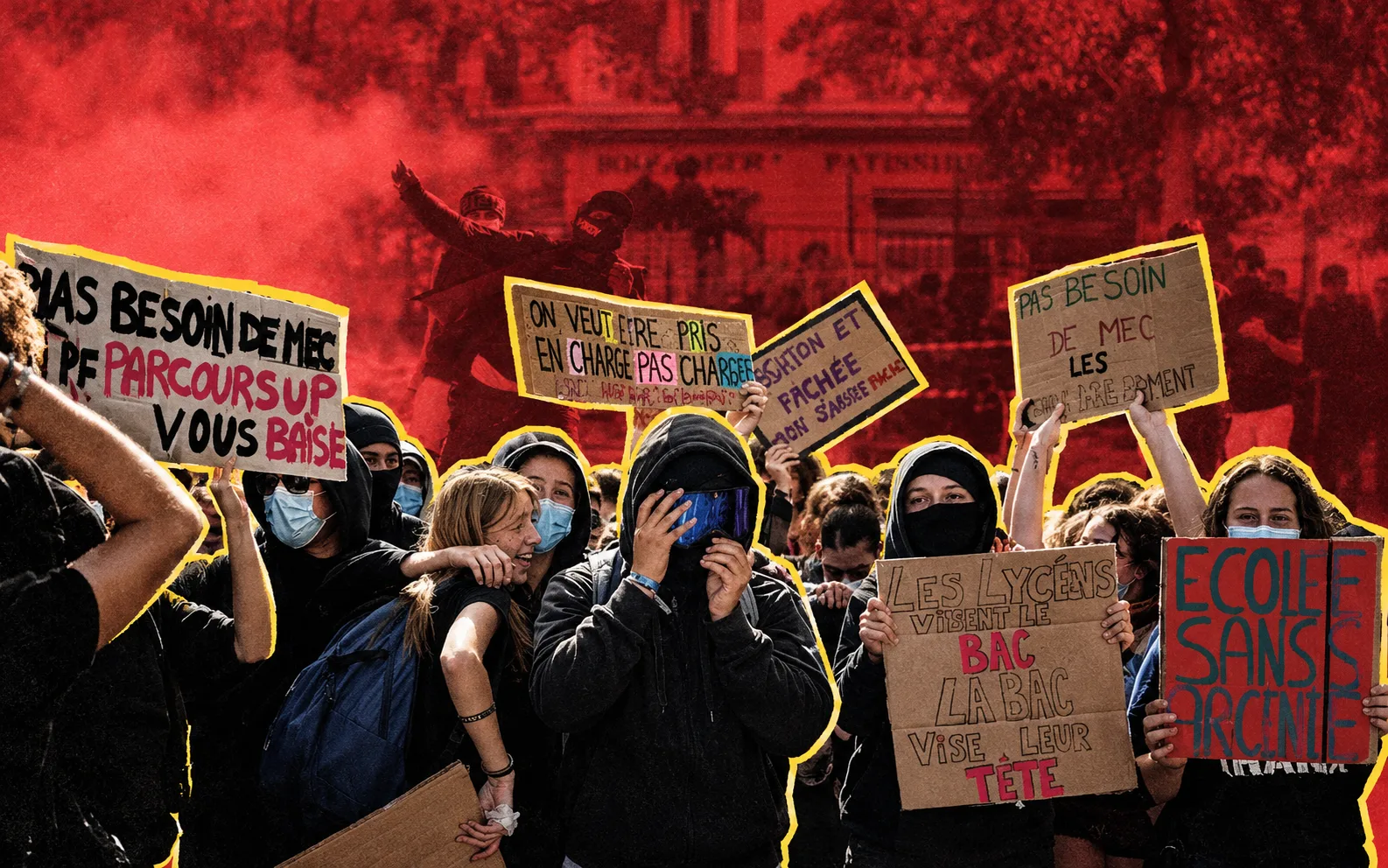
Teenagers across France have blockaded schools for two weeks. They want teachers, repairs and a say. Police clashes, thousands of arrests and a bond-market scare have turned a classroom complaint into a national crisis.
Reading
In a Nutshell:
- Lycée students began blockades in the Créteil academy on 21 September 2026, and the protests spread across France.
- Clashes turned violent, with fires lit in streets and justice minister Gérald Darmanin calling it a “public order disturbance”.
- On Monday in Lens, a 15-year-old lost his hand during a clash with riot police. Accounts conflict on how it happened, and the police inspectorate is investigating.
- Authorities say about 6,100 people have been arrested, mostly minors. At least 715 police officers and 215 teenagers have been injured.
- On Tuesday, students, teachers and parents marched in cities nationwide. The students’ union says 1,800 schools were blockaded or closed.
Context
The protests began over unreplaced teachers, crowded classes and run-down buildings. Students also complain about long school days. Posters shared on Snapchat spread the demands from school to school. Prime Minister Sébastien Lecornu has told ministers to act and to send the first proposals by the end of October. A student consultation platform is also planned. But France’s finances are under strain. Its 10-year bond yield briefly passed 5% last week, a 24-year high.
Why It Matters
This is more than a school dispute. The protests hit France at its weakest point: a large budget deficit, high debt and nervous investors. Fixing schools costs money, and the government has little to spare. Spending more could scare bond markets, while cutting costs could feed the anger on the streets. Borrowing costs are already spilling into the wider euro area, and the falling euro is another warning sign for policymakers. A presidential election is six months away. The government and Marine Le Pen’s National Rally accuse the hard-left France Unbowed of stoking the unrest, which the party denies. Le Pen leads the race and has promised deep spending cuts to show she can be trusted with the economy. Jean-Luc Mélenchon calls this the biggest youth movement since 1968. Police conduct is another test. Six judicial investigations into the use of force have been opened. How the state treats minors, who are the large majority of those arrested, may shape trust in France’s institutions long after the protests end.
What We Think
France has misread what its teenagers are saying. These students are not rebelling for sport. The protests are mainly a collective cry about how hard school life has become. Consultation alone will not be enough, because students want to be “listened to,” not just “heard”.