High Court Mandates Warrant Check
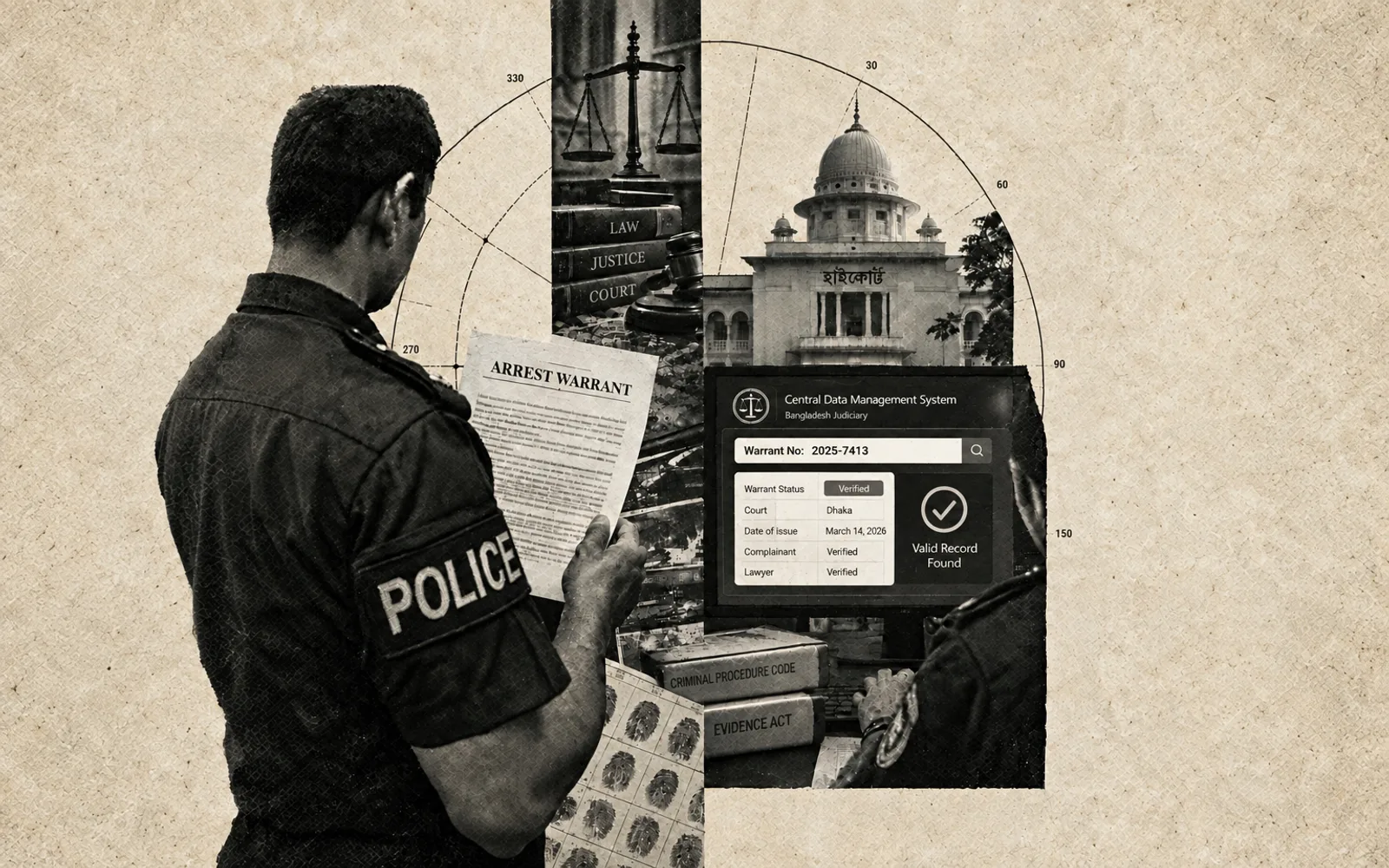
The High Court has directed police to verify arrest warrants through the Central Data Management System before making an arrest to prevent people from being detained or harassed using fake warrants. The court has also ordered steps to verify the identities of complainants and lawyers when complaint cases are filed.
In a Nutshell
- The High Court has directed police to verify the authenticity of an arrest warrant through the Central Data Management System before executing it.
- The Inspector General of Police has been asked to issue a circular informing all law-enforcement agencies about the directive.
- The Supreme Court registrar general has also been directed to inform lower courts about measures for verifying complainants and lawyers.
- Copies of the complainant's National Identity Card and the lawyer's professional identification are to be attached to complaint cases to help verify their identities.
- The court said arrests made through fake warrants violate citizens' fundamental and constitutional rights.
Context
The issue goes back to the arrest of Arif Niazi, who was reportedly arrested from his Gulshan residence in 2012 on the basis of an arrest warrant that was later confirmed to be fabricated. Human Rights and Peace for Bangladesh subsequently filed a writ petition in 2013. The High Court issued a rule that year, and after years of proceedings, the matter has now resulted in orders aimed at making warrant verification part of the arrest process. The court has also emphasised that arrests have to be carried out according to the Code of Criminal Procedure where its authenticity is being required to be checked before police act on it.
Why It Matters
An arrest warrant is supposed to provide legal authority for taking someone into custody. If a fake warrant can be used to make that arrest, the legal process itself can become a tool for intimidation. Arif Niazi’s arrest is a clear example of it.
What We Think
The fact that this case began with a fake warrant in 2012 and reached its final stage years later shows how difficult it can be for an individual to recover from misuse of the legal process. Thus this order was much needed to control the misuse of legal proceedings through false identities or fabricated complaints.