Iran’s 7-Day Roadmap to End the War: What Tehran Offered Trump
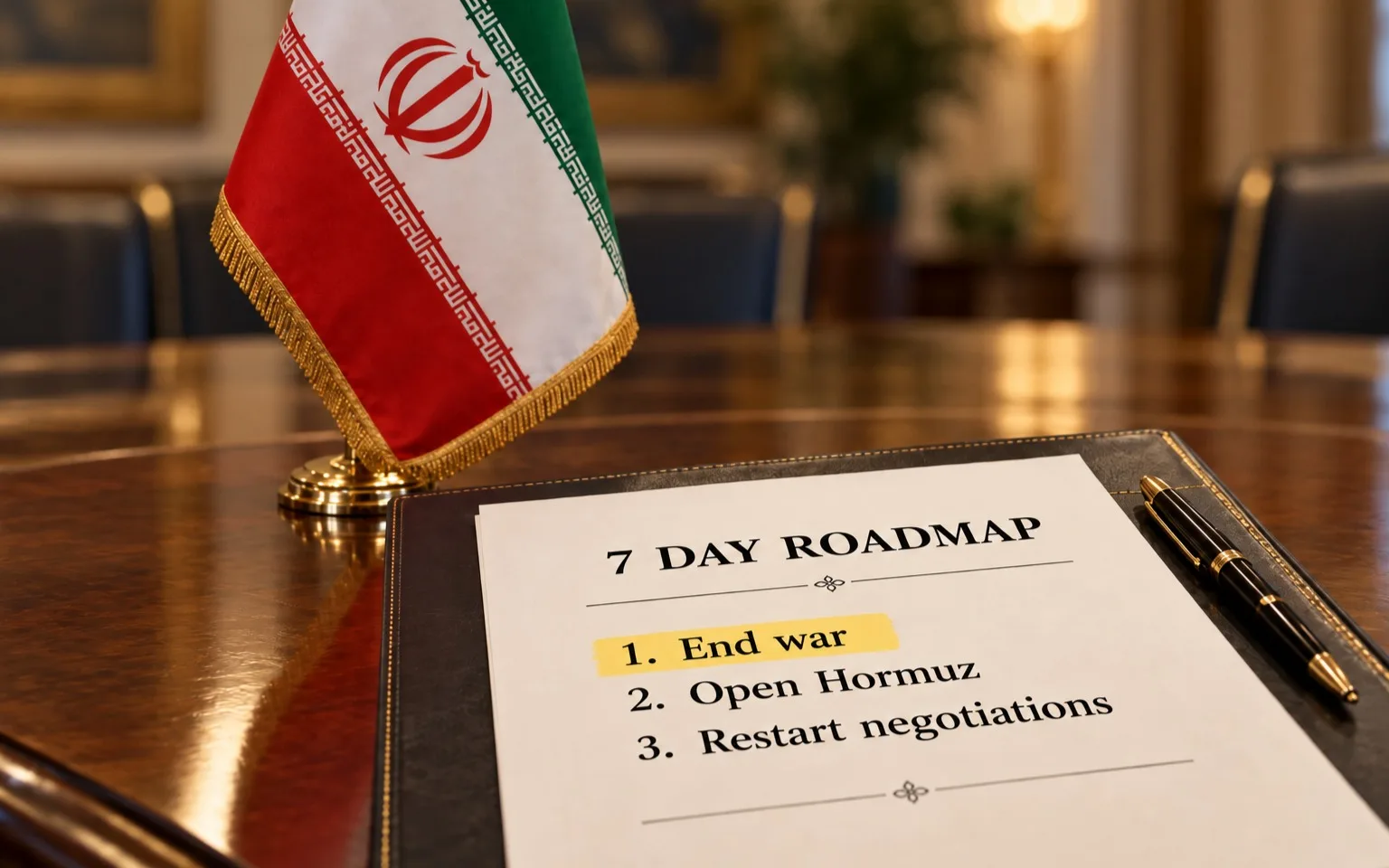
Iran proposed a seven-day roadmap aimed at ending the war, reopening the Strait of Hormuz and restarting negotiations over its nuclear programme. However, the proposal came with several conditions for Washington and US President Donald Trump has rejected the plan.
Reading
In a Nutshell:
- Iran proposed a seven-day roadmap to end hostilities and restart diplomatic negotiations with the United States.
- The proposal was presented by Iranian Foreign Minister Abbas Araghchi and passed to Washington through mediators.
- Iran called for an end to hostilities across the region, including Lebanon and Yemen, during the proposed seven-day period.
- Tehran also called for the release of at least $12 billion in frozen Iranian assets.
- Iran asked Washington to lift sanctions on its oil exports and remove the US naval blockade.
- If those conditions were met, Iran said it would reopen the Strait of Hormuz on the seventh day.
- Negotiations over Iran’s nuclear programme would also resume under the proposal.
- However, on Saturday, Trump rejected the proposal, saying, “I am rejecting it.”
Context
The seven-day proposal came after months of conflicts between the United States and Iran and the collapse of an earlier agreement reached in June, which involved ending hostilities, reopening the Strait of Hormuz and restarting discussions on Iran’s nuclear programme. The Strait of Hormuz has become a central issue in the conflict because of its importance to international energy trade. Iran has previously indicated that it could reopen the waterway if the US reduced military pressure and lifted its blockade. The latest proposal was presented by Iranian Foreign Minister Abbas Araghchi and delivered through mediators while Iranian and US officials were in New York for the UN General Assembly. This proposal put the reopening of the Strait of Hormuz within a specific seven-day framework. However, Trump rejected Iran's seven-day roadmap on Saturday, September 26, 2026, just one day after Iranian Foreign Minister Abbas Araghchi formally announced and submitted the proposal via Qatar on Friday, September 25, 2026.
A Brief of the 7-Day Roadmap
Day 1–7: Stop the fighting
Iran proposed a halt to hostilities across the region, including conflicts involving Lebanon and Yemen. The proposal was intended to create the conditions for a broader ceasefire and diplomatic negotiations.
During the seven days: Lift key US measures
The proposal called for Washington to release at least $12 billion in frozen Iranian assets, waive sanctions on Iranian oil exports and lift its naval blockade of Iran. These were presented as conditions for the roadmap to move forward.
By Day 7: Reopen the Strait of Hormuz
If the conditions were fulfilled, Iran said it would reopen the Strait of Hormuz, a major route for global oil and gas shipments, on the seventh day.
After the immediate ceasefire, Restart nuclear talks
The roadmap also proposed restarting negotiations over Iran’s nuclear programme. The nuclear issue has remained one of the central points of disagreement between Washington and Tehran.
Why it matters
With its economy under strain and the Strait of Hormuz at the centre of the conflict, Tehran offered a seven-day plan to stop fighting, reopen the waterway and restart nuclear talks. The plan called for the US to lift its naval blockade and oil sanctions and release frozen Iranian assets in return for the reopening of the Strait. Iran’s proposal can therefore be read as a diplomatic attempt to move the conflict back towards negotiations rather than continued military pressure. However, US President Donald Trump rejected the plan, yet again, leaving little immediate space for the proposed diplomatic process and increasing pressure on oil markets and the wider regional economy.
What we think
A seven-day roadmap may have provided a concrete sequence with a defined endpoint. However, with Iran putting conditions, deadlines, and an outcome on the table and Trump immediately rejecting them, it closes that pathway. If both sides keep waiting for the other to give up its leverage first, the seven-day roadmap becomes another missed opportunity rather than a route out of the war.