Mecca Defence Pact Moves Towards Troop Deployment
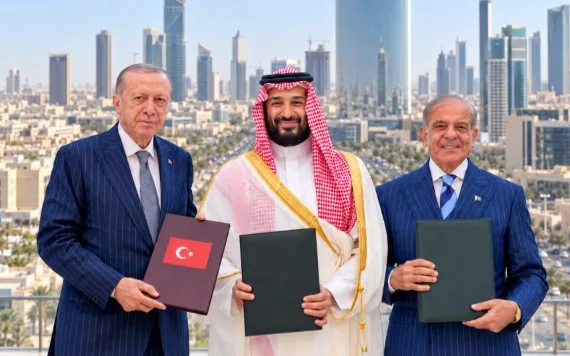
Saudi Arabia, Pakistan and Turkiye say they are moving to implement their collective-defence pact, including measures for the rapid deployment of agreed forces and military capabilities in Saudi Arabia. The countries also appointed Pakistan’s retired Lieutenant General Numan Mahmood as the alliance’s first secretary-general.
Reading
In a Nutshell:
- Saudi Arabia, Pakistan and Turkiye held an emergency meeting of the Mecca Defence Alliance’s Political and Defence Strategic Committee in Riyadh to discuss threats facing Saudi Arabia.
- In a Joint Statement issued from the emergency meeting, they agreed to take immediate steps to provide and rapidly deploy agreed forces and capabilities. However, the statement did not specify troop numbers or a deployment timetable.
- The members condemned attempted attacks on Mecca and Medina and continuing attacks on Saudi cities and civilian and economic facilities, without naming those responsible.
- Retired Pakistani Lieutenant General Numan Mahmood is appointed as the secretary-general for a three-year term.
- Pakistan and Türkiye praised the readiness of Saudi forces and reaffirmed their commitment to collective defence.
Context
Saudi Arabia, Pakistan and Türkiye signed the Mecca Joint Defence Agreement on 7 August 2026. They say an armed attack on one member is to be treated as an attack on all three. At the committee’s first meeting, held in Istanbul on 31 August, the members agreed to establish a secretariat in Saudi Arabia and further institutionalise cooperation. Their military chiefs met in Riyadh on 25 September. The latest emergency meeting takes the pact a step further. The three countries say they are preparing to put the collective-defence commitment into practical effect.
Why It Matters
The presence of Pakistani and Turkish troops in Saudi Arabia raises questions about future conflicts and regional rivalries. It suggests that Pakistan, Türkiye and Saudi Arabia may act together if the kingdom faces an attack. Moreover, this security partnership creates a new military bloc that may affect countries across the region.