Nepal Has to Decide How to Rebuild
"What matters most is how Nepal rebuilds, not simply how quickly it rebuilds." Next week, Nepal's prime minister will travel to New York to ask the world for help. But as one analyst in Kathmandu puts it, getting applause at the United Nations will be the easy part.
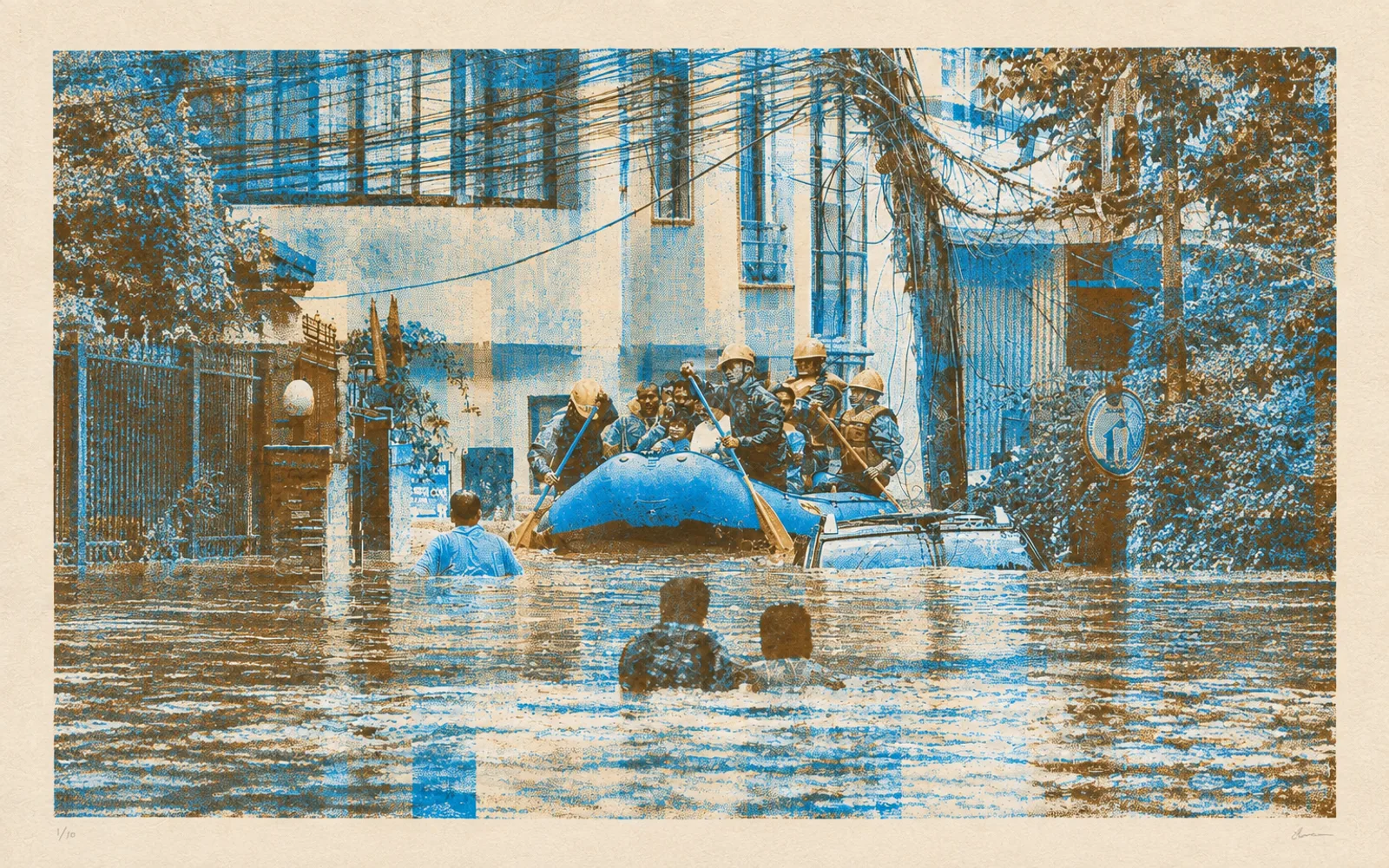
Twenty-one days after the mountain fell into the Bhotekoshi valley, Nepal still does not know the full scale of its loss.
The figures are difficult to process. There are almost four missing people for every confirmed death. That is why this disaster still feels unfinished. Not only because people are missing, but because thousands of families are still waiting for an answer.
More than 3,600 people are living in 37 emergency shelters across three districts, the Kathmandu Post reported on 14 September. Many are sleeping in school classrooms. Schools have reopened, so the families are now being told to leave. No one has properly explained where they are meant to go.
Around 8,300 homes have been destroyed, according to the National Disaster Risk Reduction and Management Authority. About 15 villages have vanished.
At five hydropower plants along the river, rescuers have not even been able to start. Officials believe 106 people may be trapped in tunnels they cannot reach, the Nepali magazine New Spotlight reported on 15 September. The equipment needed to dig them out was swept away in the flood.
On 24 September, Prime Minister Balendra Shah will stand at the United Nations and ask the world to pay attention. It will be his first foreign visit since taking office in March, and the first big international test for a government that is barely six months old.
Mahesh Bhatta, an international-relations analyst in Kathmandu, believes Nepal needs to think beyond emergency aid.
"The flood should not simply become another occasion for Nepal to ask for emergency aid," he said. "Kathmandu should use it to build a sustained international coalition around the vulnerability of the Himalayas."
The flood should not simply become another occasion for Nepal to ask for emergency aid. Kathmandu should use it to build a sustained international coalition around the vulnerability of the Himalayas.
Put another way: Nepal should not merely ask for money. It should make the case that the Himalayas have become one of the world's most dangerous climate frontiers.
The morning the mountain came down
It was 8.30am on 26 August.
High on Langtang Lirung, at roughly 5,200 metres, a huge slab of mountain broke away. The glacier above it came down too. Rock and ice fell around 1,200 metres onto the valley floor, according to scientists who have reconstructed the collapse.
The impact was so violent that instruments recorded it as a magnitude-5.2 earthquake.
But there was no earthquake. The United States Geological Survey later confirmed the signal came from the collapse itself. It was the sound of a mountain landing.
"It was not a glacier that collapsed," Jakob Steiner, a geoscientist at the University of Graz in Austria, told Carbon Brief on 8 September. "It was the mountain below the glacier that collapsed, and the glacier had no other chance but to go with it because it was sitting on top of it."
The debris dammed the river. Then the dam burst.
What followed moved down the valley faster than a car on a motorway. Researchers reconstructing the flood found it travelled 72 kilometres. In places, the water rose 80 metres above its usual level — about as high as a 20-storey building.
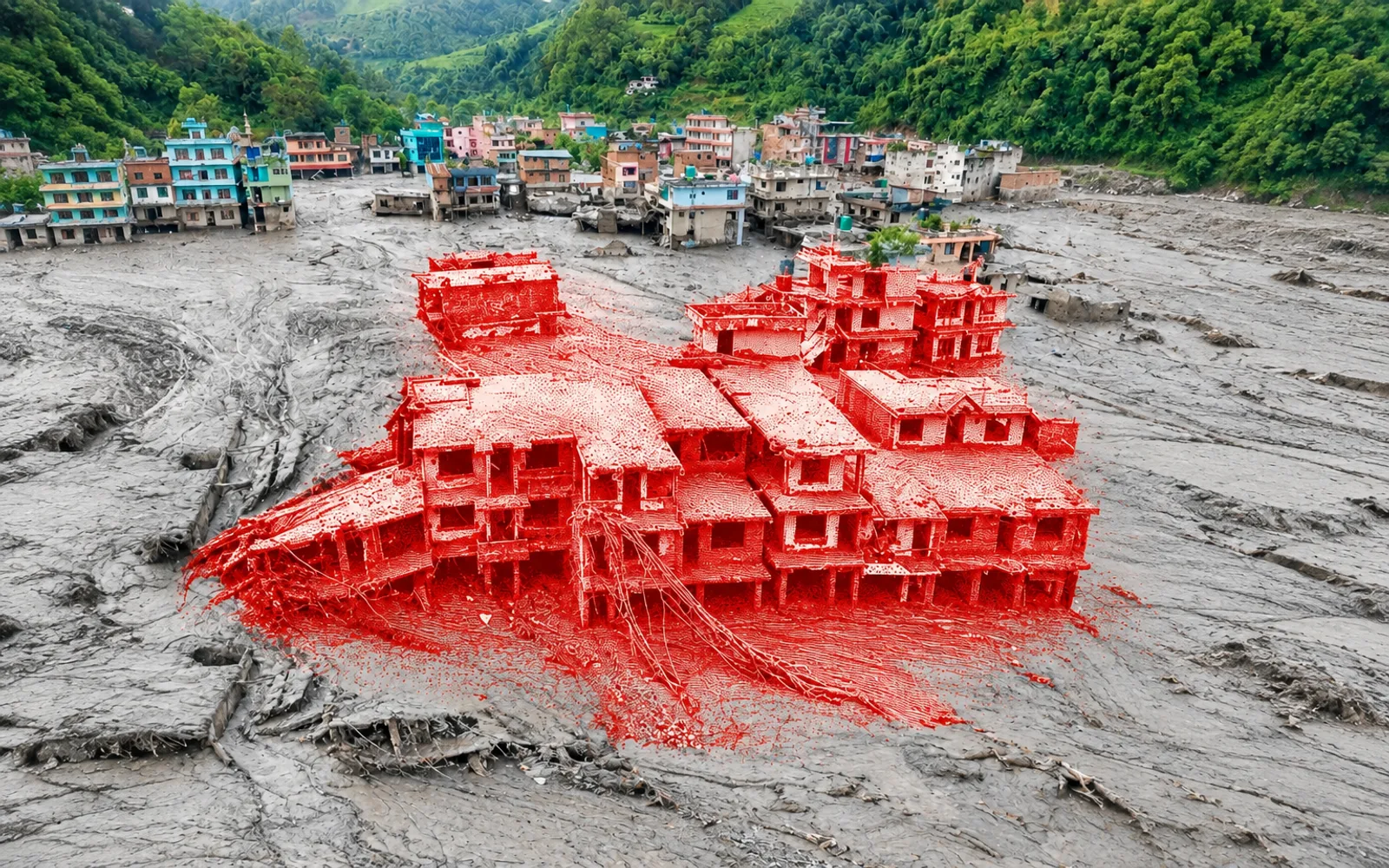
Bodies were later found 240 kilometres away, across the border in India.
The government estimates the damage at around $2.6 billion. Nepal's finance and infrastructure ministries say rebuilding may cost as much as $5 billion.
The people beneath the rubble
Many of the missing were at work when the flood came.
Around 909 workers are still unaccounted for, according to the Independent Power Producers' Association Nepal, the industry's own body. Many of them are believed to have been inside tunnels when the water arrived.
For a few days in early September, the tunnels held the country's attention. Army teams drilled into one site, heard voices through the rock, and pulled people out alive nine and 10 days after the flood.
Then the rescues stopped producing miracles.
No one has been found alive since 5 September.
Teams are now working at six sites, New Spotlight reported. At five others, they have yet to begin. Not because anyone has given up, but because the roads are gone, the stores holding heavy machinery were destroyed, and moving excavators and pumps through a shattered mountain valley takes time.
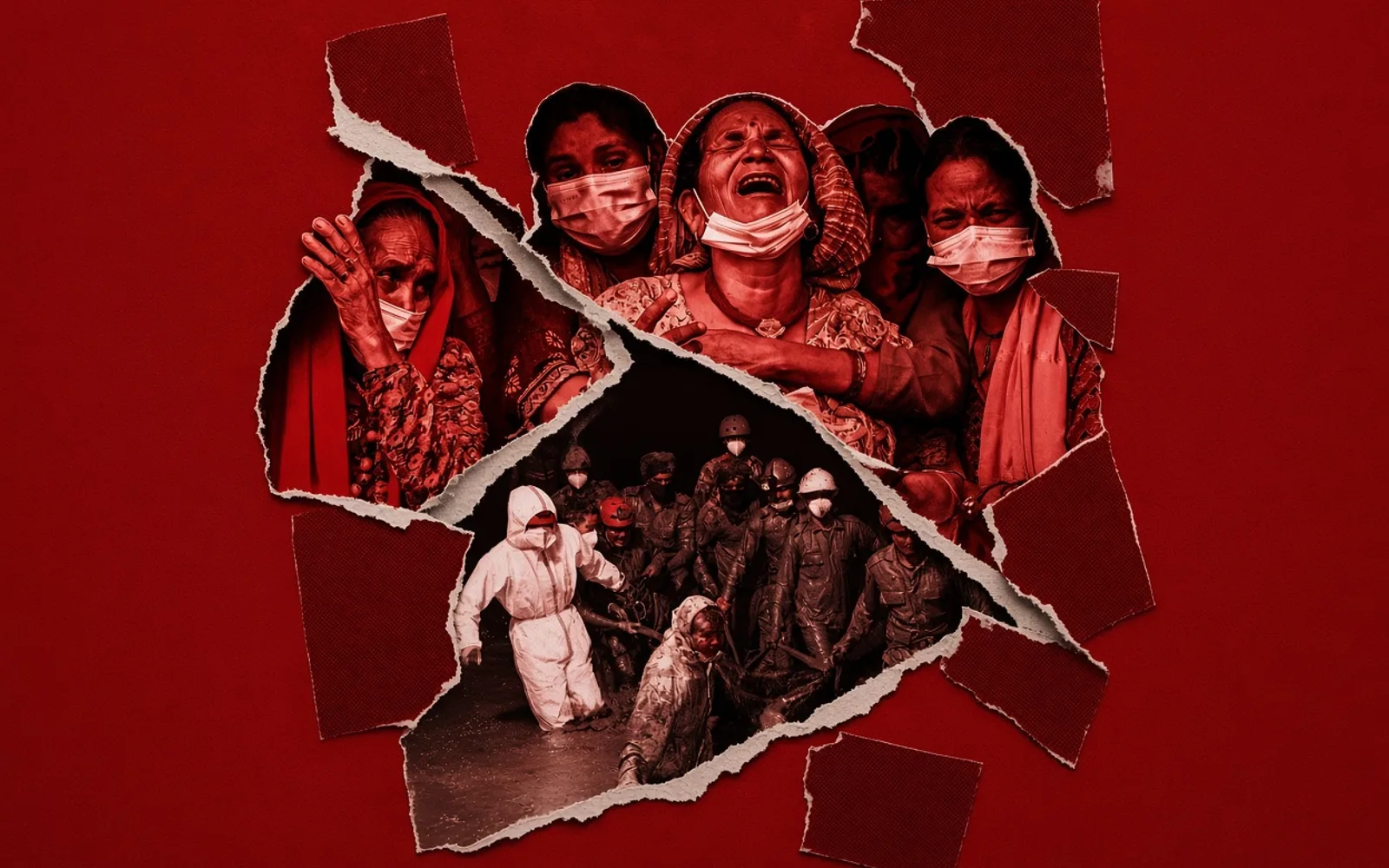
Specialists from India, China, South Korea, the United States, the UAE, Malaysia and Australia are now helping.
The government has largely confined itself to daily bulletins. When Nepali journalists asked Prakash Pokhrel, deputy spokesperson of the National Disaster Risk Reduction and Management Authority, why several sites remained untouched, he did not explain. Instead, he asked the reporter what he thought the reason was.
It was not an answer that gave families much comfort.
Nepal is not sending a bill
On 1 September, Foreign Minister Shisir Khanal said Nepal was changing the language it used with the outside world. The country would no longer ask only for aid, he said, but for "justice and compensation".
He named China, the United States and India as the world's major polluters.
Across the region, that was read as Nepal sending a bill to its largest neighbours.
Bhatta says that interpretation is too simple.
"Nepal is not demanding bilateral compensation," he said. "The Foreign Minister's clarification makes the government's position quite clear: Nepal has not asked India, China, the United States or any other country for bilateral compensation."
Nepal is not demanding bilateral compensation. The Foreign Minister's clarification makes the government's position quite clear: Nepal has not asked India, China, the United States or any other country for bilateral compensation.
Mentioning those countries, he says, should not be taken as a direct demand for money from them.
Nepal has instead applied to the UN's Fund for Responding to Loss and Damage — a mechanism intended to help countries pay for climate disasters they did little to cause.
The distinction is not technical. It is political.
Directly demanding money from India or China would mean a confrontation with the two countries Nepal can least afford to alienate. Both have already sent help. India's government says it has provided around 62 tonnes of relief supplies and forensic teams. China's government says it has sent about Rs336 million in assistance, along with 50 tonnes of relief goods.
Taking help from them while pointing to their role in the climate crisis may look awkward. Bhatta says it should not.
"Emergency relief and climate justice are two different issues," he said. "Relief addresses the immediate humanitarian crisis, while Loss and Damage addresses the longer-term question of how countries that are highly vulnerable to climate change can deal with the economic and human costs."
Emergency relief and climate justice are two different issues, Relief addresses the immediate humanitarian crisis, while Loss and Damage addresses the longer-term question of how countries that are highly vulnerable to climate change can deal with the economic and human costs.
India often makes a familiar argument in climate talks: Western countries polluted first and built their wealth through fossil fuels, so it is unfair to judge developing countries solely by their current emissions.
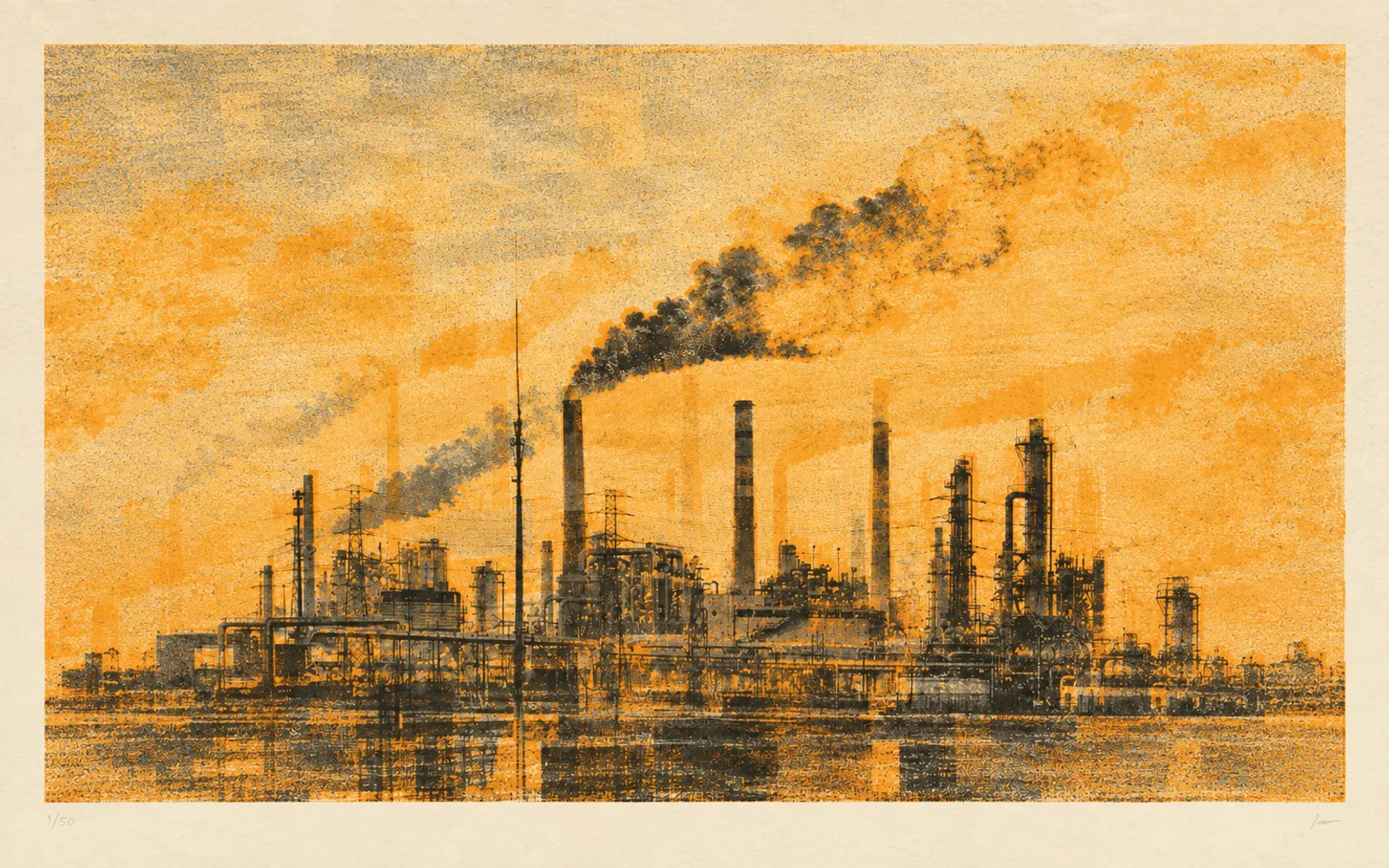
Bhatta thinks that argument actually helps Nepal's case.
"That argument can, in fact, strengthen the broader climate-justice discussion rather than end it."
Nepal's argument is not simply about who emits the most carbon today. It is about historical responsibility, emissions per person, and who has the resources to help countries living with the consequences.
Nepal itself, Bhatta notes, produces around one-thousandth of global greenhouse-gas emissions.
What counts as success in New York?
The money available is nowhere near enough.
According to Climate Home News, which tracks the fund, the UN loss-and-damage fund has about $820 million in pledges from wealthier countries. Only around $350 million has been cleared for use. The most any single project can receive is $20 million.
Nepal's current damage estimate is $2.6 billion. Even the biggest possible grant from the fund would cover less than 1 percent of the losses.
And the fund's board does not meet until December.
Nepal's own climate negotiator has already warned that the money may be symbolic. Former ambassador Vijay Kant Karna was more direct: "There is no money in the Loss and Damage Fund."
Another former ambassador, Dinesh Bhattarai, has tried to calm expectations at home.
"There is talk of Prime Minister Balen going to the UN and bringing back cash money," he said.
"Which is incorrect."
Bhatta says the prime minister's speech should not be judged by whether he returns with a cheque.
"The speech should be judged by what it helps Nepal achieve after the speech, rather than by whether there is an immediate financial announcement in New York."
The speech should be judged by what it helps Nepal achieve after the speech, rather than by whether there is an immediate financial announcement in New York.
The real questions are simpler:
- Does the world take Nepal seriously?
- Do governments make credible promises of support?
- Is Nepal still on the international agenda six months from now?
For Bhatta, the UN General Assembly is only the first stop. The goal should be to use New York to build pressure ahead of COP31 in November, where financial commitments are more likely to be negotiated.
"Nepal should therefore use the UNGA to build political momentum and COP31 to translate that momentum into concrete commitments and financing."
Nepal should therefore use the UNGA to build political momentum and COP31 to translate that momentum into concrete commitments and financing.
Nepal is also proposing a Himalayan Climate Risk and Resilience Initiative. The broad idea is to get countries in the region to monitor glaciers together and share warnings before a disaster unfolds.
That is easier said than done.
Much of the ice that threatens Nepal sits across the border in Tibet. China controls much of the data Nepal needs.

Bhatta says the project will fail if it is seen as Nepal's initiative alone.
"It will only work if it is designed as a regional cooperation mechanism rather than a Nepal-led project alone."
The system, he says, should be jointly funded and run through an independent technical body that collects, analyses and shares information.
"For Nepal, the initiative would ultimately be less about who controls the data and more about ensuring that critical information reaches vulnerable communities early enough to save lives."
For Nepal, the initiative would ultimately be less about who controls the data and more about ensuring that critical information reaches vulnerable communities early enough to save lives.
That is Nepal's strongest argument: this should not be another contest over Himalayan geopolitics. It should be about making sure people hear the warning before the water arrives.
The siren that never sounded
One of the destroyed projects, Upper Trishuli 1, was being built with $150 million in loans from the Asian Development Bank and the Asian Infrastructure Investment Bank.
The Indian news site Scroll obtained the banks' own oversight documents. In December 2024, an independent panel appointed by the ADB reviewed the project. It found that nobody had properly examined whether the plant could survive extreme weather.
The panel called that "a significant gap". It said the assessment had to be done immediately. It also said the plant's flood-warning system needed urgent redesign.
The panel returned in May 2025.
Neither recommendation had been carried out.
On the morning of 26 August, one worker who survived told Scroll that the siren never went off.
Industry figures reported by Peoples' Review show there were 1,433 people at the site. Most were rescued in the first days. Seven bodies have been recovered. The rest of the count is still open.
No one has yet been made to explain what happened in the 18 months between the warning and the flood.
From exporter to buyer
Nepal's electricity system runs largely on hydropower, and the Bhotekoshi valley was one of its engines.
The flood took out around a tenth of the country's power supply, according to the Nepal Electricity Authority. Some of the damaged plants had been running for decades. Devighat, on the authority's records, had generated electricity since 1984.
Nepal had only recently begun selling electricity abroad, including to India and Bangladesh. Those exports have now stopped.
On 14 September, India's Ministry of Power agreed to supply Nepal with electricity for 18 hours a day until the end of December.
Nepal had finally become an electricity exporter. Now it is buying power again.
Bhatta sees this as a temporary setback rather than a collapse of Nepal's energy strategy.
"When Nepal is short of electricity, its dependence on India naturally increases and that can reduce Kathmandu's room for manoeuvre in energy negotiations."
The point is obvious: when a country desperately needs power, it has less leverage in talks over price, trade and access.
But Bhatta does not believe Nepal should abandon hydropower. It should build better.
He argues for tougher risk assessments, better protection for power plants and transmission lines, functioning warning systems and a more diverse energy mix. Nepal must also keep enough electricity at home to cope with disasters, droughts and seasonal shortages.
"Nepal should continue developing its export market, but it should ensure that sufficient generation, storage and transmission capacity is available to meet domestic needs during periods of disaster, drought or seasonal shortages."
One power plant in the valley survived. At Super Trishuli, staff told the environmental news site Mongabay, the developers assessed the scale of a possible flood before construction began and placed the main structures well away from the river.
That decision increased the project's cost by around 10 to 12 percent, engineers quoted in the same reporting estimate.
It was money spent preparing for a disaster that might never come. Few developers along this river made the same choice.
One energy analyst told Mongabay bluntly that the valley was built "with cost, not resilience, in mind".
According to Nepal's hydropower industry association, newer plants with underground machine halls survived better because floodwater could not reach their most vulnerable machinery.
A young government, an early test
In the first days, Nepal turned down rescue offers from seven countries, including India, China and the United States. Later, as efforts to reach people in the tunnels stalled, it asked for specialist equipment and foreign help.
Information Minister Bikram Timilsina later admitted to the German broadcaster DW that, "on the very first day, we got a bit confused as to how to deal with the crisis."
Infrastructure Minister Sunil Lamsal, speaking to the Kathmandu Post, disagreed.
"There was no confusion. Not for a single minute."
On 2 September, 35 well-known figures from Nepali civil society signed an open letter accusing the government of mishandling rescue and relief operations. They argued that routing everything through a single central office — the government's "one-door" system, had slowed the response and pushed local councils aside.
Bhatta does not fully accept that criticism.
He says the early rejection of foreign help reflected Nepal's initial confidence in its own capacity, followed by a practical recognition that the disaster was too large for Nepal to manage alone.
"It showed Nepal's initial confidence in its own capacity," he said, "followed by a pragmatic recognition that a disaster of this scale required additional specialised expertise and equipment."
The other dispute concerns money.
Nepalis at home and abroad have donated more than Rs13 billion, about $123 million, to the prime minister's relief fund, according to figures reported by ABC News Australia. That does not mean the government should be spared criticism. It means the government has been given an enormous responsibility.
The centre has the army, the police, the diplomatic links and the money. Local councils know which homes have gone, who has disappeared, and which families need what.
"The challenge is therefore not necessarily choosing between the federal and local governments," Bhatta said.
The challenge is making them work together.
He is clear about one thing.
"The lesson should not be to recentralise disaster management."
And he adds the line the government should probably take most seriously.
"The government's responsibility now is to convert that public trust into transparent distribution, effective local delivery and clear accountability."
The government's responsibility now is to convert that public trust into transparent distribution, effective local delivery and clear accountability.
For now, that remains unfinished work.
Fifty-five water systems were destroyed. Of 15 water samples collected around Bidur, five contained E. coli, a bacterium that can cause severe stomach illness, the Kathmandu Post reported on 14 September.
Dr Niradhwaj Gharti Magar, who runs the public-health office in Rasuwa, says there has not yet been a major outbreak.
"We have seen some cases of common cold and cough, as well as viral fever. Health workers have been deployed and we have asked that patients with cold and cough be kept in isolation."
There is no road. Since the flood washed away the bridge, even patients living five minutes away cannot reach us.
But the more immediate problem is getting patients to medical care.
Three health posts have been destroyed, according to the World Health Organization's Nepal office. A hospital was damaged. Roads to two other facilities have been cut off.
Dr Rajendra Lama, who runs Trishuli Hospital, describes the situation simply.
"There is no road. Since the flood washed away the bridge, even patients living five minutes away cannot reach us."
Among the 3,600 people in emergency shelters are 1,233 children, counted by Nepal's National Child Rights Council. One hundred and two have no parent or relative with them. Another 439 have been separated from their families and are still waiting to be reunited.
The danger of rebuilding the same vulnerability
Asked what the valley might look like in two years, Bhatta does not begin with roads, bridges or housing. He begins with a warning.
"If we reconstruct the same roads, bridges and settlements in the same vulnerable locations without improving risk assessment, early-warning systems and infrastructure standards, we could be rebuilding the same vulnerability."
If we reconstruct the same roads, bridges and settlements in the same vulnerable locations without improving risk assessment, early-warning systems and infrastructure standards, we could be rebuilding the same vulnerability.
Nepal has had warnings before.
Fourteen months ago, in July 2025, a meltwater lake burst high in the mountains and destroyed the Rasuwagadhi border bridge in almost the same area.
Between 2015 and 2020, according to figures compiled by Scroll, floods and landslides damaged 34 hydropower plants across Nepal. In a single month of heavy rain in 2023, another 30 were damaged.
The mountains themselves are changing fast. A study published this year by Silwal and colleagues found glaciers in the region shrank more than four times faster between 2000 and 2023 than they did during the 36 years before that. Berkeley Earth, a US climate research group, calculated that August 2026 was the hottest month ever recorded at the site where the mountain broke away.
Steiner is careful not to say climate change directly caused the collapse.
"The physics of it is not something that has been made possible by climate change. This could have happened without it. But the chance of it happening, and the likelihood of it happening five years after a previous, similar event, we, as the scientific community, can be pretty confident about that."
The earlier disaster he refers to was in Chamoli, across the border in India, in 2021.
Two days before this article was written, four research bodies released a study of the Himalayan region. They were the International Centre for Integrated Mountain Development in Kathmandu, India's G.B. Pant National Institute of Himalayan Environment, the Integrated Mountain Initiative and Systemiq.
Their finding was alarming: out of roughly 40,000 glaciers across the Himalayas, only 21 are properly monitored from the ground.
They also warned that the region is approaching "peak water" by the middle of the century: the point when rivers stop expanding and begin to shrink permanently.
In India alone, the study identified nearly 200 dangerous glacial lakes. Fifty-six were rated as very high risk, held back by little more than loose rock and ice.
None of this tells Nepal when the next disaster will happen.
All of it suggests there will be one.
Rebuilding after this flood will also be harder than rebuilding after the 2015 earthquake. The earthquake destroyed buildings, but the land was still there. This flood has taken the land itself.
Some villages cannot be rebuilt where they once stood.
Former prime minister Baburam Bhattarai has warned against moving mountain communities down to distant flatlands, where people would lose their social networks, livelihoods and sense of place. He argues that safer sites should be found nearby. Sushil Gyewali, who oversaw reconstruction after the earthquake as head of the National Reconstruction Authority, agrees.
Yet nobody has publicly identified which villages will not be allowed to return.
Infrastructure Minister Lamsal says the government is offering displaced families around Rs15,000 a month for rent, along with prefabricated homes from China that can be assembled in a day. He estimates that resettlement will take two years.
The UN has appealed for $49.6 million to support 84,270 people for four months — enough, it hopes, to get them through a winter that is now only about six weeks away.
But money, temporary shelter and roads do not solve the deepest problem.
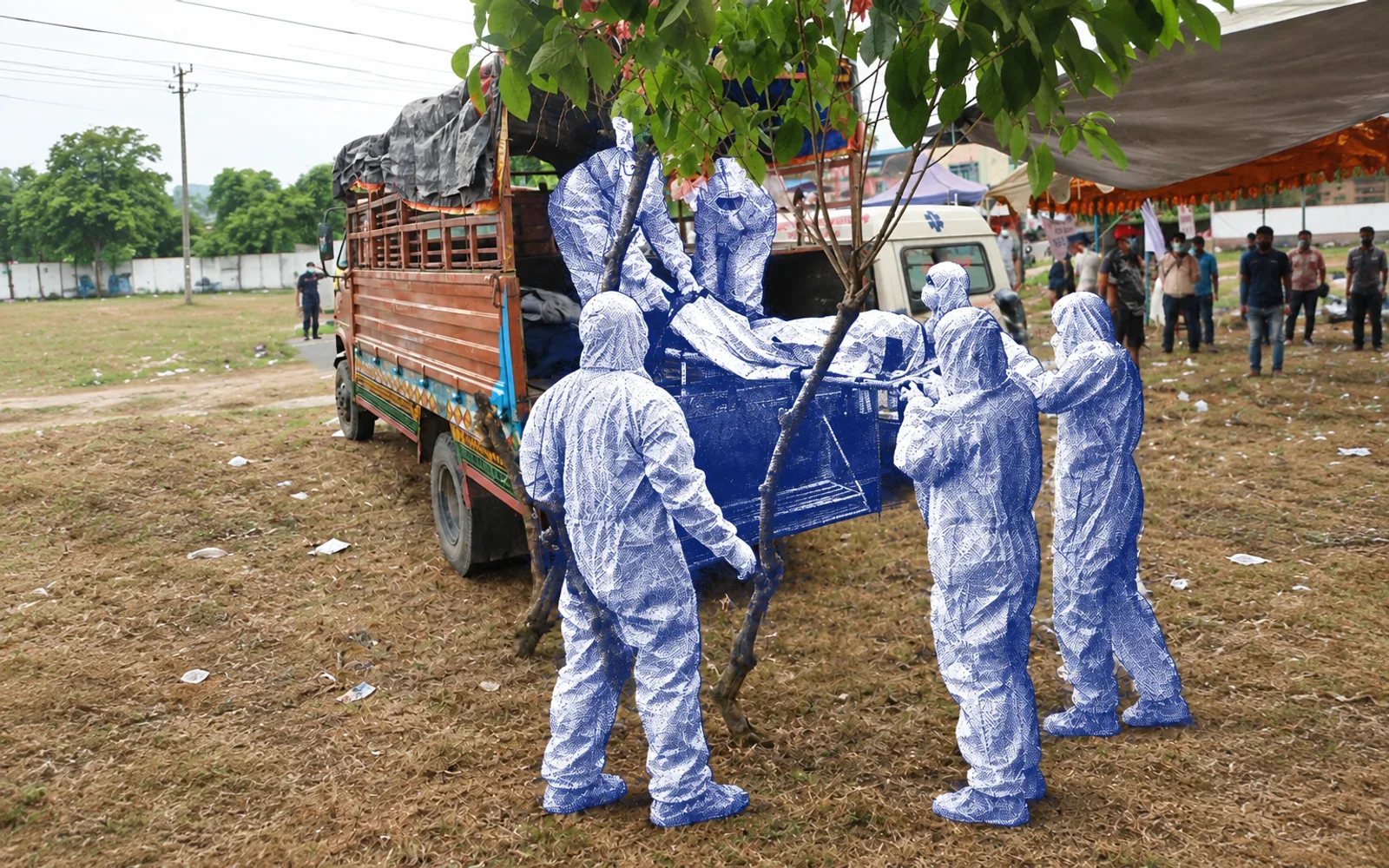
Most of the dead have not been found.
More than 5,500 people are still missing, on the government's own count. Families are giving DNA samples and waiting for a match that may never come.
Until a body is identified, there is no death certificate. Without one, there is no compensation, no insurance payment, no inheritance, no legal right to remarry, and no official recognition that a woman is a widow.
For thousands of families in Rasuwa and Nuwakot, this disaster will not end when the roads reopen or the power returns.
It will end, if it ever does, when someone can tell them what happened to their family.
Bhatta's final answer is the one worth holding on to, because it is also the standard by which Nepal's recovery should be judged.
"What matters most is how Nepal rebuilds, not simply how quickly it rebuilds," he said. "The real measure of recovery should be whether people are safer, whether infrastructure is more resilient, whether livelihoods have recovered and whether Nepal has learned enough from this disaster to reduce the consequences of the next one."
What matters most is how Nepal rebuilds, not simply how quickly it rebuilds. The real measure of recovery should be whether people are safer, whether infrastructure is more resilient, whether livelihoods have recovered and whether Nepal has learned enough from this disaster to reduce the consequences of the next one.
Eight days before New York, the speech is the easy part.
The damage surveys are still being written. The warnings issued in 2024 are still sitting in a bank's files, unread or ignored. And in five tunnels beneath the Bhotekoshi valley, 106 people are still waiting for a rescue operation that has not yet been able to begin.