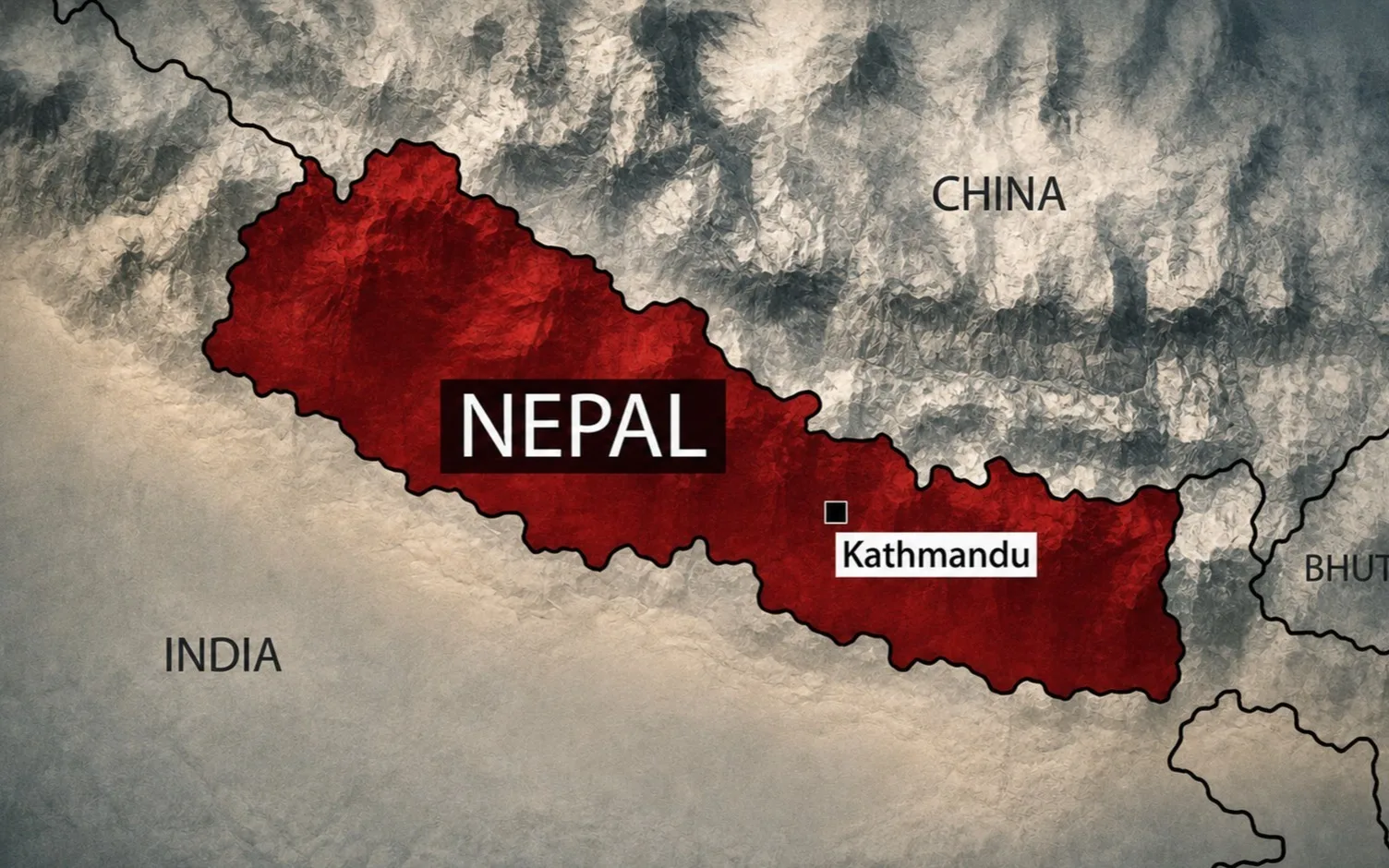
Nepal's devastating floods in late August 2026 were not merely the result of nature's fury. They were compounded by China's deliberate silence and delayed warnings, which left Nepal unprepared for the torrent that swept through its fragile Himalayan valleys. The tragedy has once again exposed Beijing's aggressive upstream engineering, its disregard for transboundary water cooperation, and its larger geopolitical motive: to destabilise its neighbourhood so that they are forced to divert attention from the path of progress. On August 27, 2026, a sudden outburst flood originating in Tibet surged into Nepal's Rasuwa district. Triggered by a landslide and glacial collapse, the floodwaters roared down the Trishuli and Bhotekoshi river corridors, destroying homes, bridges, customs yards, and police posts. By the time the waters reached Syabrubesi, the destruction was already irreversible. Hundreds were reported missing, thousands displaced, and critical infrastructure wiped out in minutes.
What made the catastrophe worse was the absence of timely alerts.
China's monitoring systems detected the flood upstream. Yet Nepal's Department of Hydrology and Meteorology received information only at 8:56 AM, a full 16 minutes after the flood had already entered Nepal at 8:40 AM. In disaster management, minutes matter. This delay costs lives, livelihoods, and precious time for evacuation.
China possesses advanced hydrological monitoring technology in Tibet, including satellite-linked sensors and dam surveillance systems.
Yet, when disaster struck, Beijing failed to activate its early warning mechanisms in time. Nepal's own monitoring stations were destroyed by the floodwaters, leaving the country entirely dependent on upstream alerts. Instead of sharing real-time data, China withheld information until it was too late. This was not an accident; it was a deliberate act of negligence. Such behaviour is consistent with China's broader approach to transboundary rivers. Whether in the Mekong basin or the Brahmaputra, Beijing has repeatedly withheld hydrological data, citing internal protocols or technical delays. The result is predictable: downstream nations suffer, while China maintains control over the narrative.
The question arises as to why China would delay warnings to Nepal during such a catastrophic flood?
The answer lies in geopolitics, but not in the conventional sense of territorial rivalry alone. Beijing's silence reflects a deeper strategy of control using water as a weapon to reinforce its dominance over fragile Himalayan neighbours. By withholding crucial information, China demonstrates its ability to dictate the terms of survival for downstream nations, reminding them of their dependence on its upstream power. This manipulation is not accidental. China's vast hydropower dams, river diversions, and tunnelling projects in Tibet are designed not only for energy security but also for geopolitical leverage. In fragile ecological zones, such heavy engineering destabilises river systems, magnifies flood risks, and leaves downstream countries vulnerable. By delaying alerts, Beijing signals that it alone decides when and how disaster information flows across borders. The motive is clear: to keep Nepal politically and economically unsettled, thereby increasing its reliance on China for aid, investment, and infrastructure rebuilding. In doing so, Beijing strengthens its grip on a strategically vital neighbour while showcasing its dominance in transboundary water politics. The floods thus become more than a natural calamity; they are instruments of geopolitical pressure, wielded through silence and control. China's upstream engineering in Tibet has long been a source of concern. Massive hydropower dams, river diversions, and tunnelling projects have narrowed river channels and altered natural flows. These interventions, carried out in seismically active and ecologically fragile zones, increase the risk of sudden floods downstream. Heavy engineering in the Himalayas destabilises slopes, accelerates landslides, and magnifies the impacts of glacial melt. The August 2026 flood was a stark reminder of how upstream interventions can trigger downstream disasters. China's obsession with hydropower and water diversion projects prioritises its own energy needs while leaving Nepal vulnerable to catastrophic floods. Nepal and China lack binding treaties on water sharing or disaster alerts. Which includes joint monitoring and flood forecasting, China maintains a one-sided arrangement where it controls upstream data but shares little. This information asymmetry leaves Nepal at the mercy of Beijing's goodwill, which was conspicuously absent during the August floods. China's exploitation of poor transboundary cooperation is not unique to Nepal. In the Mekong basin, downstream nations like Laos, Cambodia, and Vietnam have long accused Beijing of manipulating water flows to suit its own interests. The pattern is unmistakable: China uses its upstream advantage as a geopolitical weapon. 4 The Nepal floods of August 2026 were not just a natural disaster. They were an artificial catastrophe shaped by China's silence, delayed warnings, and aggressive upstream engineering. Beijing's failure to inform Nepal in time reflects a calculated geopolitical manoeuvre aimed at destabilising China's neighbourhood. By exploiting weak transboundary cooperation, China has turned rivers into instruments of power, sacrificing downstream lives for upstream control. The tragedy underscores the urgent need for stronger disaster coordination, regional water diplomacy, and international pressure on China to honour its responsibilities as an upstream power. Transparency, accountability, and binding agreements are essential to prevent future disasters. Nepal's floods exposed not only the fragility of Himalayan ecosystems but also the fragility of trust in China's role as an upstream neighbour. Until Beijing abandons its strategy of silence and aggression, downstream nations like Nepal will remain vulnerable and will continue to face indirect sabotage through its neighbourhood. The rivers of the Himalayas should be lifelines of cooperation, not weapons of geopolitical manipulation. The views expressed in this article are the author’s own.
Rohit Sharma is the CEO and co-founder of Thinkfi. OSINT expert with a focus on Chinese Influence ops and Cognitive warfare. ThinkFi is an Indian tech firm specialising in Artificial Intelligence and Machine Learning state-of-the-art solutions for advanced Open Source Intelligence research.