Nepal at the 81ˢᵗ UN General Assembly: From Global Visibility to Active Diplomacy
Reading
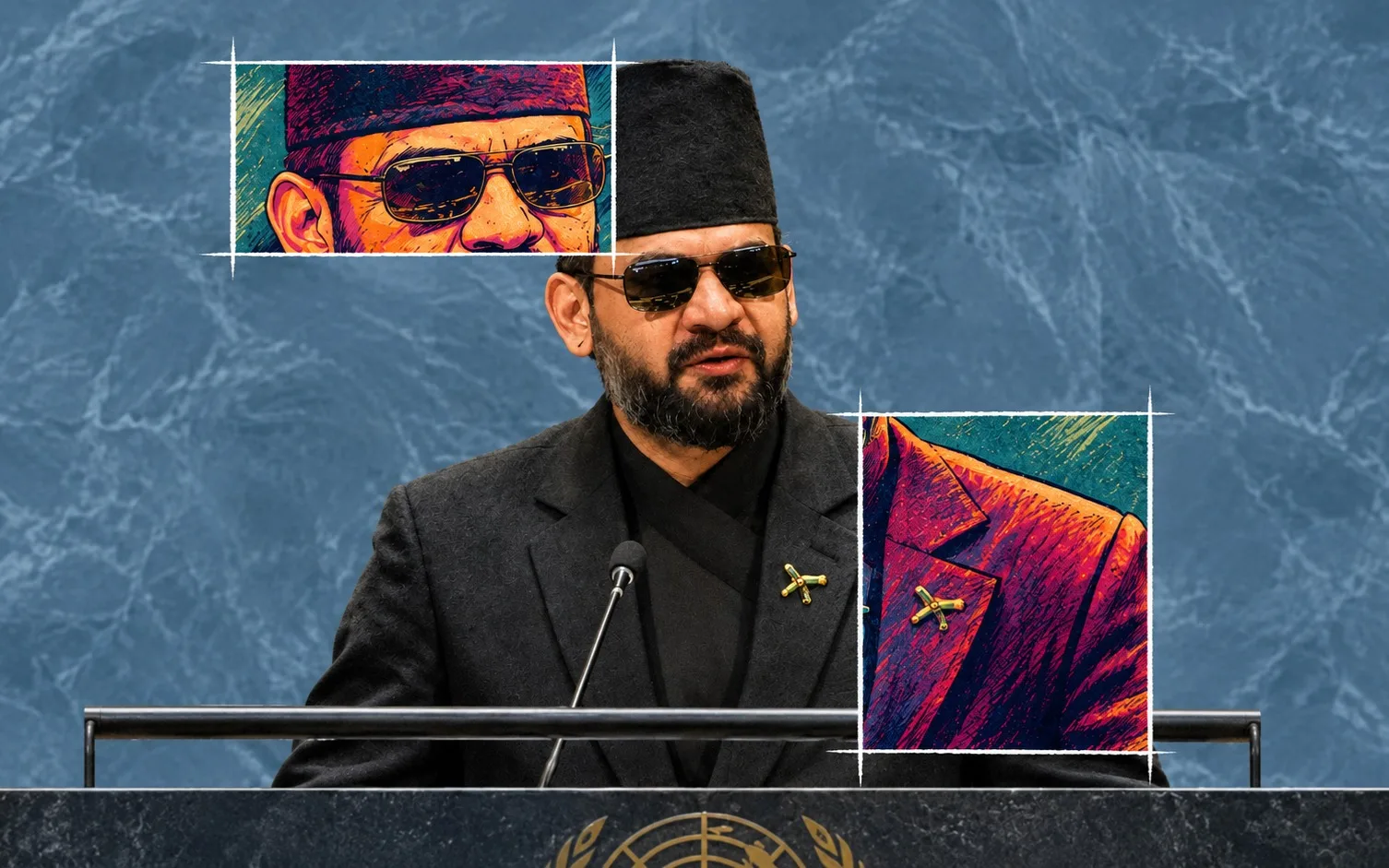
Nepal’s participation in the 81ˢᵗ Session of the United Nations General Assembly (UNGA) was marked by both Prime Minister Balendra Shah’s high-profile address and Foreign Minister Shisir Khanal’s extensive bilateral and multilateral diplomatic engagements throughout UNGA week.
The two roles complemented each other. The Prime Minister’s speech brought Nepal’s concerns, particularly climate change and the devastating Bhotekoshi–Trishuli floods, to the international spotlight. The Foreign Minister’s meetings helped carry those messages into direct discussions with governments, international organisations, development partners and other stakeholders. Together, they presented Nepal as a country seeking a more active and purposeful role in international affairs.
Why Prime Minister Balen Shah’s UNGA visit mattered
Prime Minister Shah’s participation came at a particularly difficult time for Nepal. The country was recovering from the devastating Bhotekoshi–Trishuli floods, facing major reconstruction needs and trying to present a new political and development direction after the political upheaval of 2025 and the March 2026 elections.
The importance of PM Shah’s visit, therefore, went beyond the visibility of a new and popular political leader appearing on the world stage. It gave Nepal an opportunity to connect an immediate national crisis with broader global issues such as climate justice, development financing, disaster preparedness, regional cooperation, and the reform of the international system.
The flood disaster had changed Nepal’s international priorities. Instead of going to New York mainly to discuss traditional development issues, Nepal could present the real human and economic consequences of climate change in the Himalayas.
Prime Minister Shah used that opportunity by beginning his speech with the human impact of the disaster: deaths, missing people, destroyed homes, roads, bridges and livelihoods. This gave Nepal’s climate diplomacy a direct human dimension.
The visit, therefore, served three purposes at the same time:
- Humanitarian diplomacy — drawing international attention to Nepal’s disaster.
- Climate diplomacy — strengthening Nepal’s case for climate justice and loss and damage support.
- Development diplomacy — seeking international support so disasters do not repeatedly destroy Nepal’s development gains.
That made the visit more important than a routine UNGA appearance.
Nepal as an early warning from the Himalayas
One of the strongest aspects of PM Shah’s speech was the attempt to change how the international community sees Nepal. Nepal has traditionally presented itself as a small, landlocked and developing country that needs international support. PM Shah presented a somewhat different image: Nepal as a country on the front lines of a global climate crisis and therefore an early warning for the rest of the world.
His description of the Bhotekoshi–Trishuli disaster as a “warning to the world” captured this message. He connected the disaster to rising temperatures, unstable mountain ecosystems, melting permafrost, glacial risks, floods and landslides. This is strategically important for Nepal.
Nepal does not have the economic or military power of major countries. But it has something increasingly important in global climate politics: the Himalayas. The Hindu Kush Himalaya is a critical ecological system for a huge population across Asia. By presenting Nepal’s experience as an early warning of future regional risks, Kathmandu can move from being seen mainly as a recipient of international assistance to being seen as a country with knowledge, experience and strategic relevance.
Climate justice at the centre
Climate justice was the central theme of PM Shah’s speech. He highlighted the gap between Nepal’s contribution to global greenhouse-gas emissions and the scale of the damage it faces from climate change. Nepal contributes less than 0.1 per cent of global greenhouse-gas emissions, yet it is experiencing increasingly severe climate-related impacts.
The speech also moved beyond a simple appeal for more international assistance. PM Shah made a distinction between relief, rehabilitation, and reconstruction on the one hand, and responsibility, reparation, and resilience on the other. That distinction is important because it moves the discussion from humanitarian assistance to the wider question of responsibility for climate vulnerability.
His call for grant-based rather than debt-based support was also important for Nepal. If every major climate disaster forces Nepal to borrow more money for reconstruction, climate change could gradually undermine development gains and increase the country’s debt burden. The issue, therefore, goes beyond the current flood. It concerns whether Nepal can continue its development path while facing increasingly frequent and costly climate shocks.
The Himalayan Climate Resilience Mechanism
The most concrete proposal in PM Shah’s speech was the creation of a Himalayan Climate Resilience Mechanism involving Nepal, India and China. The proposal included: satellite data sharing, glacier and glacial-lake monitoring, early-warning systems, disaster preparedness, information sharing and coordinated responses to cross-border climate disasters.
The idea is significant because climate risks do not respect national borders. A disaster in the Himalayas can affect Nepal, China and India, particularly through mountain ecosystems and downstream river systems.
The proposal also has foreign-policy importance. It creates a potential area for practical cooperation among Nepal, India and China without directly placing Nepal in the strategic competition between its two major neighbours. Instead of asking Nepal to choose between India and China, the proposal offers a possible framework for cooperation among all three countries on a shared non-traditional security challenge.
The challenge now is to move the proposal beyond the speech. A mechanism will require political agreement, institutional arrangements, financing, technical cooperation and data-sharing agreements.
A speech about more than climate change
Prime Minister Shah’s address eventually moved beyond climate change and into a broader discussion of the international system. His line about a world with “flawless logistics for war and broken logistics for food” became one of the most widely discussed parts of the speech.
The point was simple but powerful: the international system appears capable of moving weapons and military equipment quickly across borders, while struggling to ensure the movement of food, fuel and other essential goods. This connected global geopolitics with the everyday economic security of ordinary people.
The speech, therefore, covered much more than climate change. It touched on: food security, energy security, war and conflict, global inequality, international finance, development, multilateralism and human security.
This broadened Nepal’s UN message from a request for climate assistance into a wider discussion about the kind of international system that should exist for smaller and more vulnerable countries.
Why the speech became popular
The speech's popularity stemmed from several factors.
First, PM Shah used relatively simple and direct language rather than traditional diplomatic wording.
Second, the speech contained memorable ideas that could easily become headlines, social media posts, and short video clips. The contrast between the logistics of war and those of food was one such example.
Third, the speech matched PM Shah’s political image. His political appeal is closely associated with generational change, anti-establishment politics and direct communication. His UN appearance allowed him to take that style onto the international stage.
There was also strong domestic interest because PM Shah had rarely spoken publicly at length since becoming prime minister. His appearance at the UN, therefore, attracted unusual attention within Nepal.
Finally, the timing gave the speech emotional weight. The UN appearance came only weeks after the catastrophic floods. The speech was therefore not an abstract discussion about climate change; it was delivered by the leader of a country facing an immediate national tragedy.
The visit was about more than the Prime Minister’s speech
The UNGA visit should not be assessed only through PM Shah’s address. He also met UN Secretary-General António Guterres and Australian Prime Minister Anthony Albanese, and discussed the Bhotekoshi disaster, the continuing risk of glacial lake outburst floods, the relocation of riverside communities, green reconstruction, and Nepal’s transition out of the least-developed country category. This connected the public speech with specific diplomatic discussions.
At the same time, Foreign Minister Shisir Khanal was handling a much wider programme of bilateral and multilateral meetings. This division of responsibility was important because it allowed Nepal to use the entire UNGA week rather than treating the Prime Minister’s speech as the main event.
International media attention
The international coverage was broader than might normally be expected for a speech by the leader of a relatively small country.
Associated Press focused on Nepal’s floods and climate vulnerability. Reuters highlighted Nepal’s demand for grant-based support rather than additional debt, as well as the proposed Nepal-India-China climate mechanism. The Guardian also focused on the climate crisis, the Himalayan disaster and Nepal’s vulnerability.
India Today highlighted the broader geopolitical significance of bringing India and China into a shared Himalayan climate framework. Other international outlets, including Al Jazeera and Deutsche Welle, also covered the climate and Himalayan dimensions.
There was also lighter coverage of PM Shah’s distinctive sunglasses and personal style. This showed both the advantage and the risk of personal visibility. A recognisable political figure can attract international attention, but personal image can sometimes overshadow the substantive issues being raised.
Nevertheless, the broader international discussion largely linked PM Shah’s visit to Nepal’s climate vulnerability, the Himalayan disaster, and the need for greater international cooperation.
What the visit could mean for Nepal’s development
The most important long-term opportunity created by the visit is the possibility of putting climate resilience at the centre of Nepal’s development strategy. For decades, Nepal’s development agenda has focused on infrastructure, employment, connectivity, hydropower, tourism and poverty reduction.
The climate crisis now requires another question: Can Nepal’s development survive climate shocks? A road that is repeatedly destroyed by floods is not sustainable development. A hydropower project without adequate climate-risk planning is vulnerable to development. A settlement built in an increasingly unstable river corridor creates future humanitarian and economic costs.
The UN speech, therefore, pointed toward a shift from disaster response to disaster preparedness and resilience. This has implications for infrastructure planning, hydropower, roads and bridges, urban development, insurance, agriculture, water management, early-warning systems, glacier monitoring, digital and satellite technology, disaster-response institutions and international development financing.
The real legacy of the visit will therefore depend not on the speech itself, but on whether Nepal can turn its international climate argument into a national development strategy.
A new diplomatic identity for Nepal
The visit potentially signals a change in Nepal’s international positioning.
The traditional narrative has been: Nepal is a small developing country that needs international assistance.
The emerging narrative from PM Shah’s speech is closer to: Nepal is a vulnerable Himalayan country experiencing early consequences of global climate change and therefore has a legitimate voice in shaping the international response.
That is a more assertive diplomatic identity. Nepal can use this position to engage India and China on Himalayan resilience, the European Union and other partners on climate finance, development banks on resilient infrastructure, the United Nations on loss and damage, technology partners on satellite monitoring and early-warning systems and international investors on resilient infrastructure and green energy. The UNGA speech can therefore serve as the starting point for more coherent climate-development diplomacy.
Beyond the UNGA Speech: FM Shisir Khanal’s Active Diplomacy
While Prime Minister Shah’s speech provided the most visible moment of Nepal’s UNGA participation, Foreign Minister Shisir Khanal’s extensive diplomatic programme provided another important dimension.
The delegation led by the foreign minister participated in more than 80 meetings and programmes during the UNGA period. These included meetings with heads of government, foreign ministers, senior UN officials, representatives of international organisations, development partners and other stakeholders.
This matters because the UN General Assembly is not only a place for leaders to deliver speeches. It is also one of the world’s busiest diplomatic environments. Leaders, foreign ministers, senior officials, international organisations, development agencies, business representatives, academics and civil society actors all come together in New York within a short period. For Nepal, making full use of that opportunity was strategically important.
Why diplomacy beyond the main speech matters
A speech establishes a position. Bilateral meetings create the possibility of turning that position into cooperation.
Nepal arrived at the UNGA facing several challenges simultaneously. It needed international support following the Bhotekoshi floods. It wanted to strengthen its climate diplomacy. It needed development finance, investment, connectivity and economic partnerships. It also wanted to reinforce relations with India and other countries and strengthen its position in the UN and the wider Global South. FM Khanal’s meetings allowed these issues to be raised repeatedly with different governments and institutions.
With development partners, the focus could be reconstruction and climate finance. With neighbouring countries, the discussions could focus on regional cooperation and disaster response. With major economic partners, the agenda could include trade, investment, labour mobility, tourism and connectivity. With UN officials, Nepal could discuss peacekeeping, climate change, development and multilateral reform.
This is particularly important for a country such as Nepal. It does not have the economic or military power of major states. Its influence must therefore be built through relationships, credibility, coalition-building and consistent diplomatic engagement.
A wide diplomatic outreach
FM Khanal met a broad range of foreign ministers and senior officials, including Bhutanese Prime Minister Tshering Tobgay; Indian External Affairs Minister S. Jaishankar; Polish Foreign Minister Radosław Sikorski; Pakistan’s Deputy Prime Minister and Foreign Minister Mohammad Ishaq Dar; Japanese Foreign Minister Toshimitsu Motegi; German Federal Minister for Economic Cooperation and Development Reem Alabali Radovan; Finnish Foreign Minister Elina Valtonen; Icelandic Foreign Minister Porgerour Katrin Gunnarsdottir; Slovak Foreign and European Affairs Minister Juraj Blanár; Maldivian Foreign Minister Abdulla Khaleel; Australian Foreign Minister Penny Wong; Kazakhstani Foreign Minister Mukhtar Tileuberdi; Sri Lankan Foreign Minister Vijitha Herath; Armenian Foreign Minister Ararat Mirzoyan; Romanian Foreign Minister Oana-Silvia Toiu; Portuguese State and Foreign Minister Paulo Rangel; UK Minister of State for International Development Kirsty McNeill; and senior officials from the United States, European Union and United Nations.
The geographical spread is itself important. Nepal’s engagement was not focused on one region. It extended across South Asia, East Asia, Europe and other parts of the world. FM Khanal also met senior UN officials, including UN General Assembly President Khalilur Rahman, UN High Commissioner for Human Rights Volker Türk, Under-Secretary-General for Peace Operations Jean-Pierre Lacroix, Under-Secretary-General for Operational Support Atul Khare, and Senior Vice-President of the U.S. Chamber of Commerce Atul Keshap.
These meetings allowed Nepal to discuss multilateralism, human rights, peacekeeping, climate resilience and the future of the UN system.
Turning the flood disaster into sustained diplomacy
One of the strongest aspects of the programme was the consistency with which Nepal’s flood disaster was raised. The issue did not end with the Prime Minister’s UN speech. It became a recurring subject in FM Khanal’s bilateral and multilateral meetings.
The Foreign Minister thanked neighbouring countries, friendly governments and international partners for the search, rescue and humanitarian assistance already provided and sought additional support for recovery and reconstruction.
With Germany, discussions included recovery, rehabilitation, reconstruction, climate-resilient infrastructure, disaster preparedness, and capacity building. With Finland, Nepal raised recovery needs, climate cooperation and technology. With the United Kingdom and Australia, post-disaster recovery and reconstruction were also discussed.
The engagement with the United Arab Emirates produced a particularly concrete result. FM Khanal thanked the UAE for its support for flood-affected communities and for an additional commitment of US$30 million in assistance.
The importance of these meetings goes beyond the immediate financial support. They help keep Nepal’s disaster recovery within the wider international discussion on climate adaptation, resilient infrastructure, early-warning systems and development financing.
India, China and Nepal’s regional position
For Nepal, engaging India and other major powers on the same diplomatic platform is especially important. Foreign Minister Khanal’s meeting with Indian Foreign Minister S. Jaishankar focused on the longstanding Nepal-India relationship and support following the floods.
At the same time, Nepal used the broader UN platform to promote a Himalayan approach to climate resilience that involves Nepal, India and China. This offers an important foreign-policy opportunity. Nepal’s relations with India and China are often discussed mainly in terms of political and strategic competition. Climate change, disaster management, mountain ecology, and early-warning systems are other areas where practical cooperation is possible.
The proposed Himalayan Climate Resilience Mechanism could therefore become an interesting part of Nepal’s foreign policy if it is followed by sustained diplomacy.
Expanding Nepal’s diplomatic network
One of the most concrete outcomes of the UNGA visit was the establishment of diplomatic relations with Grenada, Namibia and Senegal. This brought the number of countries with which Nepal has formal diplomatic relations to 188.
Establishing diplomatic relations may appear symbolic at first, but it creates a foundation for future political, economic and people-to-people cooperation. For Nepal, expanding diplomatic relations into the Caribbean and Africa also creates opportunities to build wider coalitions within the United Nations and other multilateral institutions.
The visit also produced several practical agreements. Nepal and Rwanda signed a General Cooperation Agreement. Nepal and Serbia established a Bilateral Consultations Mechanism. Nepal and Belarus signed a visa-exemption agreement for diplomatic, official and service passport holders. Nepal and Kazakhstan also signed a similar visa-exemption agreement for diplomatic and official/service passport holders.
These agreements show why the UNGA sidelines are so important. The General Debate may receive the most attention, but many of the practical building blocks of international relations are developed through meetings around it.
Connecting foreign policy with economic development
Another important feature of FM Khanal’s diplomacy was that Nepal’s foreign policy was not presented only in political terms.
At the Asia Society, in a programme titled “Steering Nepal’s Future in Asia’s Rising Century,” FM Khanal presented a vision focused on governance, the rule of law, regional connectivity, clean energy, innovation and deeper engagement with the international community. He also argued that Nepal’s landlocked geography could be transformed into a strategic opportunity through connectivity and international engagement.
His engagement with the Group of Landlocked Developing Countries focused on multimodal connectivity, transit infrastructure, hydropower, digital transformation and service exports. This broader approach is important because foreign policy and economic development are increasingly connected. Diplomatic relations can contribute directly to investment, tourism, energy trade, labour mobility, infrastructure financing, technology transfer and market access.
A foreign minister’s role at a gathering such as the UNGA, therefore, goes beyond traditional political diplomacy. It also involves presenting Nepal as a country for investment, partnership, technology cooperation and economic engagement.
Nepal and the Global South
Foreign Minister Khanal also used the UNGA to reinforce Nepal’s position within the wider Global South. Nepal had been serving as chair of the Least Developed Countries’ Global Coordination Bureau. At the LDC ministerial meeting, FM Khanal highlighted sustainable graduation, climate justice, concessional development finance, debt sustainability, digital capacity and reform of global governance. Nepal subsequently handed the chairmanship to The Gambia for the 2026–2029 period.
Foreign Minister Khanal also addressed the G77 and China ministerial meeting, where Nepal called for stronger multilateralism, greater representation of the Global South, and more effective financing, technology transfer, and capacity building.
This is important because Nepal’s international influence does not come only from its bilateral relationships with powerful states. It can also come from working with countries that face similar challenges.
Nepal’s concerns as a landlocked developing country overlap with those of other countries facing high transportation costs, limited market access and infrastructure constraints. Its climate vulnerability overlaps with that of small-island and other climate-exposed states. Its long experience in peacekeeping also connects it with countries involved in UN peace operations. Effective diplomacy allows Nepal to build different coalitions around different issues.
Climate diplomacy as a continuing campaign
Climate justice was another area where FM Khanal’s engagements complemented PM Shah’s speech. At the Secretary-General’s High-Level Meeting on Climate Action and Just Transition, FM Khanal called for accessible climate finance, stronger adaptation, early warning systems, access to technology, and an adequately funded Loss and Damage Fund. He also called for stronger international action to protect the 1.5-degree Celsius target.
At other international meetings, including the G7 Development Ministers’ meeting and the Climate Vulnerable Forum–V20 Leaders’ Meeting, Nepal again raised climate-resilient development, early warning systems, and international cooperation.
Nepal’s own “Sagarmatha to the Sea: A Call to Action for a Climate-Resilient Future” event expanded the message by connecting mountain, island and coastal perspectives. Bhutan, the Maldives, New Zealand, Samoa and Tajikistan participated alongside UN agencies and other partners.
The consistency matters. Countries are more likely to remember a national position when it is presented repeatedly across different international forums.
Peacekeeping as a diplomatic asset
Foreign Minister Khanal also used the visit to reinforce one of Nepal’s most established contributions to the international system: UN peacekeeping.
In his meeting with UN Under-Secretary-General for Peace Operations Jean-Pierre Lacroix, FM Khanal reaffirmed Nepal’s commitment to UN peacekeeping and highlighted Nepal’s role as one of the major troop- and police-contributing countries. He also sought greater leadership opportunities for Nepali personnel within UN peace operations.
This is an example of how Nepal can turn an existing national contribution into a foreign-policy asset. Nepal has provided personnel to UN peace operations for decades. The next challenge is to translate that contribution into greater institutional representation and leadership opportunities.
Managing such a large diplomatic programme
The scale of FM Khanal’s programme is noteworthy in itself. The Foreign Ministry’s account recorded more than 80 meetings and programmes, including formal UN sessions, bilateral meetings, ministerial gatherings, side events, international organisations, and diaspora engagements.
Such a schedule requires much more than personal stamina. It requires preparation, briefing, coordination, prioritisation, and follow-up. Every bilateral meeting needs a clear purpose. Every multilateral forum requires an understanding of other countries' positions. Agreements require technical preparation by officials.
The value of FM Khanal’s role was therefore also institutional. He provided political leadership for the diplomatic machinery while the Prime Minister largely focused on Nepal’s main General Debate address and selected high-level meetings.
Why New York matters so much for Nepal
The UNGA week offers a major diplomatic advantage to countries such as Nepal. Under normal circumstances, meeting the foreign ministers of Australia, India, Japan, Germany, the United Kingdom, Finland, Poland, Pakistan, Sri Lanka, Armenia, Romania, the Maldives and other countries would require separate diplomatic travel and extensive preparation. In New York, many of these ministers are present within the same diplomatic environment for several days. For a country with limited diplomatic resources, this creates significant efficiency.
The same applies to international institutions. UN officials, development actors, humanitarian organisations, civil society representatives, business leaders, academics and media organisations all come together in New York. This allows a foreign minister to communicate Nepal’s priorities to many different audiences while also identifying opportunities for cooperation.
For Nepal, this is particularly useful because its international agenda is diverse. It needs climate finance from some actors, development cooperation from others, trade and investment from others, political support from others, and coalition-building in multilateral institutions from still others. The UNGA therefore, becomes a kind of annual diplomatic marketplace for Nepal’s national interests.
From visibility to foreign-policy capital
The main question now is how Nepal can convert the visibility generated in New York into long-term foreign-policy gains.
The establishment of three new diplomatic relationships is one tangible result. The agreements with Rwanda, Serbia, Belarus and Kazakhstan provide another. The additional financial commitments from the UAE and the United States demonstrate that bilateral diplomacy can also produce immediate practical benefits.
But the wider network of relationships is also equally important. A foreign minister does not need to secure immediate agreement at every meeting. Some meetings build trust. Others open communication channels. Some identify future areas of cooperation. Others help Nepal understand another country's position before negotiations in a multilateral forum. This is especially important for Nepal because many of its interests depend on coalition-building rather than unilateral influence.
A more visible and purposeful Nepalese foreign policy
Taken together, the UNGA engagements suggest an effort to make Nepal’s foreign policy more visible, more diversified and more closely connected to national development priorities. The agenda included: climate and disaster diplomacy; development finance; economic and investment diplomacy; connectivity; clean energy; digital transformation; peacekeeping; human rights; Global South cooperation; LDC and LLDC advocacy; multilateral reform; technology and early-warning systems; and diaspora engagement.
This breadth matters because Nepal’s international interests have become more complex. Foreign policy can no longer be neatly separated from economic development, climate resilience, migration, energy, technology, and national security.
The Asia Society engagement was particularly revealing in this regard. The message was that Nepal should not define itself only by its landlocked geography or small size. Its location between major global economies, hydropower potential, connectivity opportunities, human resources, and international relationships can also be considered strategic assets.
Overall assessment
Nepal’s participation in the 81ˢᵗ UN General Assembly should therefore be understood as a broader diplomatic exercise rather than simply a high-profile international appearance. Prime Minister Balendra Shah’s address provided the political headline. It presented Nepal’s climate vulnerability, the Bhotekoshi disaster and the country’s demand for climate justice to the international community.
Foreign Minister Shisir Khanal’s extensive programme provided the second layer: the sustained diplomatic work needed to reinforce those messages through direct relationships with governments, UN agencies, development partners and other stakeholders.
The combination was particularly important because Nepal was dealing with several challenges at once. It needed international support after the floods. It needed greater recognition of its climate vulnerability. It needed investment and development partnerships. It needed to strengthen relations with its immediate neighbours, the wider region and major global powers. It also needed to reinforce its position within the United Nations and the Global South.
The visit produced several concrete outcomes, including diplomatic relations with Grenada, Namibia and Senegal, bringing Nepal’s formal diplomatic relations to 188 countries; cooperation and consultation agreements with several countries; visa-exemption agreements with Belarus and Kazakhstan for diplomatic and official/service passport holders; additional international assistance for flood recovery; and high-level discussions on climate resilience, development, peacekeeping, connectivity and multilateral cooperation.
More importantly, however, the visit demonstrated the value of sustained diplomatic presence. For a country such as Nepal, foreign-policy influence is built gradually. It comes from being present when decisions are made, maintaining relationships with different political and geographic groups, presenting national priorities consistently, building coalitions and following up on commitments.
That is why FM Khanal’s numerous meetings matter significantly. The Prime Minister’s UNGA speech was perhaps the most visible part of Nepal’s presence in New York; the wider diplomatic programme, on the other hand, helped turn that visibility into a broader conversation about Nepal’s interests and possibilities. The strongest message from the visit is therefore that Nepal can use international platforms more strategically to connect foreign policy with national development.
The next test is implementation. The diplomatic relationships established in New York will need follow-up. Financial commitments will need to translate into effective recovery and reconstruction. The proposed Himalayan climate cooperation will require sustained discussions with India, China and other regional partners. Nepal’s demands for climate finance will require continued engagement within the UN climate system. New agreements will need to produce practical economic, political and people-to-people cooperation.
If that follow-up is sustained, the UNGA visit could become more than an unusually busy diplomatic week. It could mark the beginning of a more proactive phase in Nepal’s foreign policy—one in which the country seeks not merely to participate in international affairs, but to use its diplomatic relationships more systematically to advance climate resilience, economic development, connectivity, investment, energy cooperation and wider national interests.
In that sense, the importance of FM Khanal’s New York engagement does not lie simply in the number of meetings. It lies in what those meetings represent: an effort to place Nepal in more conversations, with more partners, across more regions and on more substantive issues.
For a country seeking to strengthen its international standing while pursuing economic transformation at home, that broader diplomatic presence is not an accessory to foreign policy. It is foreign policy itself.
Mahesh Bhatta is an international relations analyst based in Kathmandu, Nepal