A new world of gods and monsters
A review of Christopher Nolan's latest cinematic offering.
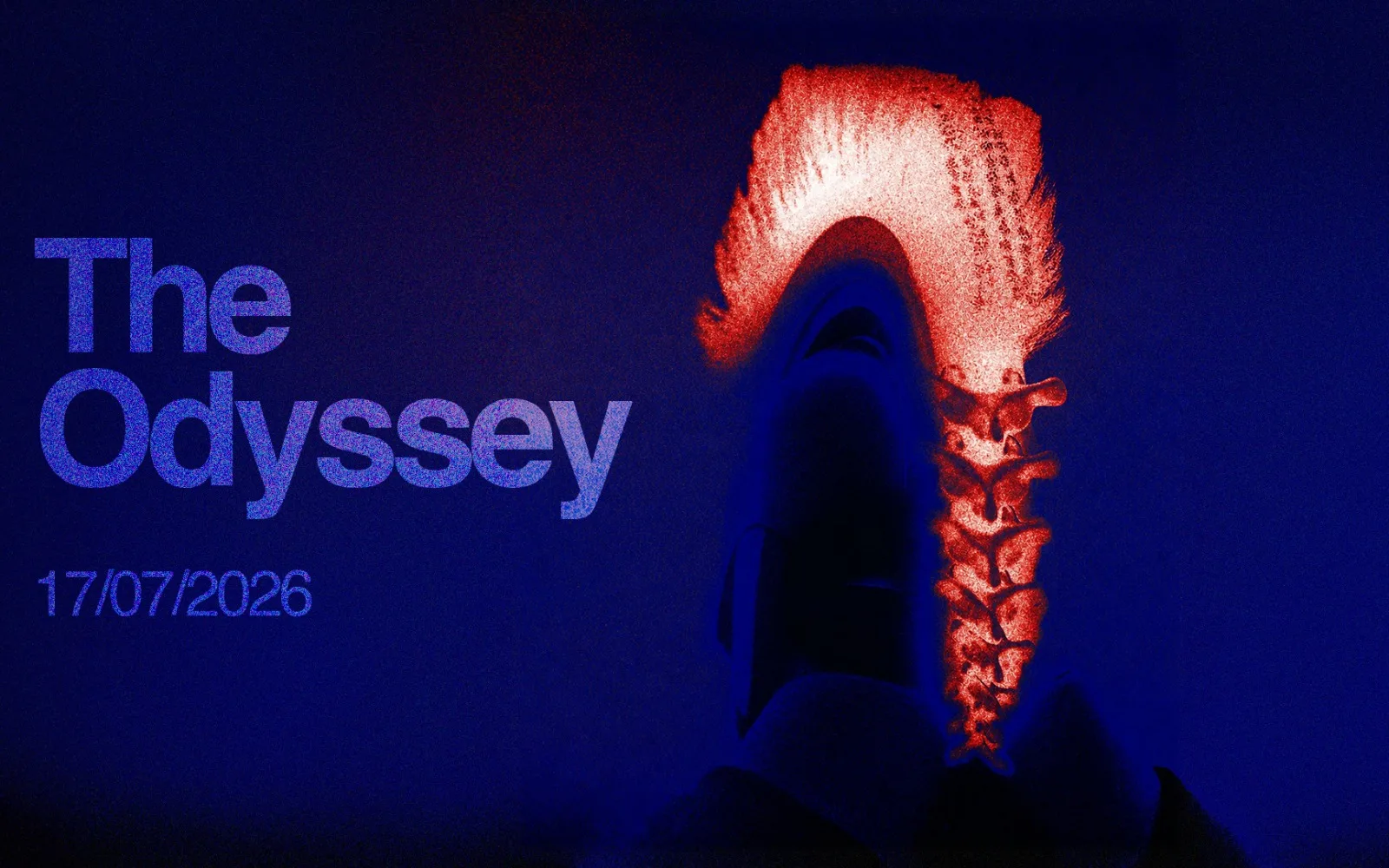
Acouple of years ago, Christopher Nolan’s Oppenheimer cleaned up at the box office and the Oscars, winning Best Picture and Best Director among other awards. For quite some time, for Nolan, the big Oscar was a matter of ‘when’ rather than ‘if,’ and Oppenheimer with its perfect mixture of cerebral depth, moral complexity, and epic scale was the perfect vehicle.
Afterwards, naturally, the question for every serious film-goer and Nolan’s vast fanbase was: How will the hottest director of our time follow up this one? When Nolan announced his next project -- an adaptation of Homer’s The Odyssey -- the anticipation was at fever pitch. The teaser trailer and information about the cast only turned up the heat. Expectations were so high, it almost seemed like we were all being set up for disappointment.
But then the film landed, and now we can all breathe a sigh of relief. Christopher Nolan is a director at the height of his creative powers, and his film is the kind of new epic adaptation that Homer’s ancient epic deserves. Most of us are at least familiar with some of the tales from The Odyssey, and so the film plays like a familiar raaga -- a long piece of music with all the required beats, with a few bravura flourishes in story-telling and editing.
Ever since his early hit Memento, Nolan has been a master at breaking up linearity and punctuating his stories with a certain emotional beat. After all, that’s how memory and recounting works, doesn’t it? We remember part of a story, then another part, and much later, we remember the part that really hurts so we were avoiding thinking about it. The inner journey of Odysseus is the one about how battle and life experiences change us forever. It is impossible to ever really go home, not because home has changed, but because we have. Frodo at the end of Lord of the Rings realizes he can never return to the simplicity of life in the Shire, because that innocence is gone.
The inner journey of Odysseus is the one about how battle and life experiences change us forever.
Odysseus, perfectly acted by Matt Damon, is a deeply flawed hero who makes blunder after blunder, and perhaps turns against his own principles at many points in his journey. But then, who are we to say those decisions were blunders if we were not with him in the trenches in the heat of the battle?
To perfectly weave the emotional texture of the film with the visually epic scale is a daunting creative challenge. Nolan hits us with set piece after set piece, until we give up trying to keep up with every detail and let the picture engulf us. The Cyclops sequence alone, in any other film, could serve as a concluding coup de grace, but here it is just another part of a long and perilous journey. Anne Hathaway, playing the long-suffering Penelope waiting back home in Ithaca is just the right touch of histrionic and does some of the best acting in her career. Tom Holland as Telemachus projects a mix of naïve and brave – a young man who never knew his father but someone who feels his presence within his heart.
Nolan prides himself on his use of practical effects, and he uses as little CGI as possible and certainly no AI, as far as I know. This gives the scenes a visceral feel that is absent in the CGI-drenched landscape of superhero films we have been living through for some years now. Everything is consequential and we do care about the characters and their fate. And though Nolan is creating a new world of gods and monsters, his interpretation of this pantheistic world is subtle. Do Zeus and Poseidon really exist, or are they simply manifestations of belief? The forms of Greek tragedy and a somewhat non-naturalistic manner of speaking is held up: a reminder that even in Nolan’s new world, we are watching a very ancient piece of drama, a story as old as Western story-telling itself.
In Nolan’s new world, we are watching a very ancient piece of drama, a story as old as Western story-telling itself
Christopher Nolan is arguably the most exciting director of our moment, and at age 56, I hope he is at a prime mid-career junction. He has so far made 13 theatrical feature films, and not a single one of them has been a dud or a flop. After making Oppenheimer and The Odyssey back to back, it is tempting to wonder if this is where he peaks, if he will now rest a bit and then go into projects that are not quite so ambitious. That’s not necessarily a bad thing: I would be very interested in seeing him do a smaller, more intimate picture that tackles his human interests while not caring so much about box office. Or maybe, after finding a 9th gear with Homer, he will outdo himself with a 10th. I for one wouldn’t bet against him.
Abak Hussain is a writer, journalist, and movie nerd.