Opposition Rejects the Constitution Amendment Committee
A disagreement has arisen among the opposition parties regarding the special parliamentary committee formed to amend Bangladesh’s Constitution. While the opposition questions the committee's formation process, the panel continues to press ahead with its work.
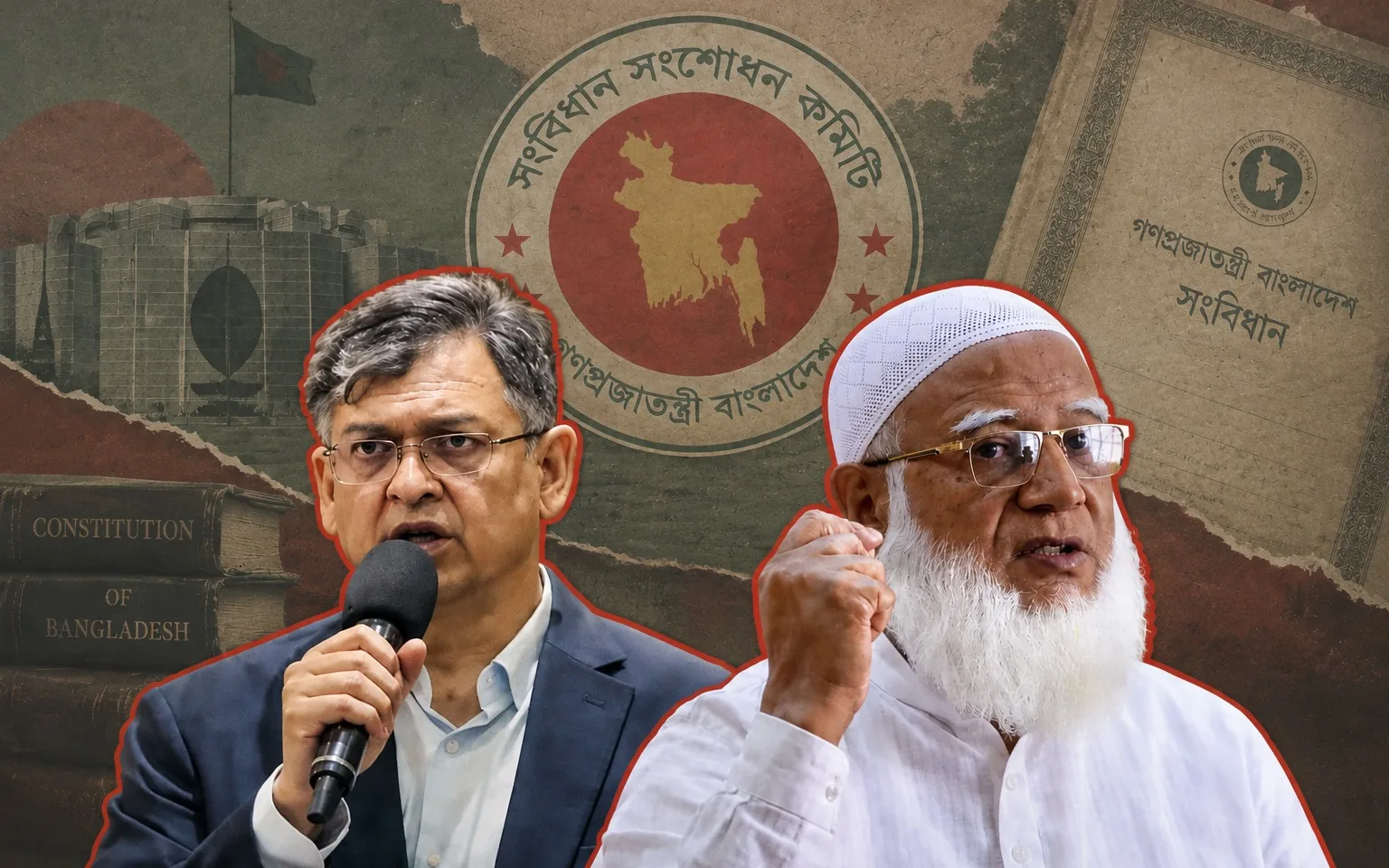
In a Nutshell:
- Jamaat-e-Islami led 11-Party Alliance, declined to participate, arguing that the implementation of reforms agreed through the July National Charter and referendum should follow the constitutional reform mechanism rather than be limited to a parliamentary committee.
- A 12-member parliamentary special committee, chaired by Home Minister Salahuddin Ahmed, has been formed to work on constitutional amendments linked to the July National Charter.
- The committee held its second meeting on September 20 and invited parties that signed the July National Charter to share their views where five positions originally reserved for opposition representatives remain vacant after opposition parties did not nominate members.
Context
The debate over constitutional reform began during the interim government, when a Constitutional Reform Commission prepared recommendations after consultations with political parties and other stakeholders. These proposals later became part of the July National Charter. A parliamentary committee was subsequently created to take the amendment process forward. The committee initially had 17 planned positions, with five reserved for opposition representatives, but it currently has 12 members because those nominations were not submitted.
Why it matters
The government has described the parliamentary committee as a way to bring different views into the amendment process, while opposition parties are questioning whether this is the appropriate mechanism for implementing the reforms associated with the July National Charter and referendum. The referendum result can be read as showing that voters want constitutional change and current disagreements remain over how that mandate should be translated into actual amendments. With several opposition parties declining the committee’s consultation, the process risks becoming a debate over procedure before agreement is even reached on substance.
What we think
The biggest issue here is the difference between changing the Constitution and building agreements around changing it. A parliamentary committee can move the process forward formally, but constitutional changes carry longer consequences than an ordinary bill.