Pakistan’s ruling party leads Kashmir vote despite boycott by banned protest group
Candidates backed by Pakistan Muslim League N have won 24 of the 34 seats decided in the first two phases of Pakistan administered Kashmir’s legislative assembly election. The result comes after weeks of protests and a boycott campaign by the banned Joint Awami Action Committee over a dispute surrounding reserved seats for displaced Kashmiris which led to clashes with security forces.
Reading
In a Nutshell:
- Pakistan-administered Kashmir held legislative assembly elections in three phases due to security concerns and heavy monsoon rains.
- Candidates backed by former PM Nawaz Sharif’s Pakistan Muslim League-N (PML-N) won 24 of the 34 seats decided in the first two phases.
- Voter turnout exceeded 56% in regional capital Muzaffarabad and topped 50% in many other areas despite boycott calls.
- The result puts PML-N on course to return to power in the region after a decade, with the remaining 11 seats to be decided on Aug 10.
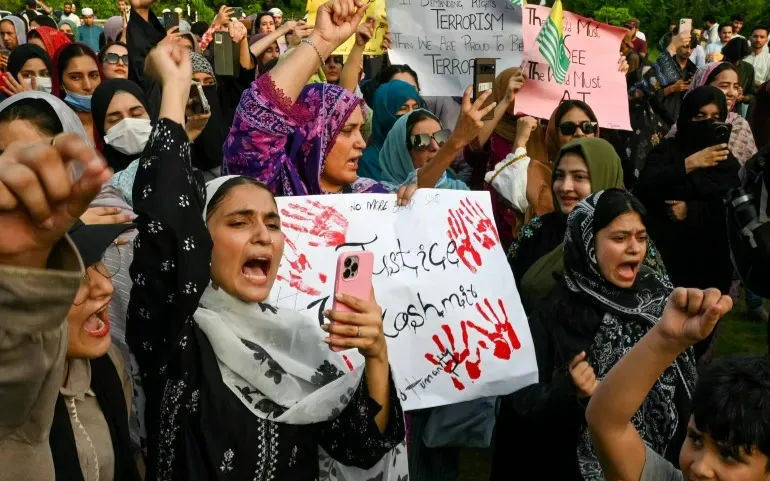
- The banned Joint Awami Action Committee (JAAC), outlawed by the regional government over security concerns, called for a boycott and its supporters repeatedly clashed with police before the vote.
- Authorities allege Pakistani Taliban members infiltrated JAAC protests, an accusation JAAC has not addressed.
- The election was overshadowed by a dispute over 12 seats reserved for people displaced from Indian-administered Kashmir, which JAAC wants abolished, arguing they give disproportionate influence to non-residents.
- In June, the region’s Supreme Court ruled these reserved seats are constitutionally protected and can only be removed via constitutional amendment, not executive or street pressure.
- The government says it has met 36 of JAAC’s 38 demands, but the reserved-seats issue remains unresolved and can only be settled by the regional assembly.
- Nawaz Sharif congratulated the winning candidates as results came in.
Why it matters
This election reaffirms a long-standing pattern in which the party governing in Islamabad tends to also dominate Pakistan-administered Kashmir, reinforcing perceptions that the region’s politics remain closely tied to federal patronage rather than fully autonomous local dynamics. The outcome arrives amid one of the deadliest unrest cycles the region has seen in years, with rights groups and JAAC alleging dozens of deaths in clashes tied to the reserved-seats dispute, even as official turnout figures suggest many residents still chose to participate in the democratic process. The controversy over the 12 refugee seats touches a deeper fault line in Kashmir’s identity politics: balancing representation for displaced persons from Indian-administered Kashmir against the political weight of resident populations, a question with constitutional and symbolic implications for how “Kashmiri” political identity is defined. Because Pakistan and India both claim the entire Himalayan region and have fought wars over it, any instability, banned-group crackdown, or disputed election in Pakistan-administered Kashmir carries cross-border resonance, potentially feeding into broader India-Pakistan narratives about governance legitimacy on both sides of the Line of Control. The banning of JAAC and allegations of militant infiltration also raise questions about civil liberties versus security imperatives in a contested territory.
What we think
Pakistan’s federal and regional governments face a trade-off between short-term political consolidation and longer-term legitimacy risks in Pakistan-administered Kashmir. While PML-N’s decisive lead secures governing capacity, the low-intensity but persistent unrest, JAAC’s boycott, and allegations of dozens of protester deaths suggest unresolved grievances that election wins alone will not neutralize. Islamabad should weigh whether continuing to treat the reserved-seats issue as judicially closed, rather than politically negotiable, risks entrenching JAAC’s narrative of disenfranchisement and radicalizing further protest, especially if allegations of Pakistani Taliban infiltration are used to justify broader crackdowns without addressing root economic and representational demands. There is also a reputational dimension: heavy security deployment, a banned-organization designation, and rigging allegations from opposition parties could be leveraged by India for propaganda purposes regarding governance in Pakistan-administered territory. A pragmatic path would involve opening a genuine legislative dialogue on constituency reform once the new assembly is seated, decoupling economic grievances (subsidies, electricity costs) from the more inflammatory autonomy and representation demands, and ensuring transparent post-election accountability for violence to prevent the cycle of unrest from recurring ahead of future elections.