The Presidential Election and the Elephant in the Room
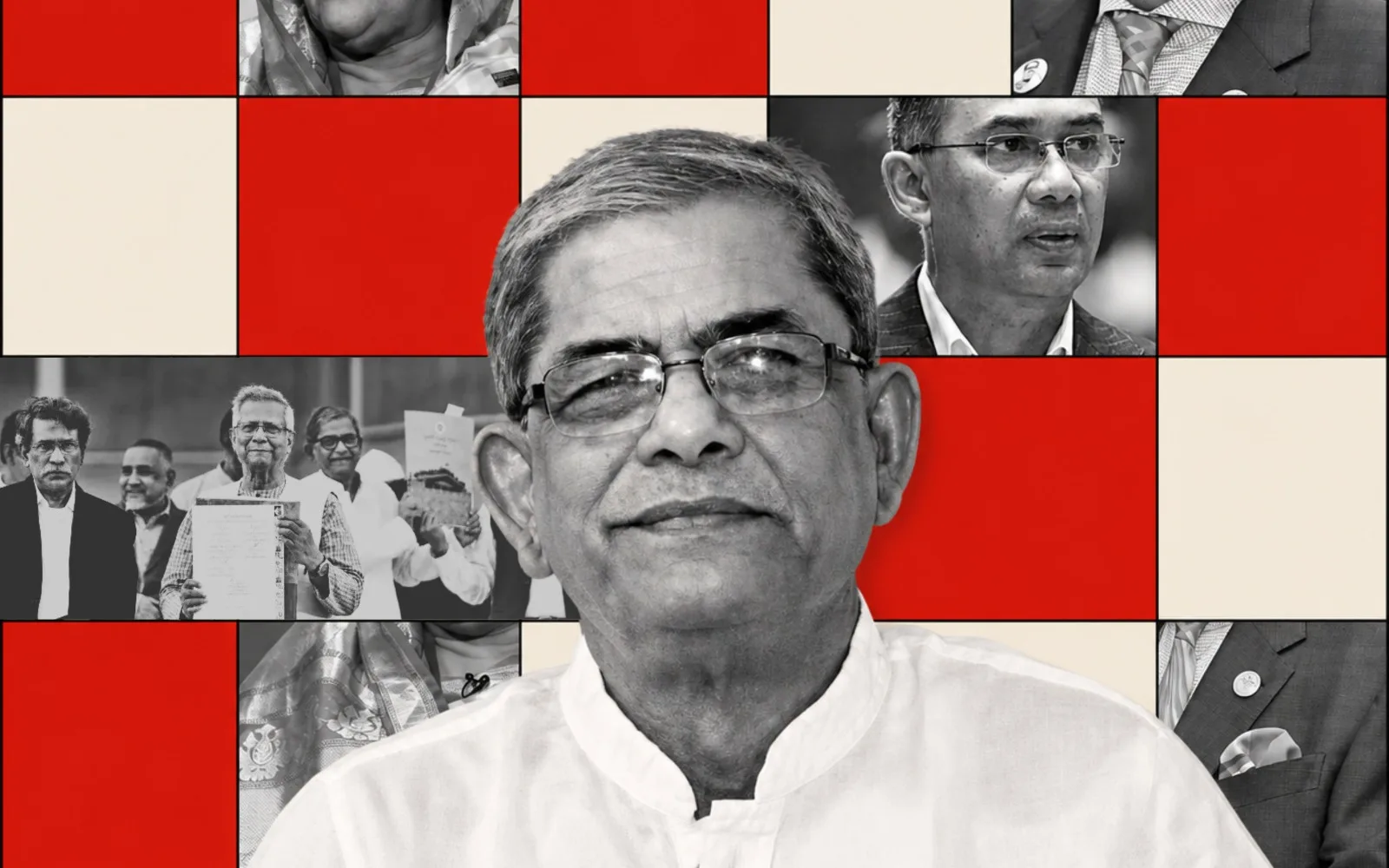
BNP has nominated its own veteran, Mirza Fakhrul Islam Alamgir, for the presidential election while promising July Charter reforms, but the opposition says the old party machine has never actually stepped aside.
In a Nutshell:
- BNP nominated its secretary general, Mirza Fakhrul Islam Alamgir, while Jamaat's allied 11-party bloc countered by naming Colonel (retd) Oli Ahmed, setting up Bangladesh's first contested presidential vote in 35 years.
- Fakhrul resigned as BNP secretary general, standing committee member, cabinet minister and MP immediately after his nomination, a move meant to satisfy the July Charter’s rule that a presidential candidate cannot hold a party or state post.
- NCP spokesperson Asif Mahmud Sajib Bhuiyan called Fakhrul's resignation "eyewash," saying to Nutshell today: "Mirza Fakhrul has been with BNP for 30 to 40 years. At the end of the day, it's still a party man becoming president."
- Asif also said BNP's Charter promises are hollow, telling Nutshell today the government's actions show it is "still running on the old, fascist structure Sheikh Hasina left behind."
- Jamaat's Barrister Shahriar Kabir said to Nutshell today, the real flaw isn't the candidate but Article 70, warning: "If this is how the presidential election is being conducted, another Chuppu is exactly what will be born from it."
- Kabir also claimed BNP is exploiting a loophole in the Charter's eligibility rule, saying "this is a clever trick" since candidates resign party posts only moments before filing nomination papers.
- BNP MP Shohidul Islam Babul defended the government to Nutshell today, saying the presidential election is proceeding under the old system because "the presidential post cannot be left sitting vacant," while insisting the constitutional changes needed for full July Charter implementation, including Article 70 reform, are still being worked on and will apply from the next presidential election onward.
- Babul also rejected claims that BNP's Charter commitment is only for show, telling Nutshell today: "Many of the July Charter's provisions, our party has already started the process. We've turned several of them into law already... if anyone says we won't implement the July Charter, that is a political statement, and we consider it an attempt to create confusion."
Context
The July Charter promised a reformed presidential election. MPs would vote freely under Article 70 on most matters, and any candidate would have to be free of party or state posts at the time of nomination. But President Shahabuddin's sudden resignation in July 2026 forced an urgent vote before those constitutional changes were finished. So the election is happening under the old Article 70 rules, where MPs must still vote along party lines except on finance bills and no-confidence motions. That means the ruling party's huge majority effectively decides the winner, just like before the uprising. BNP argues this is temporary and unavoidable, since roughly half the Charter's provisions require full constitutional amendment, a process still underway in parliament. The opposition says this "temporary" excuse looks a lot like the old system wearing a new label.
Why it matters
At the heart of this fight is a simple but heavy question: can a party that just won a huge majority be trusted to give up power over the very institution meant to check it? The July Charter was supposed to answer that by keeping the presidency independent of any party, but as NCP's Nasiruddin Patwary put it, "the problem is the process" itself, since under the current Article 70 rules, "the vote is just a formality" and whoever the prime minister picks becomes president. That is not an abstract complaint. It goes directly to whether the presidential office, which holds real appointment powers over bodies such as the Bangladesh Bank governorship and the Energy Regulatory Commission, ends up under one party's chain of command rather than functioning as a neutral state institution. Asif Mahmud Sajib Bhuiyan's warning that this is "a continuation of the practice of a party man becoming president" captures the fear driving NCP's criticism: that the uprising's central demand, an end to one party swallowing every arm of the state, is being quietly reversed just months into BNP's term. Jamaat's framing sharpens the stakes further. Barrister Shahriar Kabir's comparison to the previous, widely mocked presidency, "another Chuppu is exactly what will be born from it," is a direct challenge to BNP's legitimacy, suggesting that the party fought the same battle it now risks losing to its own instincts. His point that BNP "is changing its position every moment" on Article 70 matters because Article 70 reform was the sole mechanism intended to prevent exactly this outcome: a president elected solely because of party discipline rather than genuine parliamentary choice. If that reform keeps slipping, every future presidential election, not just this one, inherits the same structural problem. BNP's defence, delivered by Shohidul Islam Babul, rests on a timing argument rather than a denial. His point that "the presidential post cannot be left sitting vacant" is factually reasonable, since Bangladesh cannot function without a head of state while constitutional amendments are drafted. But this defence also concedes the opposition's core claim: that this presidential election, whoever wins, is not the reformed process the Charter promised, but only a placeholder using the old rules. That concession matters politically because it means the BNP is asking the public and the opposition to trust that reform will arrive later, at a moment when trust among the signatories of the Charter is already strained. The broader stakes extend past this single vacancy. If this presidential election sets a precedent in which "old system, new government" becomes the norm whenever timing is inconvenient, it weakens the credibility of every future reform promised under the Charter, including the next presidential election that Babul himself pointed to as the moment when real change would finally take hold. For a country that removed a government partly over accusations of institutional capture, how this particular gap between promise and practice is resolved will likely shape whether the July Charter is remembered as a genuine reset or as a document quietly shelved the moment it became inconvenient.