Lucid Dreaming
Project Ladyland: Sultana’s dream gets a complicated 2026 reboot
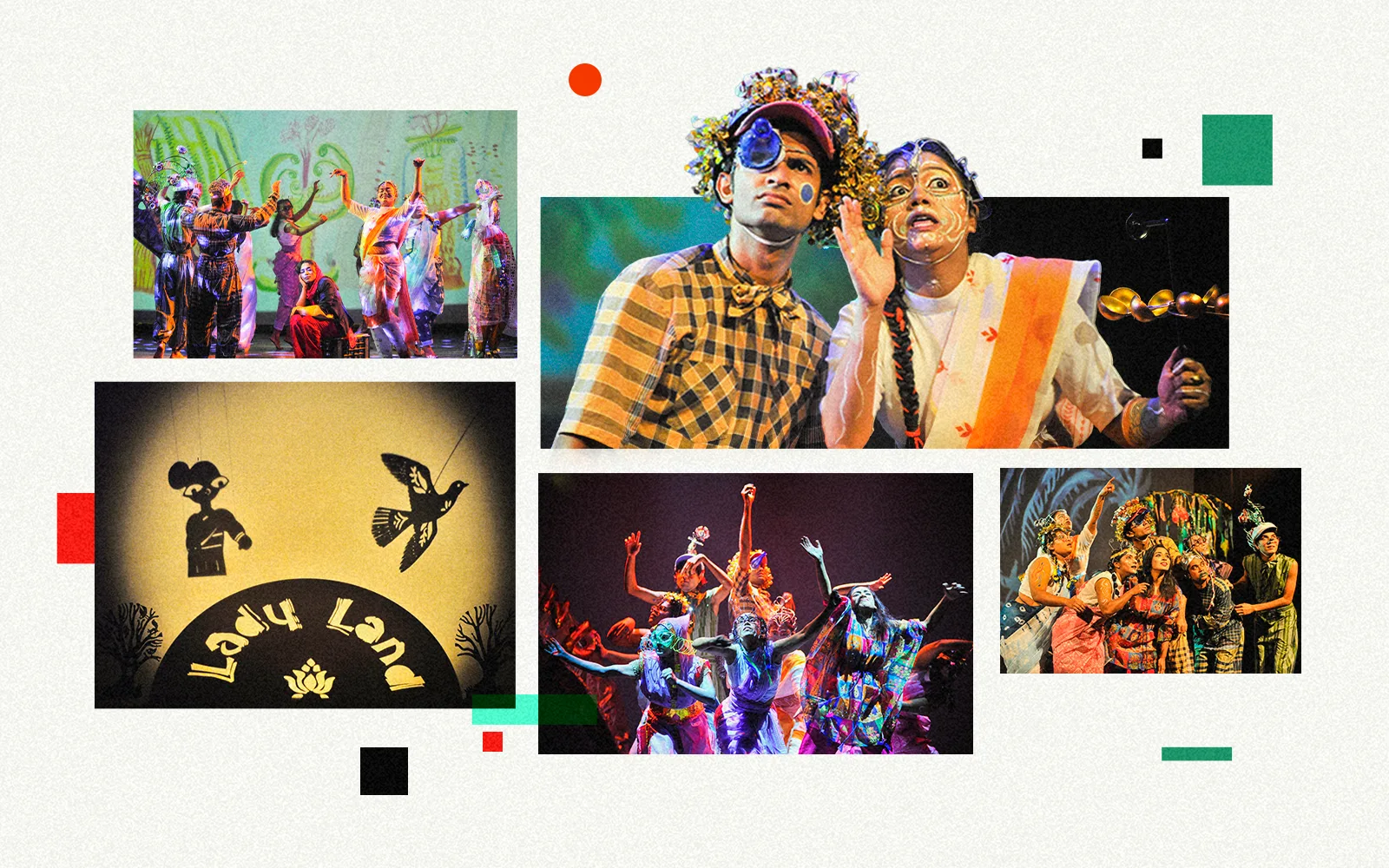
When the curtains parted at Bangladesh Mahila Samity on Thursday night, Sultana dreamt once again after 121 years.
In Begum Rokeya’s original vision, Sultana falls asleep and wanders into a world where women run the show, and men stay out of sight. Now, 121 years later, in Project Ladyland 2026, a production by HerStory Foundation supported by the British Council’s WOW Foundation Grant, the society has grown old, comfortable, and a little bit hypocritical.
This Ladyland has been running for generations. Nature is thriving, citizens are living peacefully, and men have even gained the right to work and move freely during the day. But once the sun goes down? They must return indoors. The Sunset Law exists because the women in charge still remember what the world was like before.
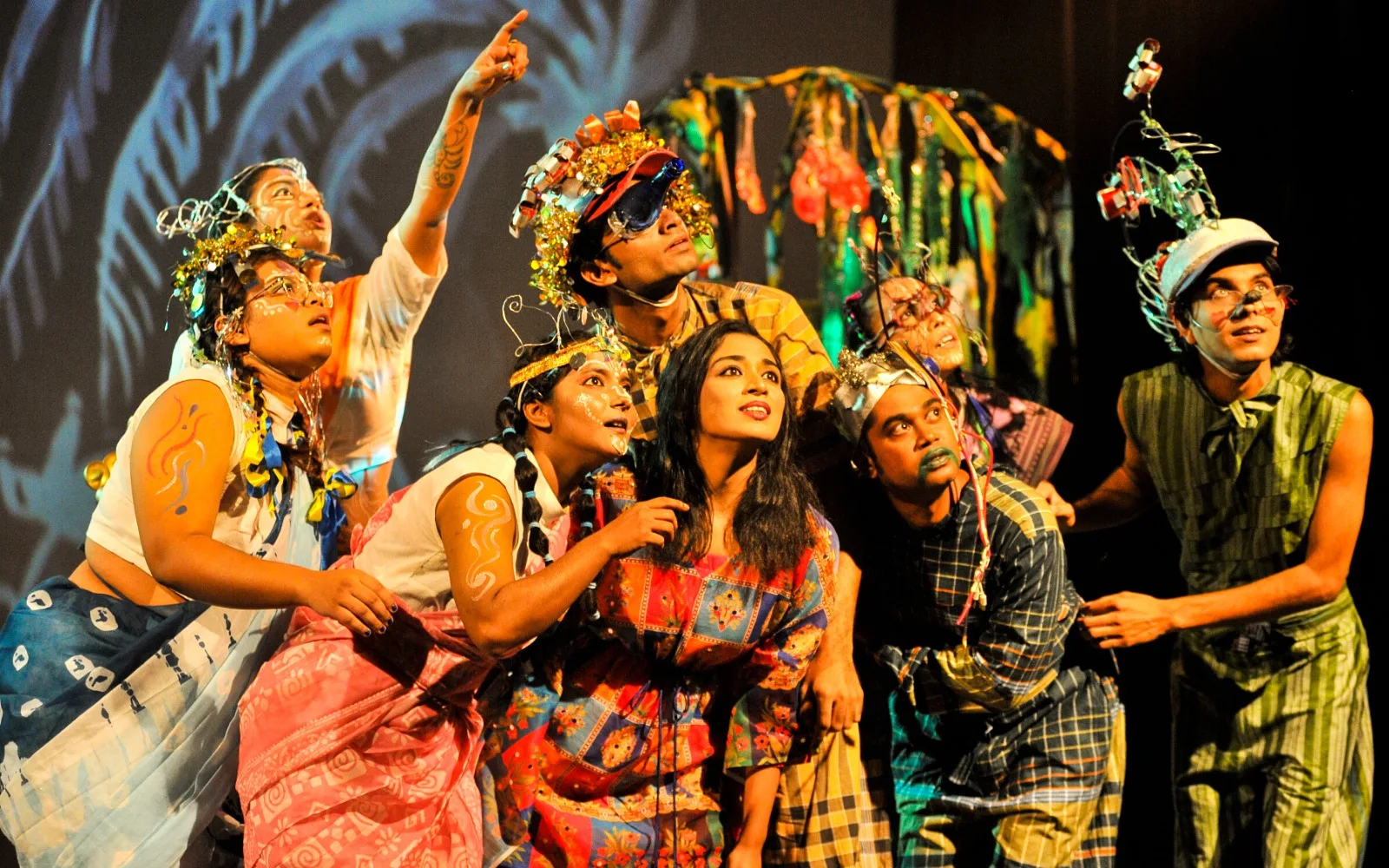
Producer Katerina Don said: "HerStory has been working with Sultana’s Dream since 2017 and has been looking to expand on the idea. We started using theatre as a form of community engagement and discussion in 2025, and the WOW grant was a fantastic opportunity to continue."
When asked what Rokeya herself might make of the production, Co-producer Risana Nahreen Malik said it would depend on which version of Rokeya came to watch it. “22-year-old Begum Rokeya, holding this new world of hers close to her heart, might say we’d missed the point entirely, and were too eager to return to a dynamic that centred men,” she said. “42-year-old Begum Rokeya, with more books and students under her belt, might be a bit more forgiving of readers running in all directions with her words.”
"22-year-old Begum Rokeya, holding this new world of hers close to her heart, might say we’d missed the point entirely, and were too eager to return to a dynamic that centred men. 42-year-old Begum Rokeya, with more books and students under her belt, might be a bit more forgiving of readers running in all directions with her words."
“Mostly, I hope she would be amused by the ruckus the play caused in the audience,” Risana said, “as homage to the ruckus the memory of her continues to create.” And what makes Project Ladyland so interesting is that it lays out all this moral chaos, steps back, and refuses to hand us an easy answer.
Project Ladyland lets the audience decide
Separated into male and female seating arrangements, the audience was called upon to settle the city's big constitutional question: Nighttime freedom for men? Yes or no? The majority of men voted for freedom while the women overwhelmingly wanted the opposite. The "No" vote triggered an ending defined by systemic repression.
The narrator offered us a rewind, and we were taken through the other possibilities: anarchy and finally, change. Each ending came with its own disclaimer, as the team said: change requires patience, repression breeds malice, and anarchy is punishable.
A conventional play asks its audience to watch characters make choices. Project Ladyland asks its audience to make one, reminding me of Black Mirror: Bandersnatch. It is the sort of theatrical experiment other productions could learn from. The team said it wanted to use theatre to gauge public opinion and understand what kinds of worlds audiences want, while documenting the performances as a record for future researchers and thinkers.
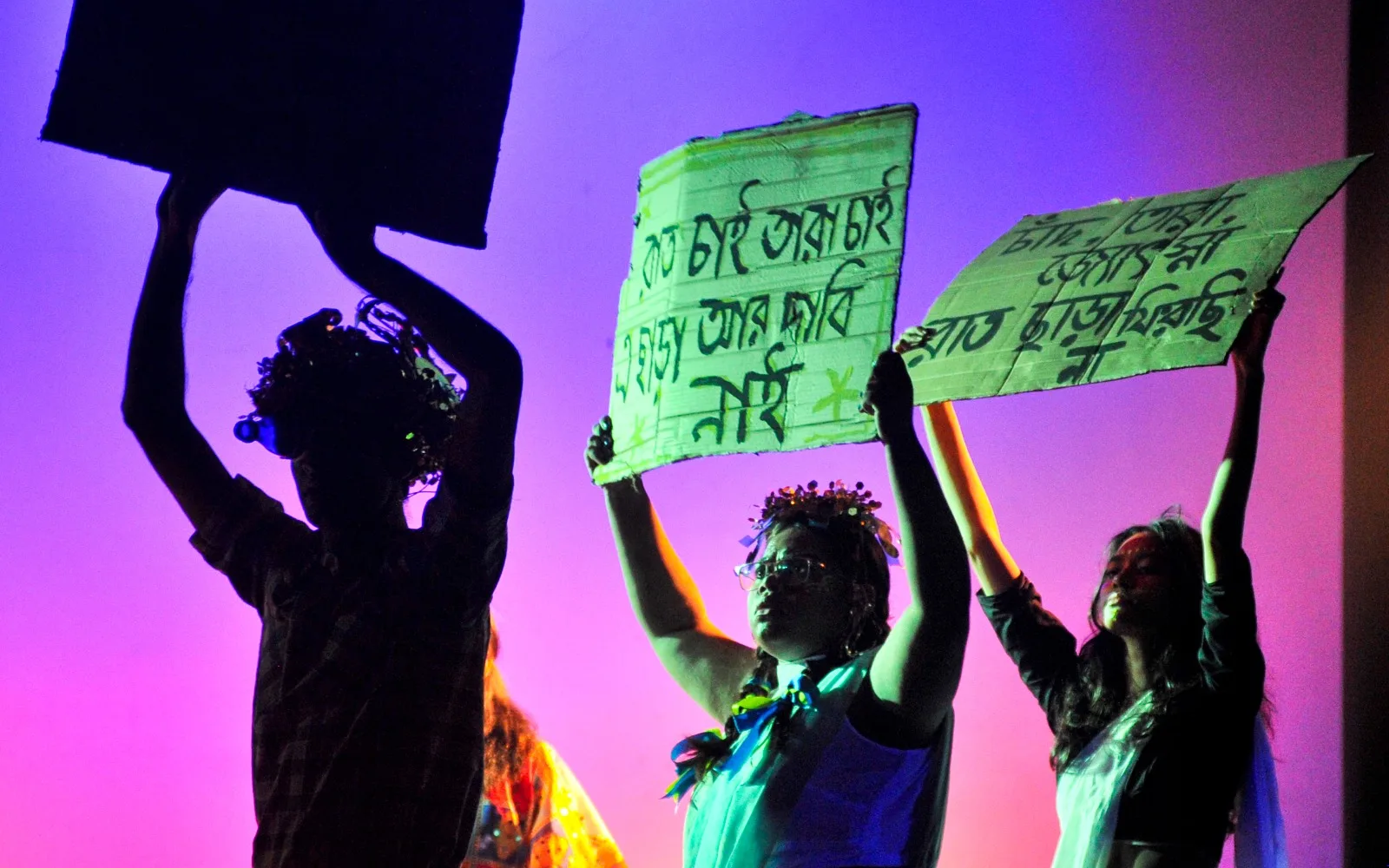
Risana hoped viewers would feel like “the last character we were waiting for to complete this production.” The audience indeed felt like a central character. However, thanks to classic Thursday night traffic, some of us arrived a little after the show had already kicked off. Despite holding tickets for Rows 3–6, latecomers were directed straight up to the balcony with the explanation that seats were being filled from the front first, which makes sense for a “first-come, first-served” arrangement. But with Tk 500 tickets for Rows 3–6 and Tk 200 tickets for the balcony, that logic doesn’t sit well. Convincing audiences to show up for live theater is hard enough, so an inconvenient seating experience discourages them even further, unfortunately.
Building a future out of what we throw away
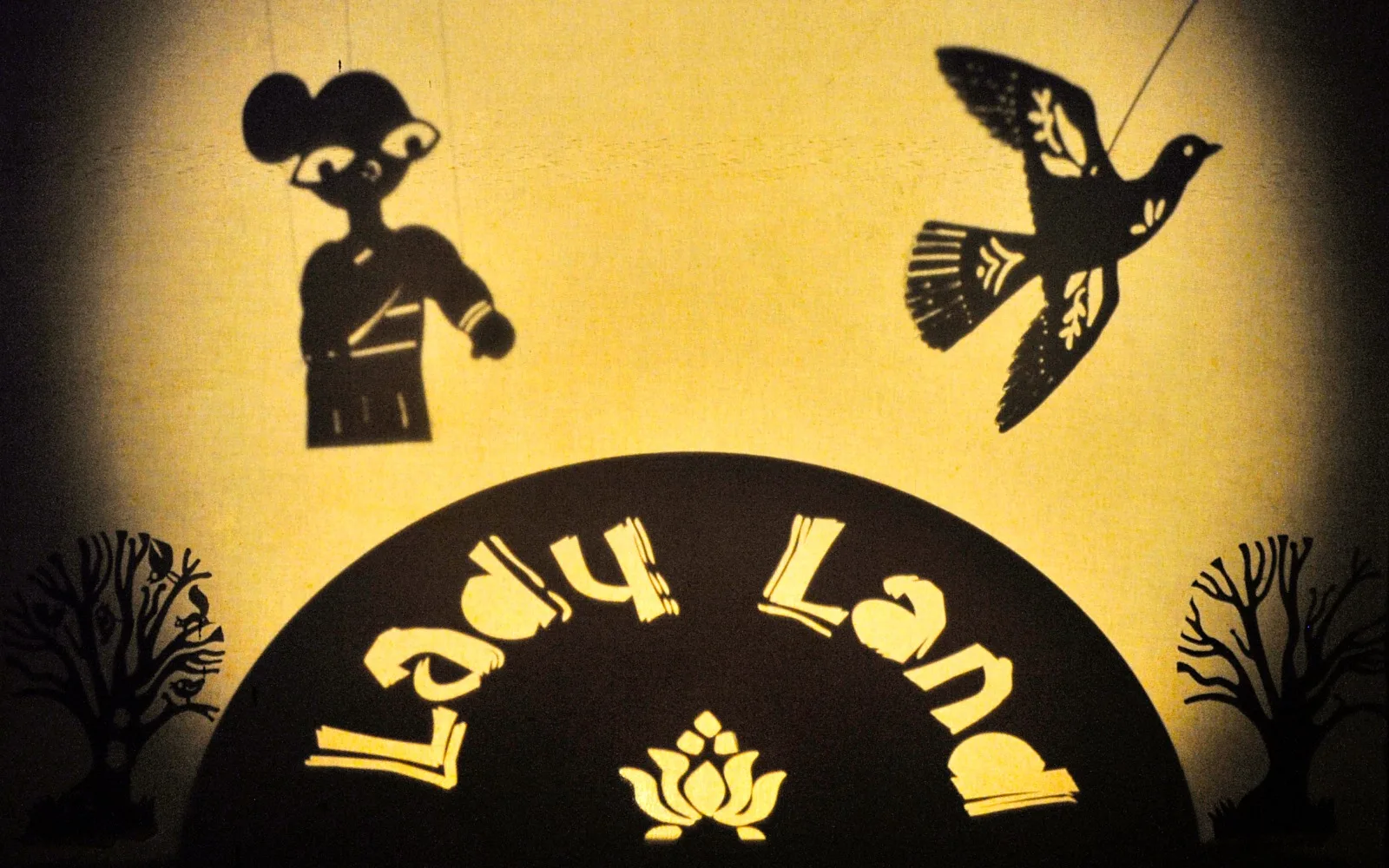
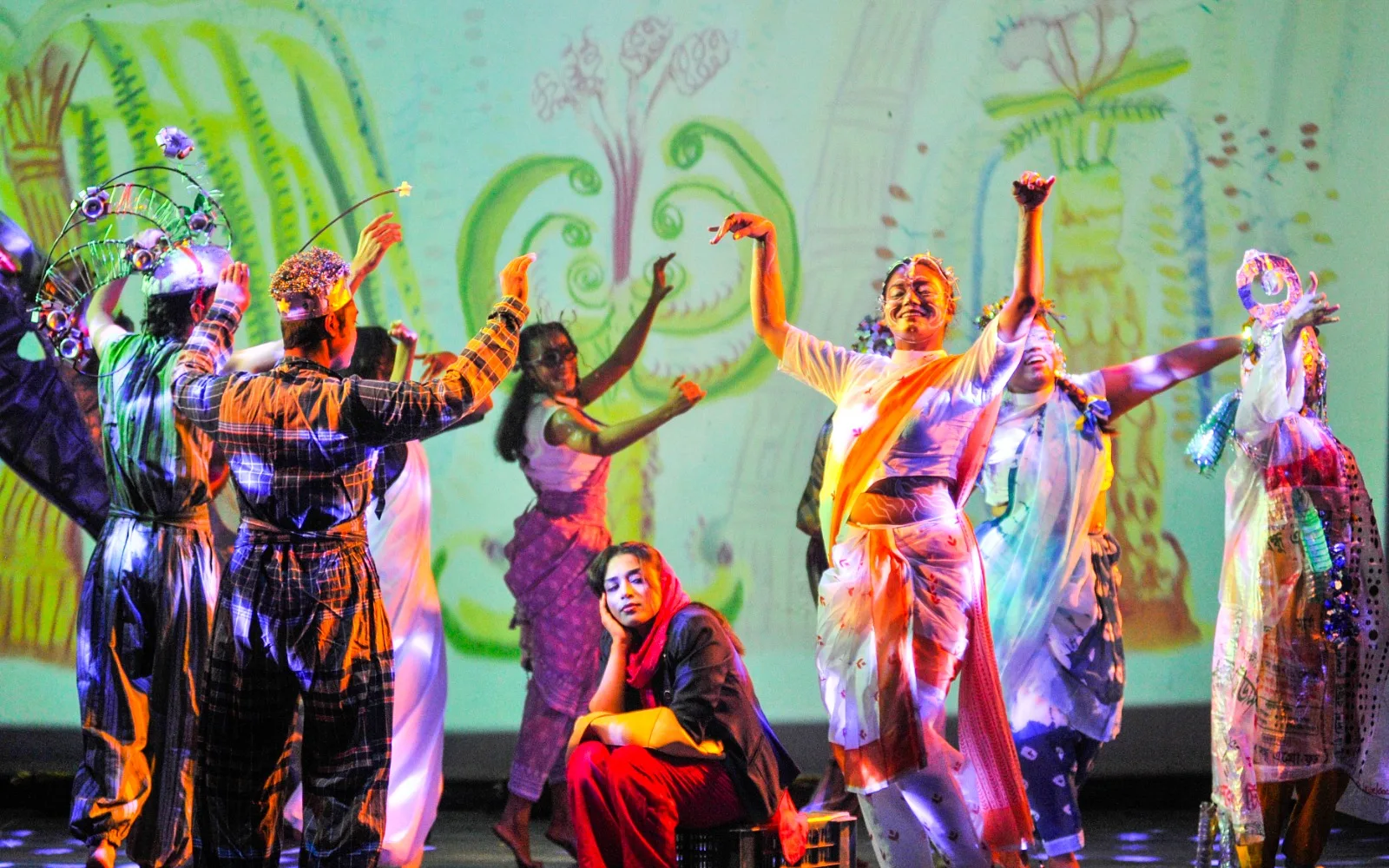
Ladyland skips shiny futuristic clichés to construct its universe from what we throw away. Sets and props are recycled, with shadow puppetry adding a breathtaking layer to narrate their past oppression.
The women themselves are visibly liberated: they dance, speak loudly, and take up space with confidence. Yet, their outfits, mostly sleeveless blouses, salwars, and half-sarees, resemble too closely the familiar salwar kameez that is considered “modest” in our world.
There's nothing unempowering about traditional dress, and freedom certainly isn't about bare skin. But if women had truly developed a society free from the expectations that once governed their appearance, the costumes could have shown more of that freedom. Perhaps through more flamboyant, experimental, and unconventional styling, with greater diversity in how the women dressed.
Why do we still have to ask Rokeya’s questions?
At the end of the night, the team expressed solidarity with the students of Dhaka University protesting female hall curfews under the Oborodh Bashini banner. Katerina Don said: “It seems like this project had been blessed. We started working on the idea of the night laws over 3 months ago, and the show premiered coinciding with the Oborodh Bashini."
The coincidence makes the play's central question difficult to dismiss as purely theoretical. Who gets to move freely? Who gets to feel safe in public? When does protection become another form of control?
The coincidence makes the play's central question difficult to dismiss as purely theoretical. Who gets to move freely? Who gets to feel safe in public? When does protection become another form of control?
Begum Rokeya laid out these questions in 1905. Project Ladyland 2026 takes her vision further, forcing us to grapple with what true equity demands. The production is beautifully executed, yet the fact that its core grievance remains so wildly relevant in 2026 is a tragedy in itself.
CAST Sultana | Maisha Masfica Tanisa Sutrodor | Tawsiad Shaolin Sara | Priti Das Shishir | Salim Shadman (Sasha) Robots | Israt Jahan Ikra Dadima | Juliet Rajeena Quiah Kolpona | Muntasrin Rahman (Mim) Bidut | Dipu Mahmud Motmo | Afrida Amir Taj | Ohiduzzaman (Tony)
Produced by HerStory Foundation Supported by the British Council’s Women of the World (WOW) Foundation grant. Inspired by Sultana's Dream by Begum Rokeya Sakhawat Hossain Written by Zohra Binte Zaman Co-writters | Anika Bushra Shoshee, Nafisa A. Iqbal, Upama Adhikary Producer | Katerina Don Edited by Khandakar Imdadul Haque Sohan and Katerina Don Acting Director | Wajed Al-Rahman Production Manager | Bappy Ameen Co-Producer | Risana Nahreen Malik Art Direction | Hridita Anisha, Props Design | Urukku.Bangladesh, Taranum Nirbir, Manzoor Real, Faiza Fairooz (Rhimjhim) Crescent Arc Design | Rashed Chowdhury, Rizat Hasan, Debjoti Barman Katha, Fatima Kamal Anonna (Dehsar Works) Music | J0N4K1 Composition | Death Wail Shadow Puppeteer | Shafrin Islam Shadow Puppet Assistant | Anika Tabassum Nuzhat Animation | Fahim Arif Choreography | Shovan Surjo Costume | Bushra Islam Labonno Make-up | Robin Ahmed Stage Assistants | Priti Das, Md. Tanvir Jaman Communication Design | Tanaya Sayma Volunteer Coordination | Senin Chowdhury Videography | Hamid Hossen