Old wine in a new bottle?
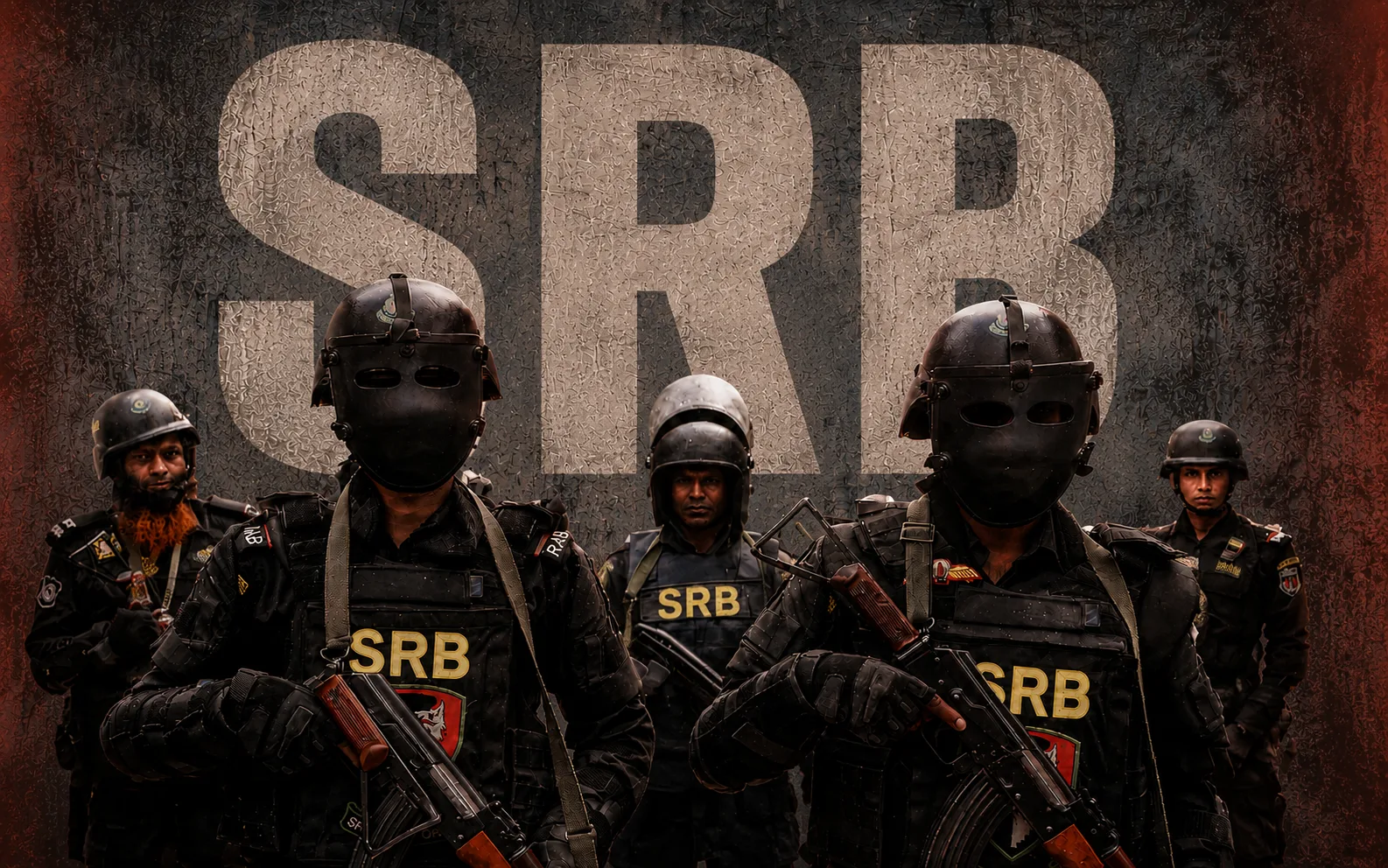
The Cabinet has approved a law to dissolve RAB and create the Special Response Battalion (SRB), but the draft carries much of RAB into the new force. Existing personnel, powers, assets, responsibilities, and procedures would largely remain unchanged. If the institution responsible for serious abuses is being retained in substance, what has actually been reformed?
In a Nutshell:
- Cabinet approved the Special Response Battalion Act, 2026, which would formally dissolve RAB and establish SRB under the Bangladesh Police.
- RAB’s manpower, authority, facilities, funds, property, accounts, records, rights, liabilities and other assets would transfer to SRB, while existing personnel would become SRB members with their service conditions unchanged.
- SRB would retain RAB’s wide law enforcement mandate, covering terrorism, organised crime, trafficking, drugs, cybercrime, illegal arms, kidnapping, murder and crimes against women and children.
Context
The initiative to change RAB’s name has been under discussion for months, with Interim Government Home Adviser Lt Gen (retd) Jahangir Alam Chowdhury announcing that the government would rename RAB as the Special Intervention Force (SIF) back in February. Then, in May 2026, on the force’s 22nd anniversary, Home Minister Salahuddin Ahmed announced that the government was preparing a legal framework for a new elite force, but did not say whether RAB would continue to operate in its current form or what would happen to its personnel. Prime Minister’s Information and Broadcasting Adviser Zahed Ur Rahman also said RAB could operate under a new name. Previously, the present Home Minister Salahuddin filed a petition himself with the International Crimes Tribunal (ICT) in June 2025 regarding ex-IGP Benazir and six others who were involved in abducting and disappearing him. As at home, RAB also previously received international condemnation with the US Treasury sanctioning several officials under it while the Hasina government was still in power in 2021. Previously, RAB was under the Home Ministry, and now it’s under the Bangladesh Police. And, with its role in killings and violence during the July Uprising, the UN Human Rights Office issued a recommendation to dissolve RAB and retain only personnel who were not involved in human rights abuses.
Why it matters
The SRB draft raises concerns because there appears to be very little visible reform in the institution's operations. RAB has long been accused of human rights abuses, with former BNP officials and even former PM Khaleda Zia calling for its abolition during her years in opposition. In December 2021, the US Treasury sanctioned RAB and several current and former senior officials under the Global Magnitsky programme, citing widespread allegations of serious human rights abuses and saying the force’s conduct threatened the rule of law and fundamental freedoms in Bangladesh. After the 2024 uprising, the UN human rights office recommended dissolving RAB and returning personnel who had not been involved in serious violations to their original units. Bangladesh’s disappearance commission later reported that RAB was implicated in nearly 25 per cent of complaints it received and recommended replacing it with a specialised force while removing military personnel from civilian law enforcement. Now that the BNP government has finally taken office after years in opposition, the ball is in their court to bring about the reforms that would put these concerns to rest. And yet, the same personnel are being retained in the SRB, and armed forces are continuing on deputation. In other words, RAB’s entire operational framework and authority are being preserved. While the RAB is transitioning to the SRB, a number of past issues remain unresolved, preventing authorities and the international community from viewing the new force as a reformed institution.
What we think
Abolishing RAB will only count as meaningful reform if the government changes the institution itself, not simply its name. How SRB will vet personnel, address past abuses, and ensure independent oversight, it still remains a question. Otherwise, a new name may simply preserve RAB’s old problems. ` If the same officers retain the same powers, RAB may be gone in name but not in practice. Also, the sanctions that were put on RAB, will it go with SRB or dissolve with the RAB name? The question still remains.