Surviving the city: Julfikar's story
Dhaka's rapid expansion has outpaced coordinated planning, straining transport, water, air quality and green space. The second instalment to our Surviving the City series, this article examines governance and planning models that could make the city's growth more resilient.

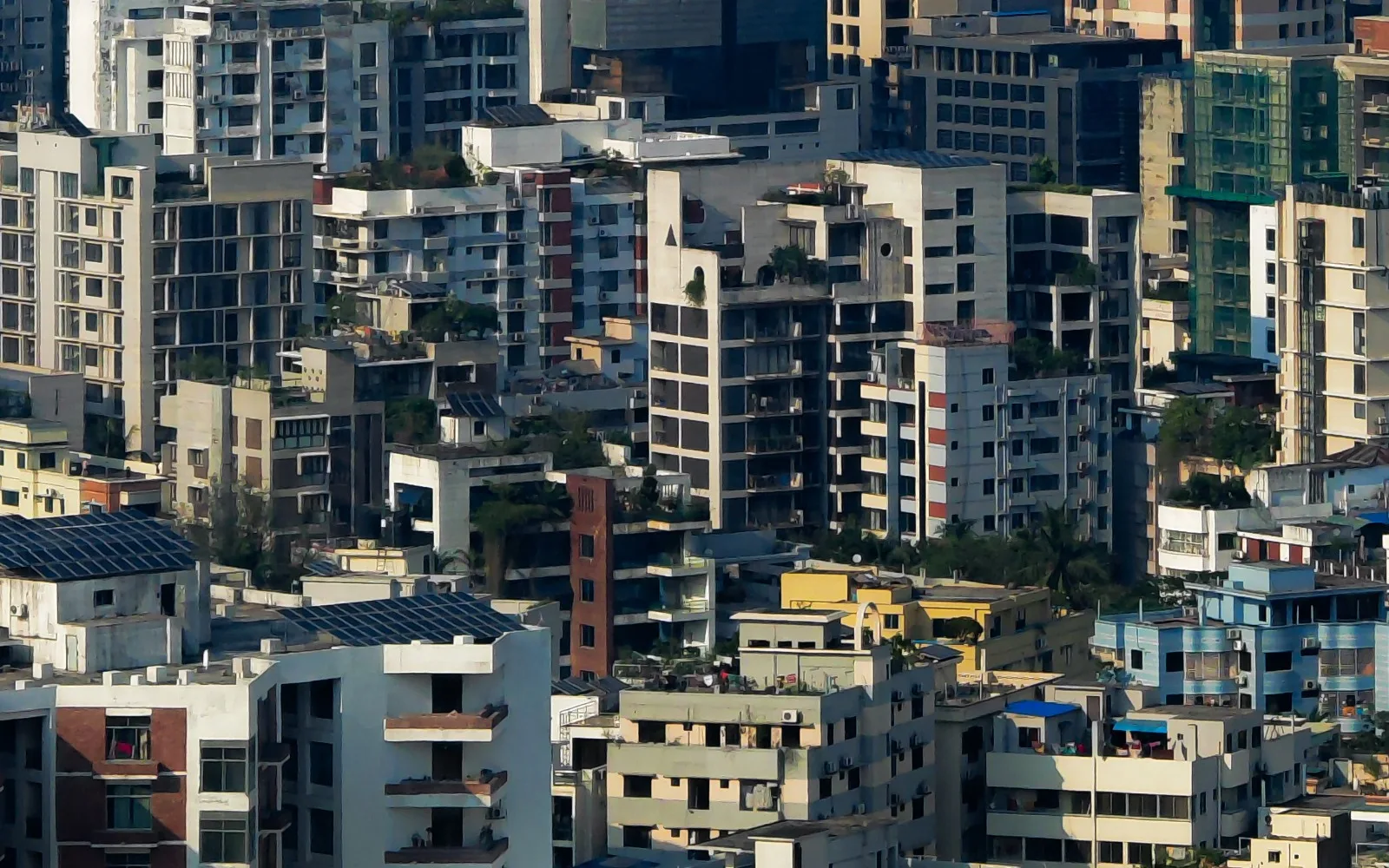
Julfikar, a small-town resident, went to the big city of Dhaka in Bangladesh, which is about 100 km from his hometown. The world here is quite different; there are opportunities, markets, amusement parks, and malls, and one can literally remain away from home for the entire day without spending time in the fields. No one bothered to water the plants, check for diseases, or remove pests and weeds.
As he walked in his thoughts, he stumbled over a waterlogged pothole. “Oh! Now I feel at home,” he says while getting his drenched leg out of the pothole. The wonders and images that had been running through his head and obscuring his vision became clear with this small incident. He just woke up and started seeing the big city.
The Nutshell
- Dhaka's rapid growth has brought congestion, pollution, unsafe water and a shortage of green space.
- Uncoordinated industrial and urban development has increased environmental risks and reduced productivity.
- Experts recommend metropolitan governance and closer coordination between spatial planning and public investment.
- Greener, more self-sufficient planning models could help Dhaka's expanding periphery become more resilient.
The cars were running across the roads; the pedestrian way was blocked by illegal structures, shops, or parking, and he suddenly began to smell burnt gas as well. He could see the dust in the surrounding area that was entering his system. He saw people carrying carts and selling vegetables grown in and around his town. He remembered the black fog that he sees every day on the horizon and asks himself where it comes from. He had an answer now.
He now sees stacks of houses on each side of the road, washed in multiple colors except green. Everyone is running in some hustle, and one got in Julfikar’s way as well. Julfikar left the way for this person and received a glare in return. He remembers that in his town, everyone greets one another and walks in a relaxed manner, with little stress on their minds.
“Is it really worth it?” asks Julfikar and looks for a water tap to quench his thirst. There is none; the water is not potable here. “Seriously!” sighs Julfikar, now going back to his town.
On the way back in a bus, he asks himself some uncomfortable questions while gazing towards the sky. “Why does the city need food grown outside? Why is the city logged in water? Why are there so many cars that a person cannot walk in peace? Why is it so polluted that one cannot breathe? Why are there very few trees on the roadside? Why does the city not have sufficient potable water?”
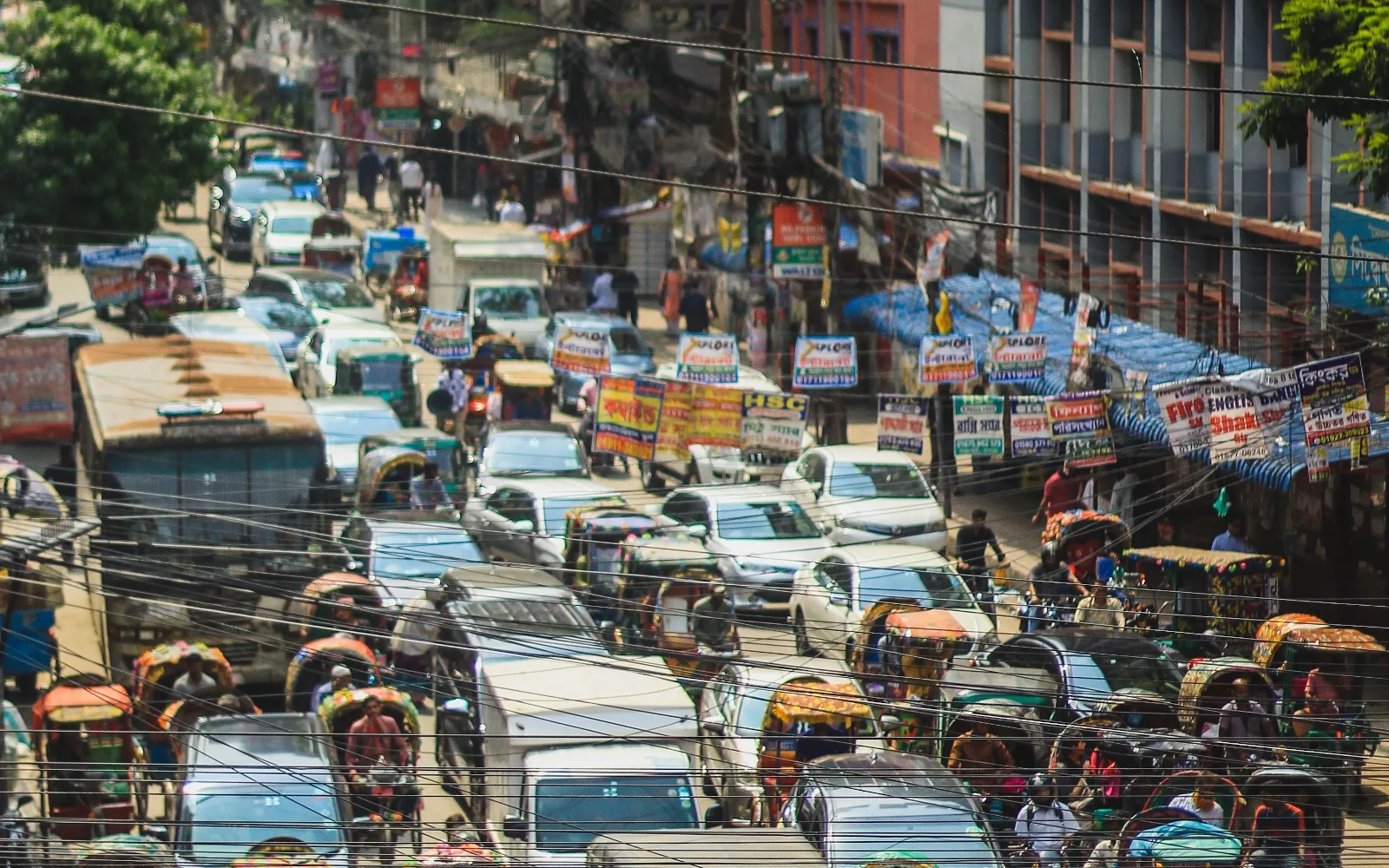
These questions are not unique to Julfikar; they echo the concerns of millions of residents who experience the consequences of Dhaka's rapid growth every day and blame the authorities. Understanding these challenges requires looking beyond visible symptoms and examining how the city has grown and been governed over time. The authorities are already hand-tied; after all, it is not easy to manage such a large population (around 40 million), sometimes larger than that in some developed countries.
There is very little autonomy that people feel they have in any developments in Dhaka.
There is, however, a dissonance between the people who make decisions and the people who suffer the consequences of the decision. There is very little autonomy that people feel they have in any developments in Dhaka. One reason lies in the way urban and industrial development has unfolded over the past decades. Bangladesh's transformation, spatially, has been market-driven. Clustering of industries emerged through individual firm decisions rather than a coordinated approach. While these areas were significant for job growth, they did grow in clusters, with most population and job growth happening in the north, northwest and southeast of Dhaka. These misalignments resulted in increased environmental risk, reducing productivity in people as the uncoordinated growth continued.
While the growth continued at its own pace and large and medium-sized firms increasingly relocated from Dhaka city to peri-urban areas such as Gazipur, Savar, Narayanganj, and beyond the metropolitan boundary, the infrastructure that was needed for transport, land management, city development was not developed in a planned manner. Planning of land remains fragmented across different agencies, with decisions often being made in different places and with overlapping objectives or objectives that would cause a trade-off with other agencies.
Planning across institutional boundaries
The recurring theme across these challenges is a lack of coordination between interconnected sectors and institutions. One solution that emerges is the strengthening of coordination between spatial planning and public investment through a nexus approach. This could be achieved through aligning transport, logistics, and urban infrastructure investments around a common spatial plan, thereby enhancing the coordination between spatial planning and public investment. The nexus approach can also help by integrating industrial development with transport, energy, water, waste, and urban infrastructure to support efficient and sustainable growth.
Experts add that Dhaka should be an explicitly metropolitan region, rather than a separate municipality. Dhaka's rapid expansion has created areas that extend beyond the boundaries of individual municipalities. A metropolitan approach would enable integrated spatial planning, coordinated infrastructure investment, and more efficient service delivery across the wider urban region. Yet governance reforms alone may not be sufficient. The physical design of cities also influences environmental quality, public health, and quality of life.
Additionally, scientists and experts advocated designing and redesigning cities so that they can be self-sufficient while also fostering the health of their citizens. Recently, an urban forester, Cecil Konijnendijk, proposed the 3-30-300 rule for urban greening, which has been shown to lead to better mental health, reduced medication use, and fewer psychological problems. The rule advocates that every citizen should see at least three mature trees from their home, school, or workplace. Every neighbourhood should have at least 30% tree canopy cover to maintain the local climate and temperature. Finally, every residence should be within 300 meters of a high-quality public park or green public space.
Designing greener, more self-sufficient cities
Similar principles have also been applied beyond urban greening, particularly in land-use planning aimed at improving self-sufficiency and resilience. The 30-30-30-10 rule was instrumentalised by King Bhumibol Adulyadej (Rama IX) of Thailand to achieve self-sufficiency. It suggests the 30% of the land should be dedicated for wate reservoir, the next 30% should be for agricultural use for grains, the third 30% should have trees, fruit trees, vegetables, and herbs, and finally 10% of the land should be dedicated to housing and livestock, including roads and infrastructure.
These, however, may be difficult to implement in an already densely populated city like Dhaka, though efforts can be made to adopt these models. As the city is growing, the periphery of Dhaka (newly developing) should model these rules and be planned to achieve self-sufficiency. Money saved is money earned. If the cities can grow their own food, manage their citizens' health well, and be climate-resilient, they can save a lot.
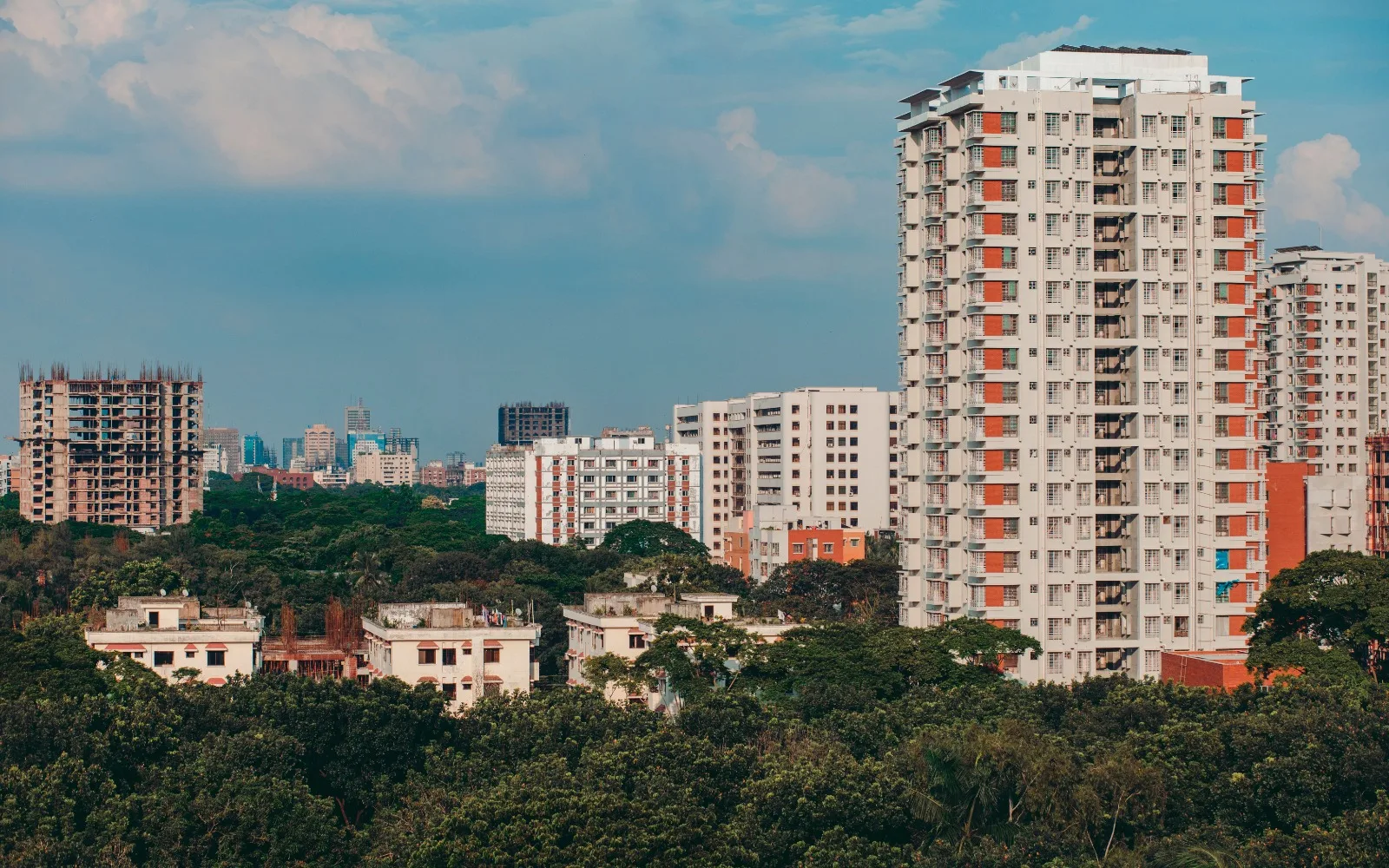
As Julfikar reaches home and forgets the woes of the day, the residents of Dhaka remain with those thoughts. We are all Julfikar, and our wonderment and actions can pave the way to a better tomorrow.
Vaibhav Aggarwal is Doctoral Researcher at the United Nations University's Institute for Integrated Management of Material Fluxes and of Resources (UNU Resource Nexus), and Dresden University of Technology (TUD). He is also an alumnus of the Indian Institute of Technology Roorkee (IIT Roorkee), India.
Raida A. K. Reza is Doctoral Researcher at the United Nations University's Institute for Integrated Management of Material Fluxes and of Resources (UNU Resource Nexus), Leibniz Institute of Ecological Urban and Regional Development (IOER), and Dresden University of Technology (TUD).