Syria Agrees to Sharply Cut Russian Oil Imports as It Seeks Closer Ties to US, Sources Say
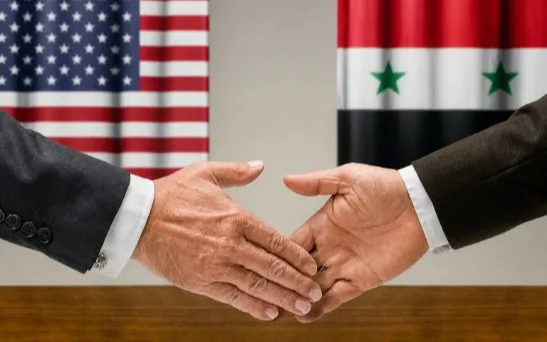
Syria told Washington it is willing to drastically cut Russian crude imports as part of ongoing US sanctions relief talks.
Reading
In a Nutshell:
- Reuters reports Damascus told Washington it is willing to drastically cut Russian crude imports as part of talks to lift remaining US sanctions.
- Syria has been on the US state sponsors of terrorism list since 1979; Trump notified Congress on July 8 of his intent to remove that designation, starting a 45-day review period.
- Russia had increased oil shipments to Syria by roughly 75% this year, reaching about 60,000 barrels per day, to preserve influence after Assad’s fall.
- US officials say ending Russian oil purchases isn’t an explicit precondition for delisting but would “raise the chances” of a fast, clean removal.
- Damascus says its reliance on Russian crude was purely out of necessity given the lack of alternative suppliers under sanctions.
- Syria has already signed a gas-extraction deal with ConocoPhillips and Novaterra (June) and held offshore exploration talks with TotalEnergies (July).
- Separately, Congress has directed the Pentagon to assess how to reduce Russian military presence at Syria’s Tartus naval base and Khmeimim airbase.
Why it matters
This shift matters because it signals Syria’s new government is willing to trade its remaining energy lifeline from Moscow for full reintegration into Western markets, a decision that would meaningfully weaken Russia’s foothold in the Levant just a few years after it helped keep Assad in power. Russia’s oil supply had become one of its few remaining points of leverage in Syria following Assad’s ouster, and losing that economic tie — combined with congressional pressure on the Tartus naval base and Khmeimim airbase — would represent a broader retreat of Russian military and economic influence from the Eastern Mediterranean. For Washington, removing Syria from the terrorism list while extracting a de facto rupture with Moscow’s energy ties is a low-cost way to project a broader anti-Russia foreign policy win, especially as it seeks to squeeze Russian revenue streams globally amid the ongoing Ukraine war context. For Syria, diversifying suppliers and attracting Western energy majors like TotalEnergies and ConocoPhillips signals a genuine pivot toward reconstruction and normalization, though it remains dependent on how quickly and completely US sanctions actually lift.
What we think
Although Bangladesh has no direct stake in Syria’s oil politics, the episode is a useful case study in how sanctioned or transitioning states can leverage energy dependency shifts to negotiate geopolitical rehabilitation, a dynamic relevant to Dhaka’s own balancing act between larger powers. It illustrates how the US increasingly links sanctions relief to visible distancing from Russia, a pattern Bangladesh should watch closely given its own deepening defense conversations with Washington (GSOMIA, ACSA) and its historical non-aligned stance toward Russia, China, and India. It also shows how quickly energy and security dependencies can become bargaining chips in broader diplomatic negotiations — a dynamic Bangladesh should keep in mind as it navigates its own reliance on external partners for energy, defense hardware, and infrastructure financing. Additionally, the pattern of major Western energy firms rushing into a newly opened market (TotalEnergies, ConocoPhillips) after political normalization offers a template Bangladesh’s energy sector planners could study when assessing how liberalization or de-sanctioning processes can rapidly reshape investment flows elsewhere. Finally, the case reinforces how transitional governments — like Bangladesh’s own interim government since 2024 — face similar external pressure to align economic and diplomatic postures with major powers as part of legitimacy-building on the world stage.