Tarique's BRICS Situation
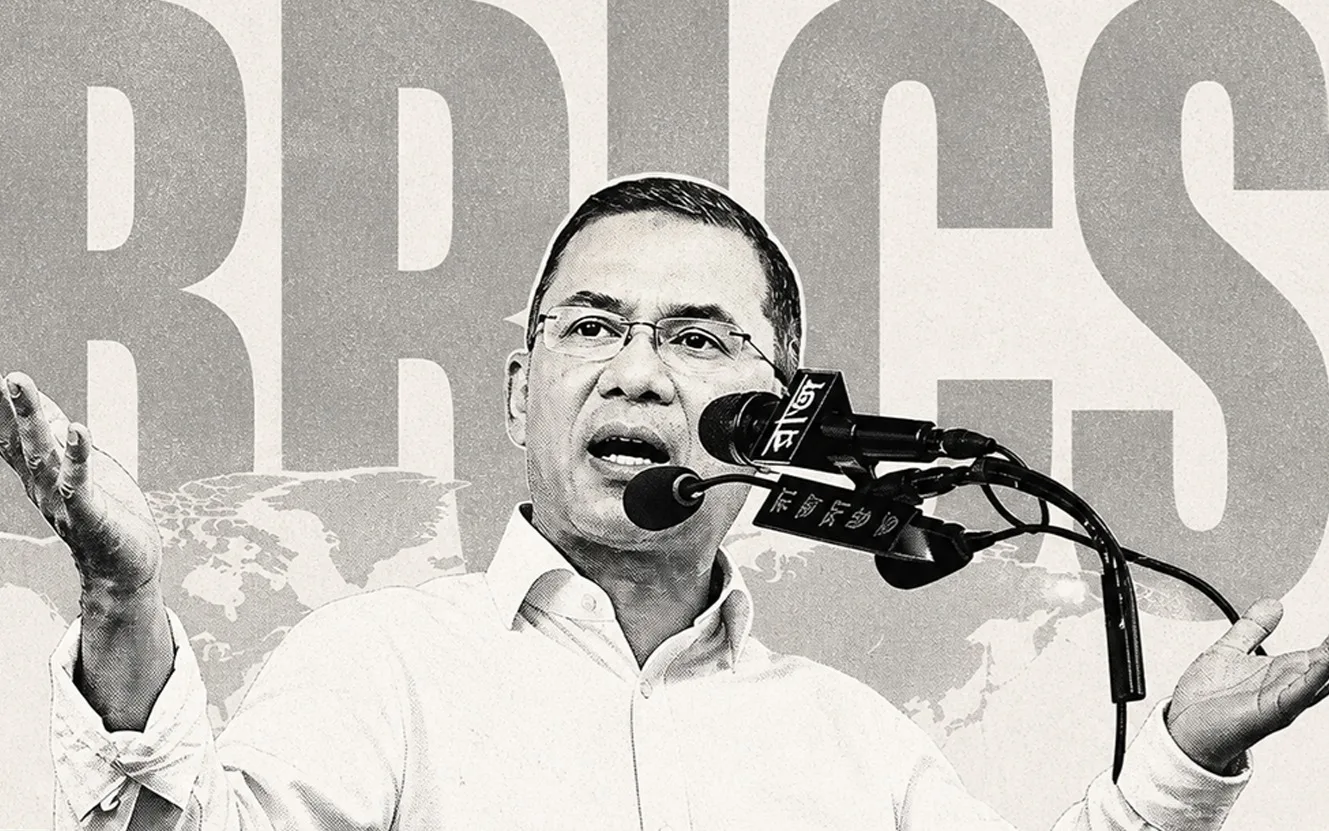
PM Tarique Rahman is expected to skip the upcoming BRICS outreach summit in New Delhi following diplomatic fallout over Sheikh Hasina's recent allegedly Indian-hosted press conference.
In a Nutshell:
- India’s MEA confirmed on August 4 a standing invitation for PM Tarique Rahman to visit bilaterally, plus a fresh invite to attend the outreach session of the 18th BRICS Summit in New Delhi (September 12–13) in his capacity as current BIMSTEC chair.
- Our diplomatic sources confirms PM Tarique Rahman has rejected India's BRICS invitation.
- Bangladesh is not a BRICS member state, so any attendance would be limited to the peripheral outreach/dialogue segment rather than core summit deliberations.
- Bangladesh has separately joined a new 14-nation Saudi-led Multinational Maritime Defence Coalition (announced July 30–August 1) to protect Red Sea and Bab el-Mandeb shipping lanes, alongside Pakistan, Turkey, Egypt, and Gulf states.
- That coalition sits alongside a fresh Saudi Arabia-Turkey-Pakistan mutual defense pact (the Mecca Joint Defence Agreement, signed August 7), which analysts have floated Bangladesh could eventually be drawn toward.
- Bangladesh’s foreign advisor Humayun Kabir warned Indian High Commissioner Dinesh Trivedi that Sheikh Hasina’s Delhi press event risked undermining improving bilateral ties; Trivedi said India would “look into” it.
- Hasina held her first live virtual press interaction from New Delhi on August 6, saying she plans to return to Bangladesh in December to “restore democracy,” despite facing possible imprisonment or a death sentence.
- Bangladesh’s Foreign Ministry issued a formal statement of “outrage,” branding Hasina an “absconding convicted genocider” and saying it had warned India in advance about the event’s likely diplomatic fallout.
- India’s MEA distanced itself, calling the event the work of a “private media entity” with “no involvement whatsoever” from the government.
- Prothom Alo reported on August 9, citing senior government sources, that it is now “almost certain” Tarique Rahman will skip the BRICS outreach session in Delhi following the Hasina controversy.
- Indian High Commissioner Dinesh Trivedi held his first official meeting with Prime Minister Tarique Rahman at the Secretariat on August 10.
- Diplomatic sources report that Trivedi emphasized looking beyond the Sheikh Hasina issue, urging India and Bangladesh to focus on bilateral cooperation and mutually beneficial engagement.
Why it matters
BRICS commands roughly a quarter of global GDP and nearly half the world’s population, giving it real institutional heft through the New Development Bank and a push toward de-dollarization as a counterweight to Western-led finance. But it remains a loose, heterogeneous bloc without binding governance and is often described as “economically strong, geopolitically weak,” constrained by rivalries — especially between India and China — that limit its coherence as a unified power. India, chairing BRICS in 2026, uses the bloc for Global South advocacy and UN reform while deliberately hedging against its more anti-Western currents, treating outreach invitations to non-members like Bangladesh as symbolic diplomacy rather than substantive access to where BRICS bargaining actually happens.
What we think
He skipped and we don’t see a problem! Because Bangladesh is not a BRICS member state, attending only grants access to the outreach fringe, not the core forum where currency mechanisms, bank capitalization, and expansion decisions are made — meaning the diplomatic traction on offer is limited even before factoring in the Hasina controversy. That caps the real cost of skipping the summit and strengthens the case that Dhaka’s energy is better spent elsewhere. Bangladesh’s more consequential pivot is toward the Gulf: joining Saudi Arabia’s maritime coalition and watching the new Saudi-Turkey-Pakistan defense pact signals a tangible realignment offering trade financing, energy security, and labour-market access — stakes far more concrete than a non-member’s seat at a BRICS sideline event. Dhaka should treat the BRICS decision as low-cost symbolism while carefully managing how deep Gulf-Sunni security entanglements go, to avoid being pulled into Saudi-Iran or India-adjacent frictions it has so far sidestepped.