Bangladesh to Make Technical Education Compulsory, Prioritise AI and Robotics
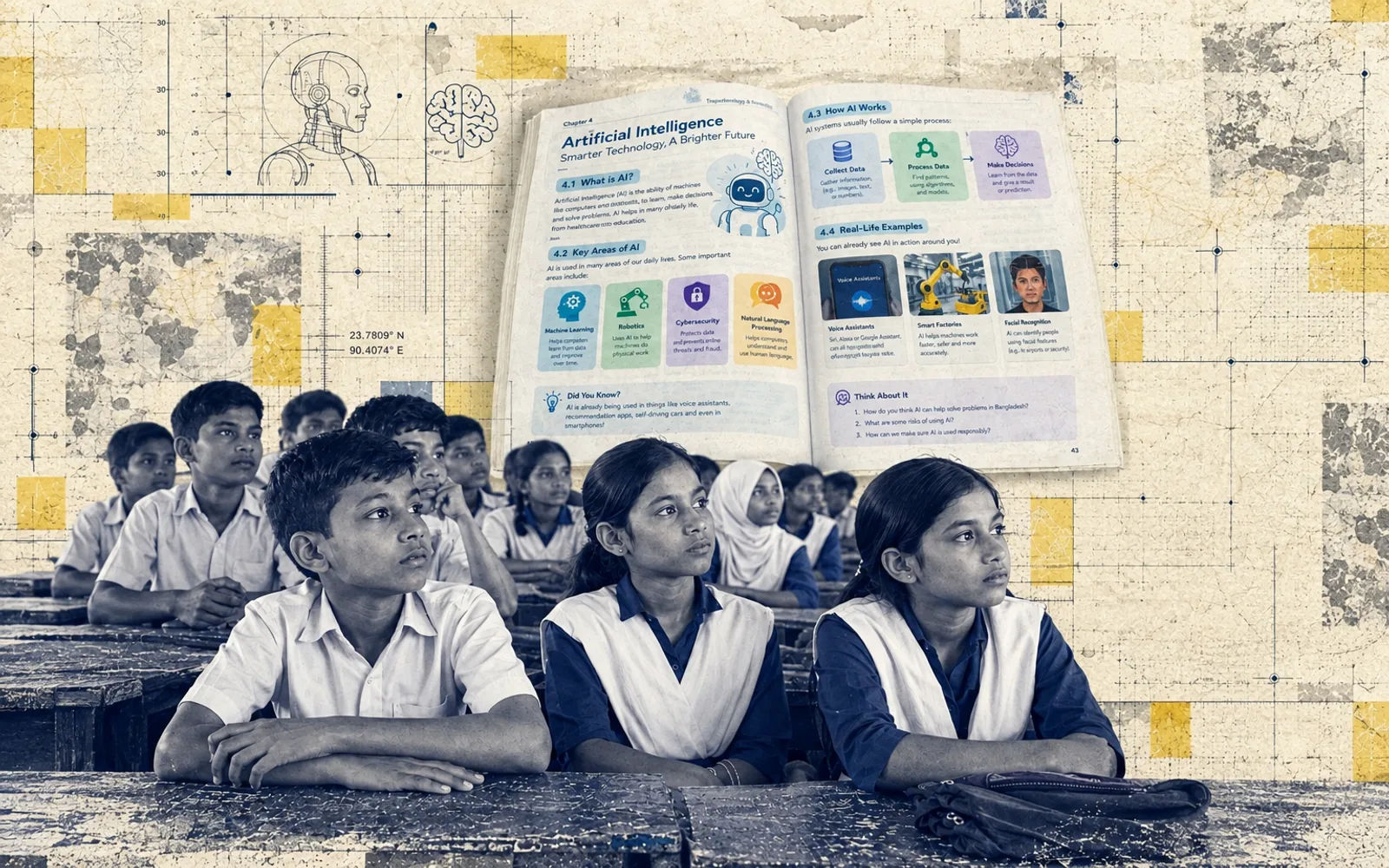
AI, robotics, machine learning, and cybersecurity will receive greater emphasis in Bangladesh’s secondary-school curriculum starting next academic year. The government also plans to make technical education compulsory from grades 6 to 10, as part of a wider effort to connect education with the skills demanded by a technology-driven economy.
In a Nutshell
- Education and Primary and Mass Education Adviser Mahdi Amin, at the Bangladesh Innovation Fair 2026 in Dhaka, announced that AI, robotics, machine learning, and cybersecurity will receive special priority in textbooks for grades 6–10 starting next academic year.
- Technical education will gradually become compulsory for students from grades 6–10.
- “Sports” and “Culture” will be introduced in Grade 4, while “Learning with Happiness” will be introduced in Grade 6.
- Technical and vocational education is also being considered for around 2,500 National University-affiliated institutions.
- The government plans to connect universities more closely with industry through endowment funds, CSR funding, alumni networks and fellowships for Bangladeshi experts abroad.
Context
The government of Bangladesh proposes curriculum changes from primary education through university, with STEM, technical education and practical learning receiving greater emphasis.
Adviser Mahdi Amin said the reforms are intended to reduce the limitations of theoretical education and prepare students for a rapidly changing global economy. The government also wants to reduce brain drain by creating stronger links between education, industry and Bangladeshi professionals working abroad.
Why It Matters
Adding AI, robotics and cybersecurity to school education and making technical education part of mainstream schooling may help reduce the perception that vocational education is a second option. But adding new subjects to textbooks is only one part of the transition. Access to trained teachers, laboratories, computers, internet connectivity and practical learning opportunities will determine whether students outside major urban centres receive the same benefits.
What We Think
The government's plan to connect schools, universities and industry is therefore particularly important. However, the bigger challenge will be implementation at scale. AI and robotics may not become useful if they remain textbook concepts without equipment, trained teachers and hands-on learning.