Touhidi Janata: A Banner Many Use, But No One Owns
There is no organisation called Touhidi Janata. No membership, no central office, no registered leadership. Anyone can pick the banner up, from a crowd besieging a police station over a harassment case to a militant with a criminal record, and once they do, no one can be shown to have owned it. This is the story of that name, the violence it has covered for, and the state that has never once been willing to call it what it is.
On the night of 18 December 2025, in a small area called Masterbari Square in Bhaluka, Mymensingh, a crowd of about 140 people seized a young Hindu garment worker named Dipu Chandra Das. He worked at Pioneer Knitwear. Someone at a factory event had accused him of insulting the Prophet Muhammad, and that accusation was enough. By around nine o'clock, the crowd had beaten him to death, tied his body to a tree, and set it on fire. The Rapid Action Battalion later said it found no evidence that Dipu had said anything at all and alleged that a factory floor manager, instead of calling the police, forced him to resign and handed him over to the crowd.
That same night in Dhaka, other crowds set fire to the offices of Prothom Alo and The Daily Star, trapping more than two dozen journalists on a rooftop while the fire brigade was held back. These newspaper attacks were tied to the death, hours earlier, of the youth leader Sharif Osman Hadi, who had been shot on 12 December and was pronounced dead on the 18th. The killing of Dipu Chandra Das had no connection to Hadi at all. It was a separate crime, driven by a separate accusation, on the same terrible night.
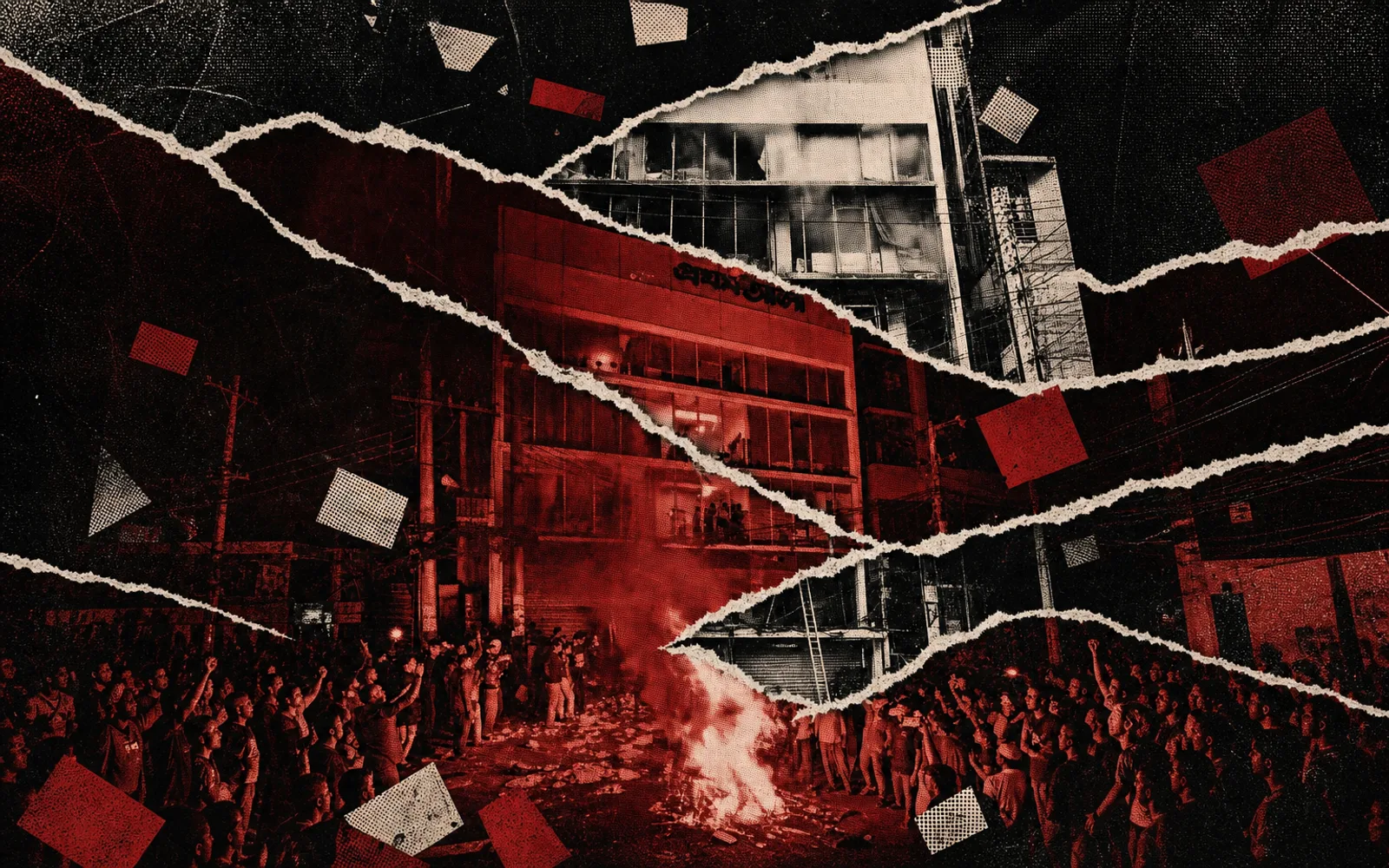
By then the language had hardened because the scenes had. A Hindu worker had been killed over an accusation investigators said they could not substantiate; journalists were trapped above burning newspaper offices while emergency access was obstructed. The earlier distinction between "mob" and "pressure group" began to collapse under the weight of what audiences could see. To call the arsonists a pressure group was to imply negotiation; to call them a mob was to describe the method but risk obscuring the people who had directed, enabled or excused it. The night exposed the weakness in both labels: one was too gentle, the other too convenient.
Six months before any of this, the interim government's press secretary, Shafiqul Alam, had already handed the state its vocabulary. Asked at a Centre for Governance Studies seminar in June about the crowds massing outside newsrooms, he was blunt: "Those you call a mob, I call pressure groups."
This explainer is about that sentence, and about the banner Touhidi Janata. The name does an enormous amount of work. Oppose them, and you appear to be opposing both Islam and the public. And because anyone at all can pick the banner up, no one can ever be shown to have owned it.
So the question is simple to ask and hard to answer. Is Touhidi Janata a spontaneous mob, a legitimate pressure group, or something the state would rather not name?
Where the idea came from
There is no organisation called Touhidi Janata. No membership, no central office, no registered leadership. Ali Riaz, professor of political science who chaired the interim government's Constitution Reform Commission and one of the most-cited scholars of Islamism in Bangladesh, is emphatic on this point. "It is organised locally," he said. "In most cases people are brought together on religious sentiment, or, increasingly, on misinformation."
Ali Riaz also warns against reaching too far back for the roots. It is tempting to draw a straight line from nineteenth-century Deoband to today's shrine-burnings, but he dates the recognisable phenomenon, an anonymous, deniable street force mobilised in defence of the faith, to the intellectual persecutions of the late 1980s and early 1990s, rather than to any centuries-old design.
The Ahmed Sharif case
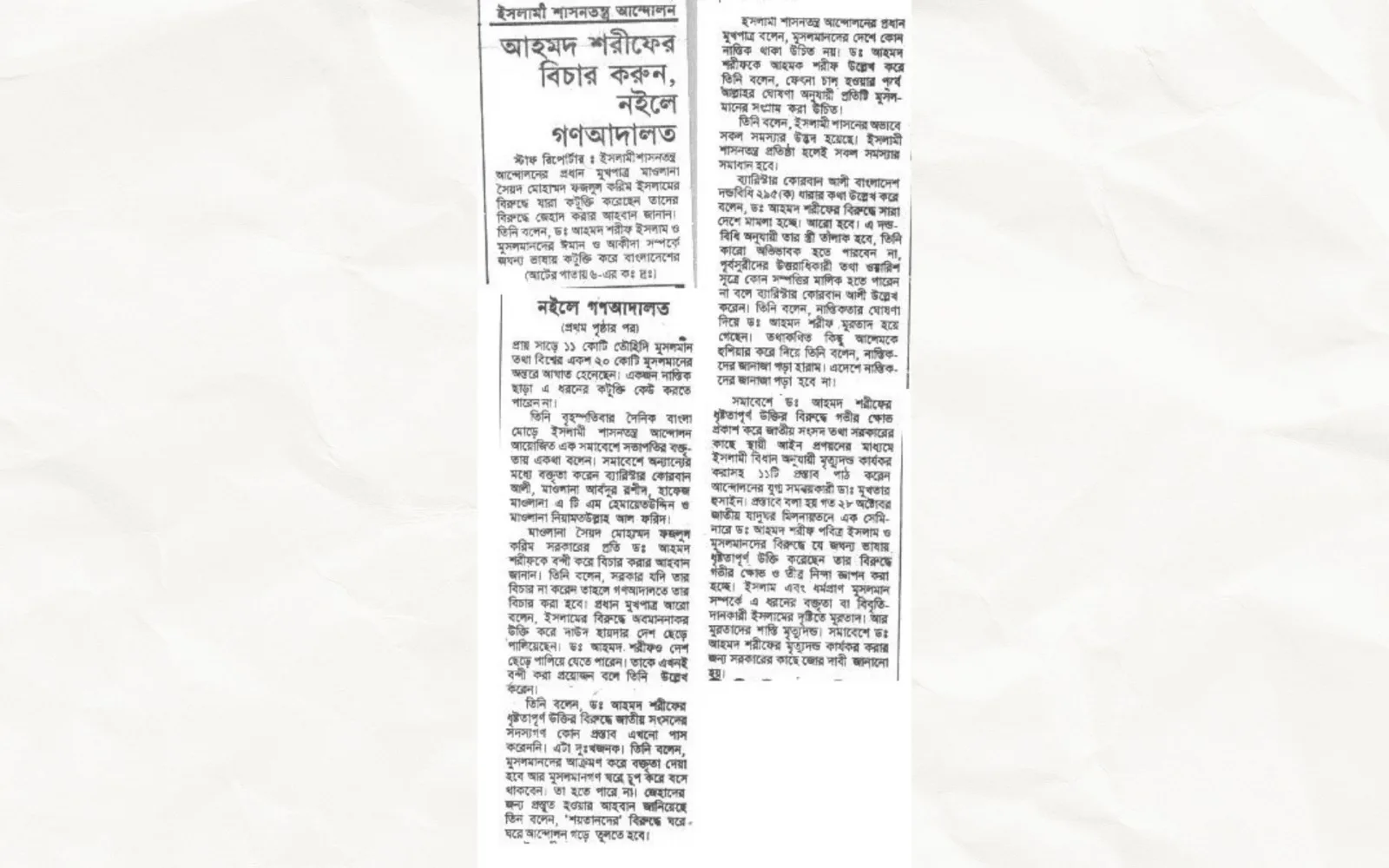
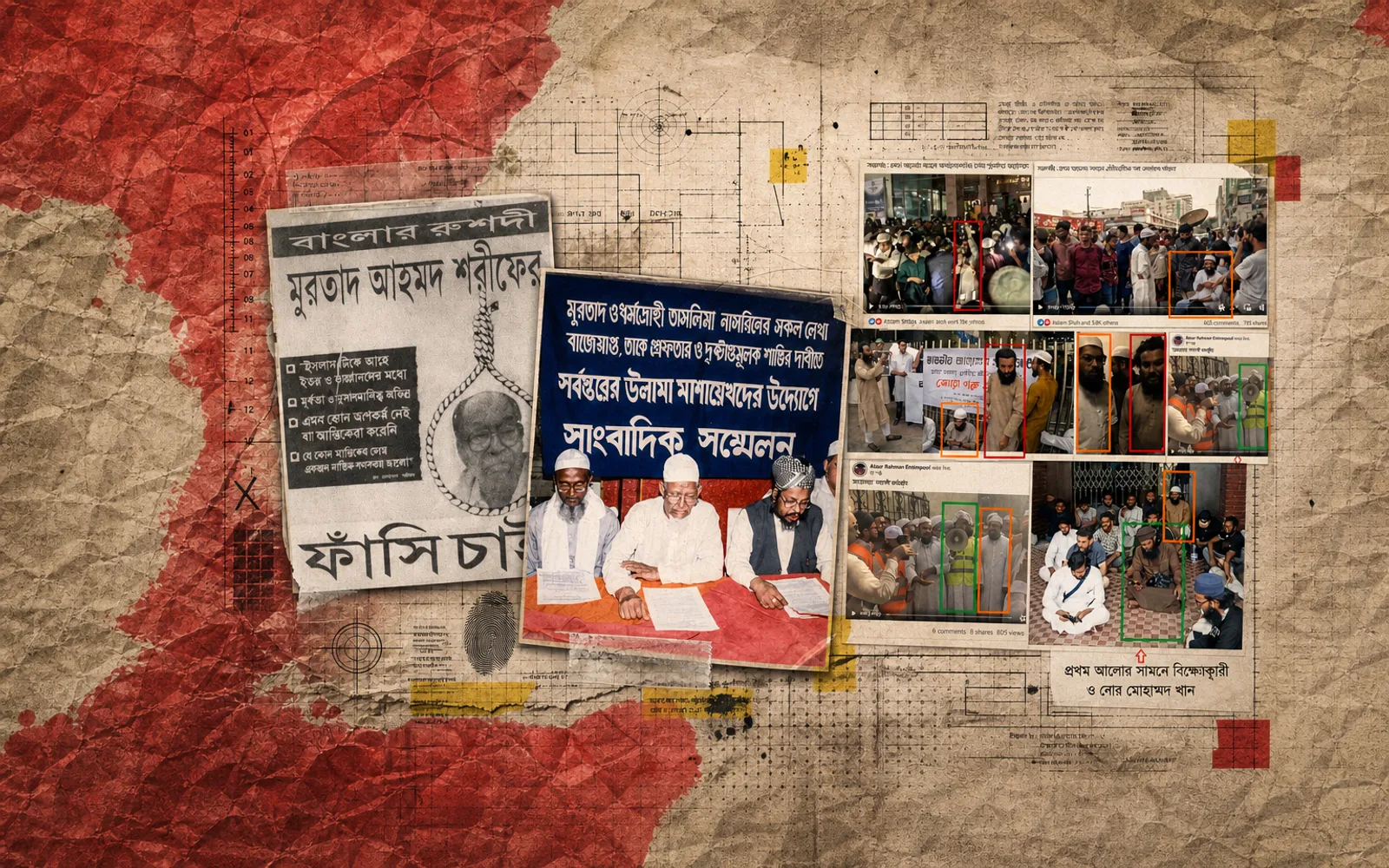
The earliest clear prototype is the case of the atheist scholar Ahmed Sharif, a professor and former chairman of the Bengali department at Dhaka University. In 1992, he chaired a seminar organised by the Swadesh Chinta Sangha, where he spoke on Islam and Muslims. The Islamist daily Inqilab then published a report claiming he had made remarks criticising Islam, and that single report set everything in motion. Two private blasphemy complaints were filed against him under sections 295A and 298 of the penal code. Court records show that his counsel told the apex court the statements attributed to him had been distorted by Inqilab, a claim preserved in the case report Dr Ahmed Sharif v The State, 17 BLD (1997) 235. The distortion did not matter. He received death threats, a bomb was thrown at his house, and cases were filed against him from around the country.
The following year, Jamaat-e-Islami and the Islami Oikkyo Jote publicly branded figures like him 'murtads' (apostates) and floated calls for their execution. Religious leaders went further still: having declared Ahmed Sharif an apostate, they announced that no religious rites would be performed for him after his death.
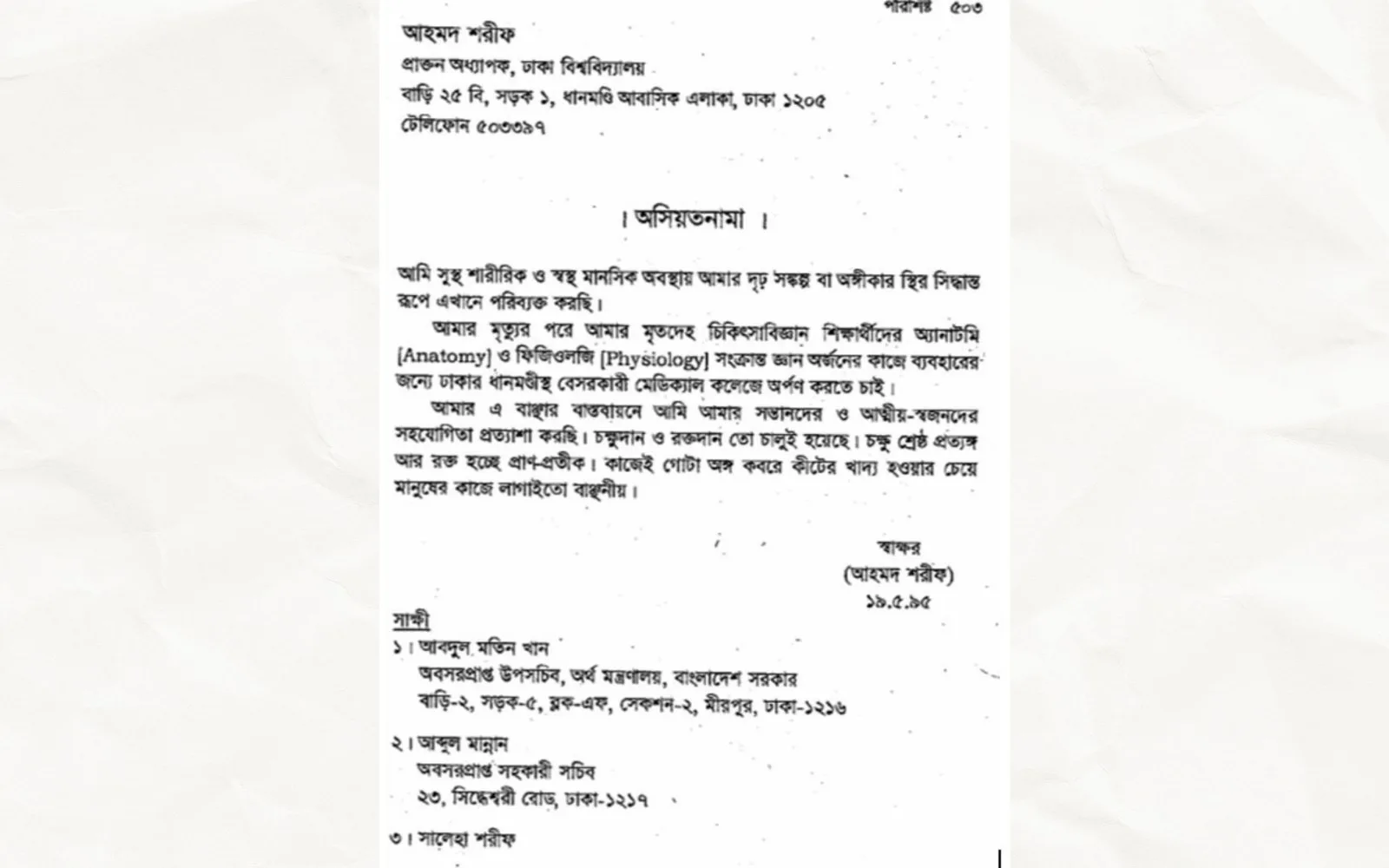
He answered them, and his answer was extraordinary. In 1995 he drew up a formal will. Since he had been refused a janaza, he would refuse the grave. His body would go to Dhaka Medical College so that medical students could learn anatomy from it. His eyes would go to Sandhani, the student-run posthumous eye-donation society founded at Dhaka Medical College, so that two blind people could see. "Eyes are the finest organs, and blood is the symbol of life," he wrote. " Hence, it is more desirable to use the entire body for human welfare rather than leaving it to decay in the grave." When he died of a heart attack on 24 February 1999, his family carried out every line of it. His corneas went to two blind recipients, one of them a young hafiz of the Quran. The men who had denied him a place among the faithful had, in the end, given a Quran reciter his sight.
The Taslima Nasrin case
In 1993, after the novelist Taslima Nasrin published Lajja, a group calling itself the Council of Islamic Soldiers put a bounty on her head. Then, in mid-1994, she was quoted in an Indian newspaper calling for a revision of the Quran. She insisted she had meant Sharia law, not scripture, but the correction changed nothing, and the streets filled. At the height of the protests, hundreds of thousands of demonstrators gathered in Dhaka, branding her an apostate and demanding her execution.
One threat from that summer has never been forgotten. A militant faction of snake charmers marched through Dhaka carrying live cobras. It announced that they would release 10,000 poisonous snakes into the streets of the capital unless Taslima Nasrin were hanged, setting a deadline of 30 June. During the nationwide strikes on that very date, over 200 people were injured, and one person was killed in clashes between Islamist and secularist groups.
The government of the day did not protect the writer. It issued an arrest warrant against her under a colonial-era blasphemy statute. She made bail, fled the country in August 1994, and has not returned since.
Thirty-one years later, her books were still the trigger, and by then the crowd had a name. On the evening of 10 February 2025, the tenth day of the Amar Ekushey Book Fair, a group under the banner of Touhidi Janata stormed stall 128 at Suhrawardy Udyan, where Sabyasachi Prokashoni was displaying Taslima Nasrin's Chumban. The stall had been marked for two days already. Viral Facebook posts from the Sunday onwards had called for it to be demolished for "spreading atheism," and the publisher's wife, Mehran Sanjana, says they reported the threats to both the police and the fair authorities, who advised them to take the books down. They did. The crowd came anyway.
What followed is the pattern in compressed form. Around six o'clock a group surrounded publisher Shatabdi Vobo, switched off the stall lights, demanded he apologise while holding his ears, and vandalised the stall; he folded his hands in apology, and police escorted him out of the fair, then covered the stall in tarpaulin. By several accounts he did not help himself, calling the group "militants" and shouting "Joy Bangla", which drew a bigger crowd. But note who ended up in custody. It was the publisher, taken into what police called protective custody, and in the days that followed no case was filed against anyone, including him. Chief Adviser Muhammad Yunus condemned the attack and ordered those responsible brought to justice; Bangla Academy formed a seven-member committee and gave it three working days; 124 eminent citizens signed a statement calling the attack an assault on freedom of expression. Meanwhile a reporter walking the fair the next day found something simpler and more telling: at every other stall that carried Taslima Nasrin's books, nobody was selling them anymore.
The coverage split along a revealing line. The mainstream reports described a "protest", a "vandalising", and sometimes a "mob", while the response from Bangla Academy and the police made the publisher, his books already removed, the immediate problem to be managed. The Daily Star called it an assault on freedom of expression; the institutional response made it look, for one night, like a disturbance caused by the expression itself. The vocabulary was still unsettled, but the sequence was not: the crowd named the offence, the state contained the target, and the press recorded both without yet agreeing on what to call the force in between.
The pattern, and what the banner adds
The template set then is the template that recurs now: a religious accusation, a crowd, and a state that manages the crisis by yielding to the crowd instead of confronting it.
What the banner adds is a theology of the target. Most of what today's Touhidi Janata attacks is not secularism at all; it is other Muslims' Islam. Shrines, urs festivals, and the Baul singers of Bengal's Sufi tradition are all condemned as shirk, the sin of associating partners with God. Ali Riaz draws the sharpest line through the ideology itself. "They speak only of tawhid," he said. "But in the creed, right after tawhid comes resalat, the Prophet's practice, and with it, his empathy, the spiritual dimension. That is exactly what is missing. There is no religious sanction for creating a 'Touhidi Janata'."
The real genius of the name, though, lies in its second word: janata.
Democracy, or mob?
It would be a mistake to treat every crowd as a disease. Nusrat Sabina Chowdhury in her 2019 book Paradoxes of the Popular: Crowd Politics in Bangladesh, did the most detailed scholarly study of this exact subject. She takes the Bangla word janata as her starting point, arguing that the English word "crowd" and the Western category of "the people" both fail to capture how fleeting, ephemeral, and materially real the janata actually is in South Asia.
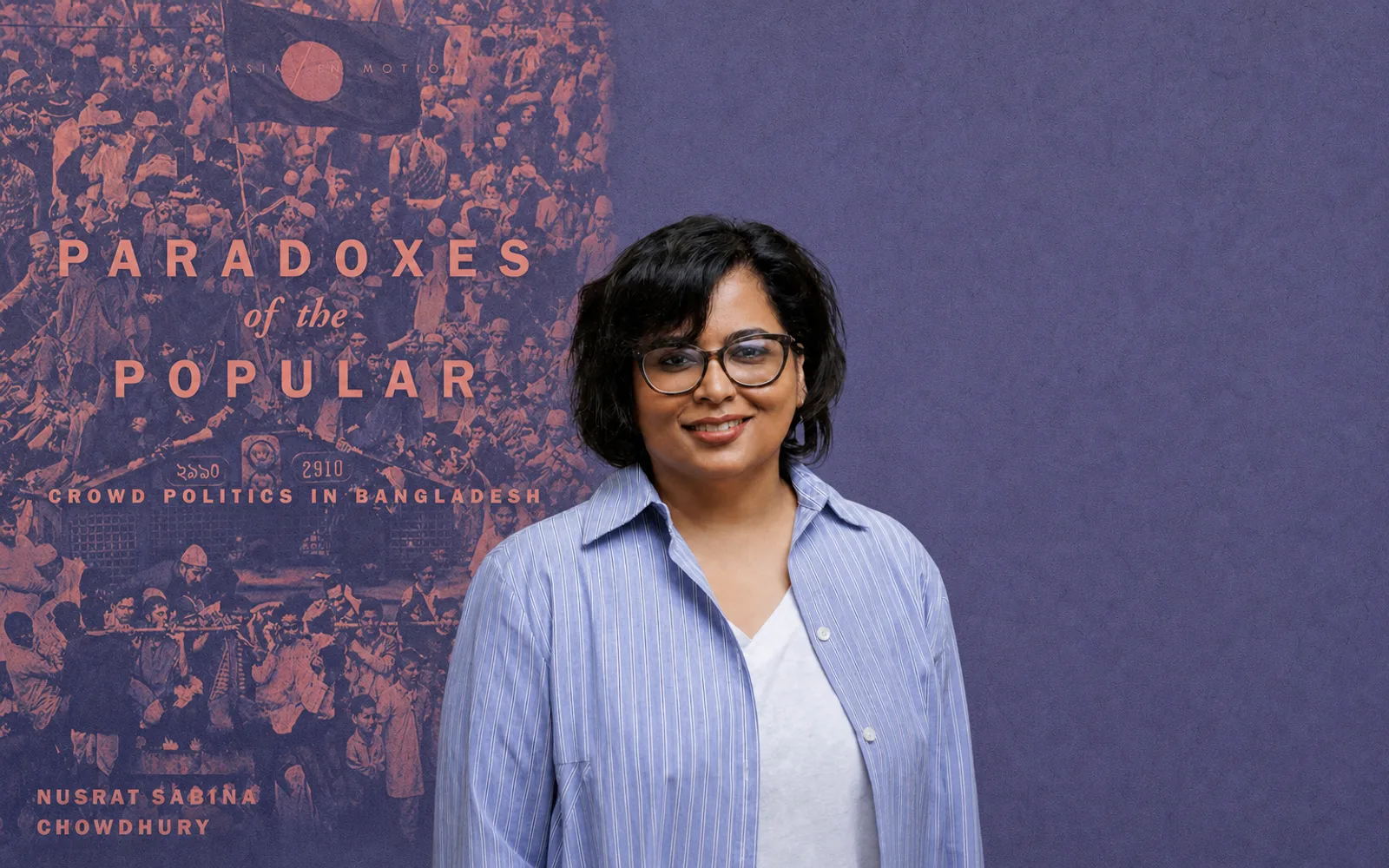
Her theoretical conclusion is the part that matters most here. Chowdhury argues that crowds are “a true political pharmakon in the sense that they are both solutions and scapegoats in performances of popular politics", simultaneously validated as the authentic voice of the people and vilified as a dangerous mob (Chowdhury, Paradoxes of the Popular: Crowd Politics in Bangladesh, Stanford University Press, 2019). This simultaneous validation and vilification, she stresses, is not new and not an aberration. It is built into the democratic culture of South Asia.
The second half of her conclusion is just as important. Chowdhury does not treat the crowd as democracy breaking down; she treats it as democracy working. Drawing on Judith Butler and Partha Chatterjee, she argues that crowds are "constitutive of South Asian political modernity", a defining feature and a foundational force of democratic practice, carrying real energy, agency, and indeterminacy rather than mere chaos.
That framework explains why she read the events of 2024 the way she did. In her January 2025 essay for the Journal of Democracy, "The Return of Politics in Bangladesh", Chowdhury saw the crowded, demanding streets that followed Sheikh Hasina's fall as democratic vitality reasserting itself after fifteen years of increasingly hollowed-out authoritarian rule. The July 2024 uprising was a crowd, too.
Here is the uncomfortable implication of her theory. If the crowd is genuinely a pharmakon, then the same force that toppled an autocrat is the force that burns a shrine. The energy is neutral. What it becomes depends entirely on who gathers it and what they aim it at. Attach Janata to a mob, and it is laminated with the legitimacy of democracy itself; stack Touhidi on top of that, and it becomes rhetorically unopposable.
The Indonesian comparison, briefly
Ali Riaz places the violence in a wider frame that should sober anyone looking for a single foreign conspiracy. "Any transition anywhere sees the rise of such forces," he said. "After Suharto fell, Indonesia had two and a half years of it. Look at Iraq's or Syria's ten-year civil war and its retribution killings. By comparison, Bangladesh has had far less."
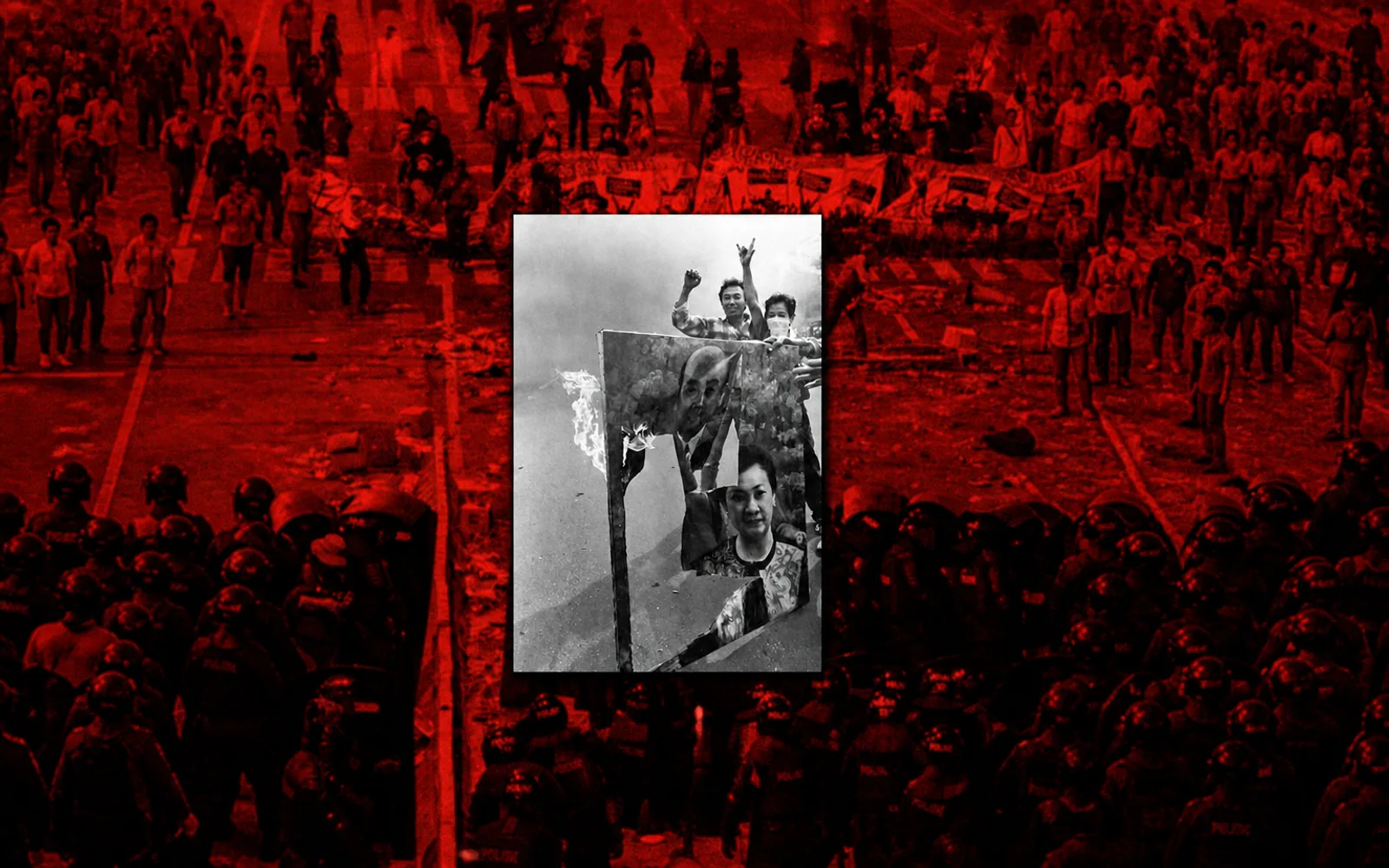
The Indonesian case is worth stating plainly, because the numbers are documented. Indonesia's authoritarian ruler Suharto had held power for 32 years. On 12 May 1998, security forces shot dead four students at Trisakti University in Jakarta, and the killings triggered three days of riots across the capital from 13 to 15 May. Ethnic Chinese Indonesians were the main target, though most of those who actually died were poor looters trapped inside burning shopping centres. Indonesia's own National Commission on Human Rights put the Jakarta death toll at 1,188 killed and 101 injured, alongside 40 shopping centres, 2,479 shop houses and 1,604 homes burned. A separate count by the NGO Volunteers for Humanity recorded 1,217 deaths in Jakarta plus 168 rapes, most victims ethnic Chinese. Suharto resigned on 21 May.
The detail that makes this comparison genuinely uncomfortable came later. Indonesia's official fact-finding team concluded that elements of the military had been involved in the riots and that some of the violence had been deliberately provoked by the very security apparatus meant to prevent it.
The general lesson holds. When a repressive state collapses, the machinery that suppressed private violence collapses with it. Scores get settled, and long-suppressed hatreds surface into the vacuum.
Why the state bows
That points to the harder question hiding underneath Shafiqul Alam's euphemism. The issue is not what to call the crowds; it is why the state keeps yielding to them. There are two reasons for the state to yield: either a crisis of legitimacy or the inability to exert its authority due to political circumstances. "The governments that bow," he said, "are the ones with a crisis of moral legitimacy. If there were no such crisis, there would be no reason to bow," says Riaz. As for the political circumstance, when the government tries to balance out various forces, it becomes afraid whether its actions will destabilise the equilibrium.
The phrase did more than soften the state's description of violence; it supplied a competing media frame. A mob is lawless, anonymous, and dangerous. A pressure group has grievances, a constituency and a legitimate claim to be heard. Once the state chose the second term, every newsroom faced the same choice: describe the crowds as a threat to public order, or as the overdue arrival of people excluded from the old order. The argument over the word was therefore an argument over responsibility, whether the state had failed to stop violence, or merely had to listen to the public.
The pattern is legible in the targets. In Khulna in September 2024, a teenage Hindu student named Utsab Mandal was set upon over an alleged Facebook post; he survived, though Indian social-media accounts widely and falsely reported him murdered. In Goalanda, Rajbari, on 5 September 2025, a crowd that gathered after Friday prayers under the banner of an "Iman-Aqeedah Rokkha Committee", identifying itself to reporters as Touhidi Janata, stormed the shrine of a dead pir known as Nural Pagla, exhumed his body, carried it in procession to the Dhaka–Khulna highway, and burnt it. One man died in the clashes, and the interim government condemned the desecration as "abhorrent". Women's football matches were forced off their pitches. And, repeatedly, newspapers.
The official adjective, "abhorrent", marked a limit that the earlier vocabulary had blurred. This was no longer easily presented as public pressure on an institution or an elite; it was a grave dug up, a body carried onto a highway, and a shrine burnt. Yet the label Touhidi Janata still protected the act from easy ownership. Reports could name the crowd, the committee and the place, but not a single organisation capable of answering for what had happened.
The election of a BNP government in February 2026 was supposed to test whether the banner was a transitional-government problem or a structural one. The answer came quickly. On 11 April, a mob of three to four hundred people stormed a shrine in Philipnagar, Kushtia, and beat to death the Sufi elder Abdur Rahman, known as Shamim Reza, over a three-year-old video clip of alleged Quranic remarks that had resurfaced online, police reportedly present as the shrine itself was later torched. A month on, the centuries-old shrine of Hazrat Shah Ali Baghdadi in Mirpur was vandalised by a similar crowd, part of what The Diplomat counted as at least two major Sufi shrine attacks in two months, against a backdrop of only eleven cases filed nationwide for the entire wave of shrine violence since August 2024. Baul musicians were attacked again in Sylhet’s Bishwanath in March, continuing assaults that had already hit Manikganj and Thakurgaon. And on 19 August, the pattern reached the police themselves, when a crowd calling itself the “Brahmanbaria Qawmi Chhatra Oikya Parishad” clashed with officers over a loudspeaker dispute, injuring thirty, before the district’s police chief held an emergency midnight meeting with Hefazat-e-Islam’s secretary general rather than treat it as a security matter. By June, the Human Rights Support Society had logged 63 mob-lynching incidents nationwide, 33 dead, sixty-six police officers assaulted in twenty-nine separate confrontations, numbers that show no discontinuity between the interim government’s euphemisms and the elected one’s record. The banner survived the ballot box intact.
The faces in the crowd
If no one owns the banner, who keeps turning up beneath it?
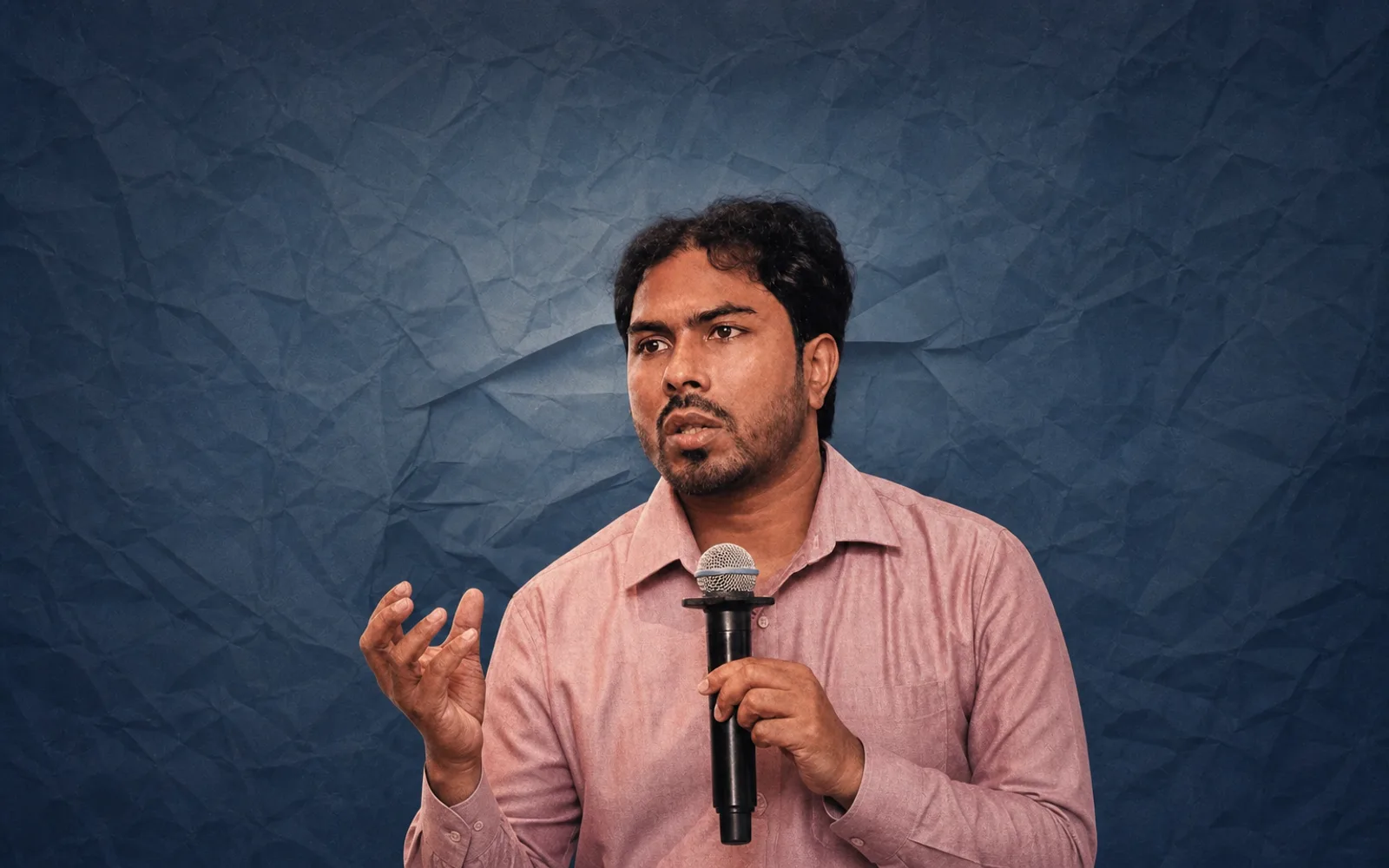
That is the question Qadaruddin Shishir set out to answer using open-source methods. He was then Agence France-Presse's fact-check editor for Bangladesh, a post he held until September 2025; he now edits The Dissent, a Dhaka-based investigative outlet focused on disinformation, foreign influence and cybercrime. He first published his findings as a post on his own Facebook profile in March 2025.
Watching footage from a string of religious mob incidents in Dhaka, Qadaruddin Shishir began noticing the same handful of men, along with a useful tell: the organisers were the ones on the chairs, holding the microphone, while everyone else stood at random. "I have seen three main characters," he wrote: Abu Sayeed Sher Muhammad Khan, Ataur Rahman Bikrompuri and Mohammad Tamim, present at protest after protest, outside Prothom Alo, The Daily Star, and the Shahbagh police station. The Lowy Institute later added a fourth recurring name, Arman Uddin.
What makes them notable is their records. Sher Muhammad Khan was arrested by the Rapid Action Battalion in 2022 for funding Jama'atul Ansar Fil Hindal Sharqiya, a banned militant outfit, and was later filmed after August 2024 carrying the black flag of al-Qaeda. Qadaruddin Shishir found that Ataur Rahman Bikrompuri had been arrested in 2021 as a member of Ansarullah Bangla Team, the banned outfit linked to the killings of secular bloggers. Bikrompuri ran a Facebook page that, in February, called for killing anyone branded shatim-e-rasul, and he openly described democracy-practising Muslims as kafirs. Shishir says Bikrompuri declared Sher Muhammad Khan the "Ameer" in a video statement during one Shahbagh mobilisation.
That mobilisation is worth pausing on, because it shows the machinery in miniature. On the afternoon of 5 March 2025, a Dhaka University student walking from the National Museum towards campus was stopped near the Raju sculpture by Mostafa Asif Arnab, an assistant bookbinder at the university's central library. He told her that her clothes were inappropriate and that she was not wearing a veil. She posted his photograph on Facebook; the proctor's office summoned him; he admitted the harassment, and by that evening he was in the Shahbagh police station.
Then the crowd arrived. Just after midnight, a group calling itself Touhidi Janata besieged the station, chanted slogans, livestreamed from inside the compound and announced it would not leave until he was freed; it held the premises until about half past nine the next morning. Its argument was that he had merely offered pious advice on modest dress, and it threatened to file theft and defamation cases against the student if she did not withdraw hers. It worked, and quickly. A magistrate granted bail on a thousand-taka bond; the same crowd met him outside the court lock-up at three in the afternoon with a flower garland, a turban and a copy of the Quran. The student dropped the case, citing pressure and threats of rape and murder; the proctor called it a compromise reached for her own safety. Qadaruddin Shishir found that Bikrompuri had travelled from Jashore to Dhaka to lead that effort, and it was during that Wednesday night at Shahbagh that he released the video naming Sher Muhammad Khan as "Ameer". Twenty departments of the university protested afterwards. The man they had garlanded was declared persona non grata on campus.
Here the language of the coverage mattered because it determined where the reader was asked to look. Reports described a "mob" besieging a police station and demanding the release of a man accused of harassment; the crowd's own language described him as a man punished for religious advice. In the first frame, the event was an attack on legal process. In the second, it was a defence of piety against secular humiliation. By the time the garland, turban and Quran appeared outside the court, the two accounts had produced opposite protagonists: a survivor of mob pressure on one side and a defender of faith on the other.
Where the evidence thins, Qadaruddin Shishir says so himself. Five or six men is only what he could identify from the footage; the real number, he allows, could be higher. And he calls his larger claim exactly what it is: "My hypothesis is that the maximum of these incidents were coordinated by certain individuals of this particular strain. " A hypothesis, not a verdict.
Qadaruddin Shishir's account of how the banner actually works is the most vivid thing the investigation recorded. "Ten of us go under the banner," he said. "The emotion and the wording pull in another two hundred. Two of us throw a stone; ten more follow. Someone is beaten; ten more join without understanding why. Then I slip to the back. The whole thing becomes 'a protest by the Touhidi public', and the responsibility never stays on me. It moves on to the general public." The two hundred, he stresses, are not criminals. Most arrived in sincere anger and left swept up in something they did not start. That is the shield, in his words: "Who isn't Touhidi Janata? I am a Muslim, so I am too. I build my shield with that word, and behind it I do what I came to do."
One real disagreement
Here the investigation ran into its most important disagreement, and it sits between two of its most credible voices, not between a source and a critic.
Qadaruddin Shishir believes a recurring core coordinates much of this from behind, and he is careful to call that a hypothesis. Ali Riaz does not go there. "Militants can join anything," he said. "In a mob, rational thought is gone, so they take advantage of it. But taking advantage is not the same as creating it. I do not think that has been the situation."
Coordinate or merely exploit? The honest answer the evidence supports is a synthesis of both: a recurring, identifiable set of recidivists operating inside a genuinely decentralised phenomenon, steering some incidents, present at many, owning none outright. Neither a spontaneous mob nor a disciplined militia. Something in between, which is precisely what makes it hard to name and easy to deny.
At the militant edge of that spectrum sits the case that broke in July 2026, when police arrested six men linked to a Khulna martial-arts outfit called Fatah Combat System, recovering what they described as videos of explosive tests. Investigators are examining the group's role in earlier blasphemy-driven mob attacks, including the one on Utsab Mandal. It is worth being exact about what is not yet established. At the time of the arrests, counter-terrorism police said they had not confirmed any link to a formal militant organisation, though the detainees themselves invoked the slogan "Ghazwatul Hind". Claims that the group was building a "Tehrik-e-Taliban Bangladesh" rest, for now, on a single overseas journalist's reporting. One of those arrested had been a local official of the National Citizen Party, which expelled him within two days.
The politics of a convenient banner
If the banner is a weapon lying in the street, the interesting question is who has picked it up, and who benefits from insisting they never have.
The Awami League, in power for fifteen years, has its own long history with exactly this constituency. Having built its brand on secular nationalism, it spent the 2010s courting the Qawmi madrasa establishment: granting state recognition to their highest degree and showering the Hefazat-e-Islam leadership with patronage, even while jailing that same movement's foot soldiers. That history is worth remembering, because it complicates any tidy story in which the Islamist street is simply the creation of the government that followed.
The investigation put the central allegation, that Jamaat-e-Islami and its student wing provide the organisational scaffolding for these mobs, to the Jamaat leader, Shahrier Kabir. He did not answer it. Over a long conversation, Shahrier Kabir argued instead that "91 per cent of the country is Touhidi Janata", so the label itself smears ordinary Muslims. He catalogued the Awami League's own atrocities. He routed the entire "extremism" narrative to an Indian and Awami information war. Pressed on the newspaper arson, he offered one revealing formulation: whoever burned Prothom Alo and The Daily Star committed a condemnable crime, before immediately relativising it. The non-answer is itself part of the record.
Mufti Harun Izhar
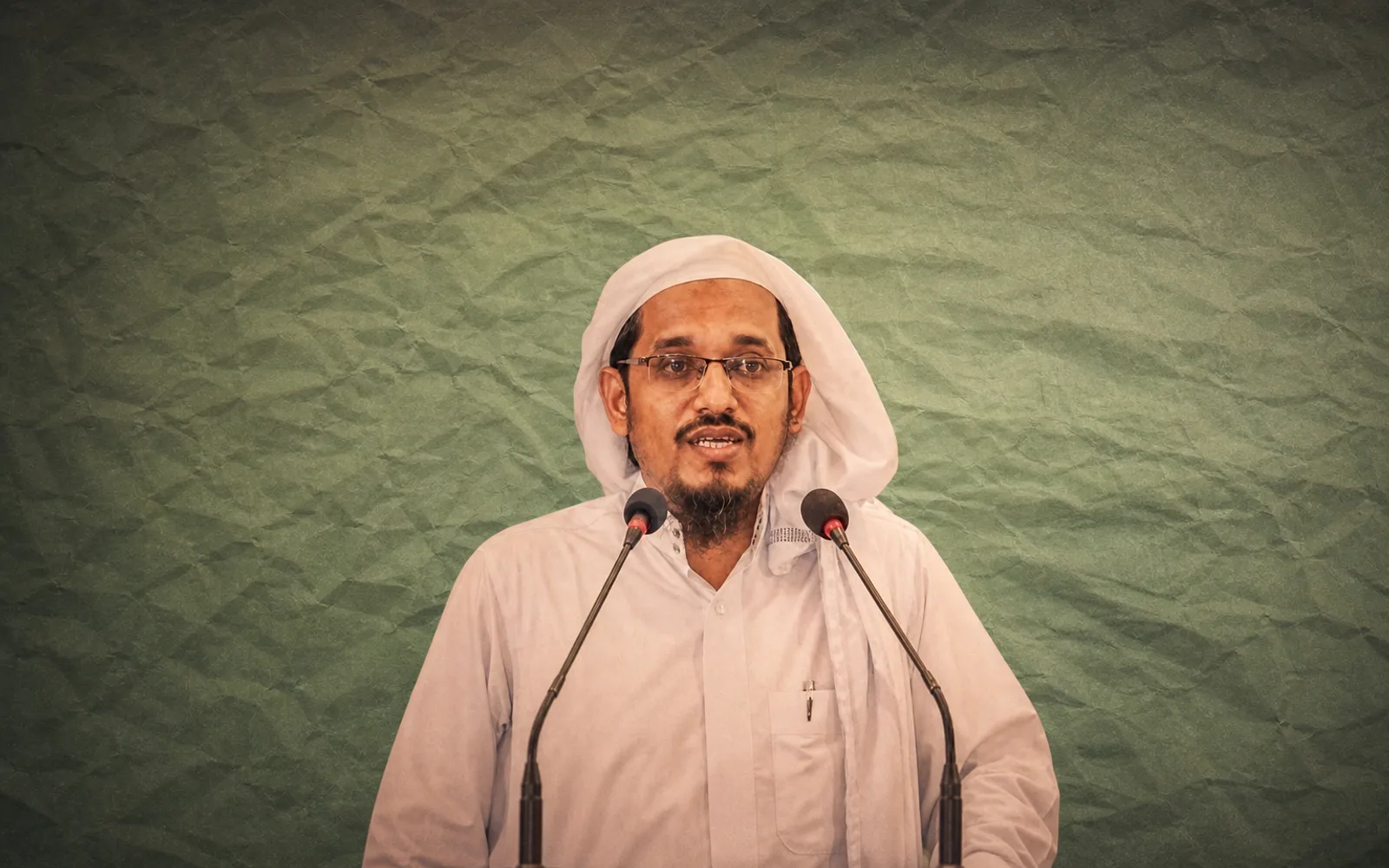
No figure sits closer to the ideological centre of this story than Mufti Harun Izhar, a joint secretary general of Hefazat-e-Islam and founder of the Shariah Graduation Institute. His lineage matters. His father is Mufti Izharul Islam Chowdhury, a founding leader of Harkat-ul-Jihad al-Islami Bangladesh, the banned militant outfit launched on 30 April 1992 at the National Press Club in Dhaka by Bangladeshi veterans of the Soviet–Afghan War, and the founder of the family madrasa, Jamiatul Uloom Al-Islamia, in Lalkhan Bazar, Chattogram.
Mufti Harun Izhar has been arrested more than once, though never convicted. He was picked up in 2009 over an alleged plot, along with two suspected Lashkar-e-Taiba members, to attack the US embassy in Dhaka. He was arrested again after the 7 October 2013 blast at the Lalkhan Bazar madrasa, which killed three people and led police to recover grenades, acid and explosives on the premises; he and his father were both indicted in that case. He was arrested a third time on 28 April 2021, over the violence in Hathazari on 26 March 2021 during Indian Prime Minister Narendra Modi's visit to Dhaka, a visit timed to Bangladesh's golden jubilee, marking fifty years of independence, alongside the birth centenary of Sheikh Mujibur Rahman. He agreed to meet the investigation on the condition that it be a conversation rather than a formal interrogation, so the specific cases against him were not put to him.
What he did discuss was illuminating. In June 2026, AFP and others traced a wave of black-and-white "kalema flags" to a call of his, flags whose design security analysts noted resembled those of the Taliban and al-Qaeda. He offered a careful half-step. He denied ordering a campaign, but admitted that, back from Hajj, he had urged followers to raise a kalema flag as a "cultural counter" wherever Argentina and Brazil flags flew for the World Cup. The mass showdown that followed was un-Islamic excess, he said, "A dawn-prayer campaign matters more than a flag showdown," and partly, he suggested, it was the work of provocateurs with obscure outlets criminalising ordinary Muslim sentiment.
Asked directly about Dipu Chandra Das, Mufti Harun Izhar called the killing "a gravely un-Islamic act" and noted, correctly, that the blasphemy charge had collapsed. And then he did the thing that defines this entire story. "Political revenge killings are far more numerous," he said. "These things have to be taken as normal. This is not a grave issue, not a national issue." A man was burned alive and tied to a tree, and it was absorbed into the ordinary.
His most striking move, though, was to invert the whole frame. The real conspiracy, he argued, is not the mobs but the narrative about them, manufactured, he claimed, by rival "moderate Islamists" who smear their competitors as militants to ingratiate themselves with the West now that India's influence has waned. Far from being India's instrument, he said, he is India's victim, and he named an Indian official he says once interrogated him. "But you who say it," he said, quoting a Persian line, "bring your proof."
Everyone points at the same border
Notice what has happened by the end of this accounting.
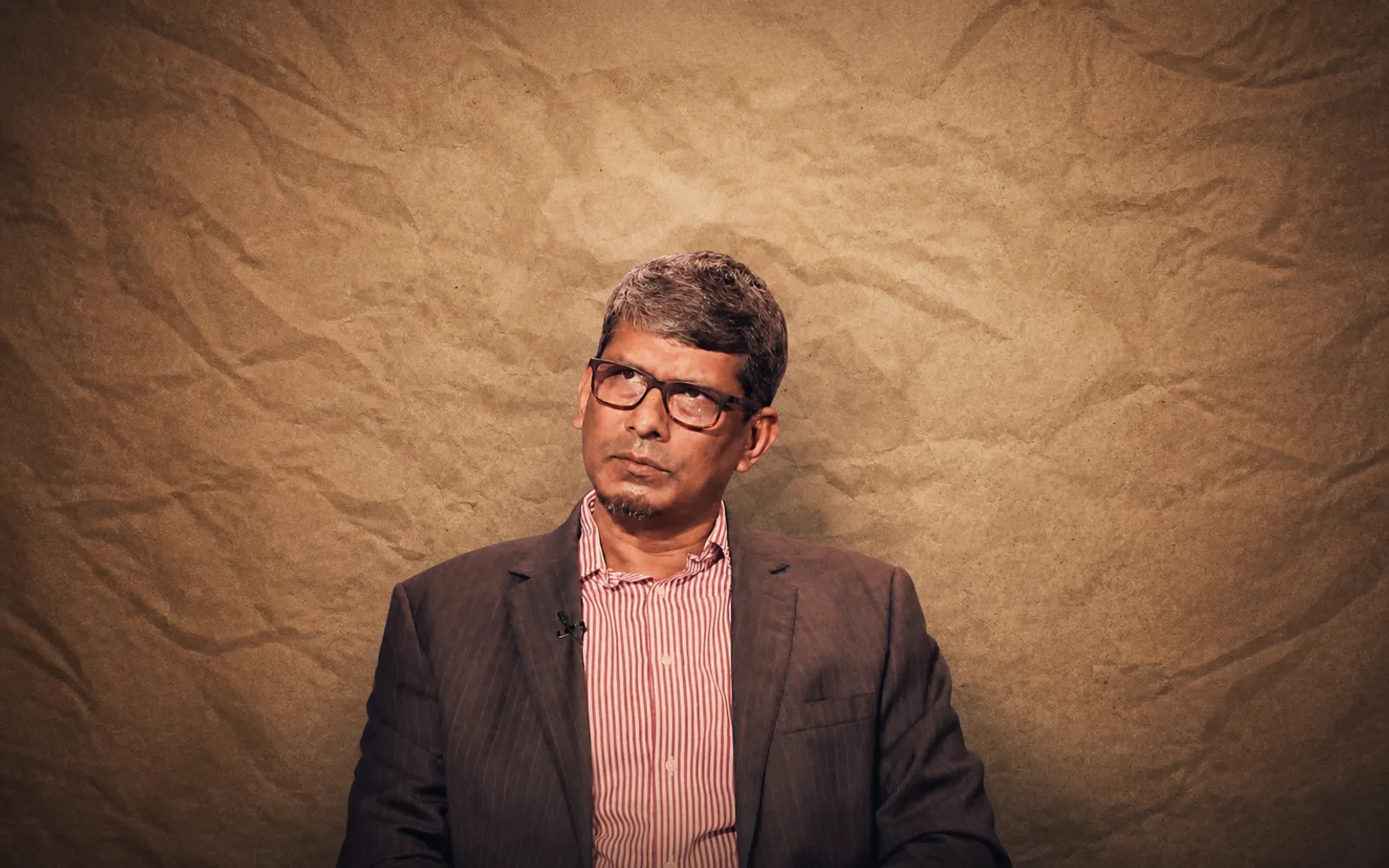
The fact-checker turned investigative editor, Qadaruddin Shishir, says India benefits from the violence. The Jamaat leader, Shahrier Kabir, says India and the Awami League invented the extremism story. The Hefazat patron, Mufti Harun Izhar, says India persecutes him personally and that the militancy narrative is a Western-appeasement plot. Three very different men, defending three very different things, converge on the same foreign villain.
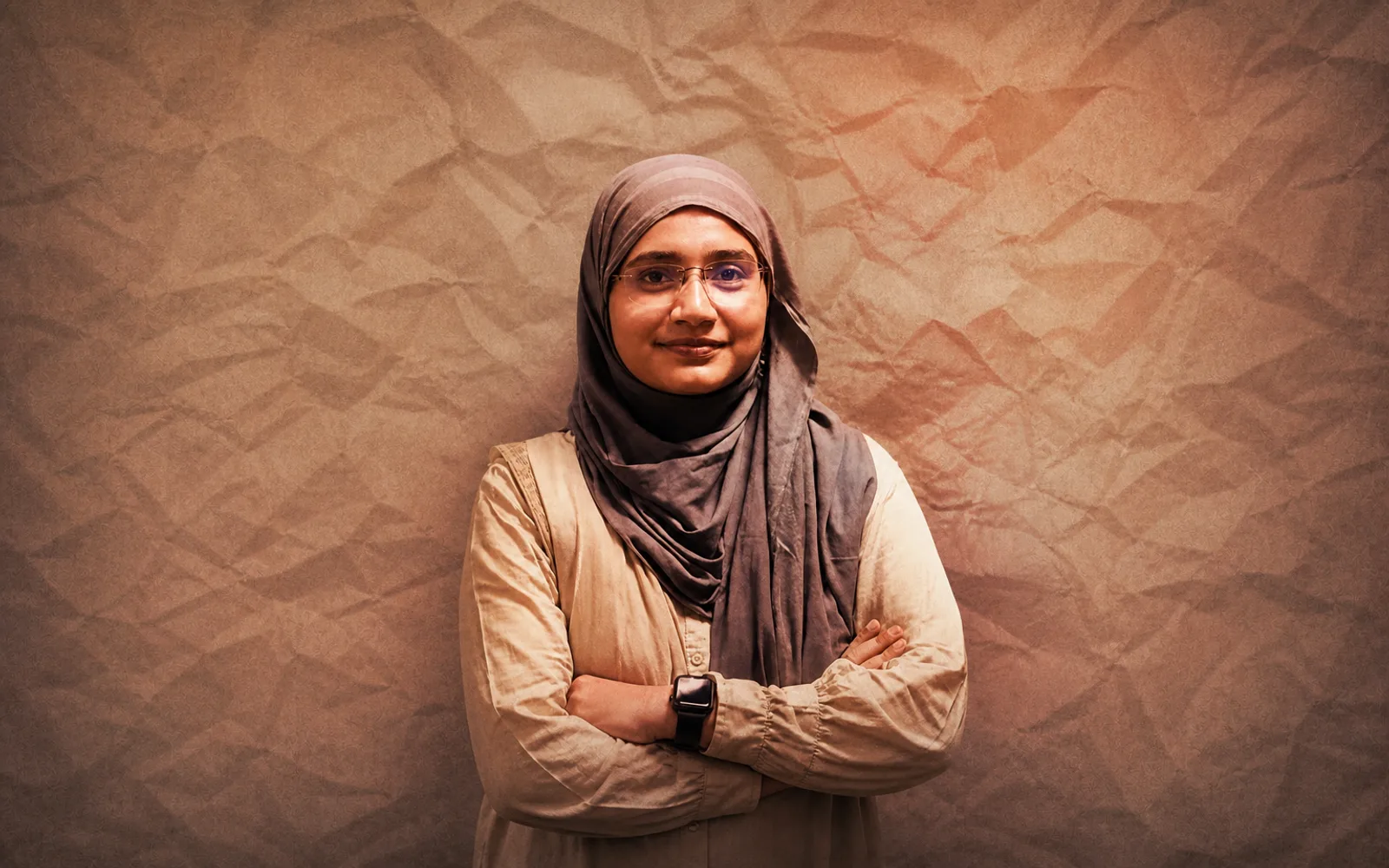
Samantha Sharmin, the National Citizen Party politician who has fought her own party over women's property rights, and who ran into the burning Daily Star building that December night to help pull journalists out, and who watched a police and army barricade "simply vanish in the dark" before the crowd pushed back inside, does not join them. Pressed on whether Prothom Alo and The Daily Star were too close to Delhi, she declined to take the frame. Her own account of who benefits points inward, not across the border: she argues both outlets spent the Sheikh Hasina years manufacturing consent for a government they should have been questioning and cites Prothom Alo editor Matiur Rahman's own admission, in a DW interview, that he might not have kept his post without the July uprising. If the newsroom arson served anyone, her theory is that it served the people who wanted July's reckoning buried, not a foreign patron.
That asymmetry is itself revealing. It is entirely possible that Indian outlets amplify and sometimes fabricate; the false report of Utsab Mandal's "murder" is proof enough that they do. But when a fact-checker, a Jamaat leader and a Hefazat cleric all reach reflexively for the same foreign villain, and the one interviewee who was physically present at the December 18 siege declines to, the outside hand starts to look like the explanation that lets everyone else avoid the reckoning inside. The shrines are being burned by Bangladeshis. The newsrooms were torched by Bangladeshis. Dipu Chandra Das was killed by his neighbours.
So: Pressure group, or mob?
Which returns us, finally, to Shafiqul Alam's words. The evidence suggests the question itself is the evasion.
Samantha Sharmin put the demolition most cleanly. A mob wanders, she said; aimlessness is the character of the janata. But the crowd that came for The Daily Star was not aimless. "They knew exactly what to do," she said. "They kept naming who they wanted. They were even asking the army to help them." Qadaruddin Shishir refuses the binary from the other side: you cannot, he says, put the spontaneous, swept-up crowd and the few who arrive with a plan into a single word.
What the banner describes is neither nor both. It is an organised, sometimes militant core; a large body of sincere, ordinary participants; and a state, plus a patron, who each, for their own reasons, decline to name the thing. It is a weapon designed to be picked up and put down without fingerprints.
When Mufti Harun Izhar was asked, at the very end, what role he wished for Islamists in the new Bangladesh, he reached, unprompted, for the same phrase the press secretary had used from the podium. They should be, he said, "a forceful pressure group".
That is the whole story, in three words the state and the street now share. The mobs may be quiet between transitions. The banner will not be put away. It is a ghost that belongs to no one, which is exactly why anyone can summon it, and no one will answer for it.
The press, meanwhile, moved between "protest," "mob," "religious sentiment," "extremism," and "public anger", each word placing responsibility somewhere different, a vocabulary as contested, in the end, as the banner it tried to describe.