The Price of an Honourable Reception
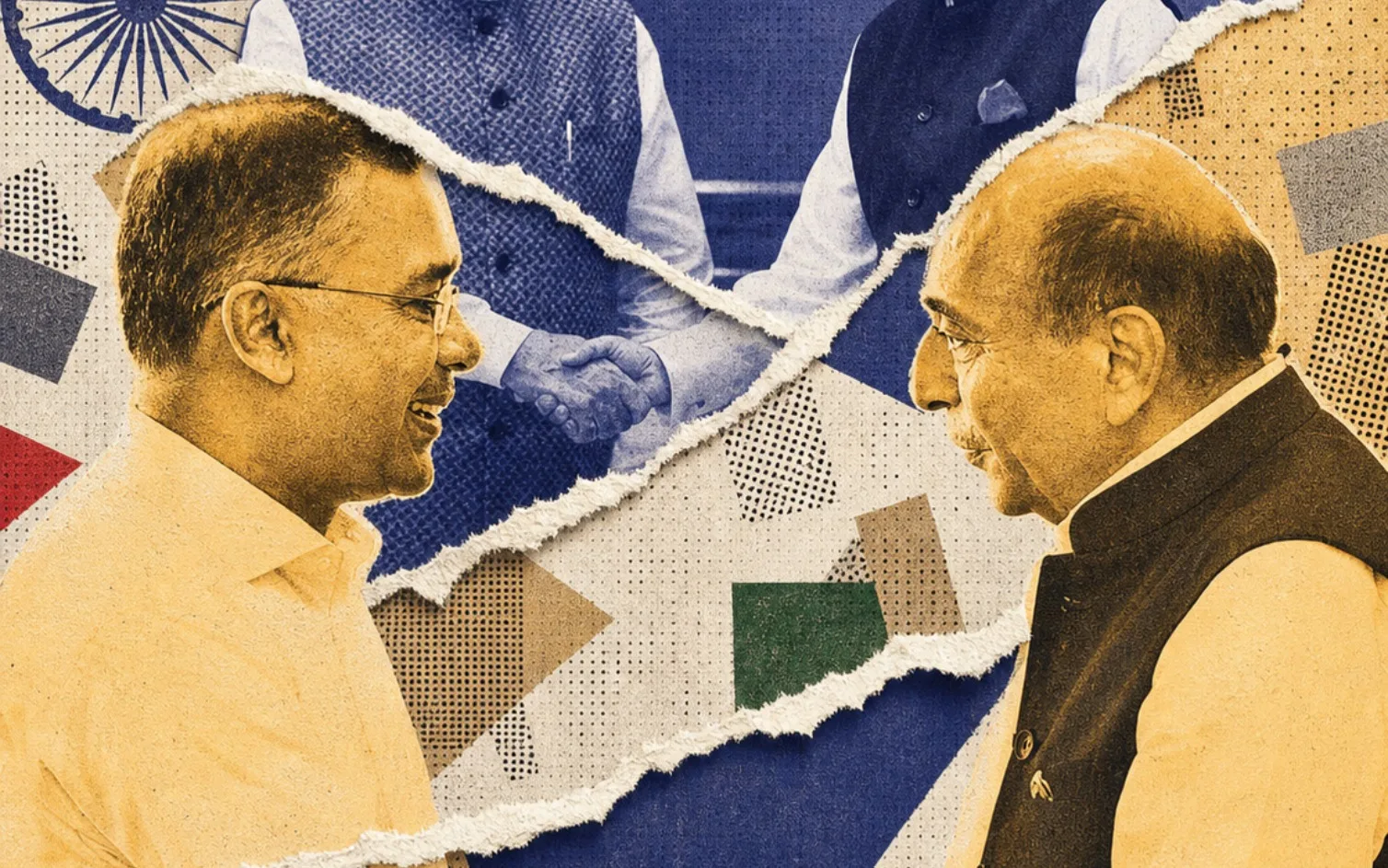
India is pushing for a diplomatic reset, promising Bangladesh PM Tarique Rahman an "honourable reception" while emphasizing trade and high-level political engagement. However, this renewed cooperation faces immediate tests over emerging regional security concerns and the politically sensitive extradition of former PM Sheikh Hasina.
In a Nutshell:
- Indian High Commissioner Dinesh Trivedi said Prime Minister Narendra Modi had assured Bangladesh Prime Minister Tarique Rahman of an “honourable reception” during a proposed visit to India.
- Trivedi urged both countries to resolve past differences through engagement and emphasised business, youth opportunities, and people-to-people ties.
- In a recent interview with an Indian media, Veena Sikri, former Indian High Commissioner to Bangladesh, criticised Dhaka for linking Prime Minister Tarique Rahman’s proposed India visit with the extradition of former PM Sheikh Hasina, calling the approach “rude” and “arrogant.”
- The CII business delegation’s Dhaka visit signals that trade, investment, and industrial cooperation are being positioned as practical channels for resetting bilateral relations.
- On August 10, 2026, a UN Security Council monitoring team report warned that Al-Qaeda in the Indian Subcontinent (AQIS) may be trying to use Bangladesh to establish terrorist cells, citing the group’s evolving regional logistics and financial networks.
- The report also linked AQIS to the November 2025 Red Fort attack in Delhi, heightening India’s security concerns about potential cross-border militant activity.
- In January 2010, Hasina and India signed an agreement to cooperate on terrorism, organised crime and drug trafficking, including intelligence sharing, training and law-enforcement coordination.
- Bangladesh Home Minister Salahuddin Ahmed rejected the UN assessment as “assumption-driven”, saying he had not yet read the report and that the government would not take action on the basis of an assumed threat.
- India’s external affairs spokesperson Randhir Jaiswal said New Delhi wants to work jointly with Dhaka against terrorism and described security as a shared regional concern.
- Jaiswal said India remains open to constructive relations with Bangladesh, while referring water-sharing issues to established bilateral mechanisms such as the Joint Rivers Commission.
Context
The developments come amid tentative efforts to stabilise Bangladesh–India ties through higher-level political engagement rather than traditional diplomatic channels. Dinesh Trivedi, a veteran politician and a close Modi ally, has recently been appointed as ambassador to Dhaka, signalling New Delhi’s intention to bring a more political approach to managing the relationship. Indian High Commissioner Trivedi met Prime Minister Tarique Rahman on 10 August, when both sides discussed bilateral relations and matters of mutual interest; India publicly expressed its intention to pursue constructive, forward-looking engagement. Then, after meeting with Tarique Rahman, Trivedi immediately flew to India to meet Modi. Security cooperation is now intersecting with more politically sensitive files: the prospective prime ministerial visit, the Teesta and other common river issues, Indian development projects, energy supplies, trade, and wider public distrust.
Why it matters
This is significant because security may become the most immediate test of whether Bangladesh and India can move their relationship from diplomatic reassurance to functional cooperation. During Hasina’s January 2010 visit to New Delhi, the two sides signed the Agreement on Combating International Terrorism, Organised Crime and Illicit Drug Trafficking. It provides for cooperation against terrorism financing and access to arms/explosives, as well as intelligence sharing, training, expert exchanges, and law enforcement coordination. India’s offer of joint action against terrorism is rooted in a regional threat narrative, especially after the AQIS attribution connected to the Delhi attack, but it also gives New Delhi grounds to seek closer intelligence exchange, border coordination, financial-tracking cooperation, and operational contact. Which means Delhi is still interested in Bangladesh's internal affairs. The simultaneous emphasis on Tarique Rahman’s India visit and business engagement suggests a possible diplomatic thaw in which security, trade, energy, infrastructure, and political recognition are increasingly negotiated together rather than in separate silos.
What we think
Delhi’s language of cooperation often masks an expectation that Dhaka will accommodate Indian strategic demands while long-standing Bangladeshi concerns remain unresolved. The AQIS warning, if investigated, cannot become a pretext for intrusive Indian security influence or intelligence access without strict reciprocity and oversight.