Three Ministers, One Foreign Policy
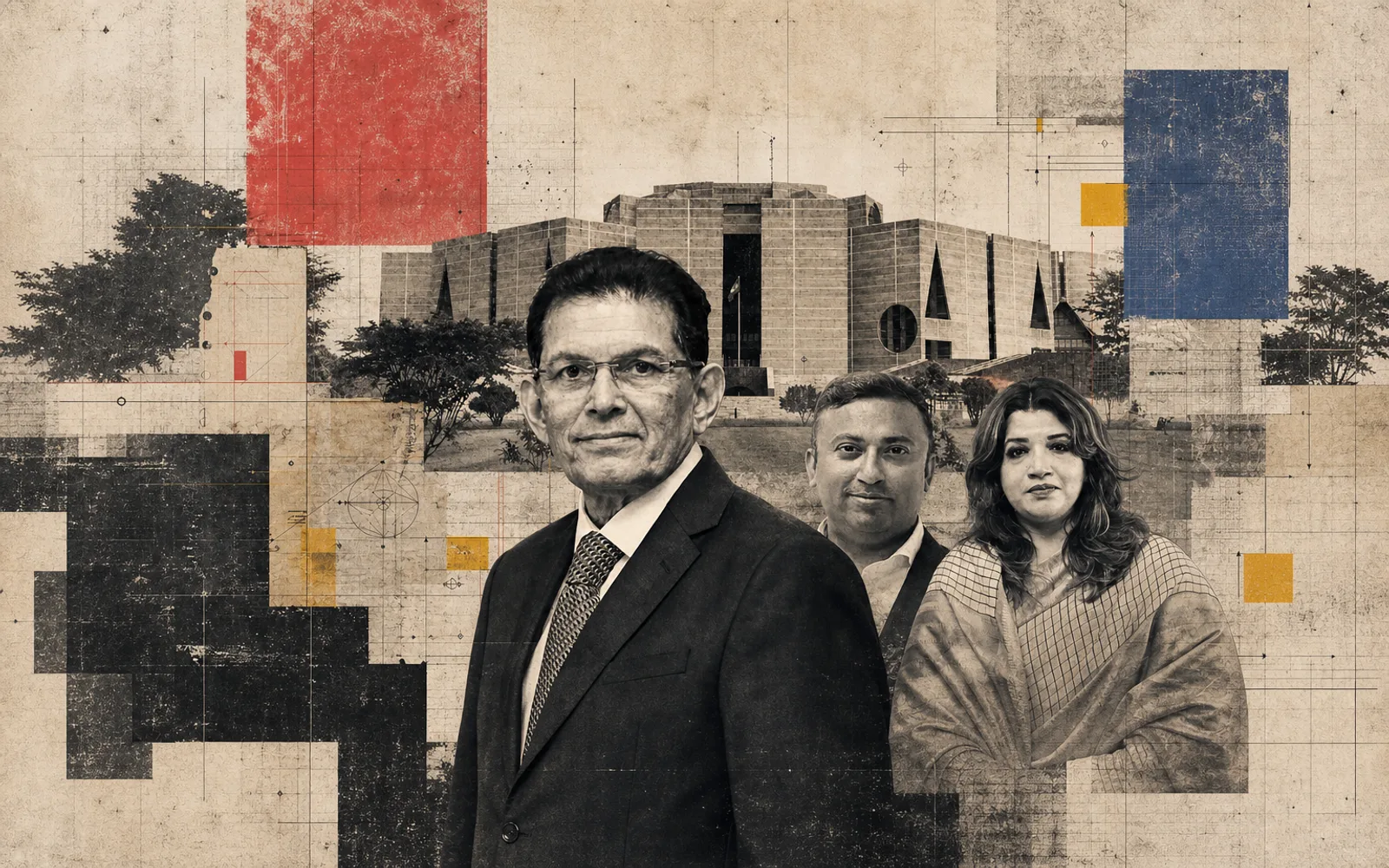
In a rare administrative move, Bangladesh has expanded its cabinet to include two state ministers—Humayun Kabir and Shama Obaed—serving under Foreign Minister Dr. Khalilur Rahman. The restructuring aims to boost Dhaka’s diplomatic capacity across high-priority files like the Rohingya crisis and relations with major powers, but success will hinge on clearly defined roles to avoid bureaucratic friction and mixed diplomatic messaging.
In a Nutshell:
- Bangladesh’s cabinet expansion on 21 August added Prime Minister’s Foreign Affairs Adviser Humayun Kabir as state minister for foreign affairs, while Shama Obaed Islam remained in the same post; Dr Khalilur Rahman continues as foreign minister.
- The appointment establishes two state ministers under the same ministry, an unusual administrative arrangement intended.
- The cabinet reshuffle was the first since the BNP-led government took office in February 2026.
- Shama Obaed, the Faridpur-2 MP, has held the foreign-affairs state-minister portfolio since February; Humayun Kabir entered government as a technocrat after serving as the Prime Minister’s foreign-affairs adviser.
- Humayun Kabir has served as Prime Minister Tarique Rahman’s foreign affairs adviser for more than a decade and is regarded as one of his trusted allies. While Shama Obaed was a key member of the party's foreign affairs committee.
- Humayun Kabir will oversee bilateral and multilateral affairs, while Shama Obaed Islam will handle human rights, climate change, LDC graduation and other assigned duties.
- Dr Khalilur Rahman is still the man in charge of the ministry with his experience in UN and multilateral diplomacy, international trade and development policy, and the Rohingya issue. Before becoming foreign minister, he served as national security adviser and high representative on the Rohingya issue to the IG. He also spent 25 years in senior roles in the UN system.
Context
Bangladesh’s foreign-policy agenda now combines several high-intensity files: relations with India and other major powers, Rohingya repatriation, trade and investment diplomacy, labor migration, regional cooperation and multilateral engagement. The Ministry of Foreign Affairs conducts political signaling while also managing technical negotiations and a substantial overseas network of missions. The constitutional issue is relatively straightforward. Article 56 authorizes the Prime Minister to determine the number of ministers, ministers of state and deputy ministers, and empowers the President to appoint them; the provision does not prescribe one state minister per ministry. The government, therefore, has legal latitude to add a second state minister.
Why it matters
The dual appointment tests whether Bangladesh can convert a larger political leadership team into more effective diplomacy rather than merely more layers of authority. Foreign policy is unusually sensitive to conflicting signals: an unclear statement on India, the Rohingya crisis, labour migration, sanctions, trade access or major-power competition can carry consequences well beyond domestic politics. A second state minister can give the ministry greater bandwidth when the foreign minister, Dr Khalilur Rahman, is abroad, including during UN-focused diplomacy, and can allow parallel engagement with bilateral partners, multilateral institutions, diaspora issues and investment interlocutors. It also formalises Humayun Kabir’s role after his advisory position, potentially allowing him to operate with clearer executive standing. Yet the upside is not automatic. When two state ministers serve under one full minister, foreign governments and Bangladesh’s missions must know who speaks with authority on which file. The first real test will come when several major files demand attention at once: a UN meeting on the Rohingya crisis, engagement with India, labour-migration talks with Gulf countries and a trade or investment push in another capital.
What we think
Bangladesh can strengthen this new arrangement by issuing a precise, operational division of responsibilities instead of relying on informal understandings. One state minister can oversee bilateral and political diplomacy, including key capitals, strategic partnerships, border-related engagement and high-level visits, while the other can lead multilateral affairs, UN diplomacy, Rohingya engagement, regional forums, economic diplomacy and services for overseas Bangladeshis. The main question is whether the extra political capacity will outweigh the added bureaucracy. A clear division of work can make diplomacy faster and more effective. But