WORLD
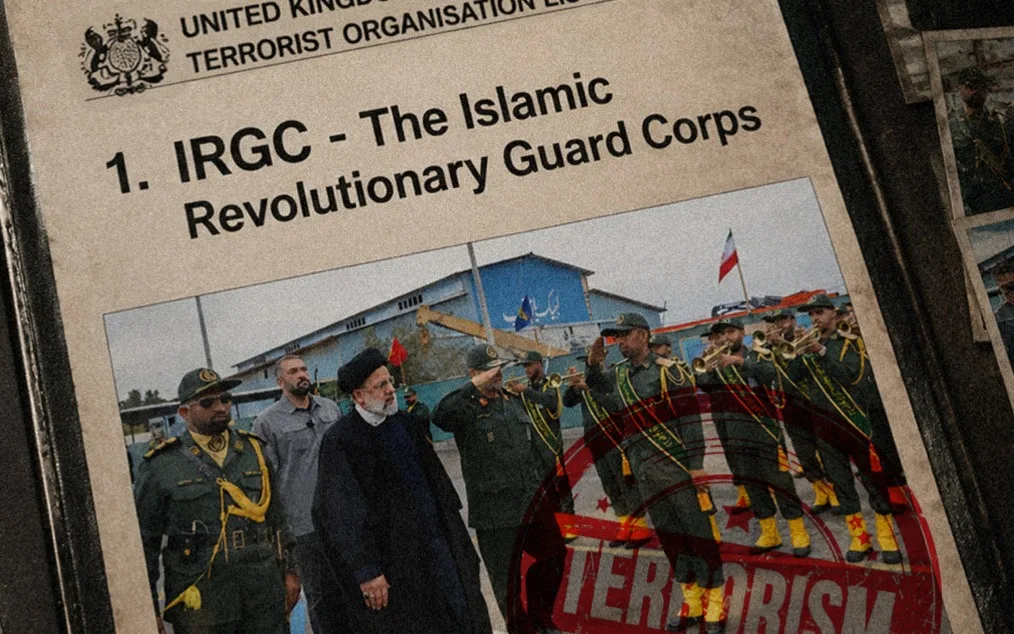
UK lists Iran's Revolutionary Guard as "terrorist organisation"; support punishable by up to 14 years in prison
Britain designates Iran's Islamic Revolutionary Guard Corps a national security threat; supporting the IRGC is now punishable by up to 14 years in prison.
LISTEN2:46
Bionic
Reading
Reading
BIONIC READING
In a Nutshell:
- Home Secretary Shabana Mahmood used new government powers introduced under the National Security (State Threats) Act, fast-tracked by Prime Minister Keir Starmer in April, to ban support for the IRGC, with anyone found backing the group now facing up to 14 years in prison.
- Two other groups were designated alongside the IRGC: the Islamic Movement of the Companions of the Right, an Iran-backed proxy blamed for a series of attacks on Jewish sites in Britain, and the volunteer corps of Russia's GRU military intelligence agency.
- The designations must be approved by Parliament before taking effect, and have been described by the government as necessary to protect the safety and interests of the United Kingdom.
Why it Matters
Britain spent years refusing to ban the IRGC despite repeated attacks on its own soil and bases abroad, making today's decision a significant policy reversal with real diplomatic consequences.
- MI5 tracked more than 20 potentially lethal Iran-backed plots in the year leading up to October 2025, yet the ban was blocked repeatedly on legal and diplomatic grounds.
- Iranian missiles and drones struck British bases in Cyprus, the Indian Ocean, and Iraq in early 2026, directly raising the cost of continued inaction.
- The designation now puts the UK ambassador in Tehran at risk of expulsion, a consequence officials had cited for years as a reason not to act.
Who it matters to
The ban creates immediate legal risk for anyone in Britain with ties to IRGC-linked networks, while also putting the UK's already strained diplomatic relationship with Iran under further pressure.
- Any group that has publicly expressed support for the IRGC now faces potential criminal exposure and will need to review its communications and funding urgently.
- Officials had warned for years that banning the IRGC could lead to the British ambassador being expelled from Tehran, a consequence the government has now decided to accept.
- Iran International relocated many of its journalists out of London in 2023 after the IRGC directly threatened their lives, and the ban now gives police new legal powers to pursue anyone conducting surveillance or intimidation on Tehran's behalf inside Britain.
Related Articles
Iran's IRGC Threatens 'Astonishing' New Military Capabilities