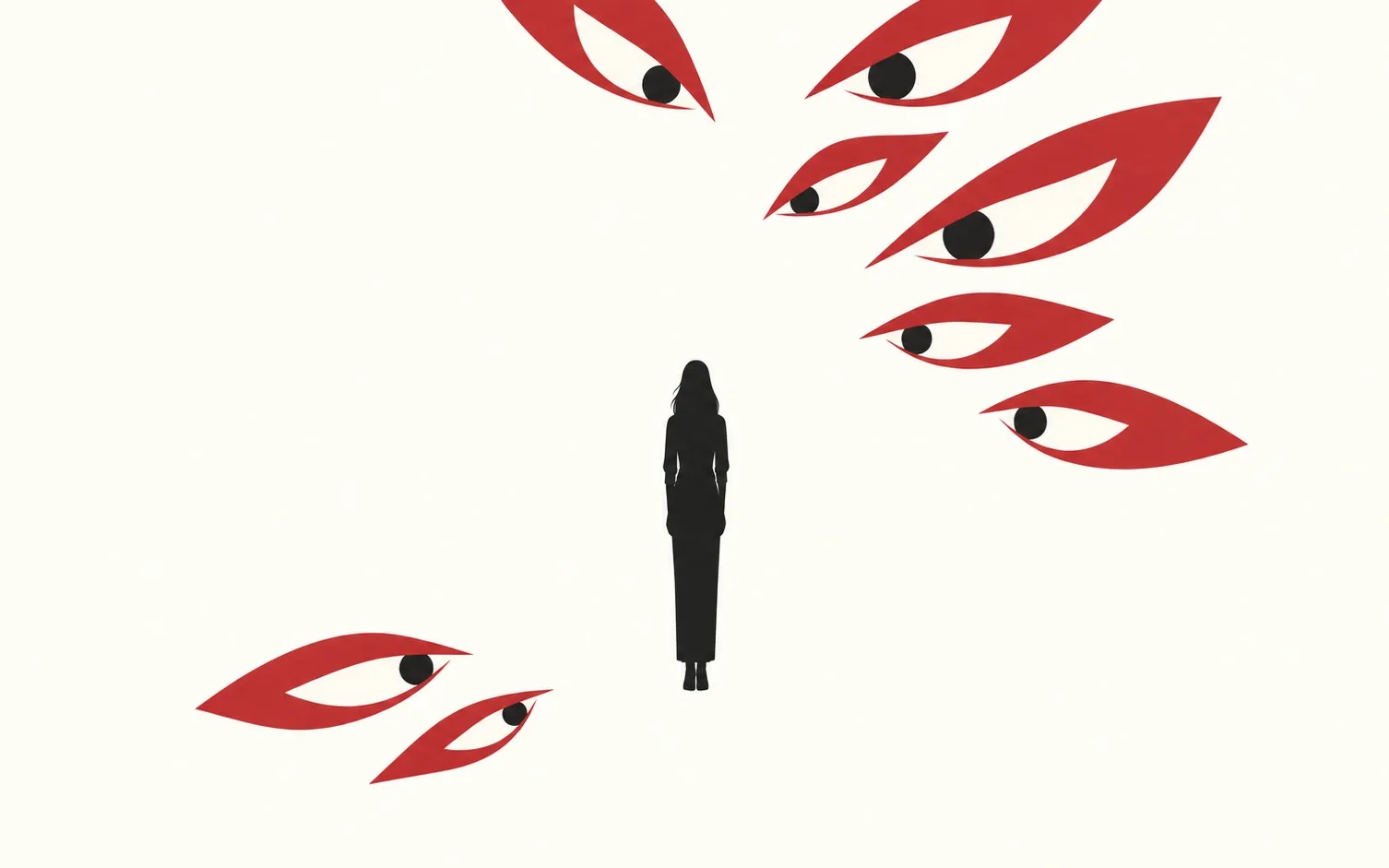
India is once again dealing with tensions on several fronts, but some of the most unsettling questions are playing out much closer to home. Scroll through Indian news on any given Monday and you start to notice a pattern. The stories differ, but the reaction from those in power is oddly familiar.
Start with the Indian Election Commission. Two commissioners have reportedly raised concerns, more than once, about how voter rolls are being managed and how the nationwide SIR exercise is being run. The opposition wants action against Chief Election Commissioner Gyanesh Kumar. Whatever the merits of each objection, the trouble is where the argument is happening. When doubts about the voter list come from inside the body that is supposed to referee elections, ordinary voters are left wondering who they are meant to trust. That question of trust becomes harder when the person raising an objection is not a powerful institution, but an ordinary citizen.
Then there is Delhi, where minister Parvesh Verma was allegedly seen slapping a young man during a road inspection, after the man complained about the construction work. AAP has called for his arrest and disciplinary action. Verma says he lost his temper because his family was abused. Maybe so. But a citizen raised a question about a road, and the answer he got was a hand across the face. And once an incident is captured on video, the argument often moves from what happened to who gets to define what the video means.
Now go north. On Monday, Lovely Professional University in Punjab shut down classes for ten days after protests over an alleged rape turned violent, with stones thrown, vehicles burned and a highway blocked. The registrar says the claim is false and part of a deliberate attempt to damage the university's name. Three students living in the same building appeared in a video backing her. NDTV later reported a second video in which the same students said they had been told what to say. Police say they have not established the identity of the student, so the allegation remains unproven. What is on record is the scramble around it. Different as these incidents are, they point to the same problem: when institutions are expected to provide answers but instead become part of the dispute, people turn to videos, statements and social media to work out what happened. And for women, that uncertainty can carry a particularly high price.
The backdrop makes it hard to shrug off. This week the Supreme Court called a recent run of rape cases in and around the capital a "failure of law enforcement". By the National Crime Records Bureau's count, more than 80 rapes are reported to police every day, and activists say the real figure is far higher because so many women stay silent out of fear or stigma.
The scales of these three stories are wildly different, and nobody should pretend an election dispute, a slap and an alleged sexual assault are the same kind of event. But the instinct behind them rhymes. Someone raises a doubt, and the first move is to protect the institution, the office or the reputation instead of answering the doubt. For a woman who says she has been harmed, that reflex carries the highest price, because it leaves her asking who is actually expected to answer. It is not only an Indian question.
On this side of the map, the same question was being asked, quite literally, in Dhaka a few days later. On 23 September, DW Bangla published a video headlined "How safe is Dhaka city at night for women? Especially the night market?", featuring the singer Masha Islam and the German presenter Emma Kremer. Asked whether being out at night is dangerous for women, Masha says everyone thinks so, and invites her co-host to come along and find the "truth". They then walk through the Night Market. The video drew sharp criticism from Bangladeshi women, among them the Bangladesh Feminist Archives, whose objection is not to the market but to the conclusion. A pleasant evening among crowds, they argue, says little about the journey there and back. It says even less for women who cannot choose how they travel: garment workers, domestic workers, students and service workers who rely on buses, rickshaws and CNGs, and who deal with harassment, unwanted touching and long waits for transport as a matter of routine. On that reading, private cars, ride-sharing and safer neighbourhoods are not neutral background. They are what buys the feeling of safety, and a video that treats one class's experience as the answer for "women" quietly erases everyone else's.
The same question sits behind a hall gate at the University of Dhaka. The Syndicate has extended the closing time of women's residential halls by an hour, so the gates now shut at 11pm instead of 10pm. The decision followed a memorandum that students from the Dhaka University Women Students platform submitted to the vice-chancellor on 27 July, listing several demands, including a later entry time. It is a small concession, and a real one. But it also shows who sets the terms. A student's evening is still bounded by a gate and a clock someone else controls, and one extra hour had to be requested in writing and waited on for weeks.
Movement is policed in other ways too. A primary school teacher in Sylhet recently came under criticism for posting a video of herself walking around her school campus to a popular Bengali song. The video went viral, and the reaction was split between criticism and support. Education authorities later withdrew a planned inquiry after the state minister for primary and mass education said he saw no wrongdoing. Later, she has been selected as one of four best teachers at the district level in Sylhet. The episode raises a question larger than one video: what does a woman have to endure simply to hold a job, walk a street, or exist inside her own family in this part of the world?
Another case played out in a government institution, and the medium was a private group chat, allegedly among former colleagues at a food-safety regulatory body. Screenshots circulated online, purportedly showing personal and sexually suggestive commentary about a former female scientific officer, including speculation about her divorce. She responded publicly and named several people she said were involved. Because the screenshots and allegations have not been established in court or by a major news investigation, they remain allegations, not settled fact. Even so, her response points to a familiar problem: a woman's marital history can become public property even when outsiders know almost nothing about the relationship.
Both cases live largely online, and the online numbers are stark. Findings show that 89 per cent of women social media users in Bangladesh had experienced online violence at least once, with women aged 18 to 30 at the highest risk. The Bangladesh Telecommunication Regulatory Commission told the same event that it received 13,023 content-removal complaints last year, around 90 per cent of which came from women. The complaints involved blackmail, image manipulation, cyberstalking and doxxing, including the sharing of personal information to intimidate victims.
None of that fits neatly inside the old idea of a workplace, and this is what institutions still struggle to grasp. A private Messenger, WhatsApp or Facebook conversation sits outside the traditional office, yet it can still damage a person's dignity, professional relationships and working environment. Sexual harassment is not only unwanted physical contact. Bangladesh's 2009 High Court guidelines cover sexually coloured remarks, gestures and other conduct that creates a hostile environment. ILO Convention No. 190 likewise treats violence and harassment as a range of behaviours that cause, or are likely to cause, physical, psychological, sexual or economic harm. The challenge is not to add another complaint box. It is to make policies capable of receiving and investigating credible reports about conduct that happens through digital channels.
None of this is new, and none of it is local. In 2017, allegations against Harvey Weinstein helped set off the global #MeToo wave. In January 2018, South Korean prosecutor Seo Ji-hyun described, in a live television interview, sexual harassment by a senior colleague and the professional fallout she said followed her complaint. In 2017, former Uber engineer Susan Fowler alleged that management and HR had failed to deal properly with her complaints, and the investigation that followed led Uber to fire more than 20 employees. The institutions were very different. Each case exposed the same gap between formal systems and what happens when a woman actually reports misconduct.
The numbers make it hard to call this isolated. A 2024 World Economic Forum analysis, citing regional data, says roughly 30 to 40 per cent of women in South Asia acknowledge experiencing sexual harassment at work. A 2025 study in Frontiers in Public Health interviewed 332 female readymade-garment workers in Bangladesh and found that 22 per cent reported frequent sexual harassment inside the factory in the previous six months. Male co-workers, supervisors and security guards were among the main reported perpetrators, and the harassment was significantly associated with night-shift work and the absence of an anti-harassment cell. The sample was purposive and convenient, so the result should not be read as a national estimate. It does, though, speak directly to the women the Night Market video left out.
The exposure can deepen when a woman crosses a border for work. UN Women's 2022 research documents gender-based violence and harassment risks for women migrant workers across the migration cycle in South and Southeast Asia. Separate research on Bangladeshi women migrants during the COVID-19 period found widespread accounts of sexual and gender-based violence among those interviewed, alongside wage theft, physical abuse and weak access to grievance mechanisms. These findings describe particular samples and periods, not every migrant woman's experience.
The region does not lack laws. A 2023 review of women's work in South Asia noted legislative progress in several countries, while observing that Bangladesh still had gaps in comprehensive protection against workplace violence and harassment. That picture has since shifted. The Bangladesh Labour (Amendment) Ordinance, 2025 strengthened protections against discrimination, violence and harassment at work, and the Bangladesh Labour (Amendment) Act, 2026 added further provisions. Bangladesh ratified ILO Convention No. 190 in November 2025, and the ILO records that it enters into force for the country on 20 November 2026.
Although, the disparities between law and lived practice remains a fair concern. The ILO's assessment of Bangladesh's framework identifies continuing implementation gaps, and a 2026 UN legal assessment still recommends a separate, comprehensive law on sexual harassment covering all sectors and educational institutions. Reform has not ended the argument over how harassment should be regulated and enforced.
On the other hand, The World Economic Forum points to transparent, impartial and confidential grievance mechanisms, clear procedures for investigation and consequences, comprehensive legislation, and regular gender-sensitisation training. Convention 190 asks for much the same, workplace policies, risk assessment, prevention, training, and complaint mechanisms people can actually reach. For the garment sector, the Frontiers findings add two practical priorities, functioning anti-harassment cells and closer attention to night-shift work. The 2009 High Court guidelines already require employers to maintain effective mechanisms for prevention and redress. On the online side, the consultation's own emphasis was on holding technology platforms accountable and making existing laws known and usable.
The teacher and the food-safety officer never met, and most likely never will. One faced public scrutiny over how she used a school campus and a song. The other was allegedly discussed in a private group in terms of her body and her private life. The circumstances differ, and the second case remains an allegation. What connects them is the question of who gets to decide what a woman's choices, appearance, work and private life mean.
That question links a viral dance video, a leaked group chat, a hall gate in Dhaka, a Night Market video and a garment floor in Bangladesh, and it stretches back to a prosecutor's television interview in Seoul. It is asked over and over, does a woman get to exist, in public, at work, or even inside a private conversation about her, without her body, her choices or her marriage becoming everyone else's business first?
Nafew Sajed Joy is a Bangladeshi researcher, writer, and environmentalist with a keen interest in sustainability, development, and South Asian affairs. He can be reached at nafew.sajed@gmail.com