Yao Wen leaves Bangladesh after four years of strengthening ties with China
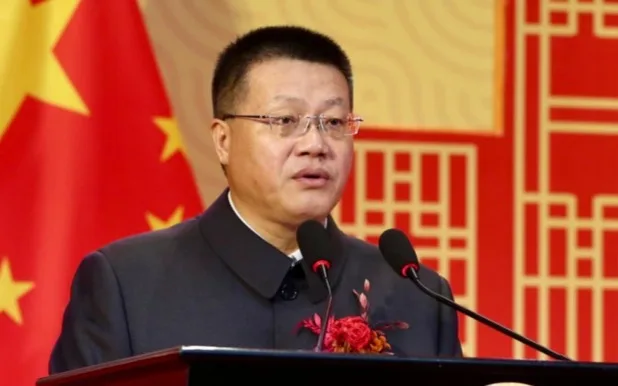
Who he is Yao Wen, born in August 1973, was China’s 16th ambassador to Bangladesh. He holds a master’s degree in law and has spent his career in China’s foreign service, including postings in Pakistan and the United Kingdom before becoming ambassador to Bangladesh. On 28 December 2022, he arrived in Dhaka, taking his appointment as Chinese Ambassador to Bangladesh after presenting his credentials in January 2023. He served for three years and nine months, spanning the final period of the Awami League government, the interim government after the 2024 uprising and the BNP government that took office in 2026. During his tenure, his main focus was deepening economic and infrastructure cooperation, particularly Chinese investment in projects such as the Mongla Port expansion, the Chinese Economic and Industrial Zone and the Teesta river project. He also advocated greater Bangladeshi exports to China, an FTA, stronger connectivity and cooperation in newer areas such as digital and green technology. As his tenure comes to an end, Bangladesh and China have now elevated ties to a “Community with a Shared Future”, with new dialogue mechanisms planned.
In a Nutshell:
- His role before and after the uprising
- Before the uprising: Yao’s work centred heavily on expanding Chinese economic and infrastructure cooperation. In October 2023, for example, he urged Bangladesh to formally apply for Chinese financing for the expansion and modernisation of Mongla Port. He also worked on broader infrastructure, trade, investment and Rohingya issues during the final phase of the Awami League government.
- After the July-August 2024 uprising: Yao was among the first senior foreign diplomats to establish contact with the interim government. On 25 August 2024, he met Chief Adviser Muhammad Yunus and said China’s commitment to Bangladesh would remain unchanged despite the political transition. They discussed continuing existing agreements and cooperation on Chinese investment, the FTA, local currency settlement, trade and Rohingya repatriation.
- 7 January 2026: Before the election, Yao met BNP Acting Chairman Tarique Rahman at the BNP chairperson’s Gulshan office. The discussion covered Bangladesh-China relations, political and diplomatic issues, development plans and how China could contribute to Bangladesh’s future economic development. The Chinese side also expressed readiness to work with the next elected government.
- 22-23 February 2026: After the BNP government took office, Yao met Prime Minister Tarique Rahman and conveyed congratulations and greetings from President Xi Jinping and Premier Li Qiang. A day before that meeting, Yao had told reporters that China remained hopeful of starting the long discussed Teesta River Comprehensive Management and Restoration Project soon. He also said Bangladesh-China cooperation was not directed against any third country. He said Beijing was ready to strengthen political mutual trust and deepen comprehensive, practical cooperation. During the same meeting, he formally invited Tarique to visit China.
- 18 June 2026: Yao met Tarique at the National Parliament ahead of the prime minister’s China visit. Foreign Minister Khalilur Rahman and Foreign Affairs Adviser Humaiun Kobir were also present. They discussed expanding cooperation in trade, investment, technical education and people to people exchanges.
- 22 June 2026: Ahead of the visit, Yao said Tarique’s trip had “historic significance” and would create a “more magnificent blueprint” for Bangladesh-China relations. He outlined stronger political communication alongside expanded cooperation in trade, investment, technology, ICT, green development and AI.
- 22-26 June 2026: During Tarique’s China visit, the two sides agreed to advance cooperation on Mongla Port modernisation, the Chinese Economic and Industrial Zone, Teesta feasibility work, trade and investment, green development, water resources and connectivity. The agreements gave several projects Yao had been discussing with Bangladeshi officials a place within the new bilateral framework.
- 2 July 2026: Yao then briefed Bangladeshi journalists on the visit, stressing that the focus should move to implementing its agreements and understandings. He highlighted flagship projects involving ports and water resources as well as cooperation in trade, industrial and supply chains, digital economy and other areas.
- 27 August 2026: Yao met LGRD Minister Abdul Moyeen Khan to discuss Chinese cooperation in infrastructure, port management, waste management, renewable energy, housing, urban development and sewage disposal. The discussions included expanding the sewer network around the Dasherkandi Sewage Treatment Plant, the planned Tk10,000 crore housing project in Korail, Sat Tala and Bhashantek, the Aminbazar waste to energy project and further Chinese support for Mongla Port and a Mongla-Chattogram port link.
- 30 August 2026: Yao met State Minister for Foreign Affairs Humaiun Kobir and reviewed the implementation of Tarique’s China visit, including the Chinese Economic and Industrial Zone, Mongla Port and Teesta. They also discussed launching a State Minister level Diplomacy and Defence 2+2 mechanism and an early Foreign Minister level Strategic Dialogue.
- 14 September 2026: Yao met State Minister for Foreign Affairs Shama Obaid Islam, with discussions covering the Bangladesh-China-Myanmar Economic Corridor, Chinese Economic Zone, Mongla Port, a proposed 1,000 bed hospital in Rangpur, education, human resource development and renewable energy. He also invited Shama to China with a delegation of Bangladeshi women entrepreneurs.
- 15 September 2026: Yao met BNP Acting Secretary General Ruhul Kabir Rizvi at the BNP chairperson’s office. They discussed strengthening Bangladesh-China political relations and giving further momentum to ongoing development projects.
- 20 September 2026: At Yao’s farewell meeting, State Minister Humaiun Kobir credited him with strengthening bilateral relations and contributing to Tarique’s China visit. Kobir said the relationship had been elevated to the “China-Bangladesh Community with a Shared Future” during Yao’s tenure and that new mechanisms, including the State Minister level 2+2 dialogue, were due to begin. Yao said China would continue supporting Bangladesh’s development.