A Friday-Night YouTube Rabbit Hole, and the History Lesson I Wasn’t Looking For
Two very different political arguments lead to a shared concern about concentrated power, contested history and the difficulty of turning popular moments into durable institutions.

I was browsing through YouTube on a quiet Friday night when I came across Khaled Muhiuddin’s long interview with Asif Nazrul. I watched it with great interest, mainly because I wanted a first-hand account of what had gone wrong.
Prof Nazrul had spent years writing and speaking about constitutionalism, democracy, human rights and the failures of the Bangladeshi state. Then July happened and he found himself inside it, as law adviser to an interim government born from an uprising against authoritarian rule. There is something fascinating about that reversal. It is one thing to know what is wrong with the state, but it is quite another to inherit it.
The Nutshell
- Two YouTube interviews prompt a reflection on Bangladesh’s political past and present.
- The author argues that popular mandates can be overwhelmed by concentrated power.
- Competing claims over 1971, 1990 and July show how political parties seek ownership of national history.
- Institutional reform will remain incomplete if history is treated as partisan property rather than shared civic inheritance.
And there was plenty to account for. The erstwhile Law Adviser has spoken about the interim government’s failures to control mob violence, to stop innocent people being swept into criminal cases, and to protect institutions from intimidation.
That was partly why it was such a compelling watch. What happens when people who have spent years demanding institutional reform finally get a chance to govern? How much of what we call authoritarianism resides in the individuals at the top, and how much survives in the habits, incentives and arrangements of the state beneath them?
When the interview ended, YouTube served me another video. This one was Jamaat-e-Islami ameer and Leader of the Opposition Shafiqur Rahman speaking in Parliament. The title suggested a fairly narrow argument about a property-transfer law and whether it was consistent with the Qur’an and Sunnah.
Not very compelling. I was comfortable with my own views and wasn’t particularly interested in a lecture on the topic. As it turned out, I was glad I clicked. The algorithm knew what I wanted better than I did.
Before the Leader of the Opposition reached the law, he was talking about 1971 and what came before and after it. About the refusal to honour a popular verdict. About independence. About what happened to democratic politics afterwards. About the danger of allowing rulers, however popular they may once have been, to become larger than the institutions around them.
His account of the years after independence is, of course, politically contested. Jamaat’s own role in 1971 remains an inseparable part of this history. That does not make the present argument meaningless. But it does make his arrival at it considerably more complicated.
I had just spent hours listening to Asif Nazrul reflect on another government born from an extraordinary popular moment, and on how difficult it had proved to translate that moment into institutions capable of restraining abuse. Now the leader of Jamaat was approaching Bangladesh’s political history from a very different direction and yet arriving at the same uncomfortable question.
Both men, from their own vantage points on our ever-dysfunctional political spectrum, were pointing towards the same lesson: the people’s mandate is not guaranteed to win against concentrated power.
A coincidental convergence? Probably not. Unfortunate for a ‘democracy’? Most certainly.
By then, I was already down the rabbit hole.

The other monopoly
The other monopoly What interested me was not a newfound agreement between Asif Nazrul and Shafiqur Rahman. Given the developments over the last couple of years, there is very little surprising about that.It was more the question both were circling: what happens when political legitimacy hardens into a monopoly on power?
Bangladesh has another source of political legitimacy tied closely to that question: the story we tell about the country itself. Who owns 1971? Who defines what it means? More recently, where does July 2024 sit alongside it? And more generally, does proximity to one of our defining historical moments somehow confer a greater right to govern in the present?
That question sent me back to something Asif Nazrul had written more than a decade earlier.In a 2014 essay, Brand new history, he criticised historical myth-making across the political spectrum. The Awami League, he argued, had moved beyond its legitimate claim to leadership of the independence movement and Liberation War towards something approaching sole ownership. BNP had built its own overly Zia-centred account. Jamaat, in his telling, engaged in defensive exercises intended to obscure its history in 1971.
What troubled him was not only historical inaccuracy. It was what these histories did to contemporary politics. Parties could draw legitimacy from their heroes and achievements in the past instead of being judged primarily on what they were doing in the present. More than a decade later, part of the ownership argument is coming from one of the parties he criticised.
The Jamaat leader has challenged BNP’s apparent claim over 1971, 1990 and 2024, asking how a party that did not even exist in 1971 could possess the history of a national struggle. He has argued that Ziaur Rahman’s contribution can be recognised without pushing everyone else who fought to the margins. He has also said Jamaat would respect 1971 as it respects 2024.
There is self-interest here, obviously. A Jamaat seeking a fuller place in mainstream politics has every reason to challenge a historical narrative that has long constrained its legitimacy. That does not make the argument wrong. It does mean we should examine it carefully.
By this point, the two videos were no longer really the subject.
Throughout our existence as a nation, political victory has meant far more than acquiring the temporary right to administer government. It has meant access to an extraordinarily concentrated state: appointments, institutions, patronage, policing, contracts, public language and the ability to determine whose version of the country receives official recognition.
In that system, the past becomes something else worth controlling. First, winner gets the state. Then the winner gets the history, building a political settlement in which controlling the past reinforces the mandate over the present.
A history that keeps changing hands
Nations need shared stories.
Not necessarily stories in which everybody has to remember every event in exactly the same way, but ones broad enough for people with very different identities and experiences to believe that they belong to the same place.
Bangladesh has plenty to work with. The Language Movement. The democratic struggles of the Pakistan years. The Liberation War. Resistance to military rule. 1990. The long fight over the vote. And now July.
They do not carry equal historical weight. 1971 is foundational in a way July is not. The Liberation War created the sovereign state of Bangladesh. July occurred within that state, however important it may prove to our political development.
We should be capable of recognising that difference without requiring one chapter to erase another. Unfortunately for us, each political era arrives with its own preferred heroes. Certain dates move towards the centre while others recede. The government changes and the argument over who truly represents Bangladesh begins again.
Losing political power becomes more than losing an election. It threatens access to the state, protection within the system, physical safety and sometimes even becomes a question of life and death.
That is why July can so easily become the next turn of the same wheel.
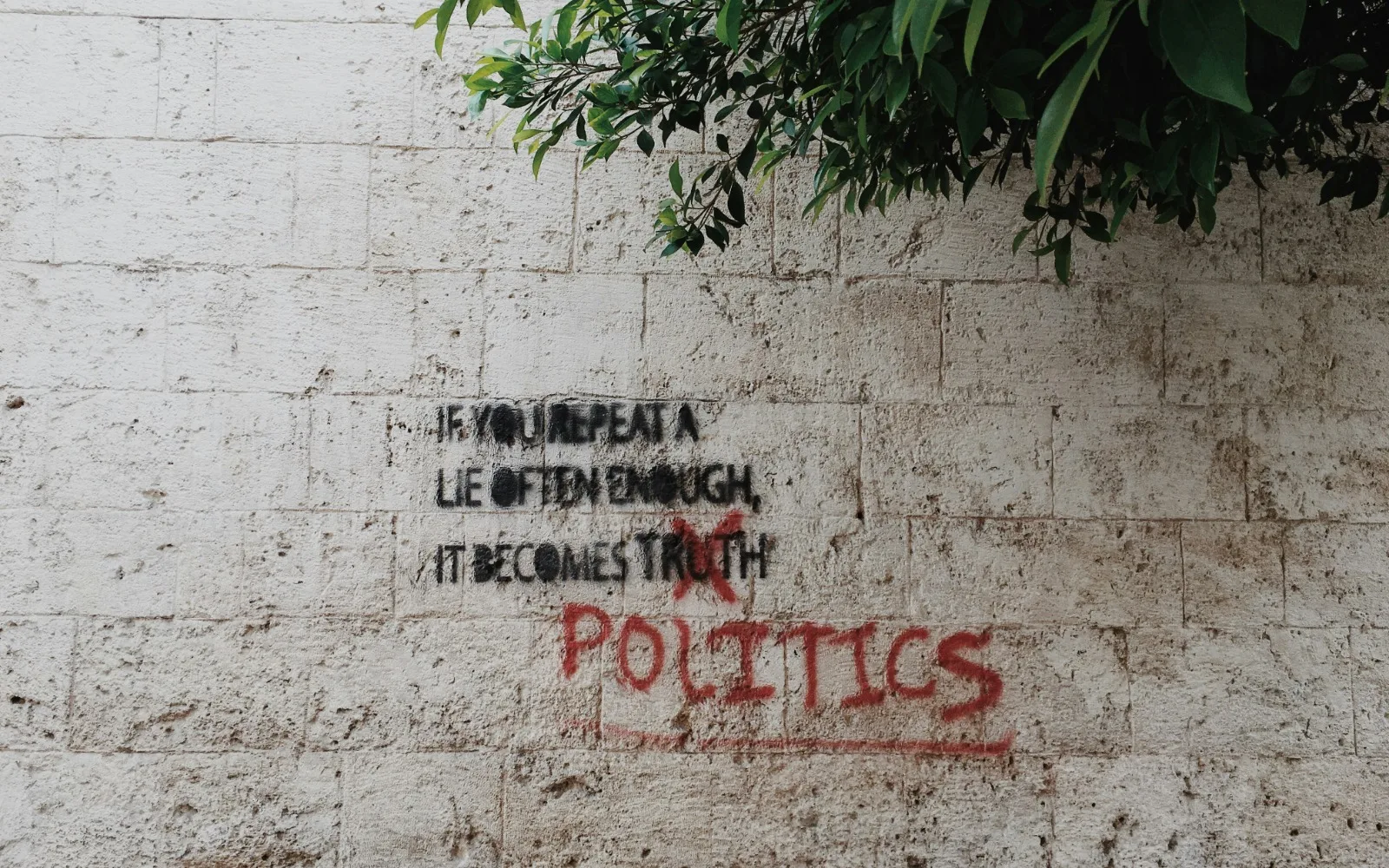
The danger after July is larger than the possibility of turning it into another official history. It is allowing another political order to emerge in which the names and narratives change while the underlying arrangement of concentrated power survives.
If that happens, we will have changed the rulers and changed the authorised story without changing the political settlement that made monopolies over history and power possible and, in turn, enabled the failures that followed: the authoritarian turns, the violence, the corruption, the captured institutions, and the promises we failed to keep.
In our quest to reform our institutions, history is conspicuously missing. National memory should function as civic inheritance rather than partisan capital. Otherwise every political generation gets to declare another heroic beginning and leave somebody else to explain the disappointment that followed.
And on goes the rabbit hole.