Ziaur Rahman’s Role in the Liberation War to Return to Textbooks
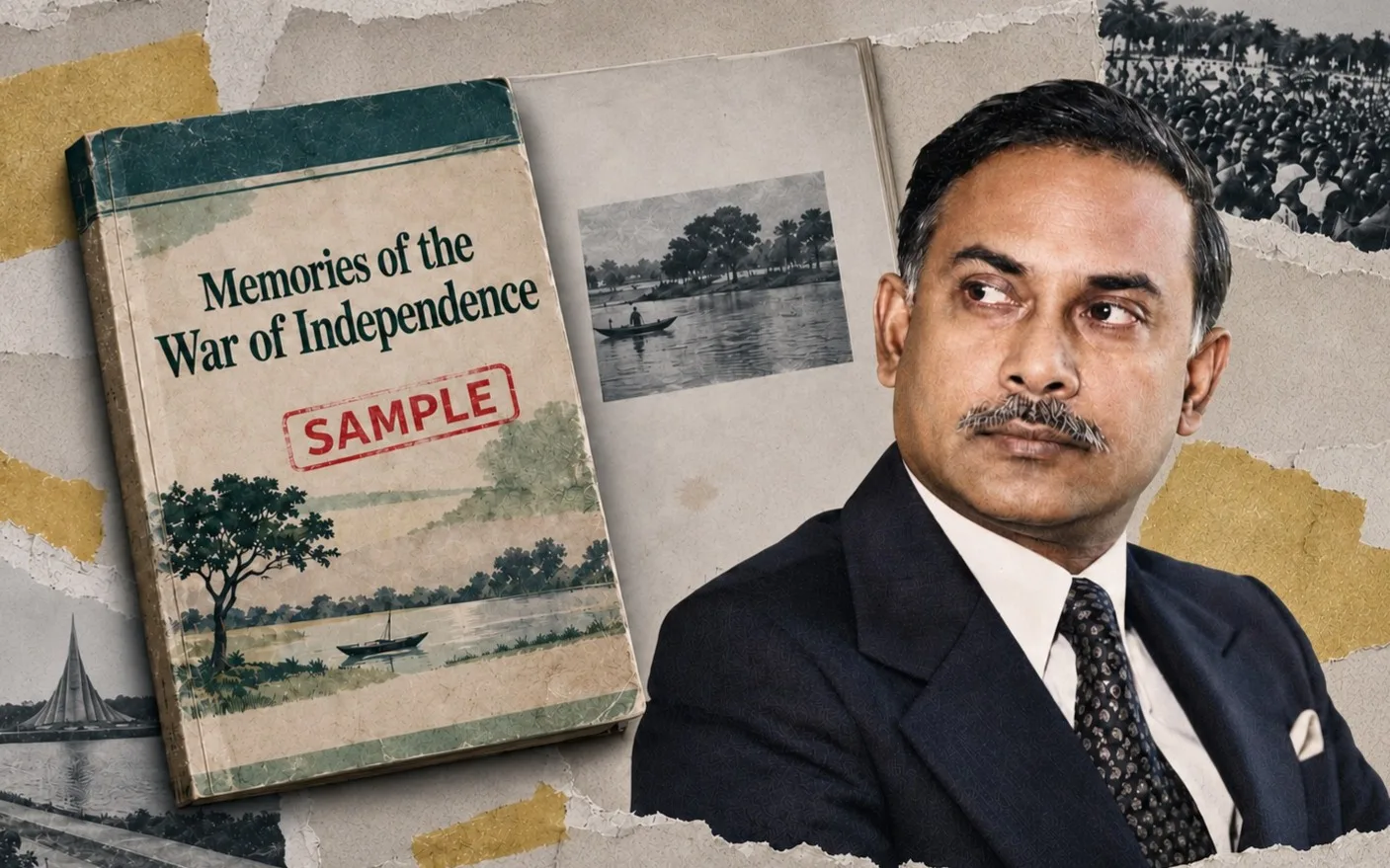
An article written by Shaheed President Ziaur Rahman, Memories of the War of Independence, will be included in Bangladesh’s Class IX–X Bangla Literature textbook from the 2027 academic year. The National Curriculum and Textbook Board (NCTB) has further decided to include an image of a historic diary kept by Zia during the Liberation War.
In a Nutshell:
- The National Curriculum Coordination Committee (NCCC) has given final approval for Ziaur Rahman’s Memories of the War of Independence to be included as a new chapter in the Class IX–X Bangla Literature textbook from 2027, along with an image of Zia’s wartime diary.
- The essay describes the beginning of the Liberation War, the armed uprising in Chattogram, the declaration broadcast from Kalurghat Radio Station and Zia’s experience on the front line.
- The accompanying author biography will identify Zia as the declarer of independence, a former president and army chief, commander of Z Force and Sector 1, and a recipient of the Bir Uttam award.
- NCTB says the revised material will also recognise Sheikh Mujibur Rahman, Ziaur Rahman, Tajuddin Ahmad, Huseyn Shaheed Suhrawardy, AK Fazlul Huq and Maulana Bhasani as important figures in the country's history of independence.
Context
The decision was approved at an NCCC meeting on August 24 and is being presented by the NCTB as an effort to make the teaching of 1971 more impartial and objective. The revised text will describe the Liberation War as a people’s war and explain the roles of various political and military figures. The inclusion of Zia’s own account is intended to allow students to encounter a first-person historical document alongside the wider narrative of 1971. Furthermore, the explanatory section before Zia’s essay will refer to two historical writings, Ekti Jatir Jonmo and Swadhinata Juddher Smriti, as documents of the Liberation War.
Why it matters
For years, the previous government’s emphasis on Sheikh Mujib meant that much of the national story was built around one central figure, mostly leaving less room for the wider network of political leaders, freedom fighters and ordinary people who shaped the independence struggle. That makes the NCTB’s stated attempt to recognise multiple contributors, including Sheikh Mujibur Rahman, Ziaur Rahman, Tajuddin Ahmad, and numerous other political, military, and civilian actors, rather than replace one dominant figure with another, particularly notable.
What we think
It is fair to acknowledge that Ziaur Rahman’s role in the Liberation War has not received the space it deserved in our textbooks during the last government’s regime. At the same time, the promise of impartial history needs to remain consistent. We have seen before how emphasis on one figure when gradually becomes the dominant version of history may lead to fascism. The hope is that this time, Ziaur Rahman’s contribution will be acknowledged without allowing another single-person narrative to replace the previous one.