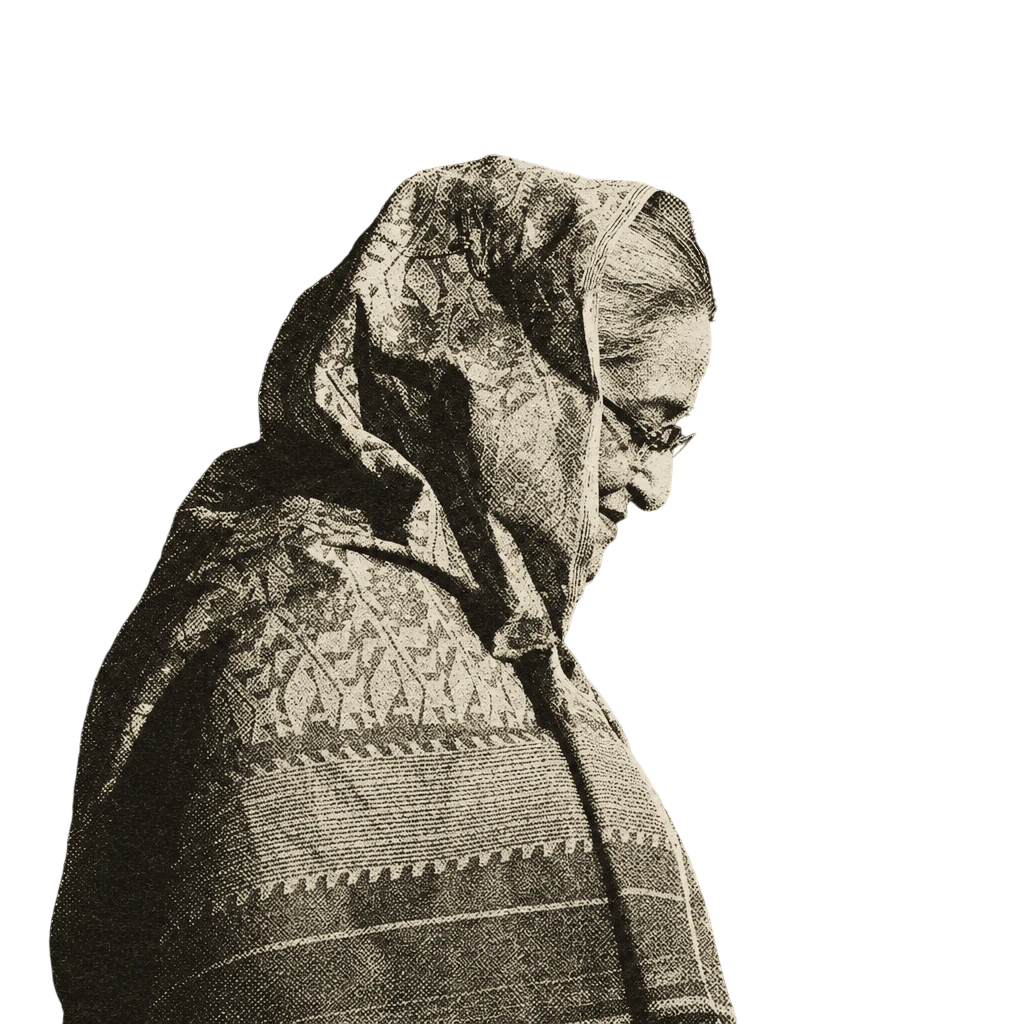
Sheikh Hasina says she is coming home.
She has lived in India since she fled Dhaka on 5 August 2024. If she does return, many readers will want to know exactly what happened during her 15 and a half years in power, and who did it.
On 19 October 2026, speaking by video to a Washington audience, she repeated a promise first made in July. This report puts the record in one place, and in every section names the people, firms and agencies involved and says what has happened to them since.
“I will go back to Bangladesh in December. I am not afraid.”
“Now, I am ready to die for the people of my country.”
“They may arrest me on my return, they may even kill me. Still, I have to go.”
Sentenced to death, in her absence.
Her party's activities have been banned since 12 May 2025 and its registration is suspended. It could not run in the 12 February 2026 election, which the BNP won with a two-thirds majority. Dhaka has asked India to send her back; New Delhi says the request is “being considered through judicial and internal legal procedures”.
Not every claim carries the same weight.
Each claim on this page carries one of three labels, in brackets after it or on a tag beside it. They run from settled in court to not yet proven.
A court has ruled on it.
A tribunal sentenced Sheikh Hasina to death in absentia in November 2025 (court verdict)
A government commission, the White Paper committee, an audit, the UN or a foreign government has found it.
A state commission has verified 1,350 complaints of enforced disappearance (official finding)
Reported by credible media, rights groups or prosecutors, but not yet proven in court.
That the Hasina family siphoned off $5 billion through Rooppur. The ACC is investigating; no case has been filed (allegation)
Being named is not a verdict
Naming a person here does not mean they have been found guilty.
Their side
The Awami League rejects most findings and calls the trials a political vendetta. Its answers are in Chapter 13, and denials sit beside the claims they answer.
Where the money figures come from
Figures marked “White Paper” come from a report written for the interim government by a committee chaired by the economist Debapriya Bhattacharya (December 2024). They are estimates, not court findings.
Fifteen years, seventeen turning points.
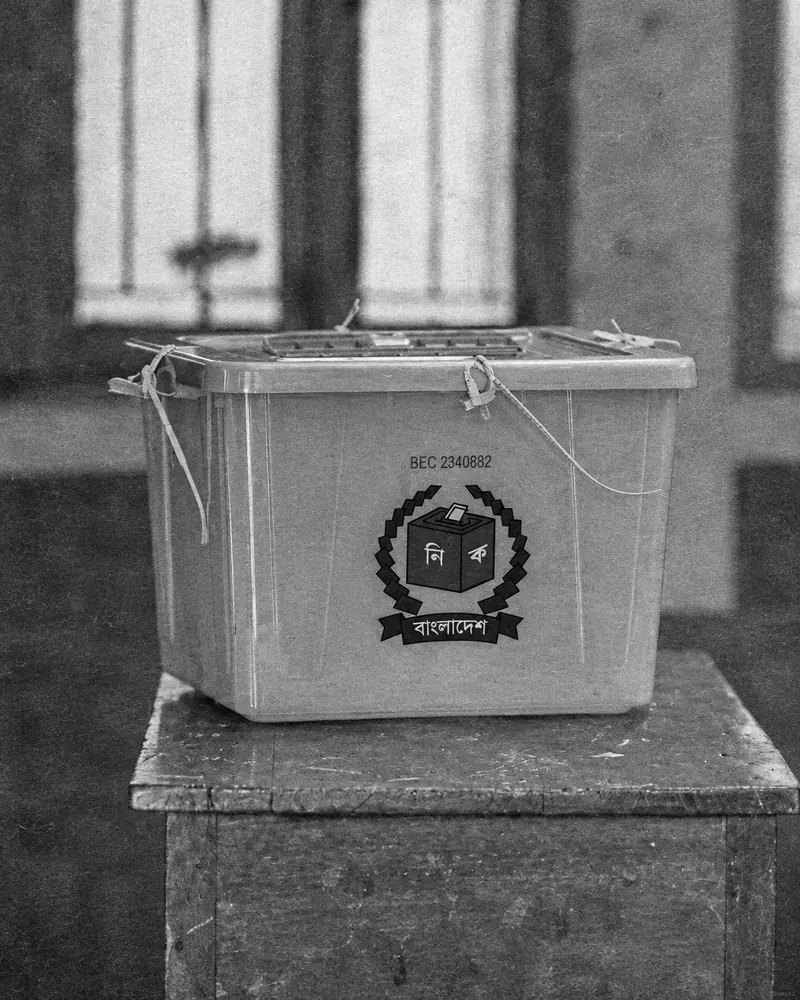
Threevoteswithoutarealcontest
Her 2008 win was real. Her alliance took a landslide in an election run by a neutral caretaker government. What came after was different.
Within three years her government had scrapped the caretaker system. It went on to win three more elections, in 2014, 2018 and 2024, that independent observers did not accept as free or fair. The White Paper calls those votes “fraudulent” and traces much of the corruption that followed to this loss of accountability.
2011
Scrapping the referee
Since 1996, a non-party caretaker government had run every general election. In May 2011 the Supreme Court's Appellate Division, led by Chief Justice ABM Khairul Haque, ruled it unconstitutional. Parliament passed the 15th Amendment weeks later. The High Court restored the system on 17 December 2024 (court verdict). Khairul Haque was arrested in July 2025 (allegation; case pending).
The BNP-led opposition boycotted. In 153 of 300 seats there was no vote at all, because only one candidate stood; 127 of those seats went to the Awami League. Official turnout was 39.6%, and as low as 22% in Dhaka. By 21 January, 7,015 opposition activists had been arrested.
The vote “did not appear to credibly express the will of the Bangladeshi people”.
Why it mattered. With no real elections, Parliament became a one-party room. In the White Paper's words, accountability “shifted from the electorate to political and business elites”. The Quality of Government dataset it cites shows Bangladesh's electoral-process score falling from 9 in 2009 to 4 in 2021.
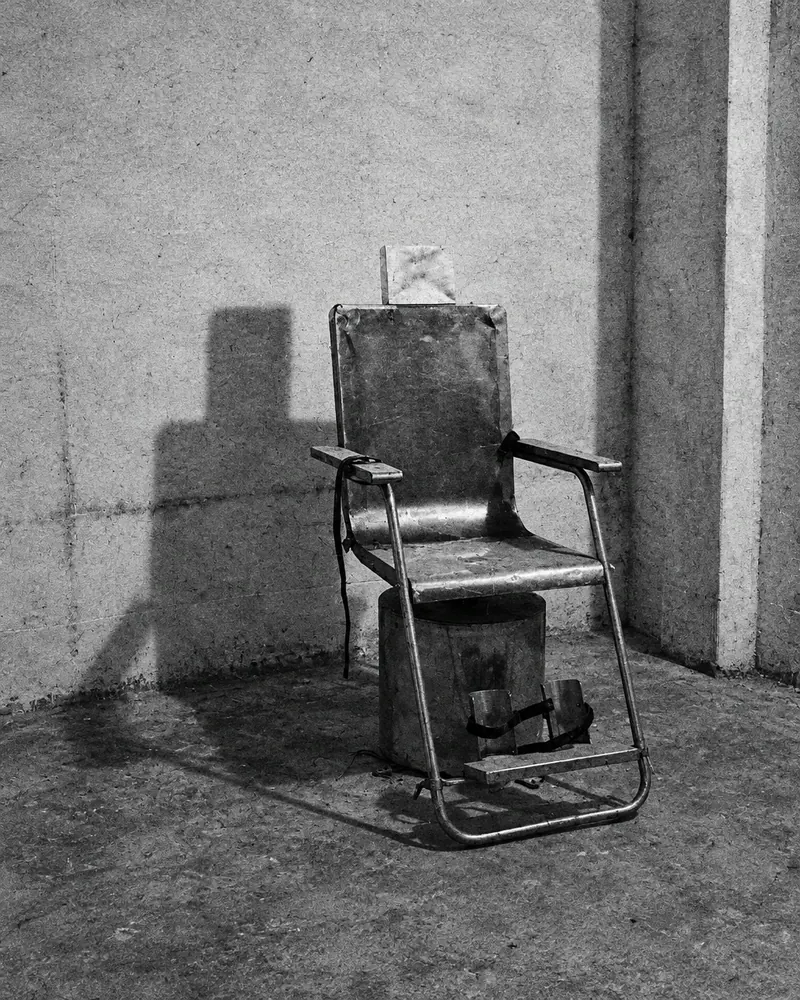
Disappearances,secretprisonsand“crossfire”
For 15 years people were picked up by men in plain clothes and never seen again, or turned up weeks later dead in a staged “crossfire” shootout.
people are still missing. A state commission has verified 1,350 complaints of enforced disappearance under the Awami League, and found Hasina implicated “as an orderer in several cases”.
Official findingVictims were passed between agencies so that no single unit held the whole record. The commission described a three-tier chain: “strategic leadership” (Hasina, her defence adviser and the home minister), agency chiefs, then field teams. Disappearances, it said, “were not viewed as crimes but rather as part of standard operational procedure”.
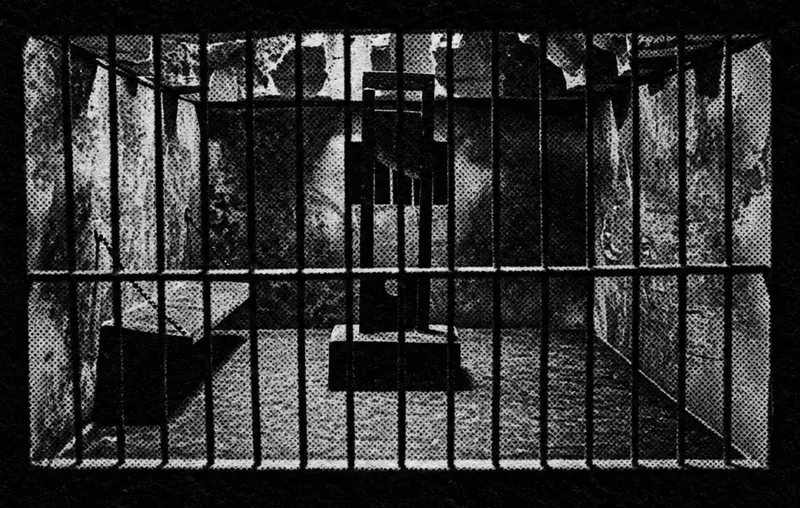
Aynaghar, the “House of Mirrors”
Military intelligence (DGFI) ran secret cells inside Dhaka Cantonment, and RAB ran its own, including at RAB-1 headquarters in Uttara. After the government fell, investigators found 500 to 700 such cells around the country. Among those freed in August 2024 were barrister Mir Ahmad Bin Quasem, held about eight years, and retired Brig Gen Abdullahil Amaan Azmi, held since 2016.
The 2018 “war on drugs”
It began in May 2018, six months before the election. Security forces reportedly committed 466 extrajudicial killings that year, three times the previous level. A senior RAB officer had told Swedish Radio: “If you find him, shoot and kill him, wherever he is. And then plant a weapon beside him.”
US Treasury sanctions RAB and six current or former commanders. Hasina's government made one of them, Chowdhury Abdullah Al-Mamun, police chief anyway in September 2022. (official finding, US government)
International Crimes Tribunal-1 accepts charges in two disappearance cases, naming Hasina and Maj Gen (retd) Tarique Ahmed Siddique first. A first for Bangladesh, said the UN human rights chief. Charges in the RAB case were framed on 23 December 2025.
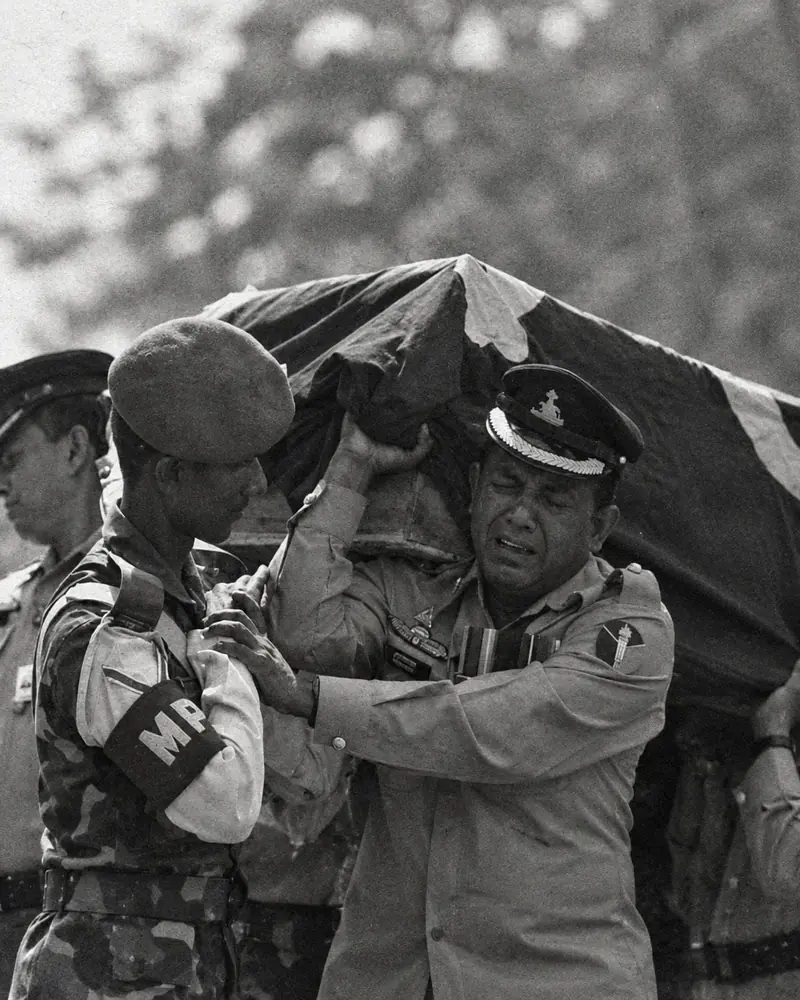
Pilkhana,ShaplaSquareandthearmedwings
Two episodes bracket the era. Running alongside both were the ruling party's student and youth wings, which used violence as a tool of politics for 15 years.
Pilkhana
killed when Bangladesh Rifles border guards mutinied at their Dhaka headquarters, including the director general, Maj Gen Shakil Ahmed, and 56 other army officers.
A 2025 commission found the massacre “was a planned operation rather than a spontaneous mutiny”, that Awami League MP Sheikh Fazle Noor Taposh was “a key coordinator”, and that “then-Prime Minister Sheikh Hasina approved the operation” (official finding, 30 Nov 2025).
The first trials sentenced 152 to death and 161 to life in 2013; Human Rights Watch raised “serious fair trial concerns”. The commission chief's claims about unaccounted Indian nationals have not been tested in court (allegation).
Shapla Square
About 5,000 police, RAB and border guards cleared a Hefazat-e-Islam sit-in in the early hours, after cutting the power. How many died depends on who is counting.
Diganta TV and Islamic TV, the two channels showing the raid live, were taken off air at dawn. Odhikar's secretary was arrested over the 61-death report; in September 2023 he and its director were sentenced to two years.
The government's muscle on campuses and in the streets.
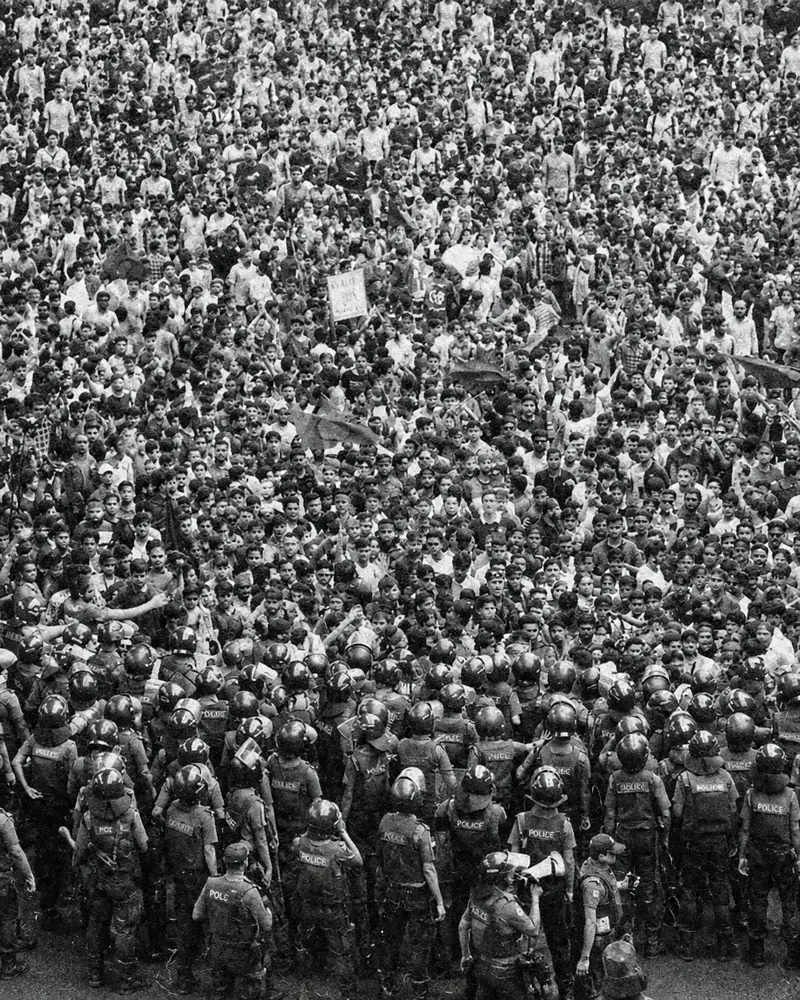
July–August2024
The UN estimates that as many as 1,400 people were killed in six weeks, most of them shot by security forces.
Between 12% and 13% of the dead were children. A Bangladeshi tribunal has found Sheikh Hasina guilty of ordering the killings and sentenced her to death (court verdict). Since then the tribunals have convicted 72 people in eight cases.
The quota remark
Students protest quotas for government jobs. Hasina asks: “If the grandchildren of freedom fighters don't get quota benefits, will those then go to the grandchildren of the Razakars?” It likens protesters to the 1971 collaborators.
Campuses attacked
The ruling party's student wing, the Chhatra League, attacks campuses.
Abu Sayed
Police shoot student Abu Sayed at Begum Rokeya University in Rangpur as he stands with his arms spread wide. The UN finds “reasonable grounds to believe” it was “a deliberate extrajudicial killing by the police”.
The blackout
The government cuts the internet nationwide until 28 July, imposes a shoot-on-sight curfew, and sends in the army, Border Guard and RAB helicopters.
The last day
Hasina flees. In Jatrabari police fire for more than 30 minutes after the army pulls back, killing at least 52 (BBC Eye). In Ashulia police pile bodies into a van that prosecutors say was then set on fire.
How many died? The counts differ.
More than 20,000 people were injured, including about 400 who lost their sight.
The UN also documented revenge violence after the government fell, against Awami League supporters, police (44 officers were killed), journalists, Hindus, Ahmadiyya Muslims and Hill Tracts communities.
BBC-verified and matched to her voice by police forensics, according to the Dhaka Tribune.
The Awami League says it cannot confirm the recording is real and denies she ordered lethal force. The UN found “an official policy to attack and violently repress anti-Government protesters”, raising concerns of crimes against humanity (official finding).
Together the eight verdicts include 24 death sentences for 23 people (one man was condemned twice), three sentences of imprisonment until death, 11 life terms and other prison terms. Nineteen of the 23 condemned are on the run. Prosecutors say 70 cases have been filed, with 203 people arrested and 352 at large (court verdicts).
Channelsshut,courtsbent
Media
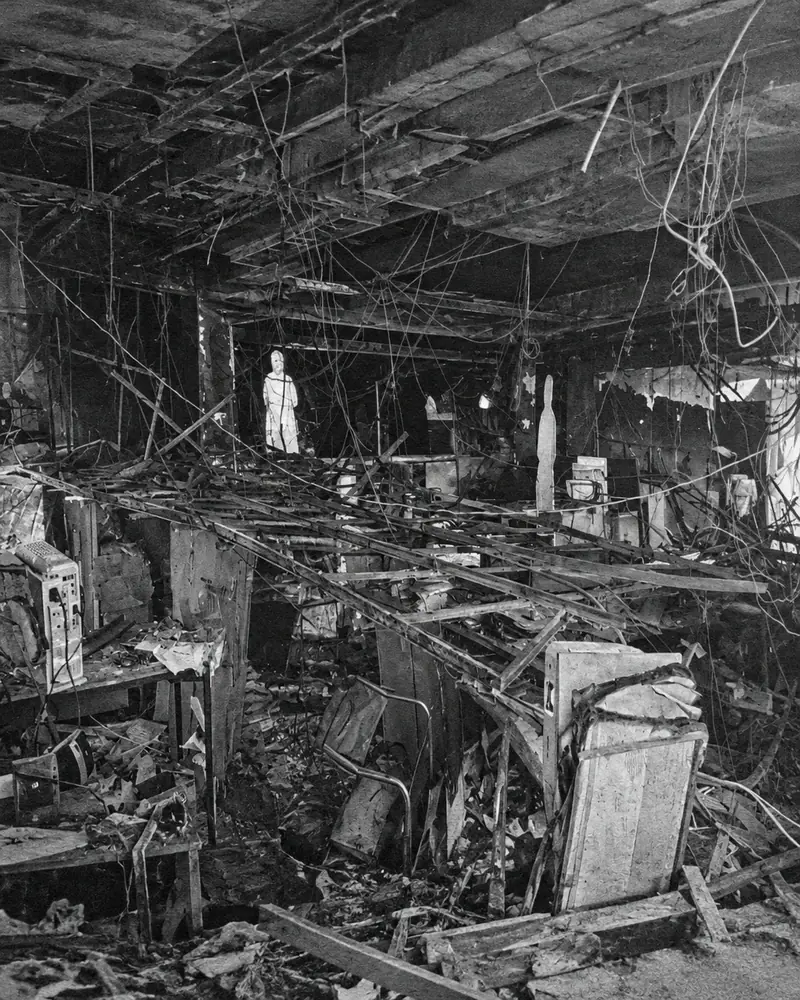
The government controlled the media from both ends. It shut down channels and newspapers linked to the opposition, and handed new TV licences to its own MPs, ministers and allies.
- 27 Apr 2010Channel 1 shutThe regulator closes a BNP-linked TV station.
- 6 May 2013Diganta TV and Islamic TV off airThe two channels showing the Shapla Square raid live are taken off air at dawn.
- 5 Jan 2015Ekushey TV off airShut after airing a Tarique Rahman speech.
- Nov 2017Chief Justice resignsSK Sinha resigns from abroad after ruling against the government.
- Feb 2018Khaleda Zia jailedJailed in February 2018; acquitted in 2025 as “malicious prosecution”.
- Oct 2018Digital Security ActThe law is enacted.
- Feb 2021Writer dies in custodyMushtaq Ahmed dies in custody; Al Jazeera airs All the Prime Minister's Men.
- 11 Feb 2012Sagar-Runi killingsJournalists Sagar Sarowar and Meherun Runi are murdered in their flat. On 30 Sep 2026 the probe report was deferred for the 130th time.
Licencesforfriends,takeoversatgunpoint
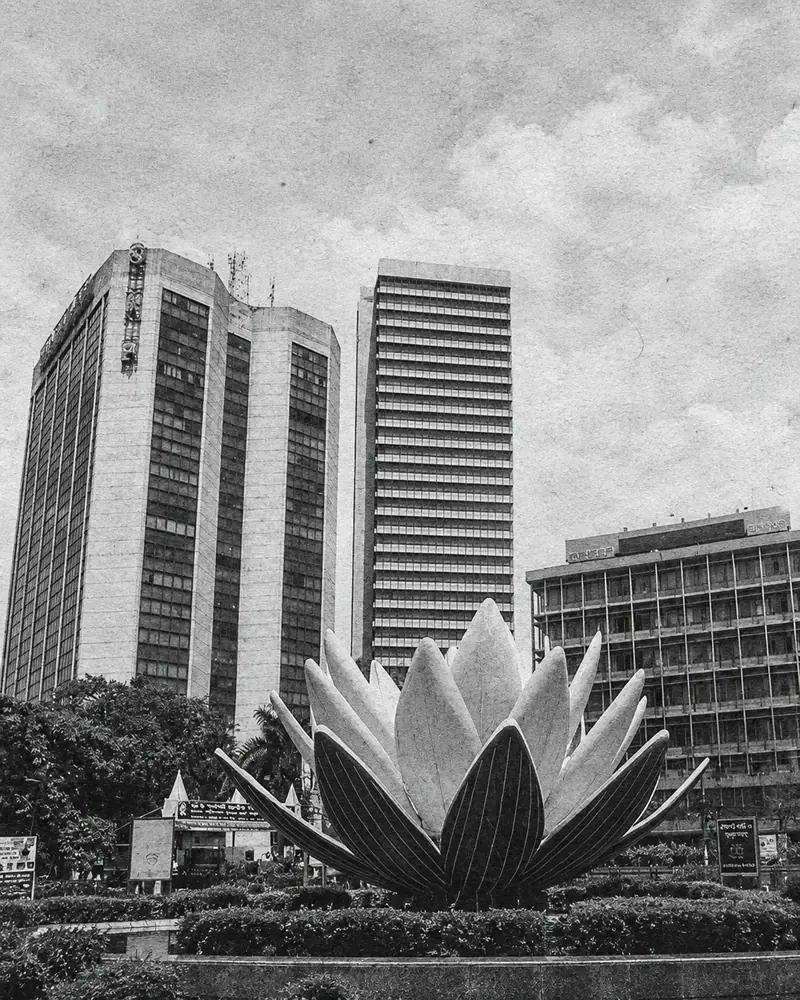
Politically connected groups took about this much out of the banking system, says the governor appointed after Hasina's fall, Ahsan H Mansur. He calls it “the biggest robbing of banks by any international standard”, and says military intelligence helped force the takeover of whole banks.
The method was simple. First get a bank licence through political connections, then lend the depositors' money to yourself.
Even Hasina's own finance minister, AMA Muhith, said later licences for Community, Citizens, Bengal Commercial and People's banks reflected “political considerations”. The governor says “at least $10 billion” was taken by S Alam's group (allegation); the group's lawyers say there is “no truth” to the claim.
ThemostexpensivethingBangladesheverbought
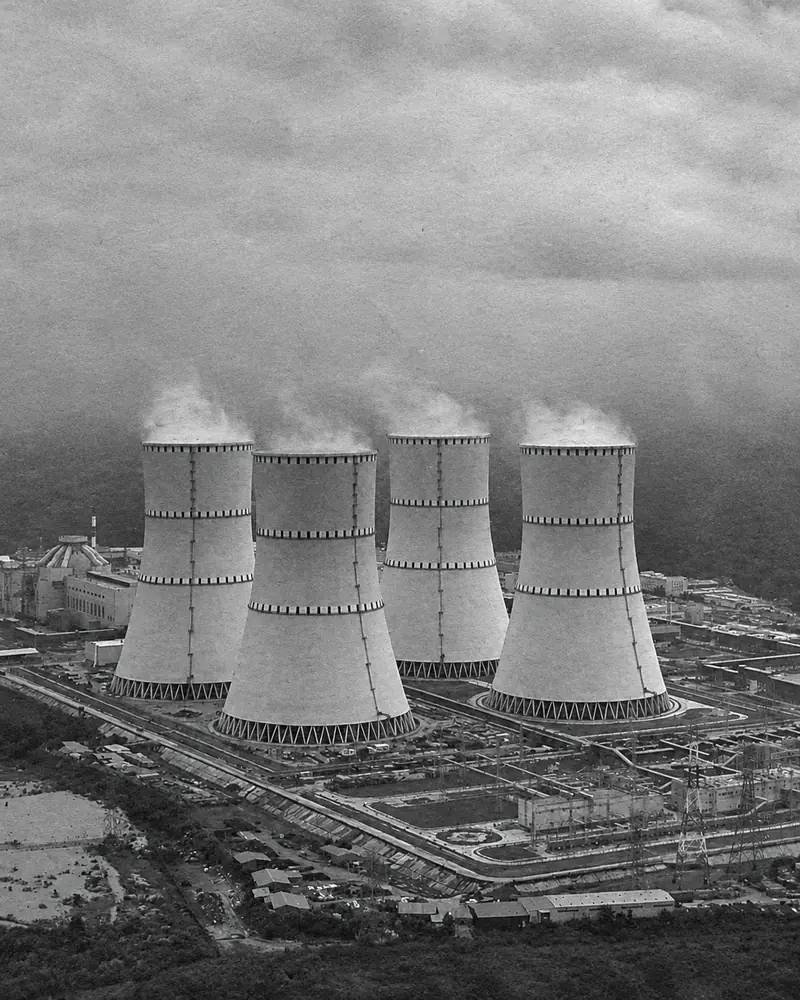
Two 1,200-megawatt reactors at Ishwardi, built by Russia's Rosatom. Ninety per cent is a Russian loan the country must repay: $11.385bn at six-month LIBOR (later SOFR) plus 1.75%, capped at 4%, with a 10-year grace period and 20 years of repayment. About $500m a year falls due from 2026.
Three questions hang over it. Why does it cost so much more than similar Russian-built plants? Where did the money go? And why was it built before the grid could carry its power?
In fairness: countries with their own nuclear industry, like India, build more cheaply, and Rosatom's plant in Egypt costs even more, about $30 billion for 4,800 megawatts. For years Rooppur's allocation was counted under the education budget, which the White Paper says had “no rational explanation”. The transmission lines to carry its electricity were still not finished when the plant was nearly ready.
Megaprojectsandpublicspending
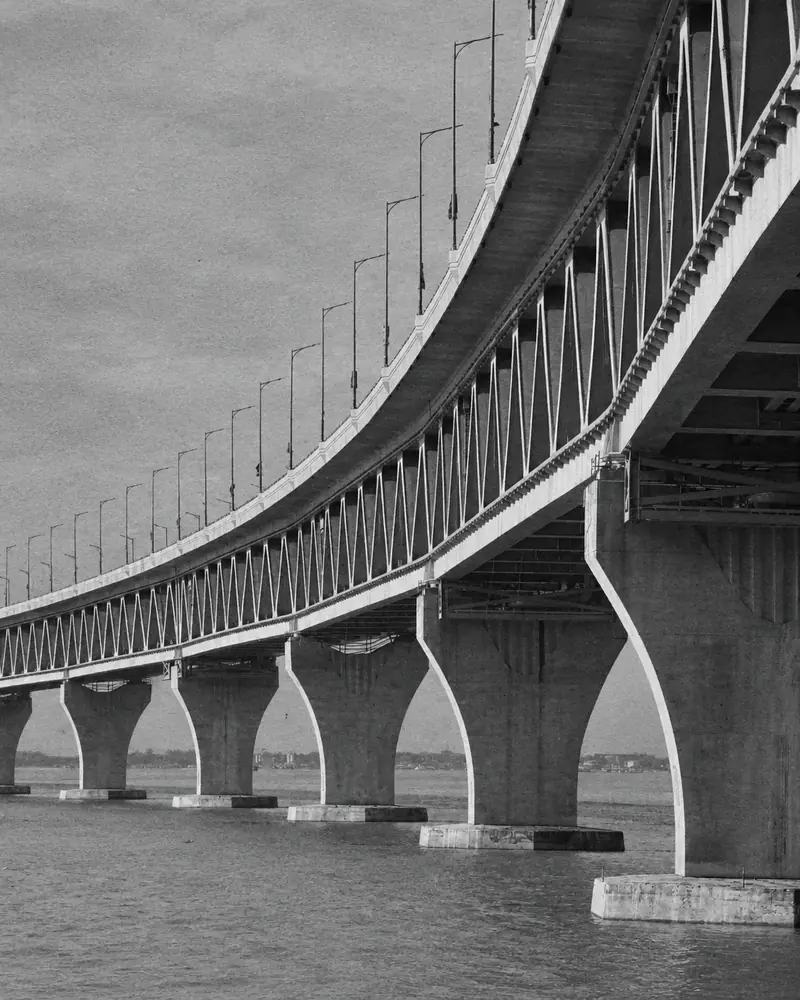
The roads, bridges and rail lines were the proudest part of Hasina's story, and the part where the most money leaked.
of the roughly $60 billion spent through the development budget over 15 years was lost to bribery, political extortion and padded budgets, the White Paper estimates. Big projects ran on average 70% over budget and more than five years late.
Power:thefirmsthatgotpaid
Bangladesh did get electricity to almost every home. The question is what it paid, and to whom.
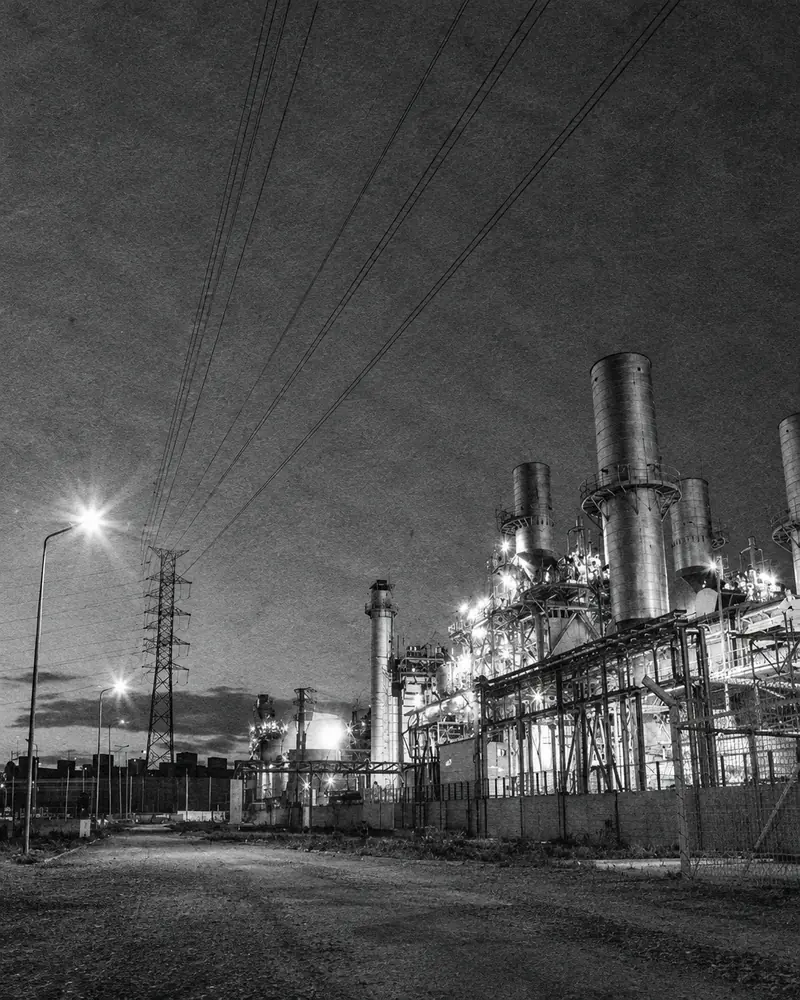
A 2010 law gave everyone involved immunity from prosecution and let the energy minister approve deals without competition. Hasina held the energy ministry herself from 2009 to 2024. The White Paper finds about 5,000 MW of capacity the country did not need, an estimated $3 billion in kickbacks, and generation costs that nearly doubled (official finding).
Moneylaundering
What does $234 billion, smuggled out of Bangladesh in 2009–2023, look like in $100 notes?
Lay them end to end, one on top of the next. A single note is 15.6 cm long.
90 notes, $9,000, stand as tall as the Shaheed Minar.
295 notes, $29,500, reach the top of the National Martyrs' Memorial.
56,740 notes, $5.7m, reach the summit of Mount Everest, 8,849 m.
At $22.9bn the line reaches Bangladesh Satellite-1, launched as Bangabandhu Satellite-1, 35,786 km up.
All $234bn: 2.34 billion notes, 364,937 km. 95% of the way to the Moon.
The notes run out 19,463 km short.
Illustration · $234bn: the White Paper's estimate for 2009–2023. A $100 note is 15.6 cm long; the Moon at its average distance; the satellite in geostationary orbit. The line is drawn wider than life.
Thenumbersthatweremassaged
The White Paper's central claim is that the “development miracle” rested partly on doctored numbers.
Officially about 7% a year; the White Paper finds about 4.2%, slowing from the mid-2010s.
Officials told the committee that after 2013 political leaders “took a keen interest in GDP figures”. Bangladesh also stopped sending trade data to the UN after 2015. The White Paper also found a multidimensional poverty rate of 36.1% in a 2020 draft, revised to 24% and left unpublished. All figures are official findings of the White Paper.
Accountabilitysofar
WhattheAwamiLeagueandtheaccusedsay
The party rejects the verdicts and most of the findings, and calls the trials a political vendetta by its opponents. Here are its answers, so readers can weigh them.
Human Rights Watch, Amnesty International and the UN back accountability for the July killings and the disappearances, but warn against trials in absentia, rushed proceedings, the death penalty and a blanket party ban. Many of the corruption figures here are estimates by a government-appointed committee, not court findings; the $5 billion Rooppur claim is an allegation and has not been proven.
Before she comes back.
Much of the economic record has not been tested in court, and every figure should be read with its label. What is settled is narrower: a tribunal has convicted Sheikh Hasina in absentia of crimes against humanity, and she says she will go back to face it in December.
- White Paper Committee, White Paper on State of the Bangladesh Economy (draft, Dec 2024)
- UN OHCHR fact-finding report, 12 Feb 2025
- US Treasury, RAB sanctions, 10 Dec 2021
- Commission of Inquiry on Enforced Disappearances, interim reports (TBS; Prothom Alo)
- Pilkhana commission, 30 Nov 2025
- Human Rights Watch, Where No Sun Can Enter (2021)
- Capacity payments disclosed to Parliament, Prothom Alo, Sept 2023
- Trial of Sheikh Hasina; July verdicts tally (TBS; BSS, 21 Oct 2026)
- Disappearance cases (JusticeInfo; Asia News Network; Dhaka Tribune)
- Purbachal verdicts, 27 Nov and 1 Dec 2025
- Al Jazeera, 10 Jul 2026; The Week, 5 Oct 2026; The Swipe Up, 20 Oct 2026
- BBC-verified audio and Jatrabari (Dhaka Tribune)
- Wikipedia reference articles for compiled figures
Source report: The Hasina Years, 2009–2024: A Sector-by-Sector Record, by Mizan Rahman, to 29 Oct 2026.
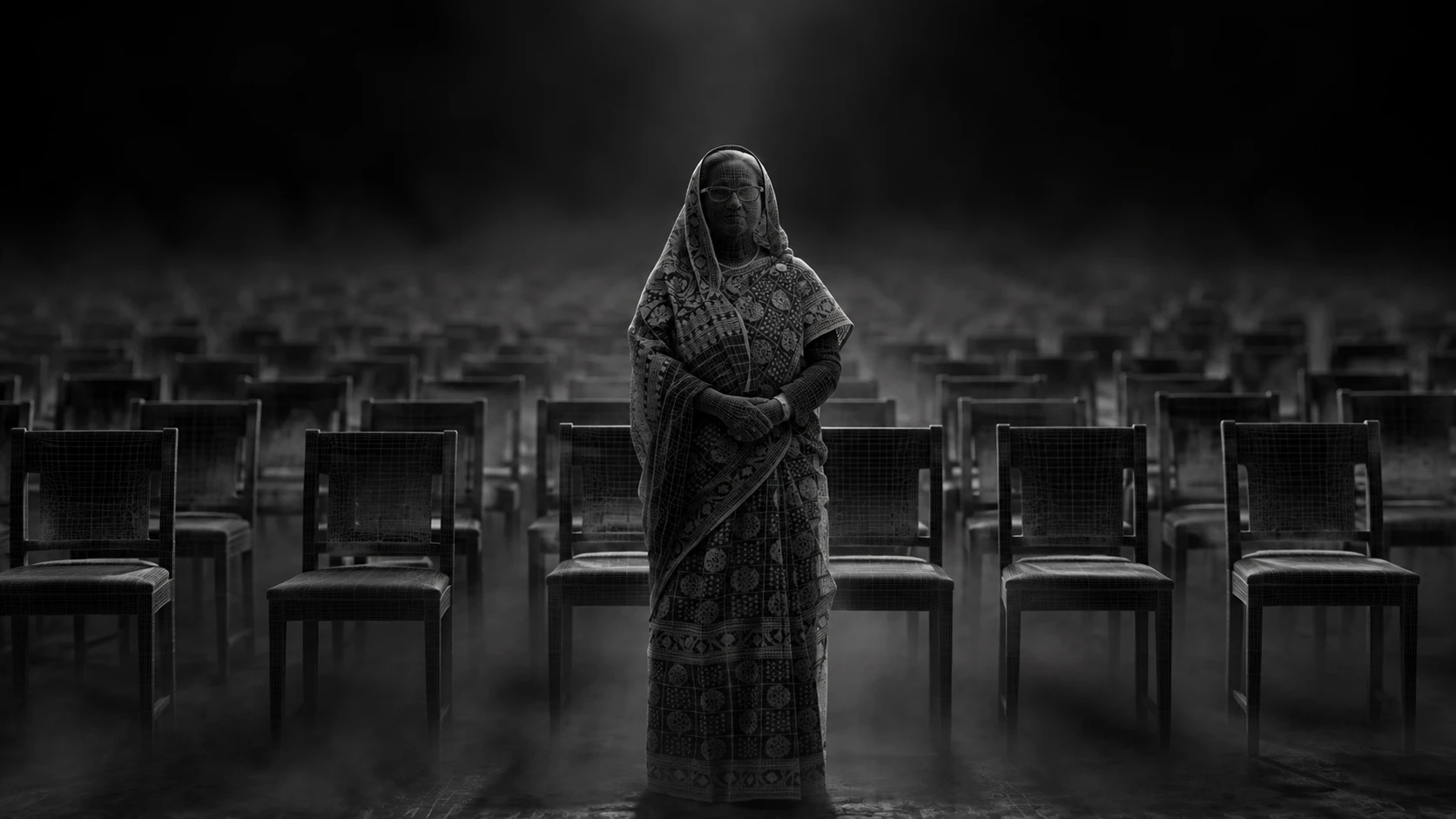
No generated images are presented as photographs.