When most people think of America, they often only think of opportunity. When I think of America, I also think of resilience. To me, it’s not only a place where my life began anew, but a place where I learned to persevere, build, and thrive. To explain why, I must take you, dear reader, back over two decades ago, to an incident that would forever change the trajectory of my life. On January 12, 2001, my mother was killed in a hit-and-run accident when the rickshaw she was traveling in was struck by a bus in the city of Dhaka. I was only seven years old. I remember arriving at the police station with my family after receiving the news and to identify her body. I remember that she lay on top of a wheelbarrow, covered by a white sheet as two flies hovered over her. I remember a police officer who had witnessed the collision explained why he had not pursued the bus that struck her. "I was about to be off duty," he said confidently. His confidence quickly faded when one of my uncles tried to lunge at the officer in anger before others came in to stop him, devastated by the explanation. Even as a child, I remember that she had simply been discarded, stripped of the dignity she deserved. I remember it all.
My grandparents from my father’s side served as the white knights in this story. They took the first flight available from JFK to Dhaka. Upon arrival, they quickly analyzed the situation and, with my father’s blessing, decided to take me to America with them. “Change of scenery never hurt anyone.”, they said. I remember looking up at the White woman with a grim face in window #10 in the US embassy in Dhaka as she stared at my grandfather, who was busy explaining the unfortunate reasons for my travel. She would look down at me every so often as if she pitied me. “Your visa is approved.”, she said with a smile after much deliberation. Just like that, these four words would initiate a cascade of events which would shape my life. In January, I lost my mother. By April, I was on a plane going to America. No one knew at the time that it would take another two decades before I would set foot in Bangladesh again.
Streets Paved with Gold
A couple in their late fifties with a seven-year-old child who just lost his mother is not the ideal party for an immigrant family to start a new life in New York City. My grandparents would be starting life from scratch once again, instead of thinking about retirement. It is safe to say we struggled. I grew up in Queens, one of the five boroughs that make up New York City. More specifically, in two different neighborhoods, first in Jamaica and then in Jackson Heights. Assimilating to American life had its share of challenges. Initially, I knew little to no English. Every day felt like I was navigating a world I didn't yet understand. I encountered gangs, witnessed violence, and often found myself in fights at school simply trying to fit in. Coming from a Muslim family, the aftermath of 9/11 added another variable in this equation to navigate: Islamophobia. The daily racist remarks in those initial years were demoralizing to say the least.
However, all wasn’t doom and gloom. Growing up in Queens meant I was living in the most heterogeneous borough in the world. A short walk through the neighborhood in Jackson Heights and you could hear a plethora of languages being spoken, such as Spanish, Hindi, Bangla, Mandarin, Nepali, and countless others. It was the epitome of the melting pot. I had the privilege to be exposed to every type of culture, religion, cuisine, and way of life. Having friends from all walks of life meant celebrating Chinese New Year, going to baptisms, attending Bar Mitzvahs, and stuffing myself with empanadas at someone’s quinceañera. As the years went by and I became an American citizen, I often felt like I was juggling between two worlds. At home, I was raised with Bengali traditions and values. Outside my front door, I was learning what it meant to be American. At times, I struggled to understand what my identity was and where I truly belonged.
Semper Fidelis
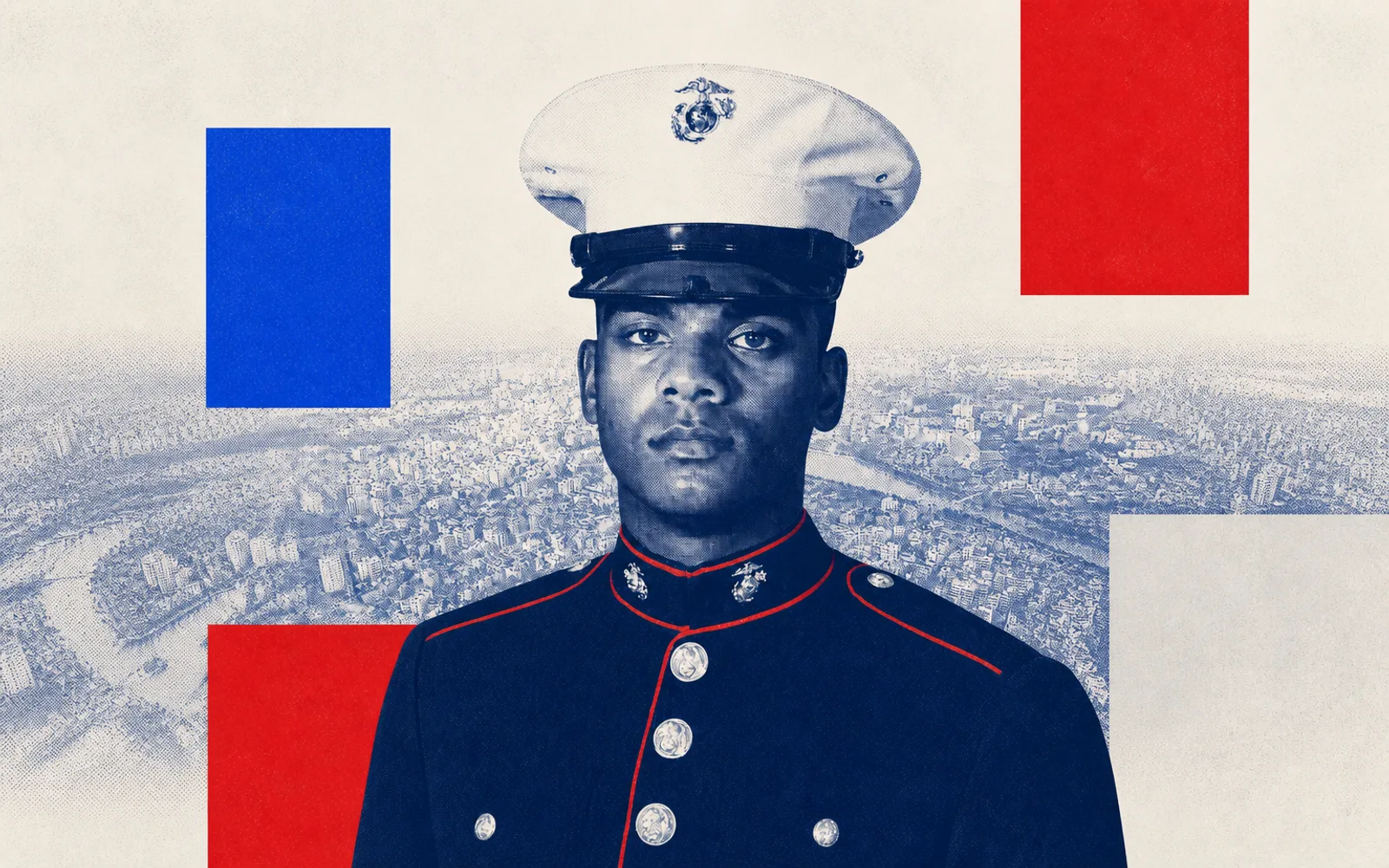
I remember being mesmerized the first time I saw a Marine in his dress blues. It is safe to say the uniform made me approach the organization, but it was the ethos that made me stay. Race, religion, creed, socio-economic status, or any other denomination didn’t matter. “Marines are only green.”, my drill instructor used to say. It was safe to say that I had finally found my tribe. After passing through bootcamp and earning the title of a United States Marine, I went through further training in SOI before hitting the fleet as an infantry Marine in 2 nd Battalion 8 th Marine Regiment. In 2013, I went on a 7-month combat deployment to Garmshir district, Helmand Province, Afghanistan, in support of Operation Enduring Freedom, where my unit conducted counterinsurgency operations. I deployed again in 2015 to Eastern Europe to train NATO allies for possible future Russian aggression as I hopped from one Eastern European country to another.
As I fully embraced my life in the Marines, I became closer with members of my squad and platoon. We were brothers. As brothers, my fellow Marines were genuinely curious about a small country called Bangladesh where I originated from. As the only Bengali American in my unit, they considered me the subject matter expert on all things Bangladesh. However, beyond teaching them a few Bangla words and introducing them to Bengali cuisine, there wasn't much I could share because I felt completely disconnected from my heritage. I had fully embraced my life as an American, which to me at the time meant having little connection to my motherland.
Going Home?
After being honorably discharged from the Marines, I delved into university life. Throughout my bachelor’s and master's, I traveled the world extensively, but never to Bangladesh. It was only after I was accepted to medical school to do my doctorate that Bangladesh crossed my mind. I knew that the rigors of medical school followed by a surgical residency would consume the next decade of my life. If there ever was a time to truly explore Bangladesh, this was it. So, after 25 years, I finally set foot in Dhaka in December of 2025.
Bangladesh was going through its own journey when I arrived. The Awami League government had collapsed, and the new Interim Government was on the verge of setting up national elections. The country was both optimistic about having its democratic rights back while simultaneously fearful of delving into a theocracy. Fears of mob violence were prevalent in the air, while simultaneously people went through their day-to-day life as if it was business as usual. Sporadic protests from different interest groups would break out every other day, causing major roads to be nothing more than clogged arteries for hours on end. Reports of petrol bombing would be in the news while simultaneously young school kids gossiped in the tea stand drinking cha without a care in the world. It was as if there were two different Bangladeshes that were coexisting simultaneously. One filled with utter chaos, and one forging through against all odds.
As I boarded my plane to leave after my month-long stay in Dhaka, I realized that I hadn’t simply traveled to Bangladesh to rediscover a country, but to rediscover a part of myself. For much of my life, I believed that becoming an American required leaving Bangladesh behind. That the two identities stood in opposition. But I was wrong because both countries hold the same undertone: resilience.
America is the story of the enslaved people who built this nation through labor, and immigrants who risked everything to shape it. Bangladesh’s story is one of surviving genocide, multiple natural disasters, and constant political turmoil. As I look at my life, Bangladesh gave me the building blocks made of granite; America helped me build on that foundation.
Ahmed Manzur is a veteran marine.