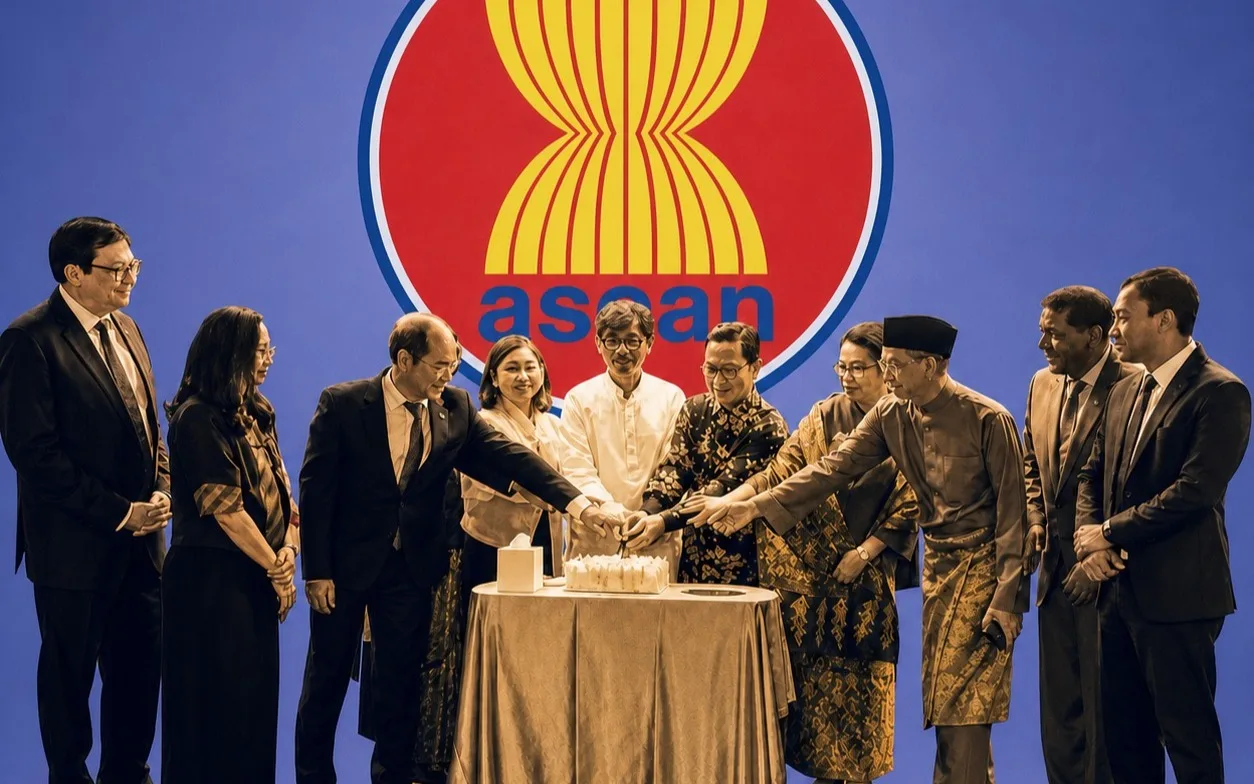
In a Nutshell:
- Although Bangladesh is not currently a member of ASEAN, ASEAN missions in Dhaka reaffirmed their commitment to deepening the longstanding partnership as Bangladesh actively pursues Sectoral Dialogue Partner (SDP) status and eventual membership.
- ASEAN's secretary-general says enlargement is over and Bangladesh sits outside Southeast Asia under the charter and membership would require all 11 members to agree to amend it.
- Bangladesh has launched or is pursuing ASEAN-related cooperation projects in fisheries and aquaculture valued at nearly US$0.5 million in tourism, ICT, MSMEs, and culture.
- ASEAN Dhaka Committee Chairman said Bangladesh and ASEAN could combine complementary strengths across trade, investment, education, culture, tourism, and people-to-people exchanges.
- PM Tarique Rahman’s recent visit to Malaysia was highlighted as his first official visit to an ASEAN member state, signalling stronger diplomatic engagement.
- The Fisheries and Livestock Minister sought ASEAN support for Bangladesh’s application to become an ASEAN Sectoral Dialogue Partner.
Why it matters
The reception signals a diplomatic effort to move Bangladesh-ASEAN relations from broad goodwill toward more structured and sector-based engagement. Bangladesh’s pursuit of ASEAN Sectoral Dialogue Partner status could provide a formal channel for cooperation, although the initiative will depend on sustained support from ASEAN members and Bangladesh’s ability to demonstrate practical value to the bloc. Economically, closer ties could help Bangladesh diversify trade and investment relationships beyond traditional partners, attract capital into sectors such as ICT, tourism and manufacturing, and connect its youthful workforce and consumer market with one of Asia’s most dynamic regional economies. The relationship also has strategic significance: Bangladesh occupies an important position in the Bay of Bengal and can serve as a bridge between South and Southeast Asia. For ASEAN, deeper engagement could support connectivity, maritime cooperation, supply-chain diversification, and access to a large emerging market. However, the political symbolism of high-level visits and anniversary diplomacy will need to be matched by concrete agreements, improved logistics, regulatory coordination and private-sector participation.
What we think
Bangladesh’s problem is not effort. The interim government made ASEAN a priority. Anwar Ibrahim’s October 2024 Dhaka visit, the first by a foreign head of government after the July uprising, was used to push the case, while Malaysia endorsed Bangladesh’s SDP bid and RCEP aspiration during a later meeting with Prime Minister Tarique Rahman in Kuala Lumpur. Dhaka hosted the ASEAN Regional Forum’s counterterrorism meeting in April 2025. Muhammad Yunus pushed for full membership with Thai officials and Anwar and at the UNGA called the application “a step towards eventual full membership,” while admitting some members opposed it: “We will not give up.” Yet the 47th ASEAN Summit’s 40+ outcome documents said nothing about Bangladesh. The message is clear: goodwill is not what we need. Dhaka should shift from seeking status to building influence through fisheries, ICT, tourism, MSMEs and education and deepen ties with Indonesia, Vietnam, the Philippines, and Singapore.