Bangladesh Reports Fertiliser Surplus
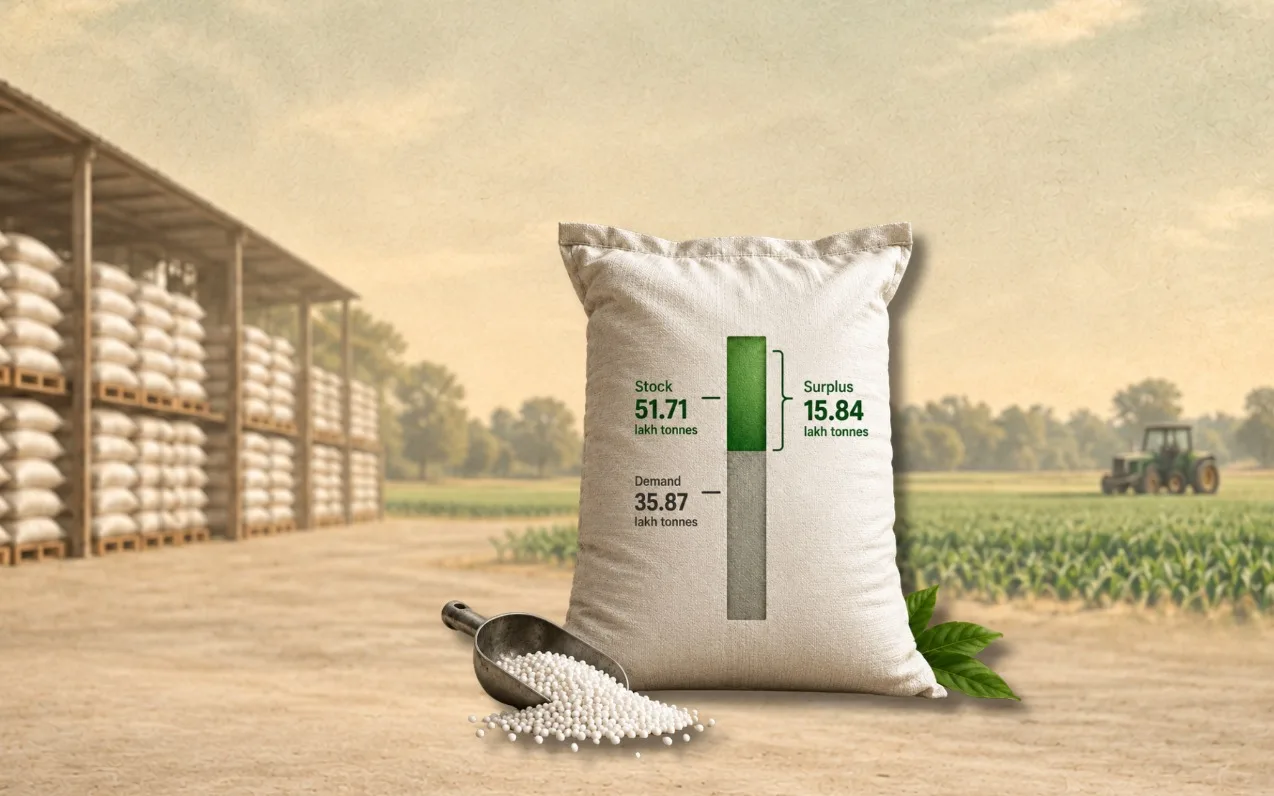
Bangladesh has reported a surplus of 15.84 lakh metric tonnes of fertiliser, with the government saying adequate stocks and district-wise allocations have been arranged ahead of the upcoming agricultural seasons to prevent shortages and ensure farmers receive fertiliser when it is needed.
In a Nutshell
- Bangladesh currently has 51.71 lakh tonnes of fertiliser prepared against a demand of 35.87 lakh tonnes, leaving a surplus of about 15.84 lakh tonnes.
- Full district-wise allocations have been made for the October demand of TSP, DAP, and MOP fertilisers.
- The government continued importing fertiliser in advance, including 110,000 tonnes approved for import from Belarus, Morocco, and Saudi Arabia.
- Fertiliser monitoring cells are being established across all 64 districts to track supply and distribution.
- The government says the system is now being based on local demand, advance imports, stock monitoring, and field-level supervision.
Context
Ahead of the Rabi and Boro seasons, the government says, this time particularly, fertiliser supply planning is based on the actual demand of individual districts rather than relying only on a general national estimate. According to Agriculture Department officials, the initiative combines demand assessment, advance procurement, district-wise allocation, and monitoring during transport and distribution. For October, the full requirement for TSP, DAP, and MOP has reportedly already been allocated across the districts.
The government has also continued imports to maintain the buffer. On 9 September, approval was given for 30,000 tonnes of MOP from Belarus, 40,000 tonnes of DAP from Morocco, and 40,000 tonnes of urea from Saudi Arabia.
Why It Matters
Despite sufficient national supply, distribution bottlenecks often cause local fertiliser shortages. Emphasising district-level monitoring ensures supply meets local demand. It may further transform national surpluses into a reliable buffer against planting season disruptions.
What We Think
The reported surplus is reassuring, particularly ahead of two important agricultural seasons. But the most meaningful part of this development may be the attempt to move from simply having fertiliser in storage to planning where, when, and how much is actually needed. And for farmers, the success of the policy will ultimately be measured not by the size of the national stock, but by whether the right fertiliser reaches them at the right time and at a fair price.