Introducing Delta Diplomacy: A Framework for Shared Delta Cooperation through Ecological-Cultural Diplomacy
The rivers that nourish us do not stop at borders. Perhaps our diplomacy should not begin there either.
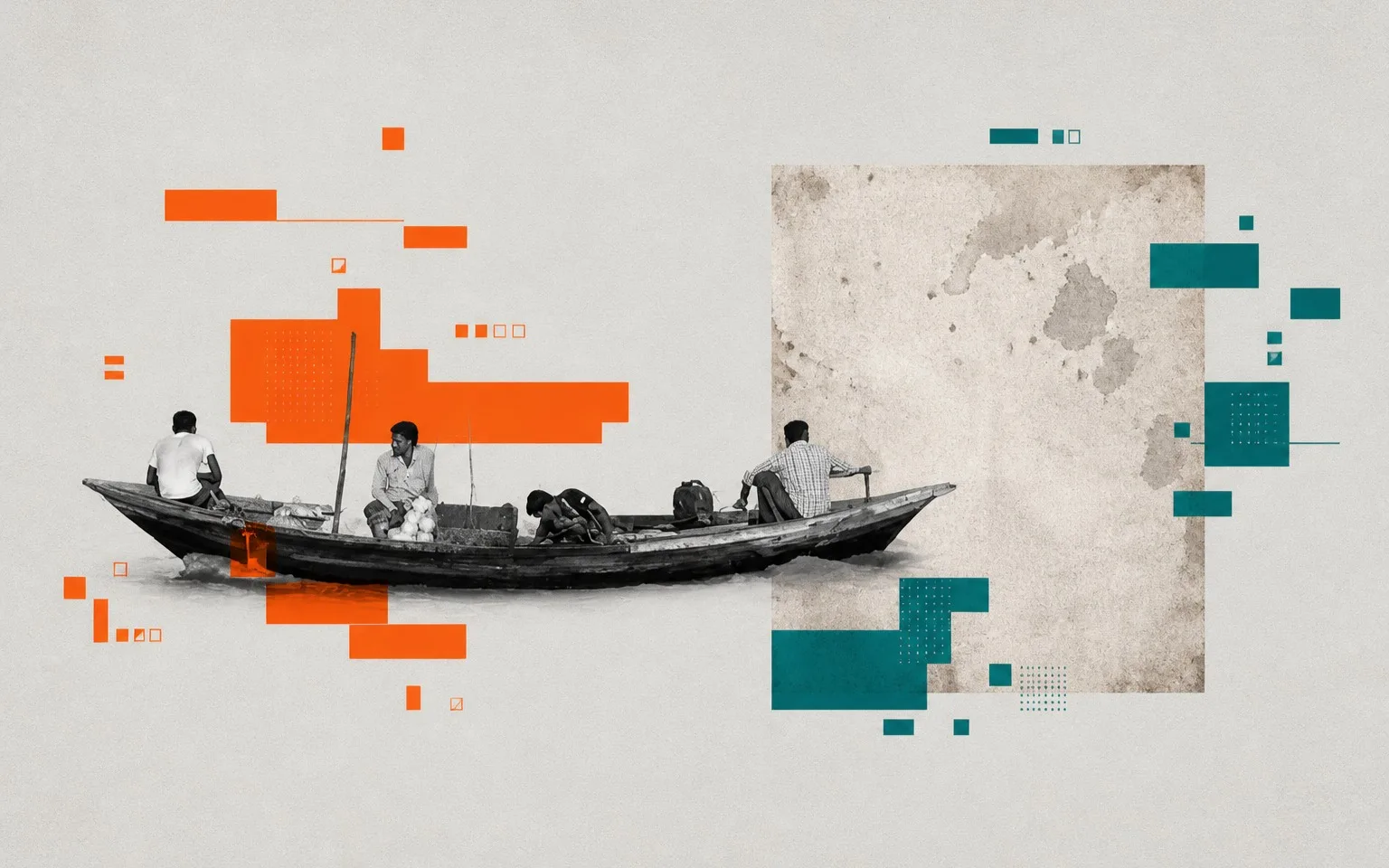
For centuries, South Asia has been imagined through lines—borders etched by empires, hardened by nation-states, and defended through policy, trade, and security frameworks. These lines have shaped how countries relate to one another, and for good reason. They have enabled governance, negotiation, and cooperation in a complex region.
But they are no longer enough.
The defining challenges of the twenty-first century—climate change, river erosion, floods, cyclones, biodiversity loss, food insecurity, and climate-induced migration—do not recognize political boundaries. Rivers carry no passports. Sediment requires no visas. Cyclones do not pause at border fences. Nature has always functioned as an interconnected system, even when politics has chosen not to.
This raises a quiet but consequential question: what if we began to see South Asia not through its political map, but through its ecological one?
At the heart of this alternative imagination lies the Bengal Delta.
Formed over millennia by the Ganges, Brahmaputra, and Meghna river systems, the Bengal Delta is one of the largest and most dynamic ecological formations on Earth. It sustains nearly 300 million people across Bangladesh and eastern India, shaping agriculture, fisheries, forests, and livelihoods.
Yet it is not only a geography. It is also a shared cultural landscape.
Across the delta, communities have learned to live with water—to anticipate floods, adapt to tides, and build lives around seasonal rhythms. Boats, harvest cycles, food traditions, architecture, songs, and oral histories all reflect an intimate relationship with this environment. The landscape has shaped culture as much as culture has shaped the landscape.
And yet, this shared ecological and cultural inheritance has rarely been treated as a diplomatic resource.
What if it were?
I propose thinking of the Bengal Delta as the foundation of a new diplomatic imagination—what might be called Delta Diplomacy. Rooted in a broader idea of Ecological-Cultural Diplomacy, it places shared ecological systems, rather than political divisions, at the center of cooperation.
This is not an argument against traditional diplomacy. Trade agreements, border management, and security cooperation remain essential. But they tend to respond to problems after they emerge. Delta Diplomacy asks a different question: how might countries cooperate before shared ecological challenges become shared crises?
Because the challenges themselves are undeniably shared.
Floods that begin upstream reshape lives downstream. Sediment flows determine agricultural futures across borders. Cyclones strike coastlines irrespective of nationality. Mangrove degradation in one region weakens protection in another. Climate migration does not remain confined within sovereign territory.
No country in the Bengal Delta can solve these problems alone. Equally, none can insulate itself from the consequences of its neighbors’ environmental decisions.
Shared vulnerability, then, can become the basis for shared stewardship.
Delta Diplomacy begins with a simple shift: from managing borders to managing the ecosystem that transcends them. It does not dilute sovereignty; it reframes responsibility. Countries remain independent, but they also become co-stewards of a living system they collectively depend on.
In practical terms, this could mean joint river and sediment monitoring, collaborative climate adaptation strategies, shared disaster preparedness systems, and regional biodiversity conservation efforts. It could involve cross-border research networks, university-led Delta Studies programs, and community-level exchanges of traditional ecological knowledge.
In this framework, scientists become diplomats, communities become stakeholders, and culture becomes a form of knowledge.
Because culture, in the delta, is not ornamental. It is ecological intelligence.
Harvest festivals encode seasonal rhythms. Fishing practices re fl ect generations of environmental adaptation. Boat-making traditions embody localized engineering. Folk songs preserve memory of rivers, fl oods, and loss. These are not merely cultural artifacts; they are repositories of lived environmental knowledge.
Ecological-Cultural Diplomacy recognizes this. It treats culture not as performance, but as practice —as a bridge between past adaptation and future resilience.
Such an approach also expands the geographic imagination of cooperation. While Bangladesh and India form the core of the Bengal Delta, the system extends far beyond them. Himalayan glaciers in China influence river flows. Nepal and Bhutan shape upstream ecosystems. The rivers ultimately empty into the Bay of Bengal, linking the region to the wider Indian Ocean.
The ecology is already regional. The diplomacy has yet to catch up.
Within this landscape, Bangladesh occupies a distinctive position. As the downstream heart of the delta, it experiences the cumulative impacts of upstream changes. But it is also a global leader in climate adaptation, disaster preparedness, and community resilience.
This experience is not merely national—it is regional capital.
Bangladesh is uniquely positioned to convene conversations on shared delta governance, ecological cooperation, and cultural exchange. Leadership here will not come from military strength or economic dominance, but from ecological understanding and lived experience.
And crucially, from people.
No diplomatic framework can endure without generational participation. Young researchers, artists, engineers, and entrepreneurs can transform Delta Diplomacy from an abstract idea into a lived practice. Universities can build regional knowledge networks. Artists can narrate shared ecological identities. Communities can exchange strategies of survival and adaptation.
Diplomacy, in this sense, moves beyond ministries. It becomes social.
The Bengal Delta has, for thousands of years, connected people through water, culture, and survival. It may now offer a way to reconnect countries.
The choice before us is not whether we acknowledge ecological interdependence. That reality already exists. The question is whether our diplomacy evolves quickly enough to re fl ect it.
If the challenges of the future are ecological, then the foundations of cooperation must be ecological too.
The rivers have already shown us how to flow across borders. The task now is to learn how to think —and act—the same way.
Ayreen Khan is a researcher, writer, and artist working at the intersection of security, culture, and ecological belonging