Are the walls fading?
Across Dhaka, murals created during the July–August 2024 uprising are being covered, erased or left to deteriorate. The fading artwork has become a measure of wider concerns about preserving the movement’s memory and implementing its reform agenda.
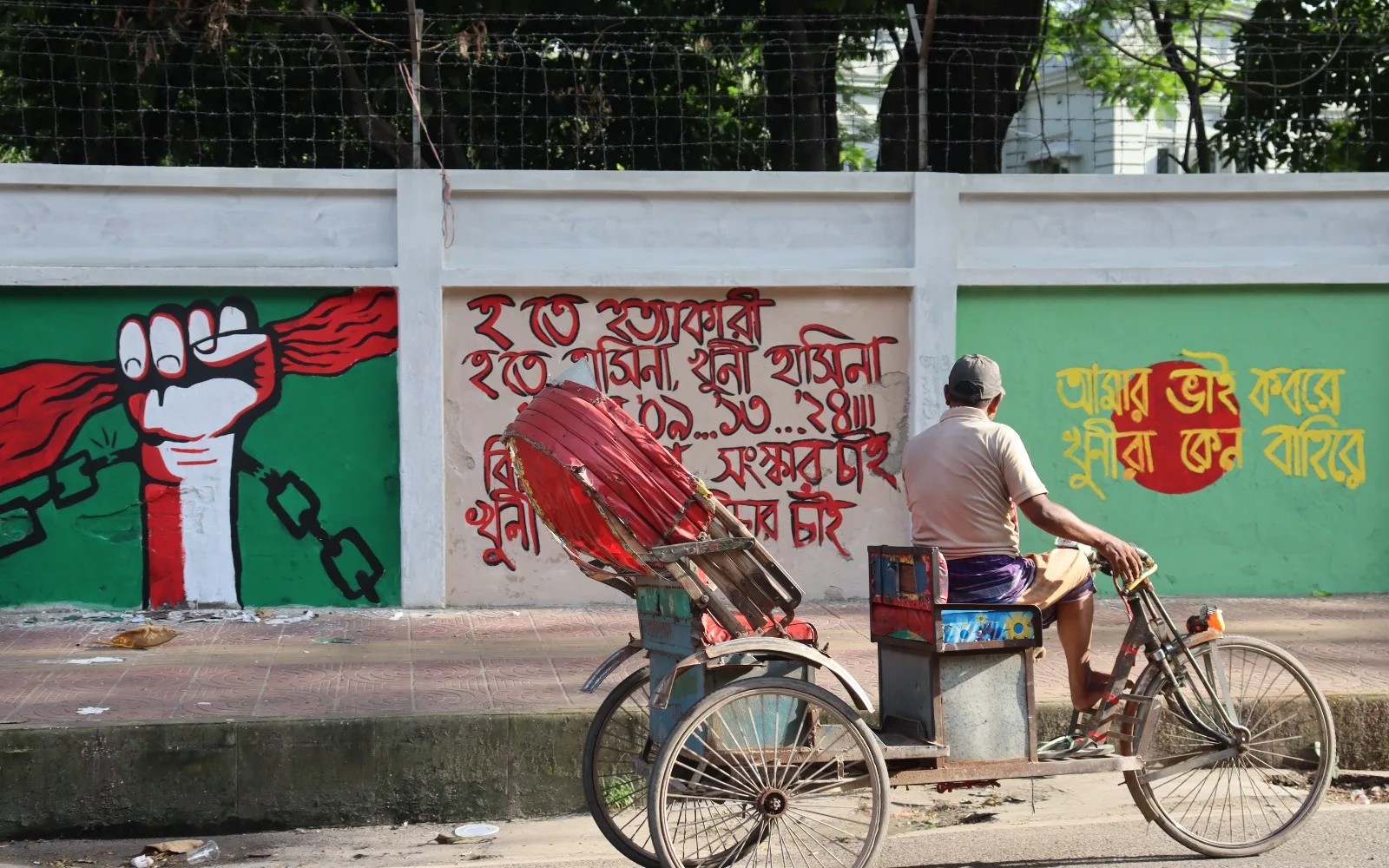
Two years after the July Revolution toppled Sheikh Hasina’s government, questions are growing over whether Bangladesh is preserving the memory of the uprising or failing the ideals and martyrs it claims to honour. Another July has come and gone, but on the streets of Dhaka the signs of that historic moment are fading.
From protest to public history
Graffiti as protest, then as public history Before and during the July–August 2024 movement, graffiti emerged as one of its most visible forms of protest. Students and activists turned walls, pillars and flyovers into canvases of dissent, painting slogans against the Hasina regime and documenting the uprising in real time. Police attempted to crack down on the graffiti artists, but the messages spread faster than they could be erased, helping to draw more people into the streets. Courage, after all, is contagious.
Wall writing itself is not new to Bangladesh. Political slogans have marked the country's walls since the Language Movement of 1952 and the Liberation War of 1971, and again during the mass uprising against Ershad in 1990. In more recent years, the anonymous "Subodh" murals that began appearing in Dhaka in 2017 and the graffiti of the 2018 road safety and quota reform protests showed how street art could carry dissent at moments when other channels of expression felt constrained.
Walls turned into an archive
After the fall of the AL regime, those same walls were repurposed as spaces of remembrance. Across Dhaka and other cities, students painted portraits of protesters such as Mugdha and Abu Sayed, scenes from the uprising, and the slogans that had shaken what they called a fascist government. Once that was done, most students returned to classrooms and everyday life. The responsibility for preserving this visual record and delivering the reforms demanded in July shifted to the state and civil society.
Photographer Raisul Islam Asad, who documented hundreds of July graffiti and later published the photobook Walls of Freedom, said the walls became an archive before anyone realised their historical value.
When I started photographing them on August 6, I didn't know they would become such an important historical archive.
Two years on, however, many of those walls look very different.
A city where July is being painted over
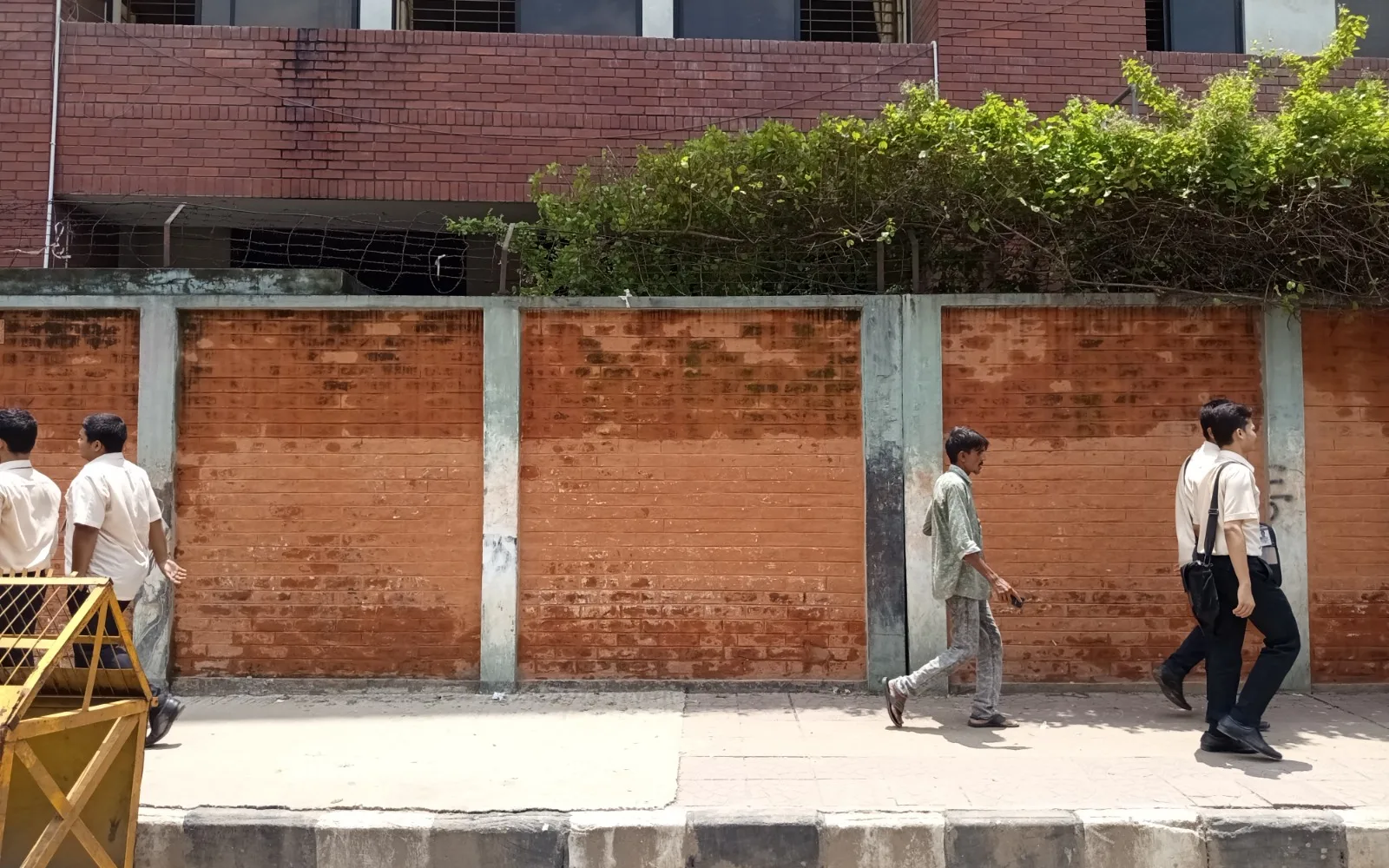
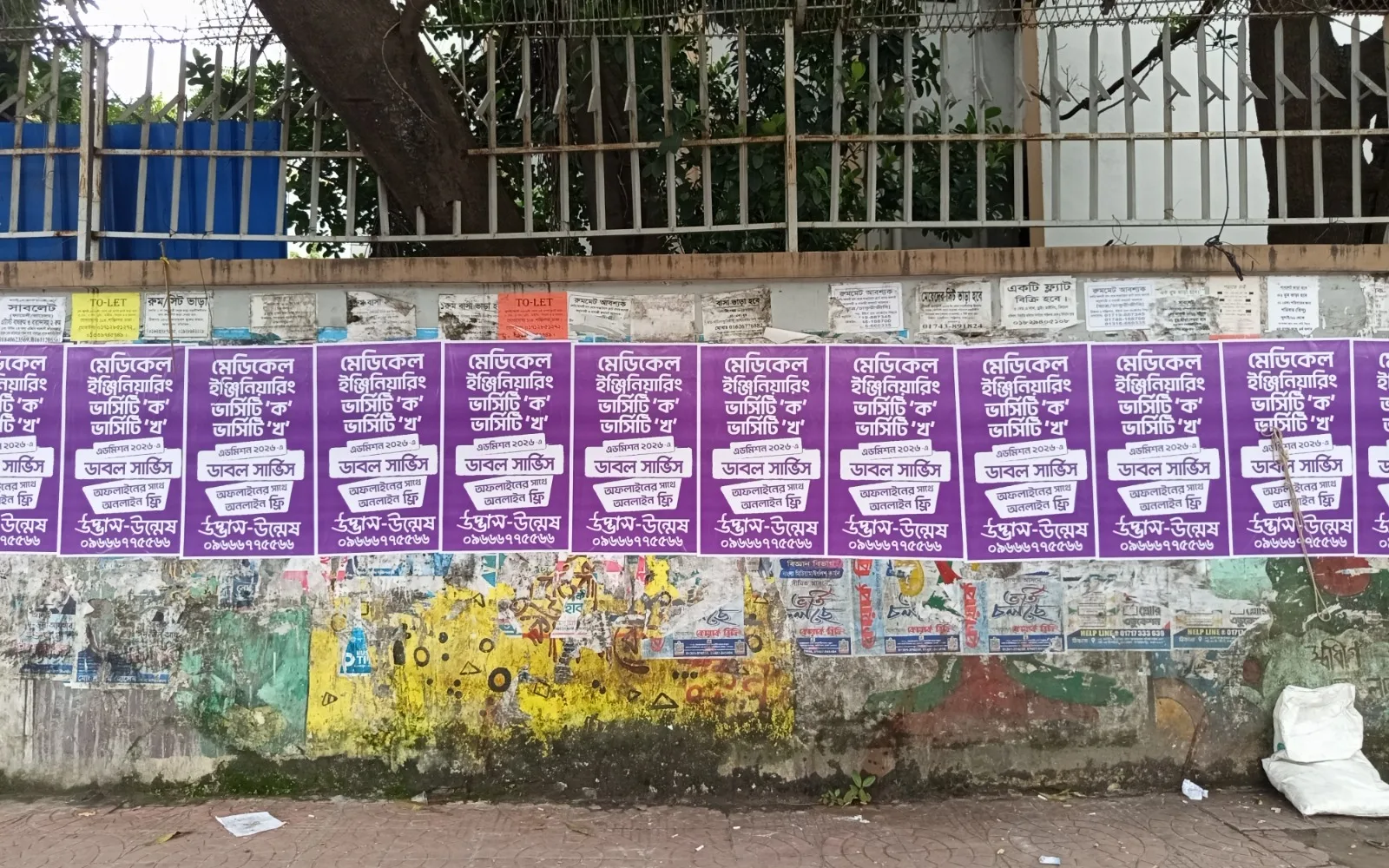
Visits to multiple locations in Dhaka reveal a pattern of neglect and erasure. In Khilgaon, an area once layered with posters and banners, students had cleaned and repainted walls and pillars to commemorate the revolution. Local residents supported them with food, paint, money and other supplies, and weeks of collective work changed the look and feel of the neighbourhood.
Today, many of those same spaces have returned to their old state. Posters and commercial banners have once again buried the murals; entire stretches of wall show little sign that any effort was made to preserve the artworks.
Similar scenes appear across the city. At Notre Dame College, graffiti on the boundary wall has been covered completely with a fresh coat of paint. At the Rajarbagh Police Lines quarters, sections of wall have been reconstructed, damaging and removing protest art in the process.
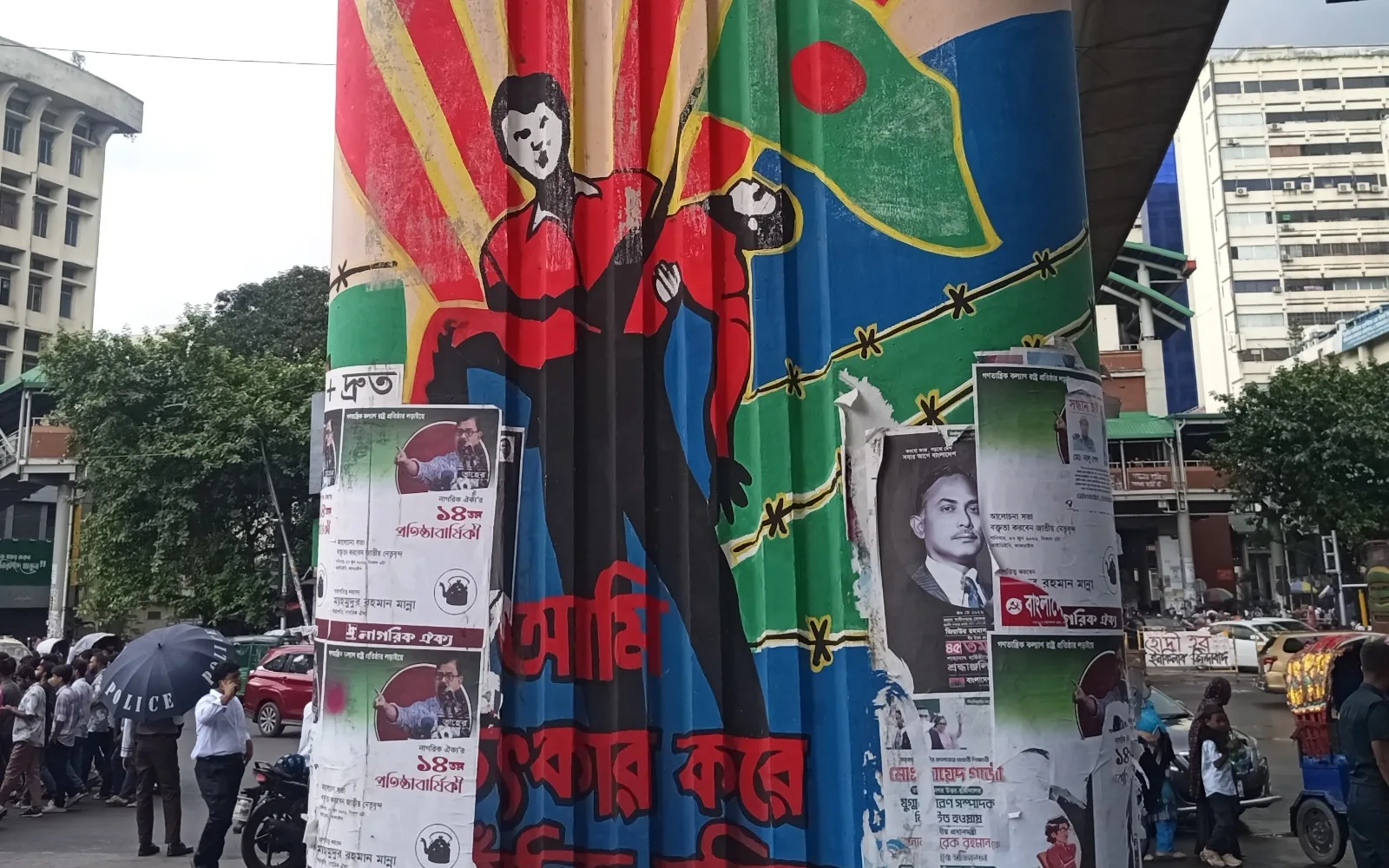
The Shahbag and Dhaka University (DU) areas, which served as epicentres of the uprising, present a particularly revealing picture. During the movement, students used the metro rail pillars, often highlighted by the previous government as symbols of “development”, to paint slogans against fascism and state violence. Today, parts of those slogans that explicitly referenced the former regime have been intentionally erased, while other sections are plastered with political posters.
One of the most striking examples is the installation known as the “Pillars of Hatred” (ঘৃণাস্তম্ভ), featuring portraits of Sheikh Hasina and Sheikh Mujibur Rahman. After authorities attempted to erase the artwork, students in the TSC area repainted the pillars and hurled shoes at the portraits as a symbol of public anger. Even this contested space now bears visible marks of vandalism and partial removal.
Across these sites, a basic question arises: were these paintings meant to be temporary, or do they form part of a historical record that merits protection?
What the fading walls signify
Charter endorsed, reforms delayed The fading of the graffiti coincides with delays in implementing the July Charter, the reform document that emerged from negotiations following the July–August 2024 uprising. The interim government led by Professor Muhammad Yunus initiated the Charter as a framework for constitutional and institutional change.
The Charter followed a clear timeline. A preliminary draft was released in July 2025; it was then formally signed by dozens of political parties later that year, and presented to voters alongside the February 2026 parliamentary elections in a national referendum. Approximately 60 percent of participating voters endorsed the reform package, giving the Charter legal and political force.
Yet the expected central institutional reforms remain largely unrealised. Under the July National Charter Implementation Order, the newly elected parliament was expected to function as a Constitution Reform Council (CRC), tasked with implementing constitutional changes within a fixed timeframe. Instead, the BNP‑led government has opted to work through a parliamentary committee, an approach rejected by Jamaat‑e‑Islami and the Nationalist Citizens’ Party (NCP), among others. The result, analysts note, is a growing gap between the referendum’s mandate and the government’s actual follow‑through on reforms.
For many of those who participated in and documented the movement, the stalled Charter and the disappearing graffiti are two sides of the same problem.
Covering an important part of our history
Several students and activists interviewed for this report described the graffiti as a form of public history rather than mere protest decoration.
When people cover these graffiti with posters or paint, they are, in a way, covering an important part of our history.
“When people cover these graffiti with posters or paint, they are, in a way, covering an important part of our history,” said Shreosi Shreya, a student at Notre Dame University Bangladesh. She argued that preserving the walls alone would not be enough. Unless the aspirations of the movement are carried forward, she fears the significance of these symbols will weaken over time.
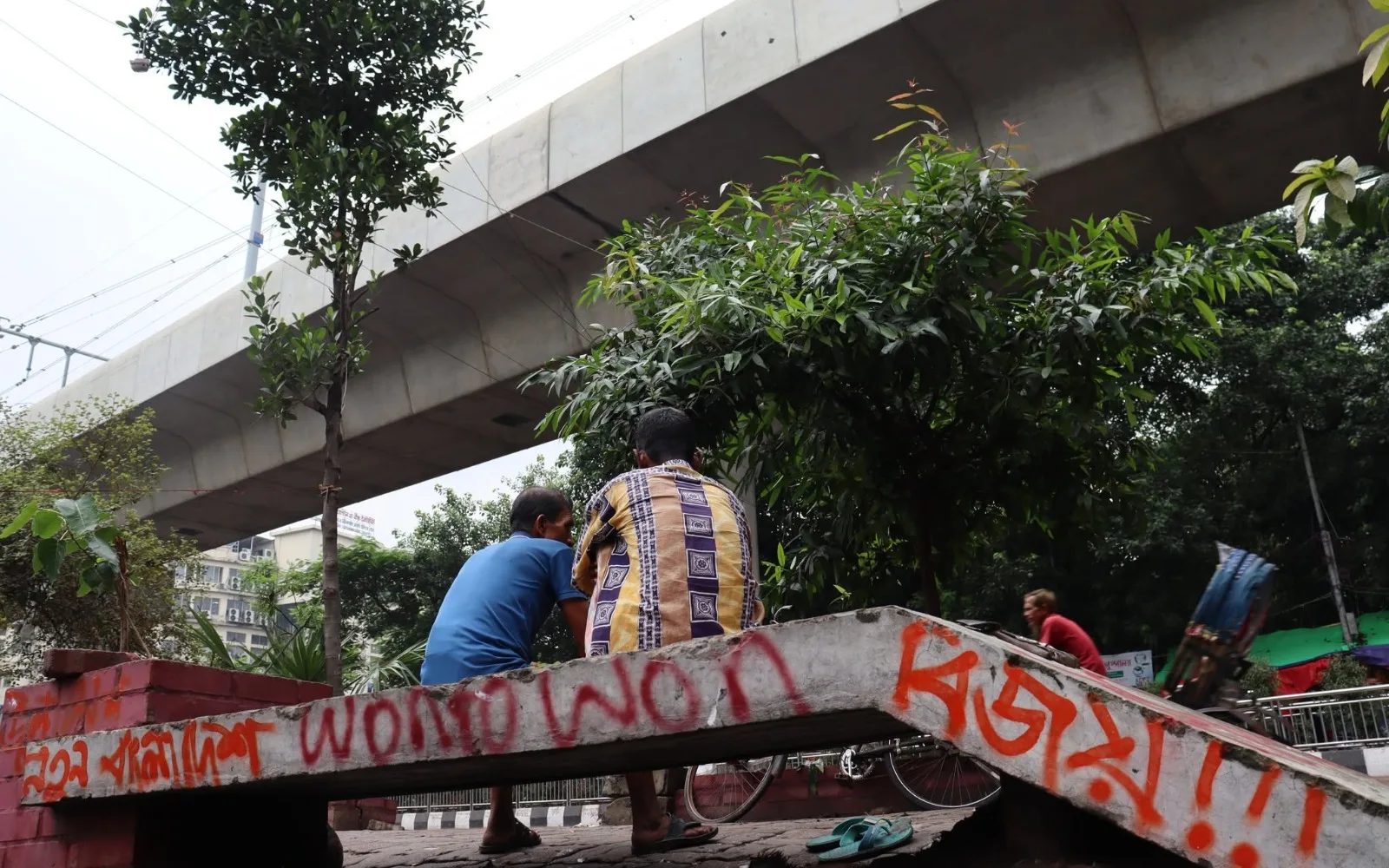
For Dhaka Medical College student Tasmia Nujhat Nuha, who painted graffiti during the protests despite the risks, the physical decay of the walls mirrors a wider institutional failure. “The moss is not only on the walls; it reflects our failure to preserve these memories,” she said. Protecting the graffiti matters, she added, but preserving July also requires books, journalism, historical documentation and, ultimately, implementation of the ideals people risked their lives for.
Asad said many graffiti had already begun disappearing only days after the movement.
"Sometimes I felt that if I had arrived just ten minutes earlier, I could have documented another graffiti before it was painted over," he recalled.
He believes many unfinished slogans also tell stories of the violence itself.
"Someone may have written only half of a slogan because the police were chasing them. That unfinished graffiti may even have been created by someone who was later killed."
He said documenting those walls became one way of preserving stories that may otherwise have been lost.
Some respondents, however, emphasised the inherently transient nature of protest art.
“Graffiti were created as temporary protest art. Their purpose was to raise a voice during the movement, and that purpose has already been fulfilled,” said BUET architecture student and graffiti artist Shamiron Barman. In his view, the responsibility now lies less in saving every image than in safeguarding the values that inspired them.
Missing policy, missing planning
Others pointed to structural and policy gaps rather than deliberate attempts at erasure. Notre Dame University Bangladesh student Tasin, who painted graffiti after the movement, suggested a more planned approach: “There should be designated spaces for commercial advertisements, while historically significant artwork is protected.”
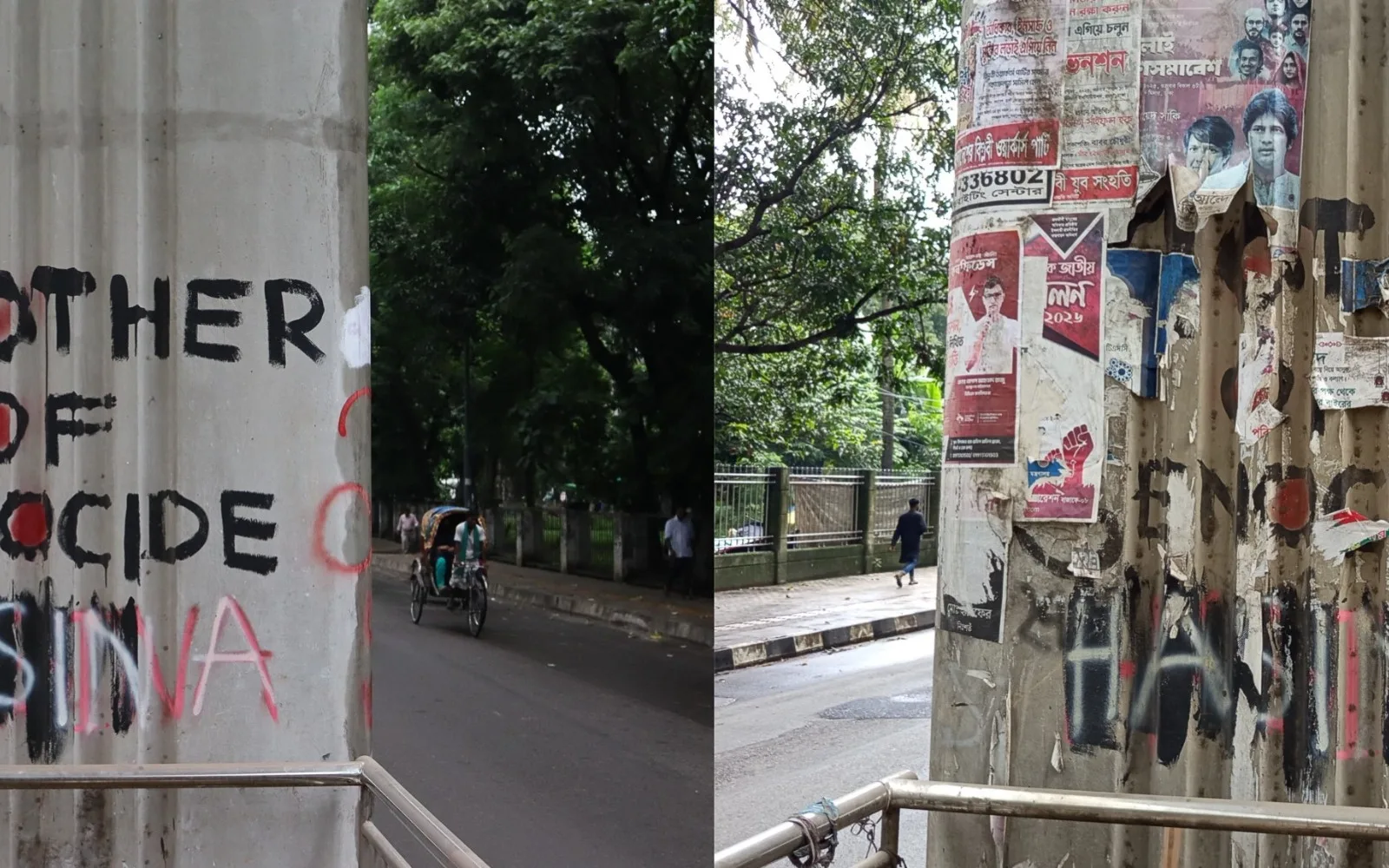
Rafid, a Development Studies student at Dhaka University, noted that once students stopped maintaining the walls, they gradually “returned to their previous use” because no institutional mechanism existed to protect them. Both students saw the fate of the graffiti as part of a broader absence of planning in how public space and public memory are managed.
When asked about the July Charter, neither believed enough progress had been made to translate the movement’s aspirations into lasting institutional reform.
This concern recurred across interviews. “Only a small part has been implemented. The most important parts are still missing, so we don’t think enough is being done,” said Mohammad Shahnewaz Arif, referring to key Charter provisions that remain pending.
Former MP Wajid Ali Khan Panni, who served during the Ershad era before later joining the Awami League, also argued that the July movement represents a defining moment in Bangladesh's political history. While he said posters covering graffiti have long been part of the country's political culture, he believes the government cannot afford to overlook the movement itself.
"The government should accept and respect the July movement. It was a very important movement that changed the country," he said, describing July as a turning point that reshaped Bangladesh's political landscape.
Freedom is harder to protect than to achieve.
Views on the pace of reform vary. English‑medium school teacher Ashraf Rahman, who took part in the movement, said he does not believe the memory of July can simply be painted over. However, he acknowledged that Charter implementation has been slower than many had hoped. “I don’t think enough steps have been taken yet, but there are reasons for that. The government is still dealing with many challenges. We hope these reforms will be implemented gradually,” he said.
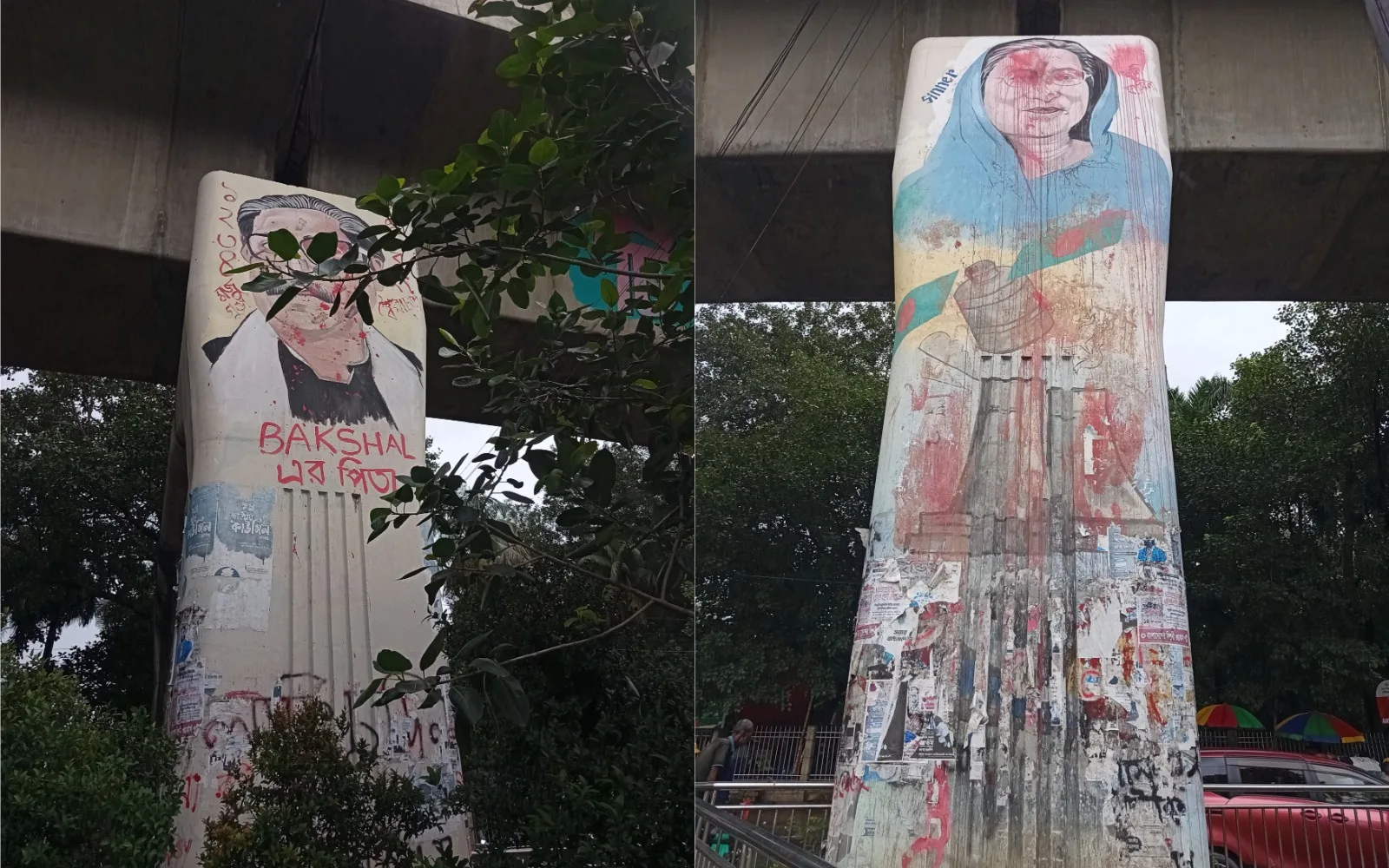
For Tanim, one of the artists who repainted the “Pillars of Hatred” near TSC, the stakes are higher than the walls themselves. “Freedom is harder to protect than to achieve. July has to be protected; otherwise, it too may fade,” he said. He sees the graffiti as reminders of the uprising but believes the real test is whether reforms and democratic aspirations demanded during the movement are now protected in law and practice.
Although Asad believes the physical graffiti will inevitably fade, he does not think July itself will disappear.
You can erase paint from a wall, but you cannot erase people's wounds.
Asked about the July Charter, he said the public had already expressed its opinion through the referendum. "People voted 'Yes'. I think it should be implemented as quickly as possible. So far, we haven't seen the progress many expected."
Other respondents were more sceptical. “If what we fought for in the July uprising is not implemented, it will gradually fade on its own,” said Sunjid, a Development Studies student at Dhaka University, suggesting that symbolism without substantive change will not be enough to keep July alive in public consciousness.
Qadarunnesa, a guardian whose son joined the protests, expressed cautious optimism. “Our hope is that, unlike the previous government, this government will not neglect the public verdict and will honour the people’s mandate,” she said, referring to both the uprising and the referendum.
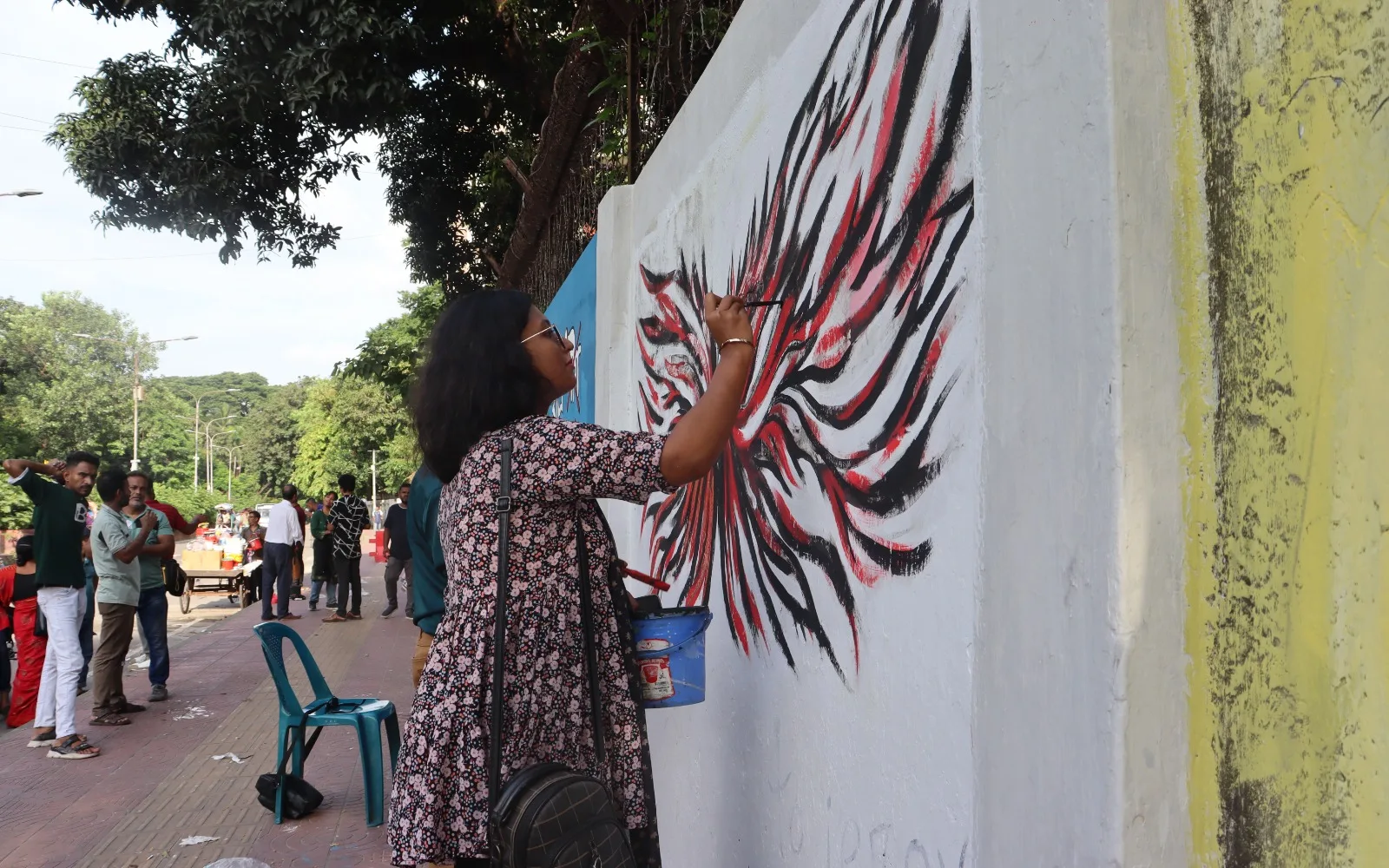
Restoration begins at Dhaka University
While much of the graffiti across Dhaka has gradually disappeared, efforts to preserve some of the movement's artwork have recently begun.
From August 1 to 3, Dhaka University organised a three-day restoration programme in which students and artists repainted graffiti created during and after the July mass uprising. According to the university, the initiative aims to preserve the original character, spirit and historical significance of the artwork. Towhidul Islam, a third-year law student at Dhaka University, welcomed the initiative. "These graffiti are part of our history. It's painful to see them covered with posters or disappear. Hopefully, through this initiative they will get a new life," he said.
Artist Sharif Ahmed, a Fine Arts alumnus of the university who participated in the restoration, said outdoor paintings naturally deteriorate over time. "These works were never created with long-term preservation in mind. They will need to be restored again in the future," he said, describing the programme as part of an ongoing effort to keep the memory of July visible.
Sabrina Azim Sara, a student at Shanto-Mariam University, also welcomed the initiative, saying she hopes similar efforts continue elsewhere. "If initiatives like this continue, it will be better for preserving the graffiti," she said.
Symbols and Charter, memory and action
Taken together, the interviews suggest that most respondents do not view the graffiti and the July Charter as separate questions. For them, the murals and slogans preserve the visual memory of the uprising, while the Charter embodies its unfinished political promise. Protecting one without fulfilling the other, they warn, risks reducing the movement to symbols alone.
As another July passes, the disappearing artwork and the stalled reform agenda pose the same unresolved question: can the legacy of a historic movement be preserved through memory and images alone, or must it be secured through concrete action on the reforms for which people took to the streets?