Humans of the Establishment: Begum Khaleda Zia
The Humans of the Establishment is a planned series of personal essays about key political figures and policymakers, aimed at highlighting the diverse and changing fabric of the present day political scene in Bangladesh.
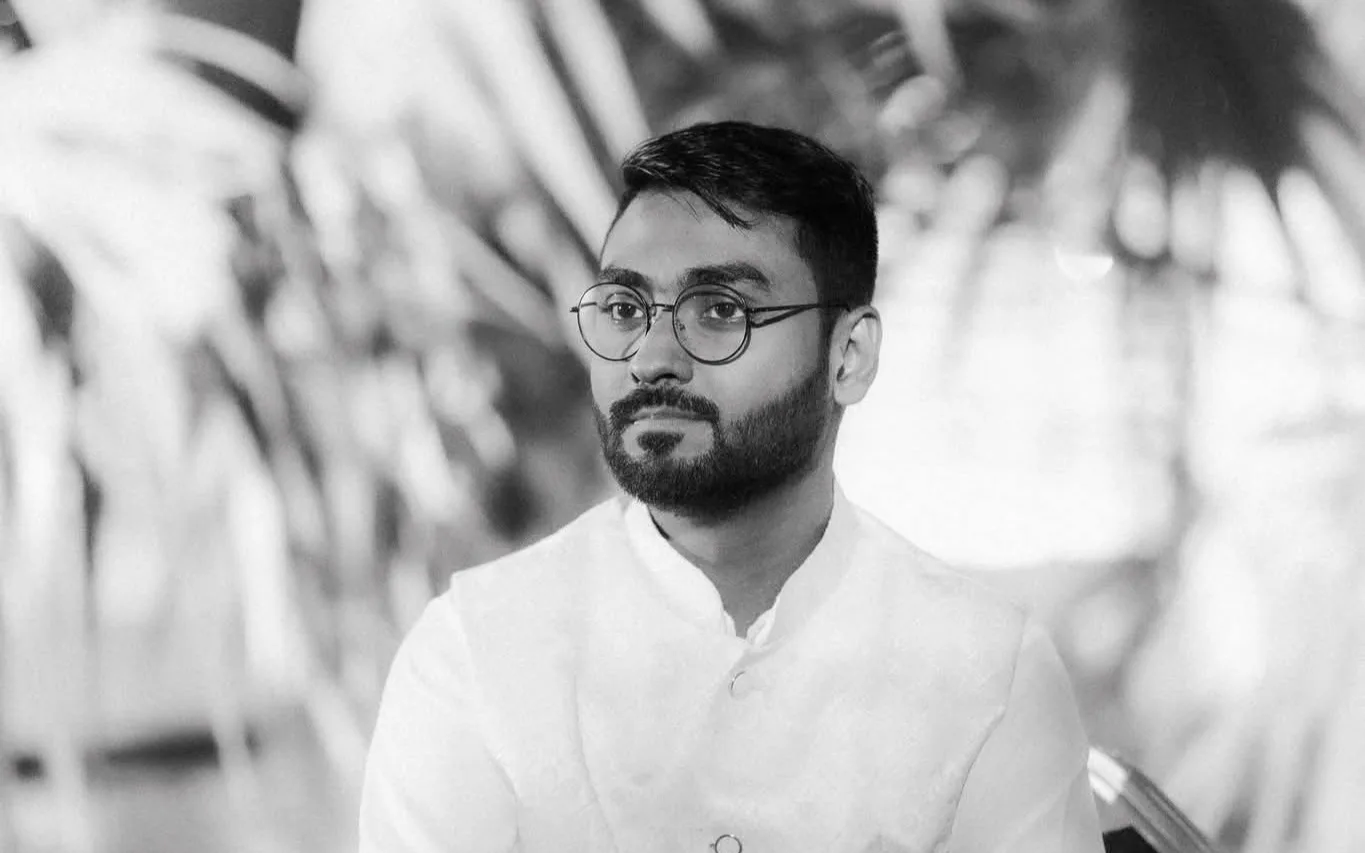
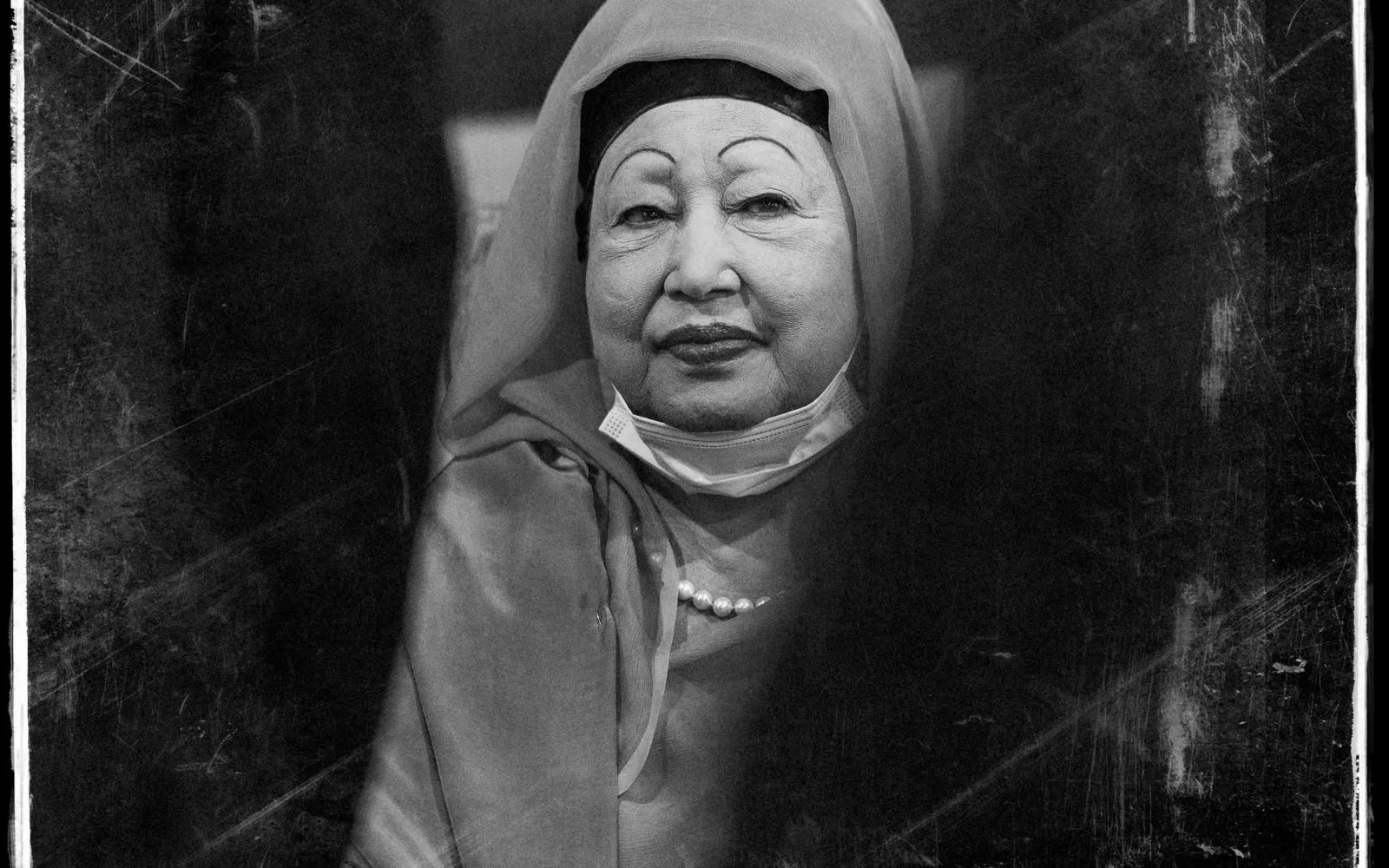
It was Armed Forces Day, November 2025, at Senakunja in Dhaka Cantonment. I was standing a few feet from her with a camera, in a room I had managed to get into, and I looked at her hands. Her fingers were swollen. Puffy, almost soft-looking, not the way fingers should look. It was the illness. You could see it there before you saw it anywhere else. I got scared first. Then sad. I had seen her on television, and she had not looked like this. And the Khaleda Zia I grew up with, on television and in the newspapers my family read, never looked like this at all. She was always put together. A chiffon saree, pale colours, draped neatly. Big dark glasses. Her hair set high and never out of place. She would sit behind a microphone at a rally, and the crowd would go quiet for her, or raise one hand from a car window, and the crowd would roar. Even when she was angry, she looked composed. That was the woman in my head when I walked into that room. I have always thought of myself as lucky. Working in the interim government put me in rooms with people I had only seen on television. But never in my wildest dreams did I think I would meet Khaleda Zia. She had been the prime minister of Bangladesh three times, and for four decades, the leader of the Bangladesh Nationalist Party, BNP. Since the 1990s, BNP and the Awami League have taken turns running this country, and their rival all those years was Sheikh Hasina. Hasina ruled for fifteen years, until a student uprising forced her out in August 2024, and the interim government I worked for took over. For most of those fifteen years, Khaleda Zia was on the wrong side of the state. She spent years out of sight: in jail, then at home in Gulshan, then in and out of the hospital. For people my age, she was a face from old photographs, not someone you could stand in front of and say salam to. The first time I got to see her was on Armed Forces Day 2024, same venue. She sat beside the Chief Adviser, Professor Yunus, in a purple saree. People queued to greet her: diplomats, politicians, advisers, bureaucrats, officers in uniform. I joined the queue because I had the privilege to be there, and I was nervous. "Assalamualaikum Ma'am, it's a pleasure and an honour to see you in person." She returned my salam and asked, "Are you with Yunus bhai?" "Yes Ma'am." "What do you do?" "I work in the press wing, Ma'am. Assistant press secretary. And I take photos." The queue behind me was long, so she had time for one thing. "Always remember, you are the future of the country. Young people like you must always keep in mind that you have to do something for your country." I didn’t say anything back. I had to move on. But I still carry that sentence. I didn’t have my camera that day. I had gone casually, just to enjoy the event. It was an oversight I would come to regret. A year on, her health was declining rapidly. None of it was sudden. When she was jailed on 8 February 2018 in the Zia Orphanage Trust graft case, a case her party consistently described as politically motivated, she was already in her seventies and living with arthritis and diabetes. She was sent to the old central jail on Nazimuddin Road, a prison that had been emptied two years earlier after inmates were moved to Keraniganj. For a time, she was its only prisoner. In April 2019, she was moved from the jail to the hospital for treatment, although she remained in custody. Then, in March 2020, during the pandemic, the government suspended her sentence on two conditions: she had to stay at her Gulshan home and could not leave the country. Her doctors later diagnosed her with liver cirrhosis in November 2021. Her family asked repeatedly for clearance to take her abroad for treatment. The answer was always no. That changed after Hasina fell in August 2024, when the restrictions were lifted. Khaleda Zia left Dhaka by air ambulance on the night of 7 January 2025 and arrived in London the following day for advanced treatment. By then, a great deal of time had been lost. I keep thinking about that empty prison. An old woman with aching joints, alone in a building meant for thousands. When I got to learn that she would attend Armed Forces Day again, I went with all my cameras. My gut said this might be the last time the public would see her. I’m not proud of thinking that way, but that's how it was. I also knew she and the Chief Adviser would sit together in a private room first. I asked my seniors for access to that room, and managed to get it. That is how I ended up looking at her fingers. I walked in behind him. She was sitting in a wheelchair with Professor Yunus. They were talking. Nobody looked at me, which was good. I lifted my camera. I wanted her face first; that's what you always want. But my eye kept going down to her hands. Her fingers were swollen, all puffy, like they didn't belong to her. I had seen that hand on television so many times, waving from a car window, and I had never once thought about it. Now I couldn't stop looking. I took a few photos. My own hands weren't very steady either. Afterwards, I waited outside for her to take her seat in public, and hunted for an angle where she might look into my lens. She did. I took the photo and switched off the camera. This time, I only said, "Assalamualaikum Ma'am, it's a pleasure to meet you again." That was it. My gut feeling had been right. It was her last public appearance. I still don't know what to do with the fact that I went there half expecting it. These days, people in Nepal talk about Balen Shah and his dark glasses. She did it long before, when it wasn't even a statement. She had come into politics late, and not by choice. After Zia was killed in 1981, BNP needed someone to hold it together, and within a few years, she was running it. She led the street movement against Ershad and became Bangladesh's first woman prime minister in 1991. Her second term, from 2001, left its own questions, and I don't think she should be remembered without them. I also grew up on the memes. In school and college, I watched her and her party turn into jokes, and I heard Sheikh Hasina and those around her mock how Begum Zia looked and presented herself. I don't remember Khaleda Zia ever going after Hasina's appearance like that.
The most famous one was "Chup koro, beyadob kothakar" (Be quiet, you insolent person). I laughed when I first heard it. I had no idea what was actually happening.
On 29 December 2013, police surrounded her house in Gulshan and stopped her car from leaving for the opposition's "March for Democracy". She sat inside the car for about 45 minutes. Then she got out, went to the gate and asked the officers by what authority they were keeping her in her own home. The line came out in that argument, with policewomen standing in front of her.
Now that I know the whole story, I don't find her anger unreasonable. You can think what you like about her politics or her choice of words.
But she was being kept inside her own house, and as far as I know, no one ever showed a court order for it. It wasn't only the police at her gate. Trucks loaded with sand had been parked across the road to keep her in. In January 2015, it happened again, outside her Gulshan office. A former prime minister, penned in by sand trucks. People made jokes about that, too. I don't find it funny anymore. To me, it says the state didn't see her as an opponent to argue with, but as something to block. She lost so much in front of her own eyes. Her husband, President Ziaur Rahman, was assassinated in 1981. Her elder son, Tarique Rahman, was tortured in custody and spent years in exile. Her youngest, Arafat Rahman Koko, died in Malaysia in 2015 and came home in a coffin. I am the youngest son in my family. I cannot imagine my mother seeing my dead body. If I had to choose, I would rather be the one to see hers. I think I'm more prepared for that. I don't know how she held up as a mother. Look closely, and it was a lonely life. The people around her were gone: killed, jailed, exiled, or picked up and never heard from. And she never left the country, no matter what. Late in life, she went to London for treatment, but she came back.
Think about it. A widow with two sons, walking into a party run by men, and ending up running it and becoming the first female prime minister of the country. We don't tell that part of her story enough. I know I didn't. For years, the only line of hers I could quote was a meme.
When she became very ill, the government declared her a VVIP on 1 December 2025 so the SSF could guard her in her last days. And when she died, I happened to be inside Jamuna. Fortunately or unfortunately, I still can't decide. A meeting was going on, a tense one. Dr Khalilur Rahman was at the centre of it; the SSF chief was there too. Then the news came. I watched Professor Yunus close his eyes for eight, maybe ten seconds. Then he opened them, and the meeting continued. I don't know what was going through his mind. Maybe grief, maybe just a pause. I only know what I saw. The next day was her janaza.
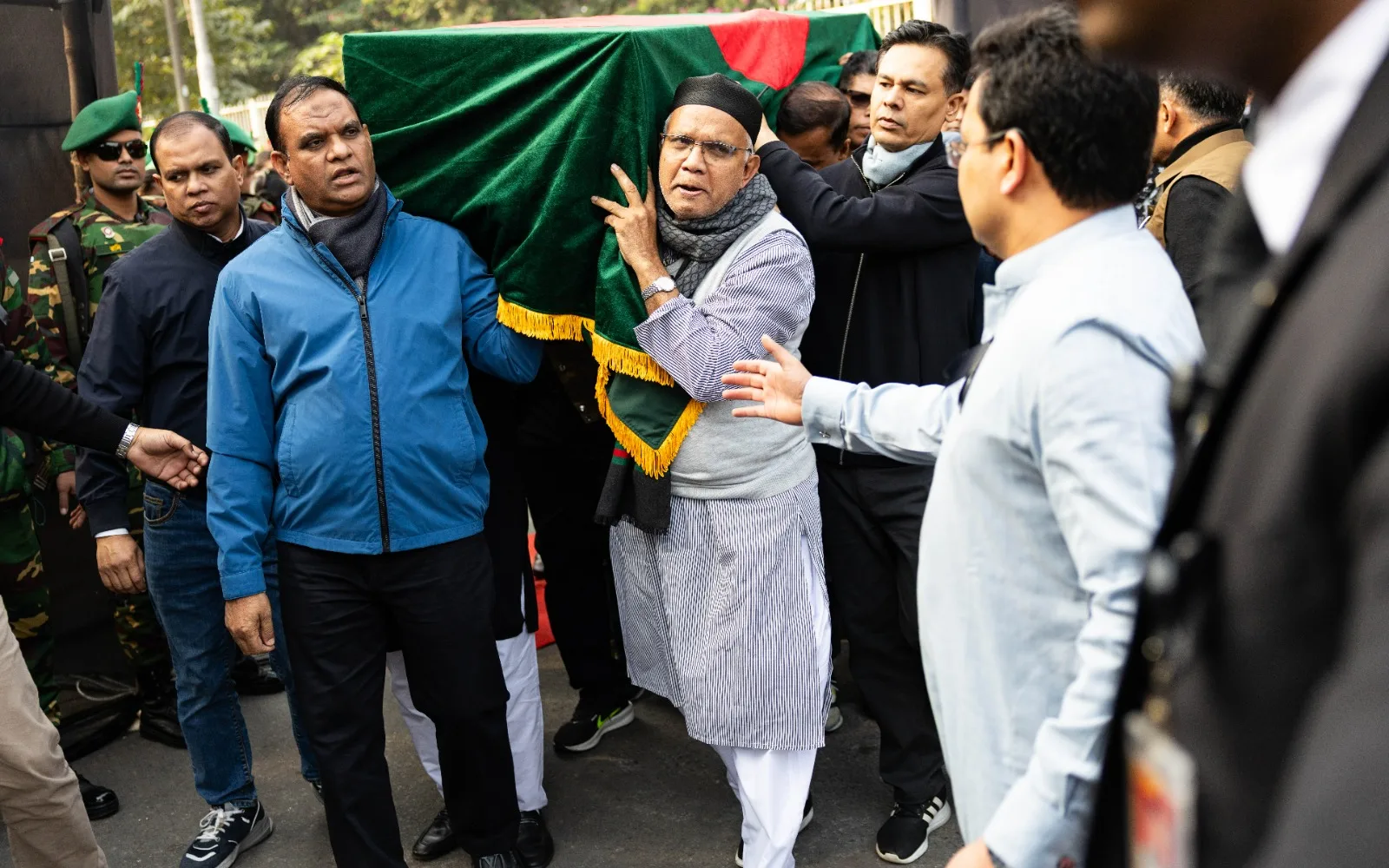
I entered. Her coffin was there. Tarique Rahman stood beside it. He had come home only days before, after seventeen years away. Professor Yunus was there too. And I was there. A few feet away, with a camera in my hands. It hit me standing there. The man running the country for now. And the woman who had run it twice, lying still in front of them both. Then Tarique spoke to the people, the way sons speak at janazas all over this country. "If my mother owes you any money, please let me know."
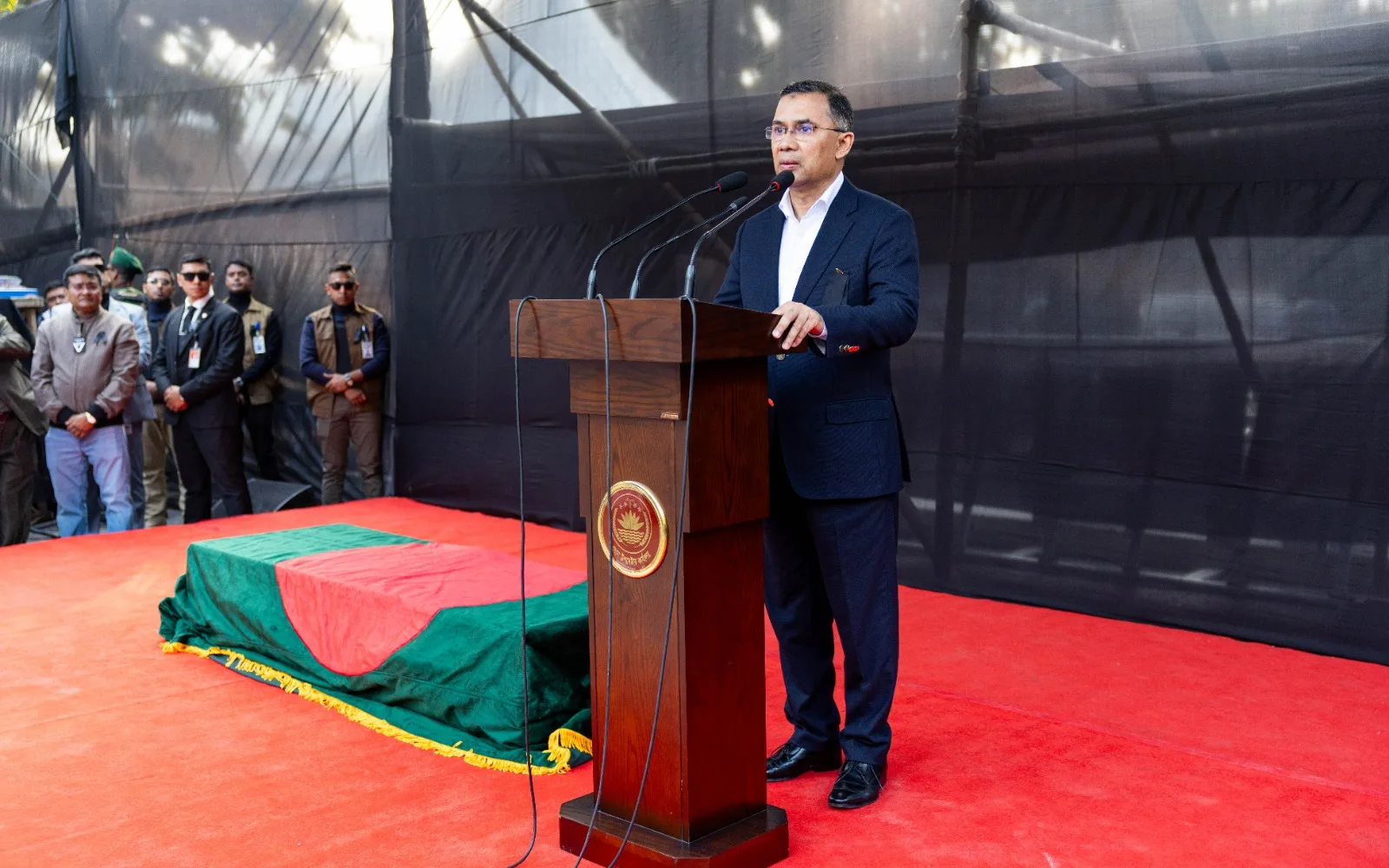
No politics. Nothing fancy. Just a son settling his mother's accounts. People watched it on television. I watched it in front of me. I took pictures of her coffin and her son because that was part of my job. But I wasn't only a photographer that day. I was someone who happened to be standing there, watching a mother leave, and a son stay behind. I first saw her in a purple saree, with a long queue of people waiting to greet her. The last time, she was in a coffin, with her son beside her.
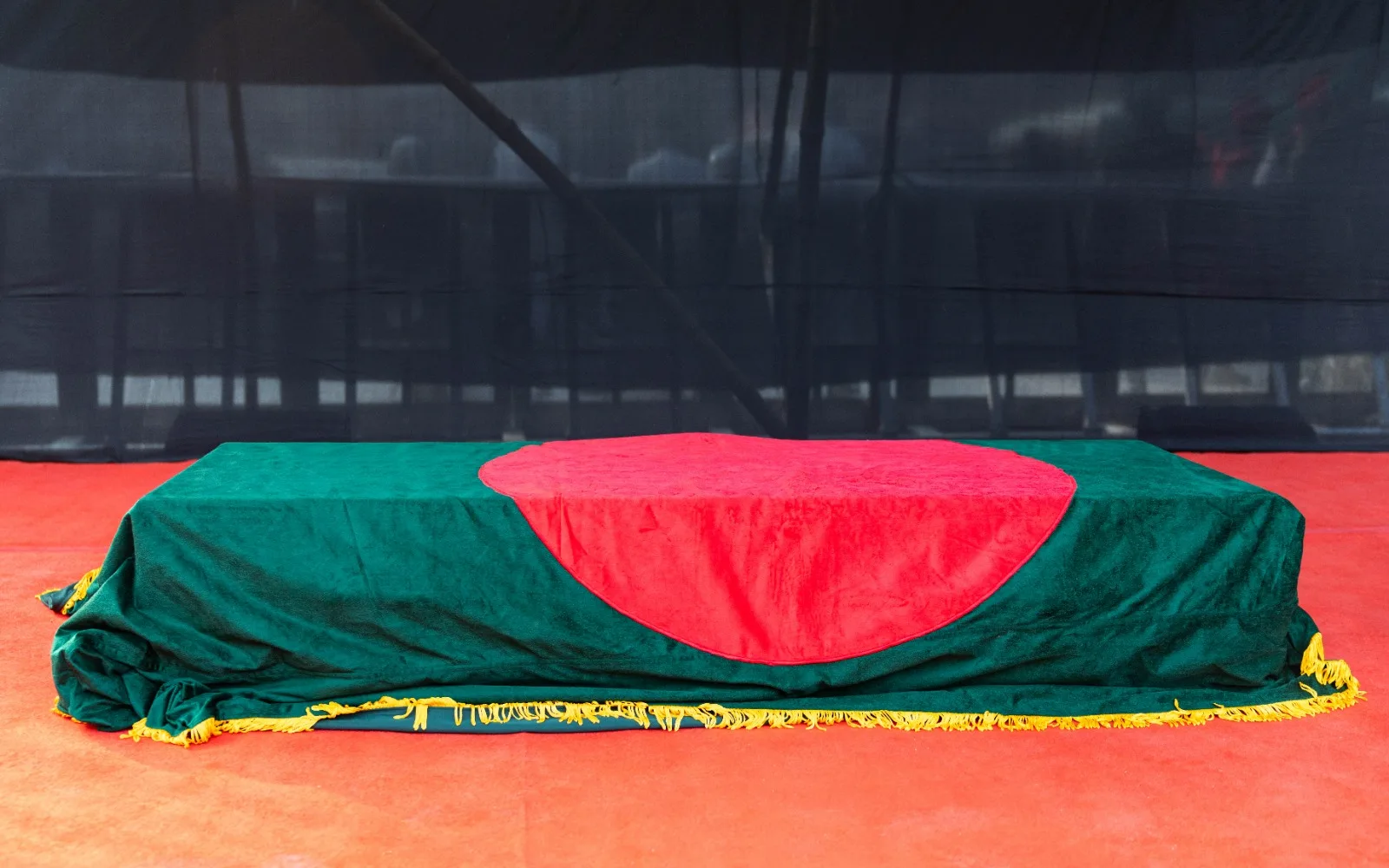
I was at her funeral. Fortunate or unfortunate, again, I don't know. But I was there, and I wanted to write it down honestly. It was a sad day for me, and for the people of this country who still believe in democracy.