Humans of the Establishment: Lutfey Siddiqi
The Humans of the Establishment is a planned series of personal essays about key political figures and policymakers, aimed at highlighting the diverse and changing fabric of the present day political scene in Bangladesh. Presented as snapshots of certain moments and periods, our hope is that our readers will catch a glimpse of individuals beyond the headlines and photo ops and connect with the context in which they operate.
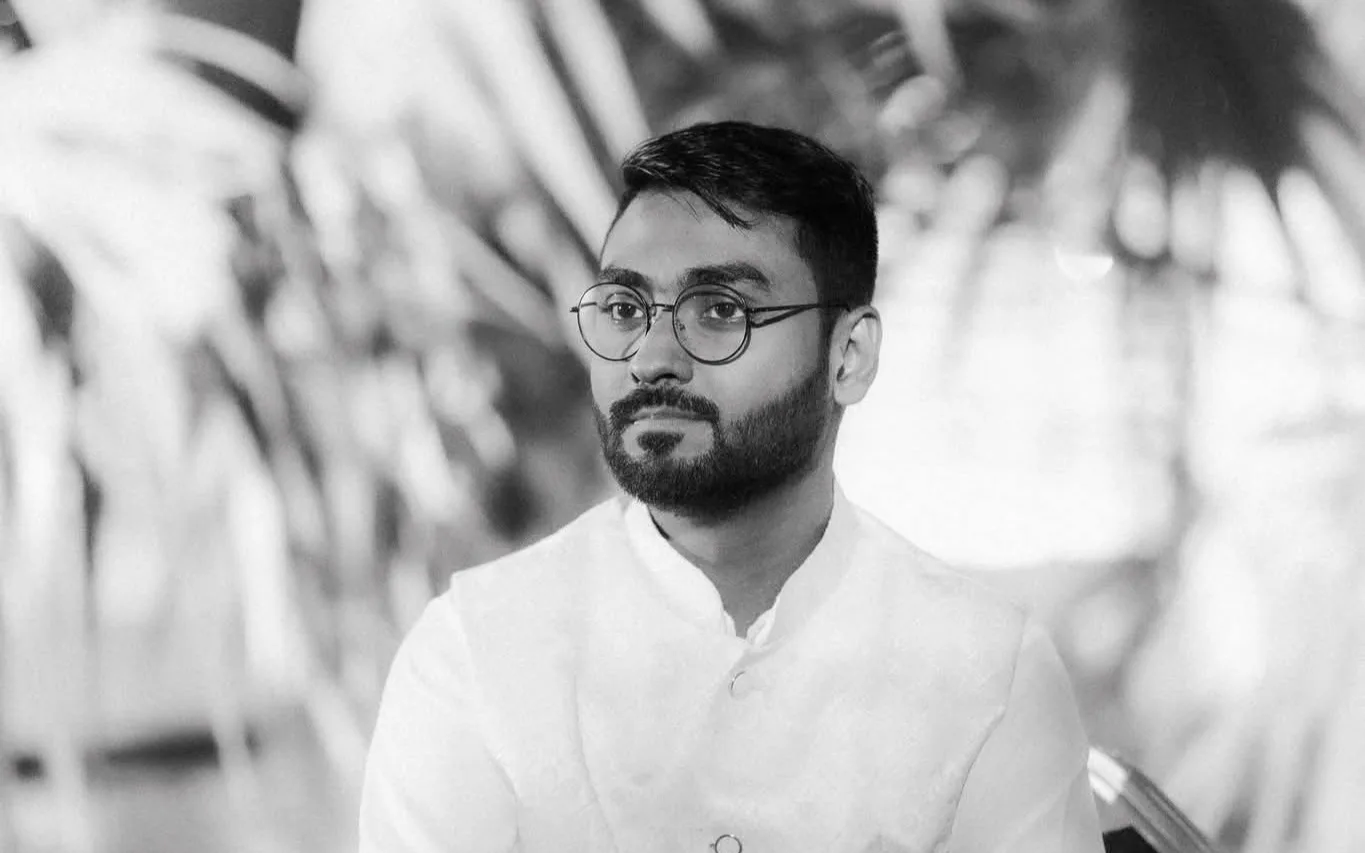
During my time in the Interim Government’s Press Wing, I had the privilege of meeting all kinds of people. Ministers, advisers, diplomats, civil servants, political leaders, foreign delegates and people whose names I had only seen in newspapers. Being one of the youngest people in the Chief Adviser’s Office, I often found myself in a strange position. I was surrounded by people who seemed to know everyone, while I was still trying to figure out who many of them were.
Lutfey Siddiqi was one of those people.
When I first heard that Lutfey Siddiqi had been appointed as the Chief Adviser’s Special Envoy on International Affairs, I had to Google him.
The first things I found were exactly what you would expect from a man with his profile:the World Economic Forum, the London School of Economics, economics, academia, international affairs and a very active LinkedIn presence that somehow made him look like a corporate tycoon who had accidentally walked into the government.
He was good-looking, too. Polished. Educated. Comfortable in that particular world of economics, policy and international conferences where everyone seems to know how the world functions. I discovered something else. He was the son of A. Y. B. I. Siddiqi, the 16th Inspector General of Police of Bangladesh Police. And I remember thinking: Okay. This guy is a big shot. A few days later, I met him. It happened inside Jamuna.
He had come to meet the Chief Adviser. It was not supposed to be a big thing, at least as far as I knew. It was around 7:30 in the evening, and I was getting ready to leave. My other press wing members had already gone home.
Then an SSF officer came over. “The Chief Adviser has asked you to cover this meeting,” I remember being slightly annoyed. It had been a long day. A few foreign visitors had already come to Jamuna, there had been several meetings, and I had barely had time to breathe. I called Shafiq bhai.
“Chief Adviser asked me to cover this one,” I told him. “Yeah, yeah. Cover it and send it to me,” he said.
So I stayed.
There was a meeting with the Korean business community that evening. I don't remember all the details of the discussion anymore. What I remember much more clearly is Lutfey.
A thought I had while watching him in action was: This guy speaks really well in a British accent. I couldn't even say “water” in a British accent.
When the meeting ended, I walked out into the hall, opened my laptop and started writing the press release. A few minutes later, Lutfey came over and sat beside me.
He smiled and said, “Assalamualaikum bhai. My name is Lutfey Siddiqi. I’m the Chief Adviser’s Special Envoy on International Affairs. Sorry about this unexpected meeting. You had to cover it alone. Please let me help you with the PR.”
You had to cover it alone. Please let me help you with the PR.
I remember being genuinely stunned, less by the offer of help than because of the way he said it. He didn't speak to me as if I were the youngest person in the room, a junior press wing member who had been left behind after everyone else had gone home.
He simply sat down and offered to help. I remember thinking, Why on earth is he being this polite to me? I quickly tried to recover.
“No, no, it’s okay, sir. I can do it. It’s my job. How about you give me your WhatsApp number? Once I’m done, I’ll send it to you, and you can give me feedback if there’s anything I need to change.”
He smiled. “That’s excellent, bhai.” And that was it. I wrote the PR. Sent it to him. He said it was fine. I forwarded it to Shafiq bhai. He said it was fine too. I thought that would be the end of it. We would occasionally meet. We would exchange greetings. Perhaps he would remember my name. Nothing more.
I was wrong.
He apparently liked my writing. He had also seen some of my photographs. Eventually, he asked the Press Wing whether I could regularly cover his events.
And suddenly, I started getting calls. “Nayem, Lutfey sir has a meeting.” “Nayem, can you cover this one?” “Nayem, Lutfey sir is receiving a delegation.” And that was how I ended up attending far more Lutfey Siddiqi meetings than I had ever planned to.
There was one obvious downside. His meetings could be long. Very long. But there was also a strange advantage. If you weren't an economist, covering Lutfey's meetings was basically an economics 101 class that you didn't sign up for.
Trade. Investment. Markets. Geopolitics. Bilateral relations. Development. LDC.
You learned whether you wanted to or not. And slowly, I realised something else. Writing about business and economics is not simply about knowing how to write. You need to understand the subject. You need to understand why a number matters. Why a country matters. Why a trade route matters. Why one sentence in a bilateral meeting can carry more weight than an entire speech. Covering Lutfey taught me that.
The more interesting things I learned about him came outside the meetings. One day, I noticed his panjabi. Or rather, I noticed his collection of panjabis. They were always interesting.
So I asked him, “Your panjabis are really nice. Where do you get all these from?” He looked at me and said, “Nayem bhai, most of my panjabis are from my father. I altered all of his old ones, and now I wear them.”
Nayem bhai, most of my panjabis are from my father. I altered all of his old ones, and now I wear them.
Later that day, he posted a collage of himself and his father wearing the same panjabis. I thought it was genuinely cool, the way he forged his style from his personal story. A son wearing his father's clothes, altered to fit a new generation, while carrying a little bit of the old one along with him. For someone whose public image is so heavily tied to economics, international affairs and polished LinkedIn posts, that small detail felt surprisingly intimate.
Speaking of LinkedIn, there was another of Lutfey's habits that I found funny and I never quite understood.
He seemed to have a consistent tradition of posting photographs of himself walking down a hallway or corridor with foreign delegates as he received them. One delegation, another corridor, another handshake, another photograph. I still don’t know how he managed to maintain that level of consistency. But human behaviour is all about patterns. Who am I to judge?
Over time, I also realised that he genuinely loved photographs. He would often ask me to take his pictures. Sometimes, he didn’t even have to ask; I would simply take a good shot and send it to him. His response was almost always the same: a love react, followed by a simple “Thank you, Nayem bhai.”
By then, I had already spent enough time around him to realise that there was much more to Lutfey than the polished economist I had first found on Google. There was, of course, the soft-spoken and courteous Lutfey. The man who sat beside a young press officer and offered to help with a press release. The man who could casually talk about his father's Panjabis.
But there was another Lutfey too. And I saw him one day inside Jamuna.
He was in a conversation with some of the older advisers. I won't mention their names; I’ll let my readers’ imagination do some work here. At some point, the discussion became heated.
It was one of those arguments that can happen in any institution: a disagreement over policy, a misunderstanding, a generational difference, or perhaps simply two groups that had spent too long talking past each other.
Lutfey got up from his chair and walked away. Apurba bhai and I were sitting nearby. And, honestly, we were enjoying the scene. There is something strangely entertaining about watching advisers argue with one another, especially when you are sitting safely outside the argument. Policy disagreements. Miscommunication or no communication at all. Generational frustration. People are not talking to each other, and then getting angry because nobody is talking to each other. Government life has its own theatre.
Lutfey came over and sat beside us. And almost immediately, he started complaining. He was frustrated. He was annoyed. He told us what had happened and why he thought the others were wrong. We listened. Then we tried to calm him down. “It's always been a generational fight,” we told him. The younger ones will always get called beyadob .” He laughed. He agreed.
And then, almost as if the laughter had given him permission to continue, he went back to ranting. That was perhaps the most human version of Lutfey I saw. Not the economist. Not the special envoy. Not the man standing next to foreign delegates. Just a frustrated guy sitting beside two younger colleagues, complaining about older colleagues after an argument. That is the version of people I tend to remember; the ones behind the official photograph, the designation. Not the carefully prepared statement. The moments in between.
During my time in the Interim Government, I met many advisers. Each had a different personality, a different way of speaking, a different way of dealing with power and people.
Lutfey was different in his own way. He was polished without being distant. And perhaps most importantly, he made me understand that behind all the big words, economics, trade, investment, diplomacy, international affairs, there is still a person trying to figure out the room around him.
I first met Lutfey because I had to stay late and cover an unexpected meeting. I thought I was simply doing my job. I didn't know then that the man sitting beside me with his British accent, his economics vocabulary, his father's Panjabis and his very carefully curated LinkedIn photographs would eventually become one of the people whose small habits and contradictions I would remember most.
When I think of him now, I don't first think of the Special Envoy. I think of a late evening inside Jamuna. A laptop is open. A press release half-written. A man sitting beside me was saying, very simply: “Assalamualaikum bhai…please let me help you.”
And, strangely enough, that is where my story of Lutfey begins.